
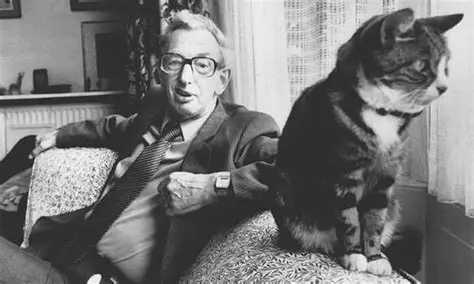
Eric Hobsbawm revisited
John Merrick has written an interesting piece on Eric Hobsbawm as a new political biography of the late Marxist historian from Emile Chabal is published.
I did know to varying degrees many of those who had been involved with the CP Historians Group, Dorothy and E P Thompson, Christopher Hill, John Saville (who called me Young Flett an analysis that has not stood the test of time) but while I heard Hobsbawm speak, and he wrote some nice words about a book I co-edited, I didn’t know him personally.
Merrick’s piece focuses on the grand historical narratives that Hobsbawm produced. While I consult these occasionally I think Merrick is right that they were written mostly for an academic and educational market. As a school student my North London School was effectively run by the CP and I recall well the Deputy Head advising me to read Hill and Hobsbawm to understand history.
I’ve always been interested in his more specific historical works, Captain Swing and The Invention of Tradition for example. These were far from the dogmatic efforts that one might have associated with the then CPGB.
Merrick raises the question of what Hobsbawm was doing staying in the CPGB and its never been obvious to me (may be I have missed accounts) of what he was actually doing. Was he selling the Daily Worker and the Morning Star, attending CP branch meetings and organising in what was then the AUT? I’m not so sure.
Merrick while rightly critical of what in shorthand, we can call Stalinism (I’m a heterodox Trotskyist of course) seems somewhat dismissive about the historical project of the left. I doubt that the ideas of Stalinism, are one way or another, exactly all in the past and nor do I think a wider left has somehow ended up defeated. Granted the current picture is not great, but that is often the case.
Perhaps Merrick’s point, which I might be inclined to agree with, is that Hobsbawm’s work while continuing to be important probably won’t inspire future generations of the left.
I always thought that Hobsbawm’s historical work was much better than his political analysis and contributions to, for example Marxism Today. I was never a great fan of the Forward March of Labour, which in itself is now an historical piece. The working class today is as likely to be a young black female union militant as it is an old bloke white with a beard like me (I remain an active trade unionist) and I’m not sure Hobsbawm was quite on that page
Anyway Merrick’s piece is well worth a read.
I still haven’t done a long overdue analysis of Hobsbawm’s apparent obsession with and dislike of jeans, although E P Thompson was no fan of beards and long hair (not that he ever mentioned that to me…)


Leave a Reply