
Blair, Starmer and Burnham & Trotskyism
A post on UnHerd has argued that Andy Burnham should rekindle his youthful dalliance with Trotskyism. Rather fanciful. Burnham noted in 2010 that he had briefly been a fan of Derek Hatton before settling on Neil Kinnock. This does not suggest however that Burnham spent his youth studying Trotsky’s Transitional Programme.
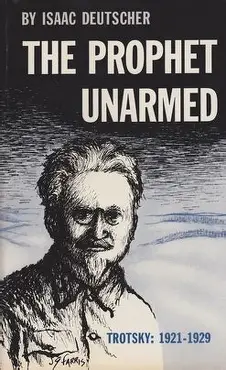
Blair went further noting in 2011 that he had read Isaac Deutscher’s classic biography of Trotsky. There is an issue with this however. Blair is known for being somewhat economical with the truth and for not being a great reader.
Starmer by contrast was in the second half of the 1980s very much associated with a variety of orthodox Trotskyism….
Starmer and Socialist Alternatives
Andy Burnham
In March 2010 he made this confession to The Independent.
This might be career-limiting to say but, as a young teenager, I was very taken in by Derek Hatton who in the early 80s seemed to be on the north-west news every night taking on Maggie.
UnHerd September 2026
Tony Blair
The nine-item list appeared in recently launched magazine We Love This Book and includes Treasure Island, The Lord of the Rings, The Crusades Through Arab Eyes and biographies of Mohammad and Jesus. On The Prophet, Blair writes:
This book may seem an odd choice for an originator of New Labour, which is about as far from Trotskyist politics on the progressive political wing as you can be, but it was, curiously, the first political book I read and the one that got me interested in politics. It is in three volumes. It was, for its time, hugely significant. In that era, the Soviet Union was supreme: Stalinism had crushed all dissent in the communist empire; Trotsky, one of Lenin’s original lieutenants in the Bolshevik revolution of 1917, was an outcast. Deutscher’s trilogy was a powerful counterblast. It described Trotsky as the true revolutionary who stood out against the cruelty and oppression with which communism came to be associated. Trotskyism and its fight with the official Soviet-style left defined student politics in the 1960s and 1970s, and no one who lived through that period can forget it. But the most interesting thing for me is the character of Trotsky that Deutscher reveals. For all his faults and inconsistencies, the range of his thinking and the energy of the creativity were remarkable. And ultimately, despite his rigid adherence to Marxism, he was moved by an impulse far more moral than scientific.
2011


Leave a comment