
Chris Wickham obituary
Historian who explored the nature of change in the creative and dynamic world that followed the fall of the Roman empire
Matthew HiltonFri 23 Oct 2026 11.29 BSTShare
Chris Wickham, who has died aged 76, transformed how we understand the millennium after the fall of the Roman empire. He did so not by focusing on religious or political elites, but on the other “85 to 95%” of the population, thus adopting the “history from below” approach.
Originally a historian of medieval Italy, Chris became known for his comparative approach and refusal to study societies in isolation from one another. But the broad syntheses for which he was celebrated were first built upwards from ordinary lives, thus placing his work alongside many other great Marxist-inspired historians.
In an essay in 1998 he showed that gossip in a 12th-century Tuscan village was not just malicious, but essential. “Talking about other people behind their backs” created an “agreed truth” among the peasantry that gave them a voice in local politics and enabled them to resist lordly power. Likewise, his 1992 book, Social Memory, written with his friend James Fentress, rejected static or passive notions of memory or concepts of a “collective unconscious”. It is individuals who do the remembering, not only on their own but by “talking about it” with others. Memories were made socially, and continuously remade, by groups – peasants, the working class, even nations – recreating usable pasts together to suit new politics and ways of life.
The books Early Medieval Italy (1981) and The Mountains and the City (1988) presented detailed social histories of rural communities and situated them within wider structures of power and the economy. From his beloved Rome, where he stayed every year, his historical imagination then stretched outwards.
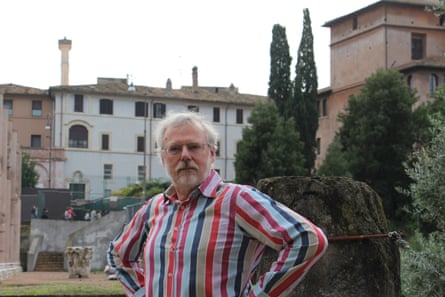
His geographical and chronological range was vast. Chris’s Mediterranean was one synonymous with Europe as a whole and included the Byzantine and Islamic worlds. At times, as with Eric Hobsbawm for the modern period, one wondered whether he had a whole team of historians working for him across multiple languages.
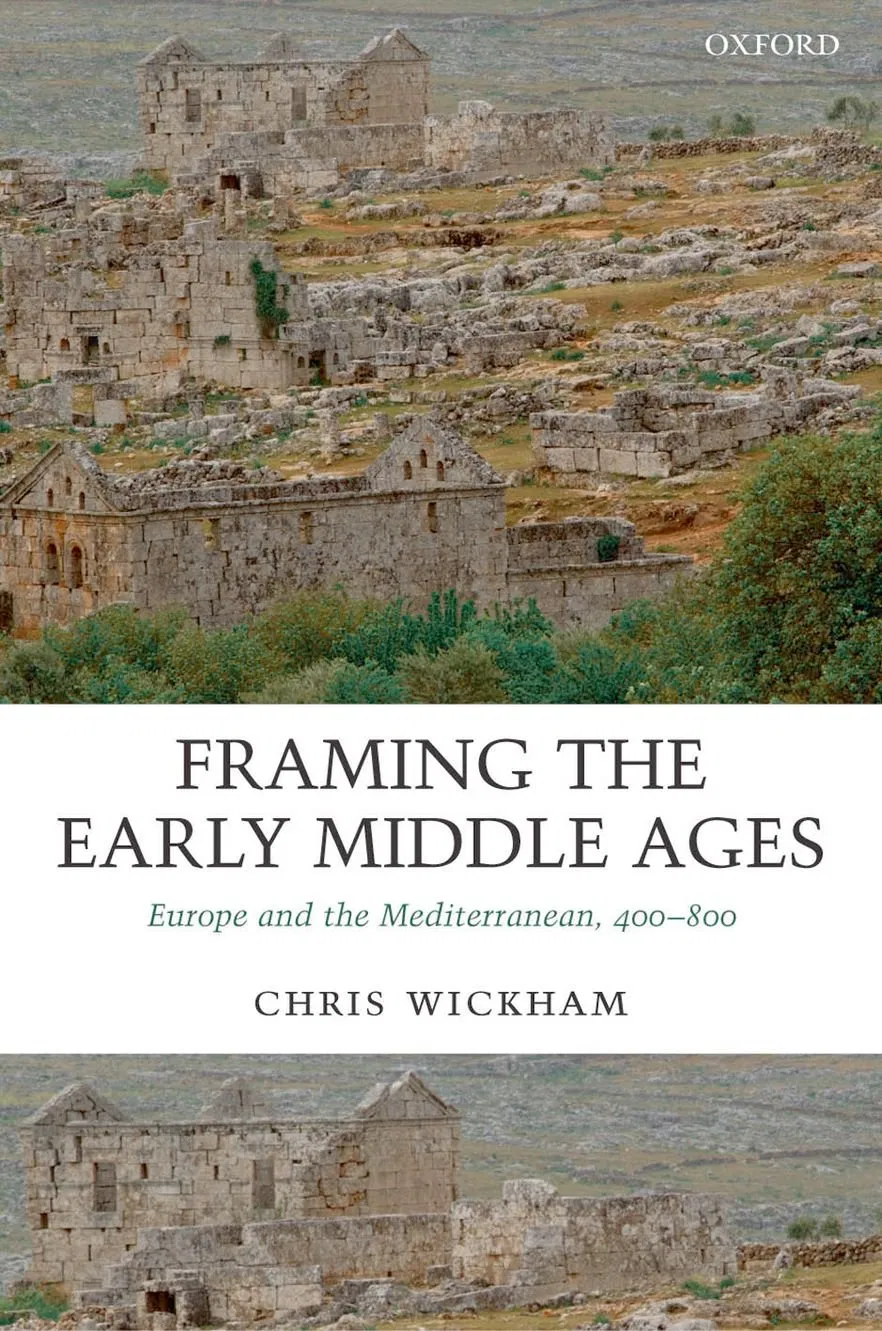
Framing the Early Middle Ages: Europe and the Mediterranean, 400-800 won the 2006 Wolfson prize for history. It fulfilled the promise of his comparative approach by presenting a bold new analysis of the nature of change after the fall of the Roman empire, for regions from Denmark to Egypt. Reviewers acknowledged it to be the most significant work of its kind for a century.
Chris argued that the Roman empire did not simply collapse into the so-called “Dark Ages”. Instead, as he showed once more in The Inheritance of Rome (2009), the world that followed the Roman empire was creative and dynamic, and for the majority of people less oppressive. That world was built by peasants and by local communities.
These themes were brought to a wider audience in Medieval Europe (2016). They also lay behind Chris’s reinterpretation of the commercial revolution of the 10th to 12th centuries in The Donkey and the Boat (2023). Local and regional trade patterns, shaped by peasant production and feudal lords, were more responsible for economic growth than the maritime luxury trade of city states.
The study of economic relations expanded his geographical range. In a 2026 paper he used the trade in pepper from Kerala between 800 and 1600 to show again that internal regional economies drove economic growth, this time across the Indian Ocean. Likewise, northern Italy was comparable with Jiangnan China because of the commonalities of their economic systems. Chris was able to demonstrate the extended feudal logic of medieval societies across Europe, Africa and Asia.
Born in Rossett, near Wrexham, on the Welsh side of the border with England, Chris was the elder son of Cyril, a patent agent, and Brenda (Moss), later a Conservative councillor. The family moved to Chalfont St Peter in Buckinghamshire and Chris obtained a scholarship to go as a boarder to Millfield school, in Somerset. He was pushed three years ahead and completed 14 O-levels by the age of 15. Then he went to Oxford University early, to Keble College, committed to becoming a medievalist.
In the early 1970s he embraced a non-doctrinaire Marxism that shaped his historical thinking (he edited Marxist History-writing for the Twenty-first Century in 2007). But ever the pragmatist, he joined the Communist party because it demanded only one night a week of his time instead of the three or four the Trotskyist Socialist Workers required.
In 1977 he went to the University of Birmingham, where he remained for three decades, progressing from lecturer to senior lecturer, reader and, in 1993, professor of early medieval history. There, at a conference in 1987, he met the Byzantine art historian Leslie Brubaker. A transatlantic relationship (and marriage in 1990) was made easier with Leslie’s appointment at Birmingham in 1994. In 2005, Chris took up the Chichele professorship of medieval history at All Souls, Oxford.
As well as writing and editing two dozen books, plus countless articles, Chris found time to serve the discipline of history. He had an extraordinary capacity for work and an ability to get things done. In life, as in history, he was fascinated by institutions. This was as true in his role as branch leader of his trade union at Birmingham as when chair of the history faculty (2009-12) and head of humanities (2015-16) at Oxford.
He was a powerful advocate for the humanities, be it from the journal he edited, Past and Present, or as a chair of one of the national bodies set up to measure the “excellence” of research in UK universities, through the British Academy (he was granted a fellowship in 1998 and awarded the Serena medal in 2014), and as head of the advisory council for the government’s research funding body for the arts and humanities. Chris’s sensible negotiations helped ensure that the drive to make the books and articles deriving from publicly funded research free to read, or “open access”, did not have the unintended consequence of destroying the commercial logic of humanities publishing in Britain. No wonder that in retirement he was parachuted into the British School in Rome in 2020 to steady and guide its demoralised staff out of a crisis arising from the Covid pandemic.
Chris was generous with his time and expertise. He was a mentor to countless medievalists, historians of all periods, and scholars in other disciplines too, especially archaeology. He listened and he heard, and made real conversation happen.
He was also tremendous fun. When Chris chaired a committee, business was brisk and light-hearted. The raising of a valid but unconstructive point was met with a trademark shrug and raised palms. Dinners were always memorable. He could talk about any subject. It seemed he had read everything and forgotten nothing. This was not just academic. His passion and knowledge of Buffy the Vampire Slayer initially came as a surprise. Eventually one gave up speculating on whether Chris’s knowledge and interests had any limit.
He died after a short illness from complications following a cancer diagnosis, and is survived by Leslie.
Christopher John Wickham, medieval historian, born 18 May 1950; died 9 October 2026


Leave a Reply