
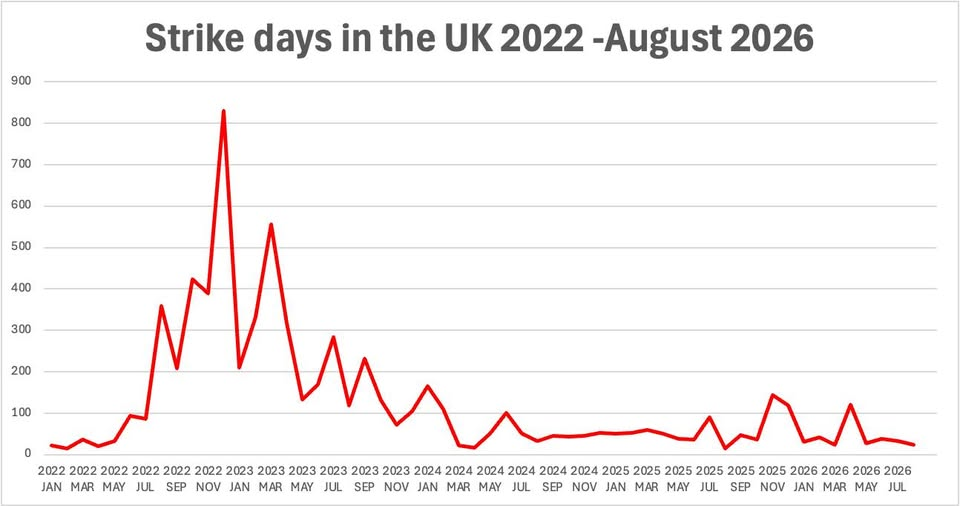
August 2026 UK strike figures out: 23,000 days not worked in 32 strikes involving 5,000 workers. Down on June and July 2026 but higher than August 2025. (from Gregor Gall on FB)
The latest figures for strike action do not, at least on the face of it, suggest a rising tide of militancy. Given the range of discontents there are (albeit some are made up- small boats) that is perhaps surprising. However digging beneath the surface suggests a more complex and interesting picture.
Starting at the top, the trade union leaderships are in general a conservative layer not predisposed to action, although they can and will do it when it fits. Most unions are preoccupied at the minute with changes to the law brought in by the Employment Relations Act. One significant area is the ability of unions to get access to unorganised areas of the workforce, often in the private sector. For example USDAW has signed a limited recognition agreement with Waitrose, which is a landmark.
These changes should increase union membership and density and in time may be reflected in strike stats.
The figures are only going to show a significant upsurge when one of the larger unions ballots for strike action and takes it. The PCS all members ballot currently underway is an example.
The fact that the figures are not on an an upward trend does not particularly reflect the level of strikes however. Local disputes- and there are many involving UCU members in Universities at the moment, won’t shift the stats dial that much. Another angle is that successful disputes raise confidence but that doesnt appear in the stats either. Unite members at the Institute of Cancer Research won pay rises significantly above inflation after prolonged action. Unite bus workers employed by Arriva across six garages in north-east London also won many of their demands after taking buses off the road for a couple of weeks.
Beyond that wider factors are important. Workplace solidarity with Palestine is significant. Indeed significant enough for the Government to rush through measures on anti-Semitism in schools. No doubt it exists, as it does across UK society, but what is really meant here is people wearing badges. Wearing a Palestine badge is not anti-Semitic. The mood of solidarity can be seen on huge demonstrations and on workplace days of action but is not yet feeding through to wider industrial militancy.
The same may well be said about two other key issues, opposing a drive to war and the fight against continued austerity.
The strike stats can suggest gloom but they can also suggest work in progress at the grassroots…


Leave a Reply