
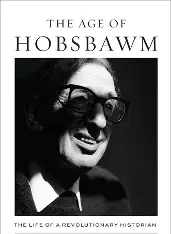
Writing biographies of socialist historians. From Eric Hobsbawm to E P Thompson
Below is a paragraph from a review of Emile Chabal’s impressive new intellectual biography of the British Marxist historian Eric Thompson.
Dworkin is right that there are comparatively few biographies of people associated with the Communist Party Historians Group. There are now studies of Christopher Hill and A L Morton and there is work on Raphael Samuel.
Of the two people mentioned below Stuart Hall while the first Editor of New Left Review was as much a sociologist as an historian. There is no biography but a good deal of writing about him.
E P Thompson is more problematic. His papers are locked up at the Bodleian Library. Some at least are replicated in a collection held at Hull which Richard Saville has worked on. His early Special Branch files to the early 1960s are at the National Archives and there is a good deal of published work although no definitive bibliography as there is with Hobsbawm (thanks to the work of Emile Chabal and others). One might equally make a case of a biography of Dorothy Thompson. Certainly both were major figures on the political new left after 1956 and significant historians too.
Of course its possible work is being done and as the convenor of the socialist history seminar at the Institute of Historical Research I am more than happy to run ‘work in progress’ papers.
A more likely British candidate to embody the age might be the historian E. P. Thompson. Like Hobsbawm, Thompson was rooted in Popular Front politics, but he left the Communist Party following the Soviet invasion of Hungary and helped found the original New Left. Hobsbawm’s labor history was widely admired, but Thompson’s The Making of the English Working Class (1963) inspired a generation of historians to write history from below. Another candidate might be Stuart Hall: never a communist but critically engaged with identity politics, he represented a younger generation and was a New Left pioneer, one of the creators of contemporary cultural studies, a supporter of the 1960s student movement, and a major analyst of racism in Britain.
What It Means to Be a Historian | Los Angeles Review of Books Dennis Dworkin


Leave a Reply