
From 1975 to the mid-1980s I lived entirely or partly in the North-East of England. In the second half of the 1970s I was student organiser for the International Socialists (now SWP) in Middlesbrough.
I was an occasional visitor to the Days of Hope bookshop in Westgate Rd in central Newcastle. I was as much drawn to the nearby statue of one of Tyneside’s most well known late nineteenth century figures, Joseph Cowen, as I was to the bookshop. Space and stock was limited but radical and socialist bookshops in the north-east did not exist in abundance. In other words pre-internet days it was the only place you might see radical papers and books.
I vaguely knew one of the original co-owners Bob Clay who became a Labour MP and came to know the author of the account of Days of Hope (below) Martin Spence quite well. Martin was an official at BECTU a union I sat on the Executive of for some years. He is the author of a very good book Capitalism comes to Penge.
Of Alan Milburn I have only vague memories. He was not then particularly well known but I would say that in his time at Days of Hope he served the left far better than anything he has done since
Days of Hope
Martin Spence
Days of Hope bookshop in Newcastle upon Tyne was part of an upsurge in
‘radical’ publishing and bookselling in the 1970s and 1980s. This upsurge
had several distinct currents: alternative, environmental, socialist feminist,
radical feminist, anarchist, Marxist. Within this mix, Days of Hope was always
clear about its own identity: it was a socialist bookshop, and it emerged from
a socialist project.
That project was Tyneside Socialist Centre. The Socialist Centre was
established around 1975 partly as a network and forum for the left on
Tyneside; but also with an ambition to acquire and run a city-centre
building, a ‘People’s Palace’, to act as a meeting place, organising focus,
and social centre for the left and labour movement. Leading Socialist
Centre members included Bob Clay, trade union convenor on Sunderland’s
buses; Andy McSmith, journalist on the Newcastle Journal; Jim Murray,
trade union convenor at Vickers Elswick engineering works; and Hilary
Wainwright, an academic at Durham University.
Inevitably some held themselves aloof from this project, notably the
Communist Party of Great Britain which had its own bookshop and
premises in Newcastle. But participants included many on the Labour Left;
trade union activists; socialist feminists; and some Trotskyists including
members of the International Marxist Group (IMG) and Socialist Workers
Party (SWP). At any time this would have been a sufficiently broad
constituency to generate fierce debate and disagreement. But this was the
period of minority Labour Government, with Healey’s infamous resort to
the IMF, campaigns against the first welfare spending cuts, and a rising tide
of industrial disputes culminating in the so-called ‘Winter of Discontent’.
So there was perhaps an added edge to the left’s debates in the late 1970s.
The Socialist Centre took out a lease on a shop in an area called Cradlewell,
in the prosperous suburb of Jesmond, about a mile outside Newcastle city
centre. In addition to the shop space this building had a large back-room
suitable for meetings, and for a while this became the de facto Socialist
Centre, although it was never envisaged as realising the full ambition. In
the shop space a socialist bookshop was established, Cradlewell Books.
Despite this suburban location, the Cradlewell building became sufficiently
well-known as a left-wing haunt to attract the attention of the local fascists,
and it suffered a firebomb attack. Some stock was damaged but no-one was
hurt.
In 1978 a small shop became available at a more central site in Westgate
Road, just outside Newcastle’s main shopping area. It had been the
8
Radical Bookselling History – Newsletter Issue 2 – April 2021
booking-office of the former Tyne Theatre, later a Stoll Picture House, now
being refurbished as the New Tyne Theatre. There was room for a small
bookshop, but no meeting space.
This provoked a new round of furious discussions. Some argued that a
city-centre bookshop could fly the flag for the Socialist Centre and serve
as a step towards the ultimate goal. Others argued that on the contrary, the
bookshop itself would soon absorb everyone’s energy, and wider ambitions
would be forgotten. And once the decision was taken to move to the new site,
an argument erupted about its staffing, and the titles it should stock. In the
end it was agreed that the shop’s workers should be properly employed and
paid the rate for the job, as laid down by the Wages Council and endorsed
by the shopworkers’ union – the fact that there was a debate about this is in
itself an interesting reflection on the times. Regarding stock, it was agreed
that all the various factions and currents of opinion in the Socialist Centre
should submit a list of ‘essential titles’.
Given that the new bookshop was no longer at Cradlewell, it needed a new
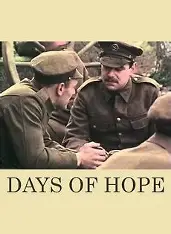
name, and the choice was inspired by a recent Ken Loach TV series: Days
of Hope. Perhaps inevitably, some played word-games with the new name
and referred to the shop as ‘Haze of Dope’. But the joke palled – not least
because the atmosphere of the place, far from being druggy and alternative,
was rather puritanical and driven. Legally, it was still a limited company
whose directors were leading members of the Socialist Centre.
The first two workers employed to run Days of Hope – one a member of the
IMG, the other a member of the SWP – had a difficult working relationship
with each other, and with the Socialist Centre directors. In early 1979 there
was a change of personnel, to one full-time worker – Martin Spence, a local
anti-nuclear activist – and two part-timers. Neither of the part-timers lasted
long, and from the autumn of 1979 the shop had two full-time workers,
Andy McSmith and Martin Spence. Socialist Centre members Bob Clay
and Ted Mason were also closely involved in financial management, and
these four made up the committee which ran the shop day-to-day.
Both sides in the earlier debate, about the wisdom of moving the bookshop
to Westgate Road, could claim to have been proved right. Days of Hope was
seen as a Socialist Centre initiative, and represented its practical presence
in the city centre. But it was also true that simply keeping the bookshop
going came to absorb much of the energy of Socialist Centre members.
A Bookshop Support Group was established, and members made regular
donations to subsidise the workers’ wages, and organised fund-raisers.
9
Radical Bookselling History – Newsletter Issue 2 – April 2021
Uta Clay, Bob Clay’s partner, did a formidable job cajoling and persuading
members to take turns on a volunteer rota, sitting on the till to free up
the paid workers to focus on other tasks. But despite all this energy going
into the bookshop, as late as the autumn of 1981 the Socialist Centre
was still capable of organising major political interventions; in October
several hundred attended a public meeting with speakers from the Polish
independent union Solidarnosc, jointly organised by the Socialist Centre and
the Vickers Elswick Shop Stewards Committee.
Meanwhile back in the bookshop, it was clear from the start that passing
trade and purchases by loyal customers would never be enough to keep the
place open. So supportive academics, especially at Newcastle University
and Newcastle Polytechnic (as was), were persuaded to keep the bookshop
informed of their key texts, and to point their students to the bookshop
as the best place to buy them – even, in some cases, taking books to the
students and selling them in the classroom on the bookshop’s behalf. Efforts
were made to break into library supply, with some success. Local Labour
Parties and trade union branches were encouraged to order bookstalls for
their meetings. And from 1980, Days of Hope acted as a key resource for the
peace movement on Tyneside, providing literature, badges and campaign
materials; serving as an information exchange; and becoming a ticket office
for buses and trains to rallies and meetings.
These were also the most brutal years of the war in Ireland, and the
bookshop acted as an outlet in North-east England – perhaps the only such
outlet – selling Irish republican literature, including the Provisional Sinn
Fein weekly paper An Phoblacht. This provoked occasional nuisance visits
from the local National Front, and on one occasion a death-threat against
one of the workers. But Days of Hope never suffered the violent attacks
experienced by some other radical bookshops.
At various times there were serious discussions about moving Days of Hope
to other premises, in search of more space and/or a more central location.
But on each occasion, once the numbers were crunched, it became evident
that the shop was stuck in a vicious circle. The only way it could improve
trade was by moving, but its current trading situation was so precarious
that it couldn’t afford to move. Throughout its history, Days of Hope lived
from hand to mouth, unable to generate a sufficient surplus to move on to
bigger or better things.
It did however change its legal status. A debate began in 1981 about
converting the bookshop into a co-op, but there were different views about
10
Radical Bookselling History – Newsletter Issue 2 – April 2021
the most appropriate form. Some felt that the bookshop was in practice run
by a small committed group, and that this reality would be best reflected by
a straightforward workers’ co-op. Others felt this would exclude the wider
network of volunteers and supporters, and favoured a ‘multi-stakeholder’
or ‘regional’ model which would give them a formal stake in the project. The
discussion was at times bitter, and continued through 1982, until eventually
the second option was adopted. Days of Hope was established as a regional
co-op early in 1983. A fair number of Socialist Centre supporters became
members, plus others who had never been in the Socialist Centre but felt a
connection with the bookshop.
By this time some key participants had changed. In 1982 Bob Clay was
selected as the Labour candidate for Sunderland North. He resigned
from the bookshop management committee to concentrate on Party work,
and was elected to Parliament in 1983. Andy McSmith had also moved
on by this time to work in the Labour Party press office in London. He
was replaced by Alan Milburn, a local Labour Party and peace movement
activist, who now worked alongside Martin Spence.
1984 brought more changes. The year started well with good sales in the
early months; the beginning of the Miners’ Strike, with its new mood of
political urgency, perhaps contributed to this. Yet again, discussion turned
to the possibility of moving to better premises, but yet again, once a detailed
analysis was done, it was clear that a move wasn’t affordable. Then, during
the summer of 1984 both the shop’s workers left to take up other jobs,
Spence to Trade Films in Gateshead, and Milburn to the Trade Union
Studies Information Unit in Newcastle.
Two new workers were recruited, Steve Peel and Jan Ligema, and for a
while sales held up. But from early 1985 they declined, and in April the New
Tyne Theatre warned that in the not-too-distant future it would be giving
notice to terminate the shop’s lease. It offered alternative accommodation
in Thornton Street, just around the corner, but in premises which were
entirely unsuitable. The shop limped on, but as ever its precarious financial
situation meant that it didn’t have the resources to fund an independent
rescue plan.
In early 1986 Days of Hope had to vacate the premises in Westgate Road.
For lack of any alternative, stock was moved to Thornton Street, but by
now the shop’s accountant was insisting that the only responsible thing to
do was to cease trading. Faced with little choice, the co-op’s members voted
for closure. Days of Hope formally ceased trading on 28th June 1986.


Leave a Reply