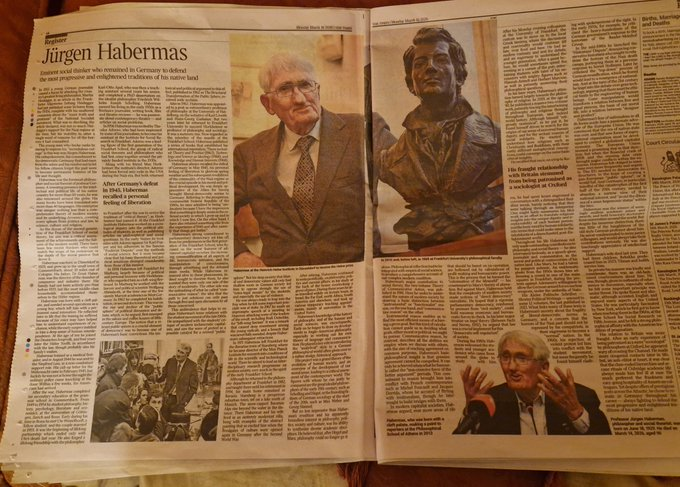
The Times Obituary of Jurgen Habermas who has died at 95 is notable for several reason.
Habermas over the decades had a number of pieces in New Left Review and was the leading figure in the Frankfurt School of Critical Theory, associated with Adorno, Marcuse and others. Normally The Times adds a line or two of snark to figures of the left but it doesn’t do that here.
Its view that Habermas stands comparison with Hegel seems questionable if only because it might be queried how such a comparison could be made. It is also noticeably silent about Habermas’s enthusiasm for the Israeli Government, although that is not an issue for The Times
Habermas is known for a range of theories and expositions some of which are covered in the obit. His work on the eighteenth century public sphere, where democratic discussion, as he saw it flourished, and its absence in recent times remains in my view of interest.
E P Thompson who saw the Frankfurt School as one with a broader Western Marxism and even Althusser was critical.
He noted in the Poverty of Theory an emphasis on ideological domination ‘which destroys every space for the initiative or creativity of the mass of the people- a domination from which only the enlightened minority of intellectuals can struggle free.
Thompson argued this led to the ‘intellectual’s disinclination to extend himself in practical political activity’
Habermas did make political interventions mostly until recent times on the left but was not associated with political organisation
Maynooth academic Peter Coles shaves Colum Eastwood to win 2026 Beard of Ireland vote
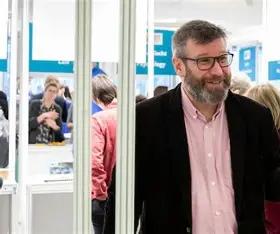
The Beard Liberation Front, the informal network of beard wearers, has said that competition for the Irish Beard of the Year 2026 bristled and an on-line vote saw Professor of Theoretical Physics at the University of Ireland, Maynooth, Peter Coles reclaim the title he first won in 2020
Professor Coles won 49.2% of the vote with Colum Eastwood second on 20.3%
The 2017 winner was politician Colum Eastwood who bearded broadcaster William Crawley for the annual Award.
In 2018 the DUP’s Lee Reynolds shaved writer Dominic O’Reilly for the honour with Colum Eastwood in a steady third place.
In 2019 Lee Reynolds retained the title
The 2020 winner was Maynooth academic Peter Coles
In 2021 Aodhan Connolly shaved opponents to win the coveted title and he retained it in 2022 2023 and 2024
In 2025 politician Gerry Carroll won the vote
The BLF says that while traditionally a land of predominantly clean-shaven cultures, Ireland has in recent times become something of a centre for stylish and trendy beards.
Contenders for the title in 2026 include a diverse range of the hirsute- an academic, political activist, a broadcaster, a TV pundit
The campaigners say the poll is specifically about the impact the beard of an individual has made in Irish public life and no other factor.
BLF Organiser Keith Flett said, we congratulate Peter Coles on regaining the title he first won in 2020. Clearly his beard has staying power.
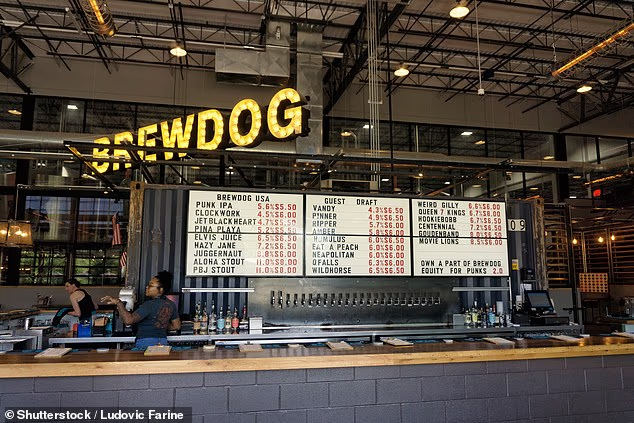
When Tilray the US medical cannabis outfit brought Brewdog on March 2nd, Lords Cricket Ground exercised a clause in their contract that allowed them to exit if there was a change of ownership.
That left Lords with a tight timescale to find a new beer provider for the 20,000 plus seater cricket ground with the first County Championship games due to start at Easter.
Thanks to George Mann @sfgmann.bsky.social (who it appears may still have to suffer Brewdog at the London Stadium) I note from a report in the Daily Mail that the contract for a new beer provider is now out. I think we may take it, unsurprisingly, that the Mail has a contact at Lords…
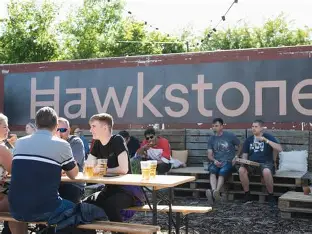
The three named contenders are Carlsberg-Britvic, Heineken and Hawkstone.
Of three Carlsberg do brew cask beer (although they seem to have little interest in doing so) and it might well be that is successful bid would see Lords revert to selling Marstons. Heineken are not really in the beer market except they do own Beavertown, whose brewery at Ponders End could no doubt easily supply Lords. Even in their independent days Beavertown didn’t do cask although their long gone smoked porter Smog Rocket did occasionally make unannounced cask appearances.
Hawkstone is also a lager brewery although they do produce a 3.8% IPA. They are mainly known due to their link with Jeremy Clarkson but fortunately he has absolutely nothing to do with the brewing. In fact they produce decent beers.
After Brewdog, Lords might want to consider the issue of reputational damage. Both Carlsberg-Britvic and Heineken do this as BAU, closing breweries, reducing the strength of beer, hiking prices etc etc. However with Corporate Big Beer its factored in, no one expects any different.
The issue with Hawkstone is not the brewery but Clarkson and his speak first think afterwards policy. The first ever women’s Test Match at Lords is scheduled for the summer. Lords would be well advised to hire a minder for Clarkson for this period.
Tilray who bought Brewdog’s UK operation for £33m on March 2nd (minus 38 pubs and 488 workers) has announced it has now acquired Brewdog’s US operations for an undisclosed sum. Earlier it also took over Brewdog Australia.
Brewdog’s German brewery and bars have closed but there remain a number of franchised Brewdog bars around the globe whose future remains unclear.
Lords Cricket Ground operated a break clause in its contract with Brewdog last week but there has been no news on the situation at West Ham’s London Stadium which also has a Brewdog contract
Brewdog is now just another corporate craft beer brand and operation. Perhaps the major UK issue is whether it will manage to keep Punk IPA on the bars of 800 Wetherspoons pubs, by far its largest UK draught outlet.
The French electoral system is different to the UK and so are French politics. However there is still left and right and while the National Rally does not equate exactly to Reform the far right politics are similar.
The first round of the Mayoral Elections took place on 15th March. All candidates who got above 10% can go to a second and final round on March 22nd. However any candidate who got over 50% on Sunday was elected.
The far right advanced further although the second round of voting will confirm how far. The left, France Unbowed, also polled well in some places and may win some Mayoral positions in larger cities.
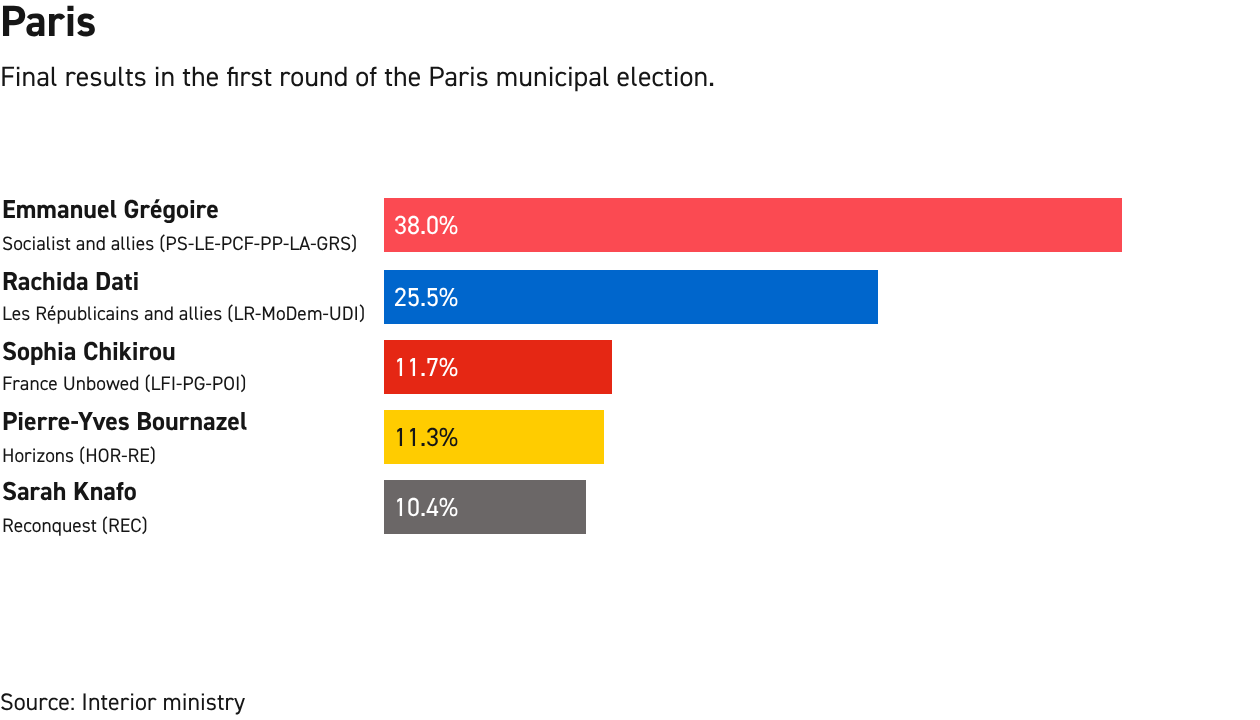
The Paris result above is a typical but still underlines a political dilemma for the left.
The Socialists have run Paris for 25 years and the candidate, also backed by the Communist Party and the Greens looks well placed to win on March 22nd. The far right don’t do well in Paris but their candidate here Knafo still got over 10%. If this vote combined with the centre right Horizons and the main stream right Republicans the Socialist might be defeated.
However if the Socialists worked with France Unbowed that would be less likely. Here there are issues. As in the UK the centre-left is not keen on working with the left (but this varies from place to place). France Unbowed is promoting a policy for March 22nd of the Republican or anti-fascist front to stop the FN. There are questions. Firstly if as is mostly the case the Socialist candidate is in the lead, the more left candidate standing down means the centre-left is winning and more radical ideas are off the agenda. That doesn’t help to fight the FN in the longer run. Secondly where France Unbowed is in the lead, will the Socialist stand down for them? We ‘ll know on 17th March when these decisions have to be made.
There is another important point. On 14th March 100,000 marched against fascism in Paris with smaller but still good sized marches around France. Fascists have been stepping up physical attacks on left wing events and activists. A crucial part of fascist politics is to control the streets. The protests aim at stopping that.
When it comes to anti-fascist electoral fronts and left candidates standing down in that context the issue is whether that helps the broader fight against fascism or not.
These of course are for the movement in France but they have strong echoes in the UK with the March 28th Together Alliance march against racism and then local elections on May 7th
As the Campaign for Real Ale(CAMRA) reaches 55 can it still curb Big Beer 2026 style?
CAMRA is 55 years old in March 16th.
That is quite an achievement for a voluntary campaign. It implies at least renewal through several generations of activists, something which is often hard to achieve.
It now has around 150,000 members and most will be active at least in the sense of promoting CAMRA’s raison d’etre, the production and drinking of good beer.
It is not a party political organisation or, in the main, a campaign that takes capital ‘P’ political decisions. After all drinkers of decent beer come with all kinds of opinions and none. It’s not about the opinions it’s about the beer.
All that said of course there are politics. That can’t be avoided for any campaign that operates in a capitalist market economy.
It’d be fair to say, that CAMRA is neither pro or anti-capitalist as such but strongly in favour of a moral economy of beer. That is a society where brewers and publicans can make a fair profit but the quality, price and supply of beer are much influenced by ordinary drinkers.
When CAMRA started the outlook for beer and pubs was poor indeed. More so arguably even than this last pandemic hit period.
There had been a long process, much accelerated from the 1950s, of brewery consolidation. That meant takeovers and closures. By the early 1970s beer in Britain was very largely controlled by what was known as the Big Six. Giant brewing concerns such as Courage, Watneys and Whitbread. Since the breweries also owned most of the pubs that meant a significant restriction of choice for the drinker at the bar.
To put it in perspective, in 2026 London has around 100 independent breweries. 55 years ago there were just two- Fullers and Youngs.
There was also the question of the beer the Big Six were producing.
With the consolidation big brewing operations brought , cost reduction was looked for. That meant a move away from traditional cask beer to pasteurised keg beer. It was much easier to transport and keep in the pub without cellaring skills. One problem was that for many beer drinkers this cold, fizzy beer, served under gas pressure, was either tasteless or worse had a distinctly unpleasant taste. A related problem was often that as breweries owned the pubs there was little escape from keg.
The beer writer Richard Boston wrote in his 1970s Guardian column of areas of East Anglia where if you didn’t want the Watneys Red Barrel served in one pub you could always try another. The problem was that also sold Watneys.
There was a lot for CAMRA to oppose and that meant it had no choice but to confront the Big Six- known as Big Beer.
That meant a range of campaigning tactics, taking into account that it was 55 years ago, largely an organisation of younger activists. The Big Six were lampooned. Watneys became Grotnys and Whitbread Twitbread. Pubs were boycotted and those that sold traditional cask ale promoted. The first Good Beer Guide to CAMRA approved pubs appeared in 1974.
At the same time campaigning pressure was exerted on the Big Six to draw back from keg and start selling cask beer again.
Over time this campaigning pressure worked. Allied breweries were first producing a cask Burton Ale from 1976. Even Watneys finally gave in and brewed Fined Bitter real ale.
CAMRA pressure on large companies had its impact. They had to change their strategies and plans
Capital constantly revolutionises itself, or tries to, however and no battle against it within its framework is ever definitively won.
The Big Six had to return to cask beer and more pubs now sold it. But the choice remained very limited. In early Good Beer Guides, symbols were used to show the range of beer available. To stretch beyond a mild, an ordinary and best or special bitter was unusual.
Beer from the remaining independent breweries- around 100 of them- was very hard to come by outside of their own local area.
CAMRA’s focus shifted to an extent to lobbying for changes in the law, under a Tory Government. No easy matter clearly but it was achieved. The Beer Orders restricted the number of a pubs a brewery could own. That meant pubs were sold and saw the rise of pub companies. At the same time there was legal provision for a guest beer to be sold in pubs which were tied to particular breweries.
Again it was a pursuit of the moral economy strategy of CAMRA. Not ending the control of capital but tempering it in the interests of drinkers.
Capital has not stood still since.
If the first wave of Big Beer had been successfully grappled with by CAMRA, a new wave appeared that posed significant new challenges.
If you want a pint of Courage Best or Whitbread Bitter you won’t find one in 2026. The Big Six companies that once dominated British brewing are long gone. Even the classic and benchmark pale ale, Bass, became hard to come by but thankfully is on its way bacl. Its recent history however summarises well where Big Beer has now gone.
The Bass brewery in Burton is owned by Molson Coors, a US/Canadian brewing giant. The actual beer however is owned by another huge brewing operation ABInBev. It is based in Belgium but has significant interests across the world in Latin America and South Africa for example. However it contracted out the brewing of the beer to Marstons, now another big beer company Carlsberg.
Grappling with UK brewers as CAMRA did successfully in the 1970s and 1980s is one thing. Trying to take on global brands is a rather different matter.
The focus shifted to some extent to supporting those larger regional to national brewers that remained UK owned- albeit often supporters of the Tory Party. This was more of an argument about what kind of capitalism rather than the specific nature of capital.
However Big Beer has marched on here as well. As well as Marstons, Fullers brewing operations were brought by Japanese brewer Asahi and Greene King is now owned by a Hong Kong businessman. Nor did it stop there. Some of the larger craft brewers whose backgrounds had rested on the idea of independence from Big Beer have ended up being swallowed by it. Heineken has a 49% stake in Beavertown while ABInBev owns Camden. Finally in 2026 what was left of Brewdog was sold to US medical cannabis outfit Tilray.
This is not a counsel of despair. CAMRA remains a large organisation with the capacity to campaign and influence. It’s clear though that on its 55th birthday the original model- even with later tweaks- of promoting a moral economy of beer, not anti-capitalist but for a constraining influence on it needs to be re-worked.
Some broad parameters and perhaps campaigning choices can be seen now.
Firstly CAMRA could do more to combat Big Beer on a global basis. Consumer organisations around beer, like CAMRA, exist in a number of European countries and the US. There are long standing links and these could be developed and mobilised further. That is to an extent easier now global communication can be effected around apps like Zoom. The trade union and peace movements, to name two example, have been co-ordinating activity across the world for a while.
Secondly CAMRA could look to build on its original campaigning focus. The revitalisation project it ran a several years ago, focused a good deal on that. The campaign is very good at lobbying MPs and Government and promoting legislative changes (or opposing them) but the protests of the 1970s about brewery closures or takeovers are now rare. To some extent this relates to an ageing membership- something that impacts many social movements. However with the rise in recent times of movements like Black Lives Matter and Extinction Rebellion, it’s clear that the mood to protest which was there in the early days of CAMRA is back again.
In practice both of these could be done, but a lot does depend on managing to engage and mobilise younger drinkers in a way CAMRA did so successfully 55 years ago.
For a social movement to endure and remain active for over 50 years is historically unusual. Often activists are co-opted into related activities or simply drift away. If CAMRA can keep addressing issues in the current day and grapple with both Big Beer and engage with the newer wave of independent breweries there is no reason why at 55 an effective campaigning future can’t be secured.
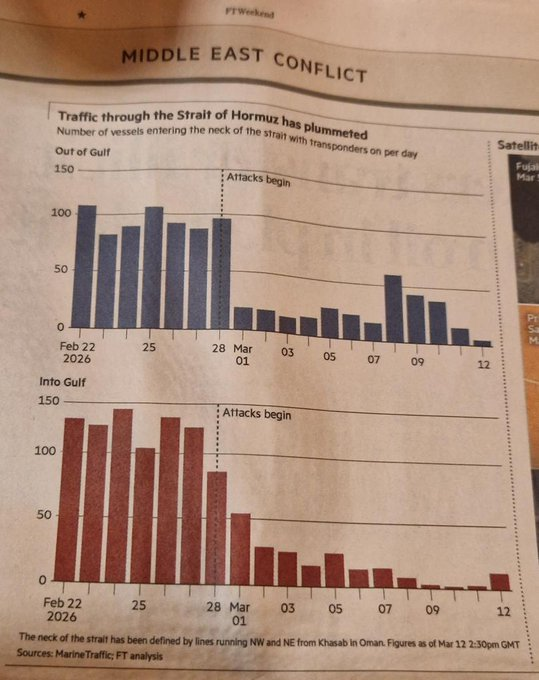
The FT’s headline for the above graphic was ‘Tehran surpasses expectations with scale of counter attack’
Trump clearly thought the war with Iran would cause regime change in short order and did not plan for a longer conflict (Tehran did). In particular as Trump’s efforts to engage other countries to act to protect the passage of oil through the Strait of Hormuz underlines he had no contingency for what should have been understood as an obvious Tehran strategy.
None of this means that the US and Israel won’t ultimately succeed in getting some kind of ill defined change in Tehran. It does meant that the global impact, at best perceived dimly by Trump, is significant
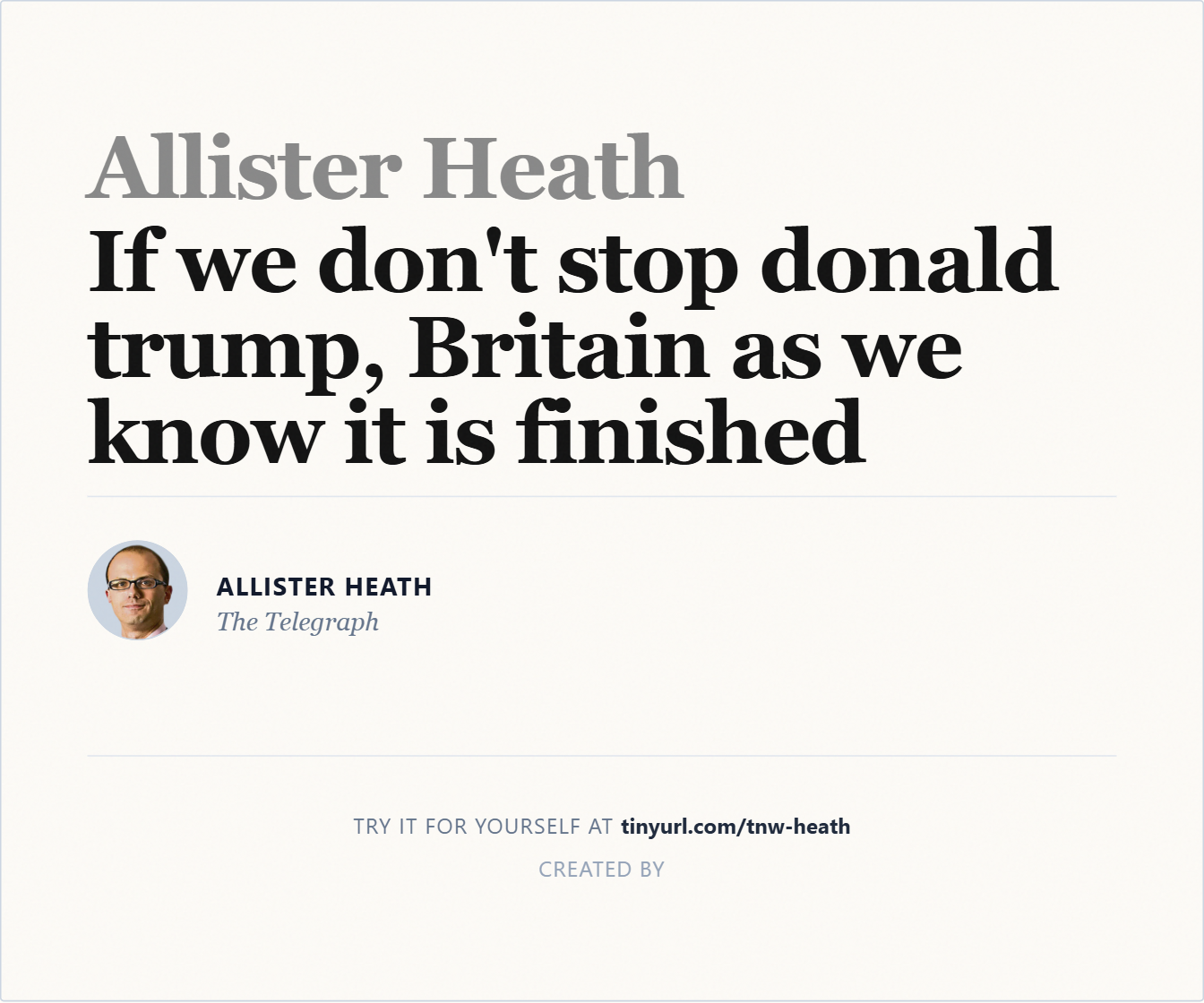
This is perhaps one of the more unlikely results of the New World’s Allister Heath (Editor, Sunday Telegraph) random headline generator in the sense that it’s true and that is one commodity Allister does not deal in
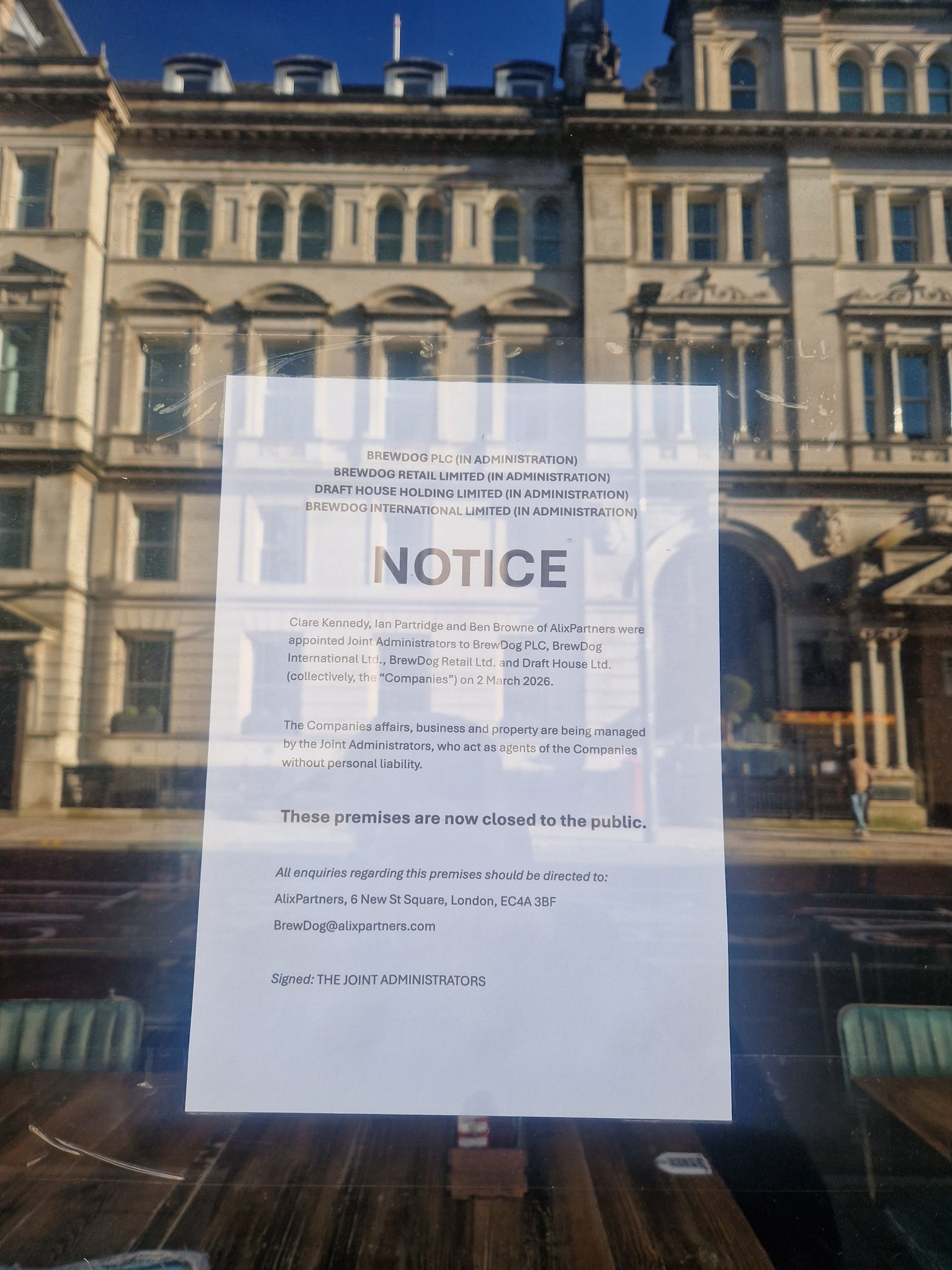
I took this picture as I passed Cardiff Brewdog a few days ago (its immediately over the road from the Principality Stadium in central Cardiff where Wales beat Italy on Saturday).
Its one of 38 bars closed at the start of March with nearly 500 job losses as Brewdog went into administration and was bought by US medical cannabis outfit Tilray.
Given that Brewdog always wanted to float on the Stock Exchange there is irony in the fact that the Administrators City of London offices are but a few minutes walk from the London Stock Exchange in Paternoster Square.
That lunch was at a pub in Leadenhall Market and Simpson in the City of London.
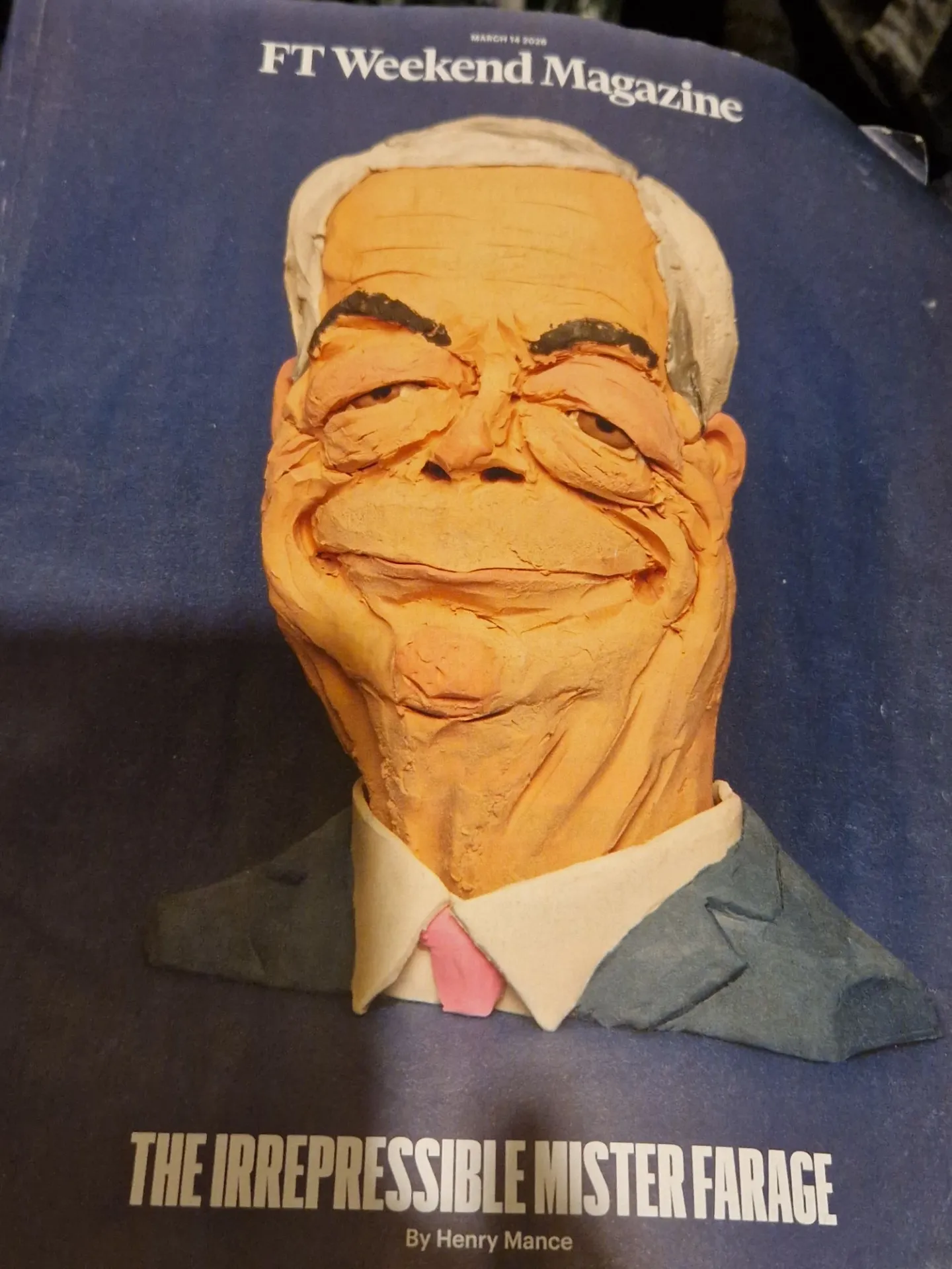
For the 2026 lunch Farage was at his favourite restaurant Boisdale which is in Pimilico
Strictly speaking what the FT published is an interview with Farage over lunch (14th March) so unlike in 2016 we don’t get full details of what was eaten (drinking is another matter) but enough to get a flavour.
The lunch starts with Farage on Boisdale’s smoking terrace having back to back cigarettes and a gin and tonic.
Back in a private room at Boisdale glasses of sauvignon blanc are ordered, glass rather than a bottle ‘because its Lent’ Farage notes and then a bottle of claret.
Mance notes ‘they say Farage drinks less than he used to. They say a lot of things’
For his main Farage orders a venison pie ‘with a token side order of vegetables’. Farage complains he can’t eat spinach
As the meal draws to a close Mance thinks surely Farage won’t want more alcohol (echoes of their 2016 lunch) but he orders another bottle of claret.
Not quite a Farage Proper Fucking Lunch PFL on the food side it appears but still going strong on the G&Ts and wine. Mance remembers that in 2016 Farage said he had given up drinking port and then drank a lot of it. At least, Lent notwithstanding, Farage is consistent in that.


 Kmflett's Blog