Articles

Beard of Spring poll knotted as Harry Kane & Christopher Wylie tie

In Uncategorized on March 30, 2018 by kmflett

Beard Liberation Front

30th March

Contact Keith Flett 07803 167266

The Beard Liberation Front the informal network of beard wearers has said that the poll for Beard of Spring has ended in tie with footballer Harry Kane and Cambridge Analytica whistleblower Christooher Wylie knotted on 36% each.

There was also a tie for second place between footballer Mohamed Salah and Prince Harry.

The campaigners say that the absence of Spring like weather did hit the poll with little incentive to grow new season’s beards.

BLF Organiser Keith Flett, in 2017 the Beard,Shorts and Sandals pre-season was well underway at Easter whereas this year with snow forecast its indefinitely delayed. Even so congratulations to Messrs Kane and Wylie and good luck with unknotting the beards

Articles

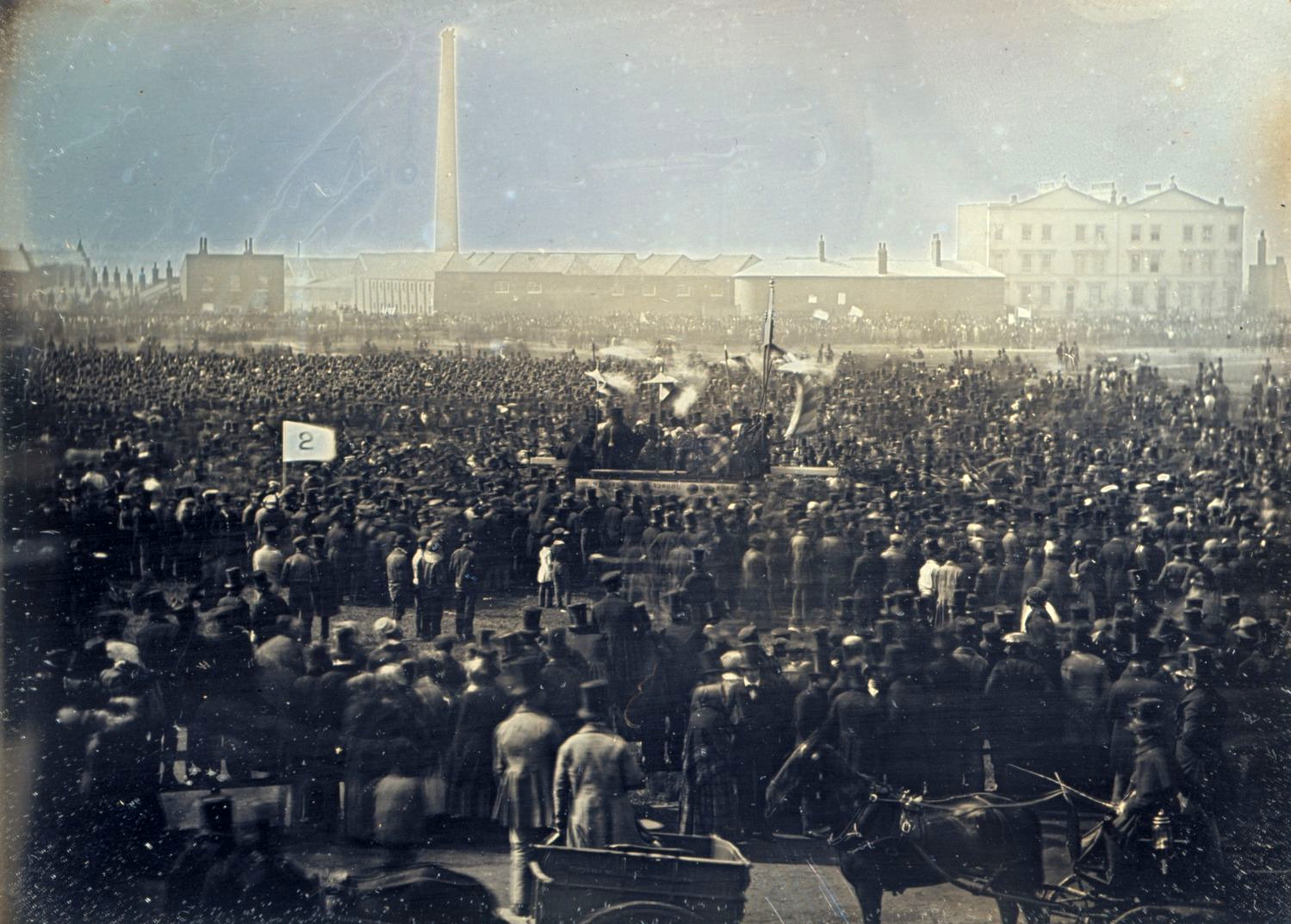
Chartists on Kennington Common 10th April 1848. How will they be remembered 170 years on?

In Uncategorized on March 30, 2018 by kmflett

You might think that the Chartist demonstration on Monday 10th April 1848 wont be much recalled on its 170th anniversary.

I suspect it will. Firstly because there is a very well known photograph of it, unique for the time. Secondly because the right like to underline that it proves that in 1848, the year of revolutions, there was and could be no such thing in Britain. That’s wrong not least because it ignores the ‘glorious revolution’ of 1688.

I checked a piece which marked the 150th anniversary in 1998 by Richard Cavendish (History Today April 1998) which rather makes the point above.

According to Cavendish 10th April was the ‘death-knell’ of Chartism (it wasnt, it went on until the late 1850s). He goes on to argue that the new railways meant people from all over the country attended. They didnt, it was a London demonstration.

He argues it was a ‘damp squib’ taking the size from the lowest official figures of the time as  20-25000. David Goodway’s book on London Chartism makes a convincing case for it being over 100,000 strong.

Cavendish suggests that the ‘crowd on Kennington Common melted damply away in the rain’ and by 2pm it was over. The rain didnt help but this is wrong again. Fighting with police and soldiers on the south sidd of Blackfriars Bridge continued into the afternoon.

Finally Cavendish notes that the Chartist petition for the vote had ‘only’ 2 million signatures on it.

So Cavendish tells us Chartism was dead and within 4 years O’Connor was certifiably insane. This was not by the way the result of spending a Monday in South London but because he had syphilis.

The above indicates that there will be much work required to make sure the 170th anniversary of 1848 is properly remembered.

Articles

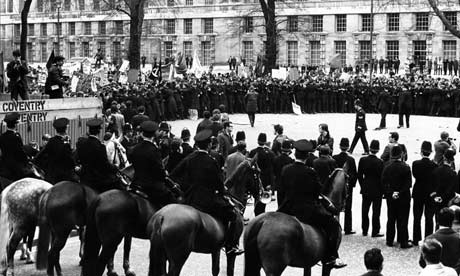
Prince Philip on 17th March 1968 Grosvenor Sq anti-Vietnam War demo: ‘licence to breath’

In Uncategorized on March 29, 2018 by kmflett

n

Researching media coverage of the 17th March 68 anti-Vietnam War protest in Grosvenor Sq I came across an interesting historical by-way in the Daily Telegraph (March 68).

A TV review by the wonderfully named L Marsland Gander reports that the Prince appeared on ITV’s Face the Press programme and was questioned about Grosvenor Sq.

He began by noting that it wouldn’t have happened in World War Two but went on to suggest that ‘we live in the most regimented society that has ever existed’ and that you have to have a ‘licence to breath’.

A particularly Royal way of defending the right to protest perhaps

Articles

Campaigners warn on ‘excessive enthusiasm’ for Maundy Thursday traditions

In Uncategorized on March 28, 2018 by kmflett

Beard Liberation Front

29th March

Contact Keith Flett 07803 167266

Hirsute Campaigners warn on ‘excessive enthusiasm’ for Maundy Thursday traditions

The Beard Liberation Front, the informal network of beard wearers, which campaigns against beardism, irrational prejudice against the hirsute, has warned against excessive enthusiasm for Maundy Thursday traditions.

The campaigners say that while the day before Good Friday is traditionally associated with the distribution of the Maundy Money and the washing of feet it is also known as Shear Thursday.

This refers to those who had given up shaving for Lent, cutting off their beards as the period of abstinence ended.

The BLF says that while there is no objection to trimming and styling an organic Lenten beard on Maundy Thursday shaving it entirely suggests excessive enthusiasm and is to be avoided.

BLF organiser Keith Flett said, Spring is a time of growth and as we announce the winner of the Beard of Spring poll on Easter Saturday, Maundy Thursday is not the time for beard shaving

Articles

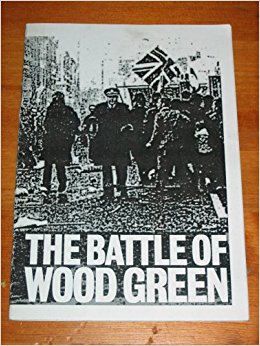
Jeremy Corbyn’s long history of fighting fascism: The Battle of Wood Green 23rd April 1977

In Uncategorized on March 28, 2018 by kmflett

Jeremy Corbyn’s record in opposing fascism, racism & anti-Semitism
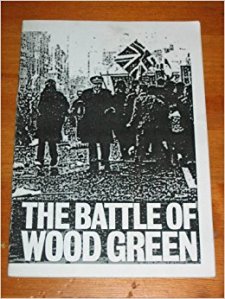
The 2007 flyer*

30 YEARS ON:

THE BATTLE OF WOOD GREEN

On Saturday 23 April 1977, a 1200 – strong National Front march through Wood Green was opposed by some 3000 anti-racists, including  delegations from Haringey Labour Party, trade unionists, the Indian Workers’ Association, local West Indians, members of Rock Against Racism and the Socialist Workers Party.

 A contingent composed of more radical elements in the crowd subjected the NF column to a barrage of smoke bombs, eggs, rotten fruit and worse. The National Front march was broken in Wood Green High Road roughly outside Marks and Spencer. The remainder straggled on, with a heavy police presence, to a rally in Arnos Park. Eighty- one people were arrested, including seventy-four anti-fascists

To mark the 30th anniversary of the event Haringey TUC is organising a short meeting on Ducketts Common at 1pm on Saturday 21st April 2007, the precise moment when the fascists began their ill fated march.

There will be speakers from those who organised the original counter-protest, together with a representative from Unite Against Fascism to remind us that the problem of fascism in British politics remains today. Also speaking wil be

JEREMY CORBYN MP        LYNNE FEATHERSTONE MP

The event will celebrate the best of Haringey, when the local community, black and white, gay and straight, faith groups and atheists, socialists and Tories united to oppose fascism.

SATURDAY 21ST APRIL 2007, 1PM DUCKETTS COMMON

__________________________________________________________________________________

For those who may have glanced at the 1st April 2018 issue of Rupert Murdoch’s Sunday Times, the post below details of one episode in the history of Jeremy Corbyn actively fighting racism and fascism

We have heard a lot from some in recent days about how Jeremy Corbyn overlooks anti-Semitism or excuses it. Yet when one looks at many of those making such points there appears to be an absence of actual active opposition to those who both hold such views in Britain and act on them.

That is not something that can be said about Mr Corbyn.

On 23rd April 1977 the National Front decided to march from Ducketts Common by Turnpike Lane tube in North London down a busy London High Road packed with Saturday afternoon shoppers. There were several thousand fascists but they were outnumbered by opponents, including many people out shopping, appalled that fascists were marching on the anniversary of Hitler’s birthday.

The National Front were an avowedly anti-Semitic party.

It would be bad enough now but this was a mere three decades after the end of the Second World War and numbers who had been actively involved in fighting Hitler were no doubt around on that Spring day.

In reality only a small part of the NF march made it to a concluding rally as it was broken by protesters.

40 years on 23rd April 2017* that day was marked with a festival to celebrate diversity and oppose racism on the very same Ducketts Common. The fascists never returned in any numbers to the Borough, but the fight against racism always needs to be maintained in each generation.

One of the keynote speakers on 23rd April was Labour leader Jeremy Corbyn. It was of course the kind of event that one might expect he would attend, but it is little bit more specific than that.

In 1977, before he became the long serving MP for Islington North, Corbyn was a trade union official and Labour Councillor in Haringey for the area adjacent to Ducketts Common. He is still remembered for the hard work he did then.

Part of that was to act as the co-ordinator for all of the local Haringey Councillors, including Tories on 23rd April.

The Councillors had called for the National Front march to be banned, recognising the provocation it was designed to be. The police had declined. On the day all of the Councillors assembled on Ducketts Common, before the fascists marched, holding a giant banner making clear they stood firm against racism.

But there was another group of people, anti-fascists, trade-unionists, socialists, who were determined that the National Front would not march. The main aim was simply to stop them by force of numbers but some physical engagement with the fascists was envisaged.

Using his influence Jeremy Corbyn was able to act as the spokesperson for both groups of people, presenting in effect a unified protest against the NF. Indeed the following week he was quoted in the local Hornsey Journal paper in just this role.

That day was one of the occasions that led to the formation of the Anti-Nazi League and the first huge Carnival in conjunction with Rock Against Racism at Victoria Park in May 1978.

Corbyn’s role in some of the events that led to the birth of the anti-racist and anti-fascist movement that did much to stop the National Front from becoming, as it threated to in the late 1970s, a major political force, should not be forgotten.

Given that it is not unknown for labour movement leaders to develop hazy memories of how they came to be leaders in the first place, it’s also good that the current Labour leader has not forgotten those days either.

This post also appeared in the Morning Star 29th March 2018

*Jeremy Corbyn also attended and spoke at an event to mark the 30th anniversary on 21st April 2007, also at Ducketts Common. It was not a big gathering, concern about racism, fascism, anti-semitism was not then at its current level. Even so he made time to attend


Articles

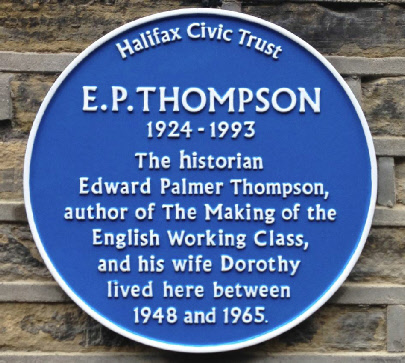
E P Thompson & the nerve of outrage

In Uncategorized on March 28, 2018 by kmflett

EP Thompson & the Nerve of Outrage

A Guardian Editorial on the Labour Party and anti-Semitism (27th March) argued that Labour leader did not have the ‘nerve of outrage’ around such matters. I don’t particularly agree but this is not the point of this post.

As the Editorial noted the term comes from EP Thompson, the 25th anniversary of whose death it is this year. He used the term in an essay, the Secret State which was collected in his 1980 volume Writing by Candlelight.

The reference in its specific context is a little problematic for reasons I’ll explain, but the hat tip to EP Thompson was in any case a nice touch (probably by Martin Kettle).

The relevant section of the Secret State is below. Thompson discusses the case of the 1966 seamen’s strike (John Prescott was a leader) and the then Labour Government’s view that the whole thing was a conspiracy organised by the Communist Party.

In the Secret State Thompson suggests that even by the late 1970s the matter had been largely forgotten and it should not have been.

He locates the origin of the nerve of outrage with the Freeborn Englishman of the early nineteenth century. This individual was prone to protest and even riot if he thought his (limited) civil liberties were being interfered with by the State or that the Government was embarking on unwarranted imperial adventures.

Unfortunately for the Guardian Editorial many ‘Freeborn Englishmen’ were significantly influenced by William Cobbett who was without question an anti-Semite.

Thompson’s complaint that the modern left had lost the nerve of outrage was not in anyway related to anti-Semitism but to his view (one I tend to share) is that the left just accepted that the State broke its own laws, trod on civil liberties and generally behaved badly because that’s what capitalist States do.

Thompson’s point of course was that be that as it may, protest was essential. And is still is.

Extract from the Secret State

Thirdly, I have recited this episode because, in its general outlines, it is now so familiar. The national crisis—the state of emergency— the deployment of armed forces— the attempts to induce panic on the national media— the identification of some out-group as a ’threat to security’— all these are becoming part of the normal repertoire of power. Of course, there are historical precedents for all these things; but never before, since 1816, has government been able to employ this repertoire without deeply and bitterly dividing the nation, and without inflaming the nerves of outrage and resistance in a minority— a minority which, by patient agitation and political education, has often been able to influence the majority, and, in the long run, secure some reversal of the pretentions of power. What is new, in the last two decades, is the dulling of the nerve of resistance and of outrage. Familiarity has bred contempt— not contempt for the state and for the specious alarms and rationalizations of power, but contempt for any possible alternative. And in this moment a new danger appears. For once the libertarian responses of the British people have been brought under sedation, then the reasons for the invisibility of the state within the state begin to lose their force. And so we see the evidence, in the present decade, of the police, the army, the security services, the quasi-official and the pseudo-private agencies of control, becoming more public, engaging in active ’public relations’, lobbying for new curbs on civil rights and for ’simplified’ legal process and attempting to familiarize the public with their intrusive presence. And, in the face of this new danger, the ancient historical nerve begins to throb once more. State Research is one of the evidences of that.

I will conclude by advancing some arguments which are, in part, addressed to my friends of the Left.  In doing so, I am bound to tread on corns, left, right and centre. So that I must insist, once again, that these comments are personal, and need carry no assent from the authors of this book.

A large part of the blame for the dulling of the nerve of outrage lies with the left itself. I do not make this as a wholesale accusation. There have been honourable centres of resistance, as in the long and dogged record of the National Council for Civil Liberties. We owe more than is often supposed to the vigilance of a few Labour and Liberal MPs, and even occasional questions from crusty Tory back-benchers. More recently, some journalists have been alerted to the dangers. And there are many others, among the splinters further to the left. But the resistance has been inadequate…

Articles

Australian balls: the end of the affair?

In Uncategorized on March 28, 2018 by kmflett

Australian balls: the end of the affair?

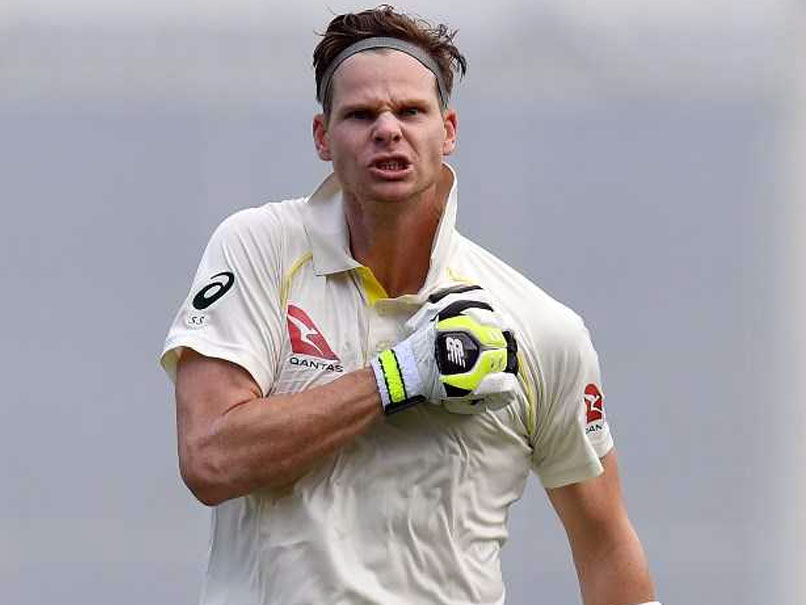
The Australian cricket ball tampering affair has concluded today with 12 month bans for Smith and Warner and a 9 month for Bancroft. They can appeal though its not clear if they will.

There is a decent BBC report there that has attracted a huge number of comments (not all of them immoderate)

http://www.bbc.co.uk/sport/cricket/43565737

Whether this really is the end of the affair is another matter. The Australian authorities are maintaining that only the three named players were involved and that it was an isolated incident.

The coach Lehmann has now resigned in what looks rather like a legal severance process, where both sides walk away. As Ive previously said if he was unaware of events as he claimed one wonders what exactly he was doing in the role. As for the Chief Executive of Australian cricket Sutherland one must presume he is acting in good faith and not temporising as a matter of expediency in terms of who is really implicated. If the latter is the case he’ll have to go to in due course and the damage to cricket in general will be greater.

The affair sends out the message that while gamesmanship is a constant element of cricket there is a line beyond which it becomes cheating and with modern technology that is likely to be spotted before long.

Will it stop it? I doubt it. But it may considerably reduce it at least for a while.

As for Bancroft, Smith and Warner they might now spend some time growing their beards and in due course perhaps return more balanced players


Articles

CND at 60. The New Reasoner Spring 1958

In Uncategorized on March 28, 2018 by kmflett

The New Reasoner was a journal of the ‘old’ New Left after 1956 edited by two of the most well-known post-1945 socialist historians, John Saville and EP Thompson. Along with Universities and Left Review it became the New Left Review in 1960.

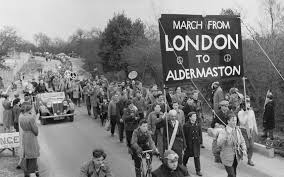
Below is an extract from its view of CND in Spring 1958 as CND co-sponsored the first London to Aldermaston march on 4-7th April 1958 (the march direction was reversed from 1959).

It is an essential part of where the modern left came in and still 60 years on a much discussed and debated issue

The full article is at this link:

http://banmarchive.org.uk/collections/nr/index_frame.htm

_____________________________________________________

 At last it is beginning to move. The frozen formations of the Cold War era are beginning to break up. The response of the electors at Rochdale (where both Labour and Liberal advocated British renun-ciation of the Bomb) and the rapidly-gathering success of the Cam-paign for Nuclear Disarmament: these are signals of a new temper among the people.

All talk of sweeping socialist advances in the next few years is unrealistic unless it starts from this premise : there is no way forward until the international deadlock is broken.

For years both Right and Left have covertly regarded the Cold War as one of political and economic attrition which will end only when one of the two giants crack up. The Right has speculated upon revolt or collapse behind the ‘ Iron Curtain.’ The Left has awaited the classical slump which would awaken old-style revolutionary responses among the Western working-class. The Trotskyists have hoped for a coincidence of both. All views led to a common conclu-sion : the British people must wait for something to happen, some-where else, for some other nation to move first.

Now we are coming to understand that our destiny need not be left indefinitely in American or Russian (or Polish or Hungarian) hands. It is now our turn to move. Our turn because, paradoxically, the stalemate of the two giants has increased our room for manoeuvre. Our turn because, despite Alsatian dogs and Civil Service purges, the ravages of the Cold War have left our democratic processes relatively unclogged and the main fabric of our civil liberties intact; our radical tradition can still stir with unexpected vigour, where its American counterpart is scattered in disarray and is still re-grouping after the assault of McCarthyism; our labour movement is united, where the French movement lies temporarily disabled between the thorough-going treason of Mollet and the stagnant Stalinism of Thorez. Our turn because the world waits for someone to move, and – with an election in the offing – there is a chance for our people to intervene.

Articles

Australian cricket: crisis what crisis?

In Uncategorized on March 27, 2018 by kmflett

Australian cricket: crisis what crisis?

The fall out from the Australian ball tampering incident in a Test Match against South Africa is continuing.

The ICC have deliberated and issued sanctions against, then, Australian captain Smith and the actual transgressor, Bancroft. They have declined to look at suggestions that ball tampering went on during the recent Ashes series on the grounds that they are out of time. I welcome that. It is an important reminder that if you don’t raise an issue in a timely manner than in general you should not just be able to dredge up it when you feel like it.

The Australian cricket authorities have also been investigating and on Tuesday the top man James Sutherland held part one of a press conference to explain what they planned to do.

He announced that coach Lehmann would stay in post as he knew nothing and that sanctions against Smith, Bancroft and Warner (and apparently no one else) would follow after due process, tomorrow.

As a union officer I’m a big fan of due process. As we know from the recent pay dispute Australian cricketers have a good union. The three players will want to consult their representative and expect a disciplinary meeting where matters will be dealt with according to a previously agreed procedure and where they will be represented by the union.

Since at least Smith and Bancroft have already agreed they did endeavour to tamper with the ball the issue would be whether there are any mitigating circumstances.

Of course such things don’t take place in a vacuum and the wider context can often have an influence on the outcome, not in terms of innocence or guilt, but in terms of what action is taken.

It would seem that the Australian media, the public and politicians are all angered by what has gone. Its probably just as well for the cricketers that Rupert Murdoch isn’t an Australian anymore.

Former Australian captain Michael Clarke tweeted after Sutherland’s press conference that the full facts needed to come out and accountability be established.

It looks like the Australian authorities are hoping that the three players named as being involved can be sanctioned and the matter left at that.

I doubt that will work and if I was the players union rep I certainly wouldn’t let it rest at that.

If Lehmann as the coach genuinely did not know his captain was organising an attempt to cheat, he should be sacked for incompetence. And if Sutherland is trying to limit damage rather than have a proper ‘drains up’ he might find he ends up going too.


Articles

Jeremy Corbyn at event to mark 30th anniversary of the anti-fascist ‘Battle of Wood Green’ in 2007

In Uncategorized on March 27, 2018 by kmflett

On the 23rd April 1977 the fascist National Front tried to march from Ducketts Common, Turnpike Lane in North London down a busy shopping street on a Saturday afternoon. A large counter-demonstration largely halted their progress. One of the key people organising that was then Haringey Councillor Jeremy Corbyn.

In 2017 a major event was held on Ducketts Common to mark the 40th anniversary.

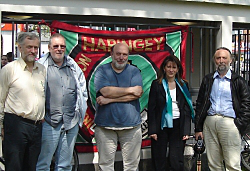
However the 30th anniversary was also marked by a small scale rally organised by Haringey TUC at Ducketts Common on 21st April 2007. As in 2017 Jeremy Corbyn turned up and spoke underlining, should that be needed, his sustained and lifelong opposition to racism and fascism

In the picture L-R: Jeremy Corbyn MP, John Robson, John Burton, Lynne Featherstone (then Hornsey & Wood Green MP) Keith Flett