Articles

Campaigners say ‘The Economist’ plan for a beard tax wont fill UK’s fiscal hole

In Uncategorized on February 16, 2018 by kmflett

Beard Liberation Front

Media  Release 16th February

contact Keith Flett 07803 167266

Campaigners say The Economist plan for a beard tax wont fill UK’s fiscal hole

The Economist

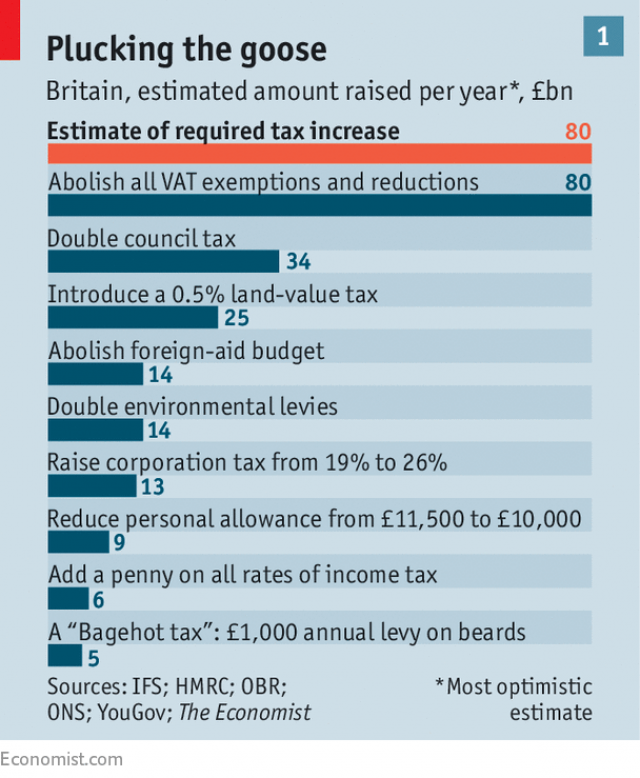
The Beard Liberation Front, the informal network of beard wearers, has said that a suggestion by the Economist that a beard tax might help to fill the UK’s fiscal hole is erroneous and impractical.

The campaigners say that while Peter the Great introduced a Beard Tax in 1698 in Russia it was only ever applied to a small section of the elite.

The reality is that any modern Beard Tax would cost far more to enforce than it would ever produce in revenue and in any case has no place in a liberal democratic society (which late seventeenth century Russia certainly was not).

The Beard Liberation Front has a long standing policy that a luxury tax should be levied on all products and services related to shaving and there is little doubt that this would provide a good revenue stream for Government.

BLF Organiser Keith Flett said, let’s face it, a Government led by Jeremy Corbyn, the most likely political outcome in the near to middle future, will never introduce a beard  tax

The Economist story

https://www.economist.com/news/britain/21737036-politicians-are-slowly-facing-up-fact-higher-taxes-are-needed-wanted-radical

Thanks to Rishi Dastidar and Michael J Harris


Articles

St David’s Day Beard of Wales poll kicks off

In Uncategorized on February 16, 2018 by kmflett

Beard Liberation Front

Press release, 16th February

Contact Keith Flett 07803 167266

St David’s Day Beard of Wales poll kicks off

The Beard Liberation Front, the informal network of beard wearers, has said that the St David’s Day Beard of Wales 2018 poll is underway.

The poll aims to determine the St David’s Day Beard of Wales, the Welsh beard that offers the most positive national image.

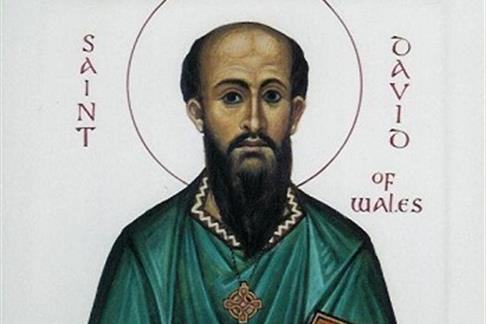
The campaigners say that images of St David suggest that the Welsh Saint himself may have had an organic beard

Welsh rugby prop Adam Jones won the Award in 2013, voted for by BLF supporters, just shaving former Archbishop of Canterbury Rowan Williams. Another rugby player Leigh Halfpenny won in 2014. In 2015 the Award went to Thee Faction musician Chris Fox in 2016 footballer Joe Ledley and in 2017 to Charcutier Illtud Llyr Dunsford

It is the sixth time the Award has been given following the traditional UK Beard of the Year at the end December each year and the BLF says it is a mark of Wales as a modern nation on St David’s Day that beards are now playing an increasingly significant role in national life.

BLF Organiser Keith Flett said it is the most diversely hirsute shortlist for Beard of Wales yet, a sign that beards are making a growing impact in Wales

Beard of Wales 2018

Alun Wyn Jones, rugby player

Illtud Llyr Dunsford, charcutier

Paul Flynn, politician

Chris Elmore, politician

Chris Fox, musician

Michael Sheen,actor

Tom Jones, singer

Grant Tucker, Times journalist

Joe Ledley, footballer

Gruff Rhys, musician

Hefin David, politician

Huw Irranca-Davies, politician

Warren Gatland, rugby manager

Gwilym Pugh, male model

Articles

Jeremy Corbyn: take The Sun Test. Did the beard make him a spy or a socialist?

In Uncategorized on February 16, 2018 by kmflett

According to Rupert Murdoch’s Sun ‘newspaper’ Labour leader Jeremy Corbyn was a ‘communist fellow traveller’ in the 1980s and possibly linked to an Eastern European spy (although admittedly he was in possession of absolutely no material that would interest a spy).

The key question, yet to be asked is this:

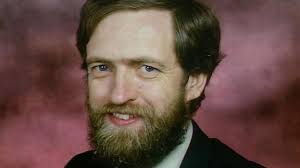
Did Jeremy Corbyn’s organic beard in the 1980s make him a spy or a socialist

Articles

Corbyn, Czech ‘spies’ & Le Carre

In Uncategorized on February 15, 2018 by kmflett

Corbyn, Czech spies & Le Carre

The Sun ‘newspaper’ has provided a front page on Jeremy Corbyn meeting a Czech diplomat in the 1980s (or Commie spy if you are on the further reaches of social media). It is comforting for those of us a certain age (and perhaps these are now also the Sun’s core readership) who remember well the Cold War, John Le Carre novels and spies.

It is a bit light on the fact department, but it is the Sun and of course therefore has no historical context at all.

The diplomat met Corbyn allegedly, not long before closing time was called on ‘actually existing socialism’ in Eastern Europe. It would be fair to say that Corbyn was from that part of the Labour left who were not fans but were in fact anti-Stalinists. There were certainly also those, including Labour MPs, who were genuine fans of Russia and in their circle one or two who did actually give what passed for UK secrets to Moscow. One suspects that Moscow already knew what these secrets were but it was all part of the Cold War game.

The details the Sun prints oddly do more or less confirm what the Czech diplomat was likely to have found out from Corbyn. Namely that he was a mild-mannered chap with a beard who would go on to have an allotment in East Finchley.

The Sun which appears never to have heard of the first law of holes was still digging in its Friday edition dredging up a discredited former Head of MI6, who one suspects thinks anyone with a beard is dodgy, together with a quote from Daniel Hannan the Tory MEP who never quite seemed to be sure whether he was actually in UKIP. The Sun says that Corbyn was a ‘communist  fellow traveller’ a phrase associated with the Cold War.

The point is, he was not. There were numbers who were, often with what they thought were the best of intentions (suffice to say I didnt) but Corbyn on the part of the left he has long been associated with were never ‘fans’ of Eastern Europe. Quite the reverse. One need only look at back copies of Labour Briefing from the 1980s to underline the point.

On Saturday the Mail & Telegraph joined the Sun in Corbynphobic stories and the Telegraph was still going on about it on Sunday with the alleged Labour agents now including John McDonnell and 15  other Labour MPs. Smears are just that going back to the Zinoviev letter. Evidence is awaited:

1] What information did Corbyn allegedly pass to a Czech spy?

2] If he was paid, where is the evidence of payment?

If this cannot be produced and there is no sign of it so far we may take the tales as being evidence that the hard-right media think a Corbyn Government is near and that wont be good for them. Here  at least  they are right.

The Czech State agency that has control of the former Security Services files has said there is no evidence relating to Corbyn supplying information beyond meeting the alleged diplomat/spy. One would have thought that were the spy actually doing their job they would have a recording of conversations with Corbyn, or documentation. However nothing beyond increasingly odd  claims.

Somewhere along the line too Louise Mensch managed to drag in a twitter exchange I had with Jeremy Corbyn in 2012 about the need for a beard to keep at bay the impact of Russian snow. It was not I think a serious political discussion but full marks to Ms Mensch for  such Stakhanovite trolling.

But back to the first para. The Cold War was a war. There was actual fighting by proxy- think Vietnam- but it was mainly carried out by propaganda and influence. So if Russia tried to do this (and it did) so did America.

Of course the US did not require UK secrets. They were already shared in the main anyway. But influence it did want and this was done by funding various front organisations, such as the Congress for Cultural Freedom, and Encounter. Figures from the Labour right were involved, and no doubt saw this as part of a democratic measure against Soviet authoritarianism just as those on the left felt they were supporting socialism in the East.

Hence the slogan, neither Washington or Moscow but International Socialism which had some currency in this period.

Articles

The biggest march in British history 15 years on: not history yet

In Uncategorized on February 15, 2018 by kmflett

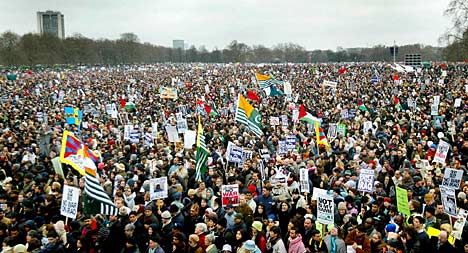
15th February 2003: 15th anniversary of the biggest protest in UK history. Until Trump arrives
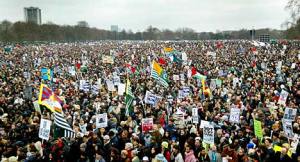
The Hyde Park grass survived

It is fifteen years since the biggest march in British history, against war in Iraq, on Saturday 15th February 2003. It is not quite as cold in central London today as it was then. Hopefully, if and when Trump arrives in Britain later this year the weather will be better and the protest will be even larger

Below is what I wrote on the 10th anniversary.

The march is not yet history and is some way from being so. The political arguments about war, imperialism, defence and intervention continue and many of the leading players in 2003 remain active today. Indeed Tony Blair and Alastair Campbell are rarely absent from the media for long, the same being true of courses for Jeremy Corbyn.

It does however continue to be important to keep remembering that the event took place and left a mark on a generation. Perhaps not surprisingly the blockbuster film has yet to appear and perhaps never will. But what happened and what it achieved should continue to be something that is discussed and debated.

___________________________________________________________________________

10 Years After: The Historical lesson of 15th February 2003- Keep Marching On

Many readers of this will have been on the central London demonstration called by the Stop the War Coalition on Saturday 15th February 2003 as I was myself.

It was the biggest demonstration in British history and remains so.

The British Government still has imperial ambitions, as Libya and Mali underline. But whereas before that cold Saturday ten years ago it would have been a minority of left and peace voices that spoke out, today it is legitimate for a broad range of opinion to question why the country is intervening in  wars elsewhere and what purpose it serves.


The media are unlikely to be devoting special supplements and programmes to the anniversary although in truth that is what it deserves. The Stop the War Coalition have held a conference to mark the continuing fight against neo-liberalism and war.

Making sure the demonstration is remembered and underlining the historical point that popular mobilisations make a difference is important.

While there were many young people on the march, the fact remains that there are people in their twenties today who are too young to have either been on the march or to remember it. If in today’s environment it was said,’ we can mobilise well over a million in people in central London for an important issue’, eyebrows might well be raised. Yet just 10 years ago we did exactly that.

So making sure that the event is remembered and remains in the popular memory is an important task not just for historians but for the left generally.

For those who were there, and it was estimated that someone from most households across the UK was, the question ten years on remains one of what impact was made, and whether marching changes anything.

Here history can provide some pointers.

As the historical sociologist Charles Tilly argued in his book Repertoires of Contention- looking at Britain in the late eighteenth and early nineteenth centuries- people fighting injustice can follow a range of strategies. These can vary from petitions through strikes to armed revolts and from riots to large indoor meetings that agree to lobby Parliament.

It depends what is thought to be effective at the time and what mobilises numbers for the maximum impact. In recent times a march with a large and broad turn-out, although far from the only strategy, has often made a significant and sometimes lasting political point.

There is another angle made by the late Peter Sedgwick in his introduction, Farewell, Grosvenor Square to David Widgery’s 1976 volume about the left in the 1960s.

Sedgwick argues that until the rise of CND in the late 1950s the idea of going on a demonstration to make a political point seemed an odd one for many. If you wanted change you wrote to your MP and voted for a Government from time to time.

The minority who did march were watched by many more from the nearest pavement.

From the 1960s all that changed. As Sedgwick noted when delivering leaflets door to door for a protest the reaction was no longer puzzlement from the householder but ‘thanks luv see you at t’demo then’.

Even if a march does not have the precise consequences that were  desired it often does beg significant political questions and may do so long after the last marcher has returned home.

That’s why it is important to keep remembering that cold Saturday of 15th February 2003 and to keep in mind that it can happen again.

But while we are remembering 15th February it is important not to forget some other points.

The march did not stop the drive to war with Iraq as the usual suspects have been busy reminding us. But the war itself did not come until a month later on March 19/20th 2003. At that point the aim of anti-war activists was to take protests beyond demonstrations towards walk-outs and industrial action. Numbers did take place, but not sufficient numbers to reinforce the impact of 15th February. It suggests that in the circumstances of the time the mass march was far from being our best strategy to stop the war but in fact the best shot we could muster. Unfortunately it was not enough

Finally a literal footnote. Despite the concern of the Royal Parks and Culture Secretary Tessa Jowell the grass in Hyde Park survived the march and last time I checked was still thriving.

Articles

Cloudwater at 3

In Uncategorized on February 14, 2018 by kmflett

Cloudwater at 3

Manchester’s Cloudwater Brewery is three years old. Its called combined and uneven development by old blokes with beards like me.

After all this weekend is Beavertown’s 6th birthday (there is a Beavertown/Cloudwater beer or two to mark the occasion) and let’s face it Tottenham has the better football team.

But if you compare the compact size of Cloudwater’s brewery to that rather larger Beavertown operation you can see the scale of the achievement. It can be understood too, in part, why Cloudwater stopped doing cask (and Beavertown do hardly any). There is just not the capacity to do that on any scale and produce all the seasonal beers they do.

Cloudwater beers are vegan and of course beard friendly but if you had to name one brewery that pioneered what some call the ‘juice bomb’ DIPA it could be them.

There is of course a significant social media presence and, as goes with the patch, controversy.

You can tune into that or not as suits but the beer remains always worth a try even if its style that may not appeal to you.

Cloudwater like Kernel change endlessly rather than having a core range so perhaps are not so widely known in the generality as brewers that do have such beers. Think of Beavertown’s Gamma Ray or perhaps now Neck Oil. So perhaps they are a little more ‘niche’ but with that goes an ability to try the new and different and tweaked that can be constrained if a lot of your production is taken up by high demand beers.

My only real criticism. I do wish they’d do more with the conker trees outside the brewery.

Articles

Hirsute give guidance on how to kiss a Valentine’s Day beard

In Uncategorized on February 14, 2018 by kmflett

Beard Liberation Front

PRESS RELEASE 14th February

Contact Keith Flett 07803 167266

HIRSUTE GIVE GUIDANCE ON HOW TO KISS A VALENTINE’S DAY BEARD

The Beard Liberation Front, the informal network of beard wearers, has issued guidance on how to kiss a beard on Valentine’s Day.

The campaigners say that kissing stubble is generally best avoided but that a full beard should be soft and silky on the lips. Even so there are definite protocols involved in how and how not to kiss a beard

SEVEN STEPS TO KISSING A VALENTINE’S DAY BEARD

The beard is best approached from the side rather than the front

Ideally choose an area halfway between the ear and the lips

Place the lips on the beard and kiss it.

It is best to avoid wet kissing of the beard in most circumstances

Do not suck in beard hairs to the mouth as you kiss the beard.

Gentle stimulation of the beard with the tongue is generally believed to be mildly erotic and appropriate for a Valentine’s Day kiss

Repeat the kiss to taste

BLF Organiser Keith Flett said There is something about a beard that makes it an essential part of the Valentine’s Day experience. To kiss a beard is a truly romantic thing

Articles

Jeremy Corbyn shaves Idris Elba to regain Sexiest Valentine Beard title

In Uncategorized on February 14, 2018 by kmflett

Beard Liberation Front

Media Release 13th February

Contact Keith Flett 07803 167266

Jeremy Corbyn shaves Idris Elba to regain Sexiest Valentine Beard title

The Beard Liberation Front, the informal network of beard wearers, has said Labour leader Jeremy Corbyn has shaved actor Idris Elba in the annual vote for the sexiest Valentine’s beard.

The Vote

Jeremy Corbyn 37.5%

Idris Elba 34.38%

Justin Timberlake 12.5%

The winner of the annual My Hairy Valentine Award is announced ahead of Valentine’s Day 14th February

The BLF says that contrary to pogonophobic mythology many beards are soft, sexy and deeply mysterious.

Jeremy Corbyn was voted My Hairy Valentine in 2016 but in 2017 Idris Elba shaved the opposition.

The BLF says that whether a beard is sexy or not is in the eye of the beholder but the Award is focused on beards in the public eye, whether celebrities, politicians, musicians or sports stars.

The list covered a diverse range of people and beards, with a considerable churn from the 2017 list.

BLF Organiser Keith Flett said, after making the cover of GQ magazine in 2017 Jeremy Corbyn has underlined the enduring impact of his beard by reclaiming the Hairy Valentine title from Idris Elba

Shortlist

Idris Elba, actor

Prince Harry, personality

Tom Jones, musician

Gary Lineker, broadcaster

Jeremy Corbyn, politician

Philip Wilton, cheesemaker

Eric Cantona, philosopher

Robbie Savage, mouth

Articles

Is craft beer in crisis?

In Uncategorized on February 13, 2018 by kmflett

The FT under the austere heading ‘agricultural commodities’ has published analysis that the US hop growing market has gone from ‘boom to bust’. It says that the reduction in the increase of demand for hops is related to a decline in the growth of the US craft beer market from 18% a year to 5%

https://www.ft.com/content/0f678bd6-0cc7-11e8-839d-41ca06376bf2

It seems unlikely that this this is a final crisis of craft beer but rather just the rather more mundane working of market capitalism. There has been a very significant increase in hop production in the US and supply has outstripped demand. The result is a decline in price.

This is no doubt good news for Big Beer. Whether it will make much impact on smaller, and what some would regard as ‘genuinely’ craft producers of beer may be a rather different matter.

It is any way a useful reminder that however much one may think you are sticking two fingers up at Big Beer by drinking craft, its close ally, market capitalism is always lurking

Articles

Shrove Tuesday & Subversion

In Uncategorized on February 13, 2018 by kmflett

Shrove Tuesday and Subversion

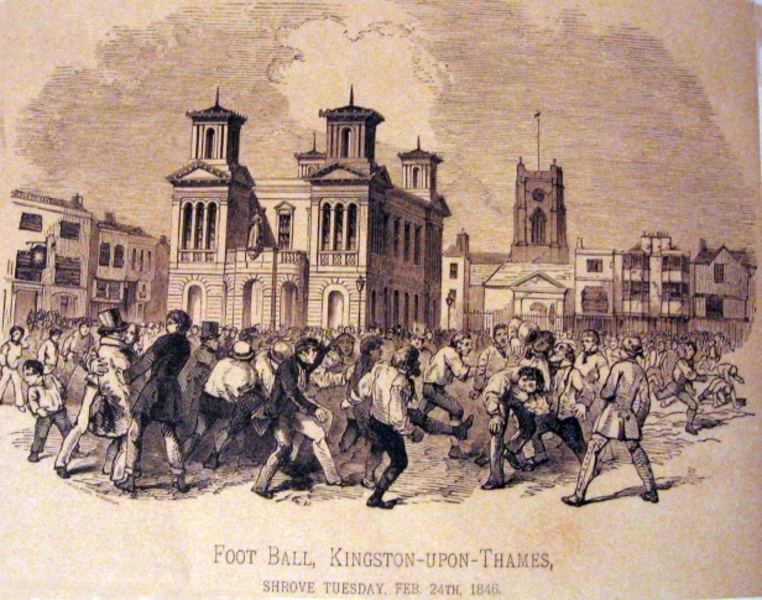
In 2018 the moveable feast of Shrove Tuesday, the day before Lent, is known almost entirely for the consumption of pancakes. Historically matters, in certain periods, particularly the early C17th, were a bit more exciting.

Shrovetide was the occasion for ball games, what Ronald Hutton in the definitive volume on British folk customs, Stations of the Sun, notes as ‘licensed misrule’.

By 1598 the ball games had started to develop into something wider. There were, Hutton records, riots on 24 out of the 29 Shrove Tuesdays in the early Stuart period (1600s). The riots took place mainly it seems in areas to the north of the City of London and involved centrally apprentices but also craftsmen.

As ever the riots were not random but aimed at particular targets, in particular brothels and playhouses. Hutton records that between 1612-14 on Shrove Tuesday a Shoreditch brothel was attacked each year until it shut. On Shrove Tuesday 1617 a new Drury Lane playhouse was destroyed and prisoners freed from Finsbury prison by rioters.

Hutton notes that, while the targets may at least seem odd to modern eyes, they ‘fitted into a much older tradition of cleansing a community before Lent’. In other words the Shrove Tuesday crowd, in rioting, was seeking to destroy what it saw as the less moral parts of the early C17th economy.

The tradition of rioting died out only slowly and the mass playing of football on Shrove Tuesday still goes on in some places- Ashbourne in Derbyshire for instance- as a distant echo of earlier times. Shrove Tuesday football had no rules and no limit on the number of participants. The struggle (or fight) to get possession of the ball was at least as important as what was done with it afterwards.

That is also a reminder that Shrove Tuesday in the traditional calendar was the end of the reign of the world turned upside down figure of the Lord of Misrule, often appointed on the previous All Hallow’s Eve 31st October.

In short in the 1600s Shrove Tuesday was not about pancakes but about disorder, riot and subversion.