Haringey protests, the London mob and the London Crowd
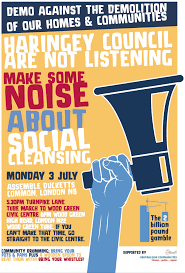
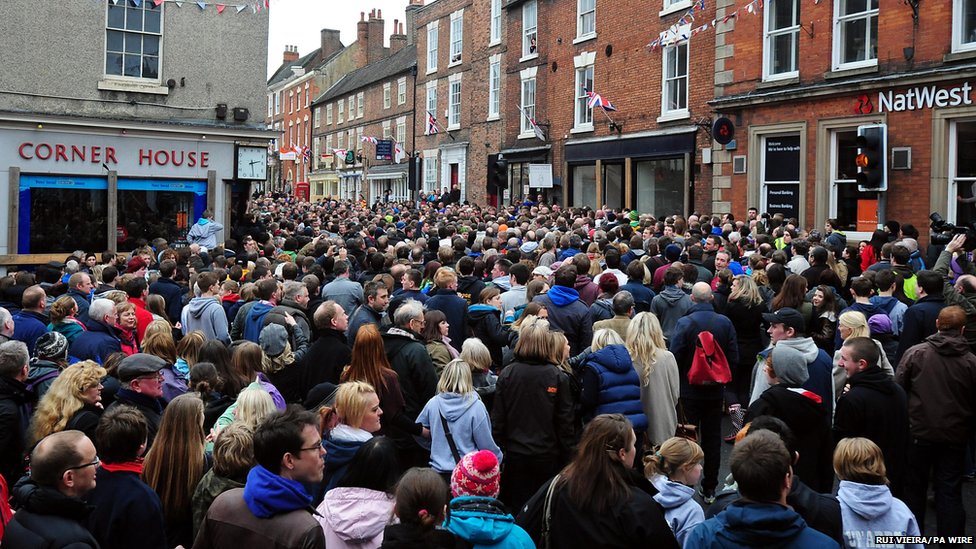
I didn’t see the tweet at the time but I note that Haringey Labour Councillor Natan Doron, who is standing down in May, tweeted about a protest at the Council meeting on February 7th over the controversial Haringey Development Vehicle that ‘There was a mob, with some Momentum faces that I recognised who booed & hissed..’.
As a Labour Councillor one would hope that Mr Doron would be a little more careful with words when dealing with the subject of protest crowds.
Understanding what happens when ordinary people decide to protest has been an issue for as long as the inequalities and divisions of market capitalist society have sparked the protests themselves.
This is really, at least in part, where the term ‘the mob’comes from.
It is used to describe a group of protesters about whom those in authority have little idea who, if anyone, might be leading them, and what they plan to do.
This worries those in authority but it is a function of large cities like London. It is possible in crowded urban areas for people to get up to all kinds of things without it being officially noticed.
Well off Victorians had a fear of the working classes living in areas adjacent to them. A concern that they might attack them or their property or both and then disappear back into the mysterious working-class areas from whence they came.
So for example in 1848 the cry of ‘the Chartists are coming’ was sometimes heard in well off London neighbourhoods, heralding an imminent invasion of protesters intent on creating havoc.
Needless to say, in the main Chartist demonstrations were orderly affairs. There were occasions, for example in early 1848, when Chartist influence was less, that less predictable protests took place.
Much the same fear underwrites current talk of ‘the mob’.
It is not an anonymous group in reality. It is a mixture of the more and less committed, of all kinds of ideas and strategies and on occasion none.
That is why the left far from using the term ‘mob’ has tended to refer to ‘the crowd’.
The pioneering work is by the late Marxist historian George Rude who wrote the classic text ‘The Crowd in History’.
It could be said that the difference between ‘the mob’ and ‘the crowd’ is that the former has sometimes been reactionary while the latter is generally progressive.
That is perhaps stretching an historical point.
Not all London mobs have been of the left and some attacked left-wing causes, for example during the period of the French Revolution in the 1790s.
But there is a tradition of left-wing crowds, from those who stood up for ‘Wilkes and Liberty’ in the 1760s, to the unemployed who marched and rioted in London in the 1880s and who formed an audience for the marxist Social Democratic Federation, right up to the modern day with the poll tax.
It could be said that the street protests and their often chaotic nature represent an absence of the orderly traditions of the labour movement. Or we might argue that they are a force that can be organised to achieve real change. A great start pointing for better things.