Articles

Jeremy Corbyn pledges the return of municipal socialism & beard power in Local Government

In Uncategorized on February 9, 2018 by kmflett

Beard Liberation Front

Media Release

9th February

Contact Keith Flett 07803 167266

Jeremy Corbyn pledges the return of municipal socialism & beard power in Local Government

The Beard Liberation Front the informal network of beard wearers has welcomed Jeremy Corbyn’s pledge at the Labour Local Government conference on 3rd February that municipal socialism is on its way back.

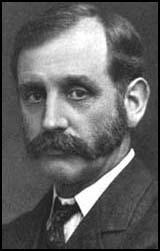
The campaigners say that the municipal socialist par excellence was George Lansbury (1859-1940). Lansbury a long-standing labour movement activist, supporter of women’s suffrage and opponent of World War One (he was a pacifist) was the Editor of the left-wing Daily Herald newspaper from 1912. As leader of Poplar Council in the early 1920s he fought the Government over funding for working-class areas and went to jail in Brixton prison as a result in 1921. In the 1930s Lansbury was Labour leader from 1932-1935.

Lansbury also had, as does the current Labour leader Jeremy Corbyn, distinctive facial hair

BLF Organiser Keith Flett said, of course it’s the socialist policies that are the key here but the beard power that Lansbury made the hallmark of Labour in local Government is clearly on its way back, marking a new era of diversity in local Council leaderships


Articles

Jeremy Corbyn closing on Idris Elba for Sexiest Valentine Beard title

In Uncategorized on February 9, 2018 by kmflett

Beard Liberation Front

Media Release 9th February

Contact Keith Flett 07803 167266

Jeremy Corbyn closing on Idris Elba for Sexiest Valentine Beard title

The Beard Liberation Front, the informal network of beard wearers, has said that the annual hunt for the sexiest Valentine’s beard is once again underway and with the poll closing at midday on 13th February Labour leader Jeremy Corbyn is closing in actor Idris Elba for the annual accolade

The winner of the annual My Hairy Valentine Award is announced on Valentine’s Day 14th February

The BLF says that contrary to pogonophobic mythology many beards are soft, sexy and deeply mysterious.

Jeremy Corbyn was voted My Hairy Valentine in 2016 but in 2017 Idris Elba shaved the opposition.

The BLF says that whether a beard is sexy or not is in the eye of the beholder but the Award is focused on beards in the public eye, whether celebrities, politicians, musicians or sports stars.

The list covers a diverse range of people and beards, with a considerable churn from the 2017 list.

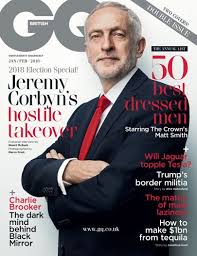
BLF Organiser Keith Flett said, after Jeremy Corbyn’s appearance on the cover of GQ magazine who’s to say his beard is not sexy?

Shortlist

Idris Elba, actor

Prince Harry, personality

Tom Jones, musician

Gary Lineker, broadcaster

Jeremy Corbyn, politician

Philip Wilton, cheesemaker

Eric Cantona, philosopher

Robbie Savage, mouth

Justin Timberlake, musician

Articles

Haringey HDV Court case: judge says ‘no’. The Campaign goes on

In Uncategorized on February 8, 2018 by kmflett

After a demonstration on 7th February and a decision in a full Council meeting to stay any further moves on the Haringey HDV until after the May Council elections, the High Court has today ruled against the legal challenge to the HDV.

The judge says that many aspects of the challenge were out of time but is not persuaded by their merits either.

Gordon Peters who brought the case as part of the campaign against the HDV has said in a campaign mail:

We look forward to being in Appeal Court as much better chance of favourable judgement there, and could be precedent -setting for local authorities on how they make decisions, which would not have come out of this court.

The full judgement is here (thanks to Andy Wilson).

Click to access 20180208102033914.pdf

The judge notes that the HDV is ‘controversial’ but has confined the judgement as might be expected to legal points. I may be a socialist with a beard but I am with the late EP Thompson (and a bit less so with the late Norman Geras) in believing that the ‘rule of law’ is an important part of how a democratic society works.

That doesnt mean that specific judgements are not challengeable and Gordon Peters gives an example above. As an historian I might note that if the judge had found the HDV to be even more controversial than it was thought to be in Court the judgement might have found other grounds to reach a slightly different view..

In any case after the fudged Council vote on 7th February the campaign must go on. There is a useful report of that here:

https://socialistworker.co.uk/art/46084/A+chance+missed+to+bury+HDV+scheme+but+battle+continues

Articles

JFC Harrison, socialist historian (1921-2018)

In Uncategorized on February 8, 2018 by kmflett

With the death at 96 of JFC Harrison arguably the last of the post-1945 generation of great labour and socialist historians has now passed. Harrison was one of the founders of the Society of Labour History in 1960

The Guardian Obituary by Malcolm Chase is here:

https://www.theguardian.com/books/2018/feb/05/jfc-harrison-obituary

While I often referred to Harrison’s books on Owenite socialism and millenarianism during research projects I never met the man.

As Malcolm Chase points out Harrison was a colleague of EP Thompson (who I did meet on a number of occasions) at the Leeds University adult education department in the 1950s.

Thompson paid tribute to Harrison’s work in the London Review of Books not long before he died:

J.F.C. Harrison’s The Second Coming (a book which contains a second book condensed in its footnotes) LRB 28th January 1993

Malcolm Chase himself as noted:

As his friend and former colleague EP Thompson once commented (Guardian 13 Sept. 1979), John always wrote “with clarity, in an unhurried, authoritative, economical style”. These were qualities much in evidence in what were landmark textbooks when first published, The Early Victorians (1971) and Late Victorian Britain (1990).H-Albion January 2018

One hopes that like Thompson, Harrison’s works are still inspiring new research

Articles

Donald Trump hair crisis: Campaigners urge him to grow a Presidential beard

In Uncategorized on February 8, 2018 by kmflett

Beard Liberation Front

PRESS RELEASE 8th February

Contact Keith Flett     07803 167266

Donald Trump hair crisis: Campaigners urge him to grow a Presidential beard

The Beard Liberation Front, the informal network of beard wearers, has said that after a video revealed that Donald Trump is seriously follicly challenged on the top of his head the way forward for the President now is to grow a beard.

https://www.theguardian.com/us-news/2018/feb/07/donald-trump-hair-wind

The campaigners have provided some guidelines for the President to grow a beard:

1] Do not shave. Do not even think about shaving. Put it out of your mind

2] Do not look at shaving adverts on Fox News

3] Consider what beard would be appropriate. Probably not either an Abraham Lincoln or a ZZ Top.

4] A George Clooney salt and pepper beard may work. DO NOY dye it orange

BLF Organiser Keith Flett said, a Presidential beard could be Donald Trump’s last hope of finding gravitas in office.


Articles

After the Suffragettes William Cuffay black leader of London Chartism should also be pardoned

In Uncategorized on February 7, 2018 by kmflett

After the Suffragettes William Cuffay black leader of London Chartism should also be pardoned
On the centenary of the 1918 Representation of the People Act which gave women over 30 the vote, Home Secretary Amber Rudd said consideration would be given to pardoning Suffragettes jailed for fighting for the vote. Labour has committed to a full pardon when elected to Office.

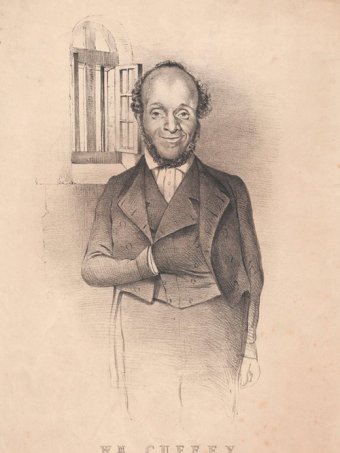
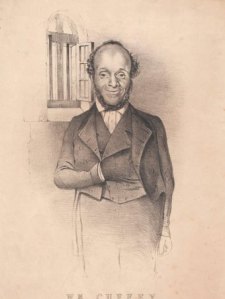
In the context of the fight for the vote it must also be time to consider a pardon for William Cuffay, the black leader of London Chartism in 1848. Cuffay was arrested and sentenced to transportation to Tasmania.

William Cuffay was born in Gillingham in the Medway Towns in 1788, the son of a local woman and a former slave from St Kitts who had made his way to Britain by working on a Royal Navy ship. Many of those aboard Navy vessels in the late eighteenth century were black.

Little is known about Cuffay’s time in Medway- though research is being done.

We do know however that by 1819 Cuffay was in London and had learnt the trade of a tailor.

No doubt Cuffay would have been exposed to the radical working-class politics of London in the 1820s and he was certainly involved in the strike called by the Grand National Consolidated Trade Union in 1834.

Cuffay went on to become, by the end of the 1830s, a leader of a group of London Chartist tailors.

In 1840 Cuffay was 52- very old for a Chartist activist at that time- and he became a central and trusted figure in London Chartism.

The best way to understand him is as the key ‘backroom’ organiser of Chartism in the Capital- raising money for jailed Chartists and being appointed to oversee the funds of the Chartist Land Bank.

By 1842 Cuffay had been elected from London to the national Chartist Executive. These positions were fiercely contested, so Cuffay will have had a considerable constituency of support.

Details of Cuffay’s work in this period can be tracked in the Chartist paper, the Northern Star.

Martin Hoyles in a recent book on Cuffay has also revealed that during this period Cuffay was performing as a singer on the London stage.

Although research is still in progress it now seems clear that Cuffay was the organiser of the great Chartist demonstration on Monday 10th April 1848.

Chartists gathered at various points across London and marched south to rally at Kennington Common. The idea was then to proceed back across Blackfriars Bridge to present a giant petition for the vote to Parliament.

It was a strategic mistake- it’s unclear what part Cuffay played in deciding the venue for the rally. Police and soldiers blocked the way back over the River Thames and the national leader of Chartism Feargus O’Connor agreed with the police that the Chartists would not try to march.

Cuffay was understandably very annoyed at this decision and is reported as arguing that the march should go ahead.

We now know that there was hand to hand fighting between Chartists and troops on the south side of Blackfriars Bridge but a heavy April shower caused the attempt to be abandoned.


Later in the year, in August 1848, Cuffay was arrested for his part in an alleged revolutionary conspiracy at Seven Dials, Covent Garden. Arms were found in Cuffay’s house. His precise role in the events is unclear but it is very likely that as the London Chartist leader he was at the very least aware of what was planned.

Tried at the Old Bailey, Cuffay was sentenced to 21 years transportation to Australia.

Arriving in Hobart Tasmania, now over 60, Cuffay could have been forgiven for retiring from political activity. He did not. Instead he was active in a range of radical causes in the earliest years of the Australian labour movement. He was pardoned after 3 years but remained in Australia, dying in 1870.

Modern interest in Cuffay can be traced back to a chapter in Staying Power by the late Peter Fryer which recovered much of the history of black people in Britain.

Cuffay left no diary, autobiography or papers, but research to uncover details of his life and activity is continuing. There has been considerable effort in Australia and in Britain plans remain to erect a blue plaque for Cuffay in the Strand.

The Times in 1848 referred to Cuffay and the Chartists as ‘the black man and his party’ and we can now see that this was not hyperbole but a recognition that the London organisation of the world’s first working class movement was led by the son of an ex-slave from St Kitts.

Cuffay came from the imperial diaspora to challenge imperialism at its heart in London to find himself exiled to another part of the British Empire in Australia as a reward for his efforts.

It is surely more than time to recognise William Cuffay not as someone worthy of transportation to Australia as a convict but a key figure in the development of British democracy, just as the Suffragettes were 70 years later.

Articles

Protest against the Haringey HDV Wed 7th Feb 5,30pm Turnpike Lane: the importance of pressure from without

In Uncategorized on February 7, 2018 by kmflett

There is a further protest against the Haringey Development Vehicle today at 5.30pm. If you are in the area I hope you’ll be there.

Why is the protest important? After all the current Council leader Claire Kober, who is stepping down in May, has said that no final decision on whether or not to proceed with the HDV will now be taken until the Council elected in May meets?

The specific reason for the protest is that the opposition Liberal Democrats have put down a motion to a full Council meeting tonight calling for a halt to the HDV. Should they attract the support of the Labour Councillors opposed to the HDV the motion will be carried. What the impact of that would be is unclear.

It is however very much a matter of internal Council politics. One can understand why Labour Councillors might be reluctant to vote for a LibDem motion opposing a massive privatisation exercise given that the Party’s current national leader Vince Cable was the architect of the sell off on the cheap of the Royal Mail. On the other hand a motion calling for a stop on the HDV might have its uses if passed.

The wider point however, and a strong element of the protest is what is known as ‘pressure from without’. There is an excellent book on the subject covering the early Victoria period by Patricia Hollis (now a Labour peer).

The HDV campaign goes much wider than the Council chamber. Its covers tenants and community activists, trade unionists, members of political parties not in the Council from the Greens to the SWP and lots of others. Those voices need to be heard too. Democracy is not just what goes on in a Council meeting.

Articles

Historians say Theresa May’s intimidation law wouldn’t impress the ‘Freeborn’ Englishman & woman

In Uncategorized on February 6, 2018 by kmflett

London Socialist Historians Group

Press Release

6th February, contact Keith Flett 07803 167266

Historians say Theresa May’s intimidation law wouldn’t impress the ‘Freeborn’ English man and woman.

The London Socialist Historians Group, which organises the socialist history seminar at the Institute of Historical Research in central London, has said that Theresa May’s plan for a new law of intimidation against politicians would not do down well with the ‘Freeborn’ English man and woman in British history.

The historians say that while it is right to deal robustly with intimidation and harassment of politicians, particularly based on gender, sexuality and ethnicity, in practice there are already laws, some dating back to the Victorian era that can deal with this.

The problem with a law which aims to deal specifically with politicians is that it risks criminalising legitimate dissent and robust questioning of politicians.

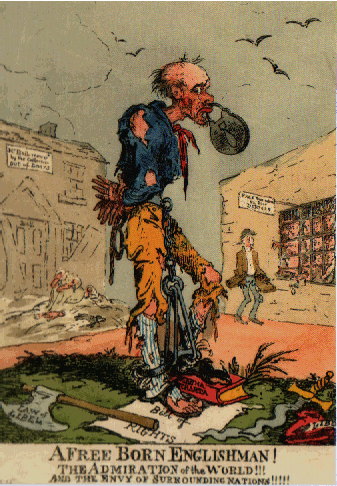
The late socialist historian EP Thompson wrote of the nineteenth century Freeborn Englishman, by no means always a radical figure, that while he had relatively limited freedoms one of those he did have was:

the vicarious participation in liberty (or in its semblance) afforded by the right of parliamentary opposition and by elections and election tumults (although the people had no vote they had the right to parade, huzza and jeer on the hustings)

Similarly, 100 years ago the Suffragettes campaign which successfully won some women the vote included a range of tactics that certainly would be regarded as intimidatory under Theresa May’s proposals and were designed to be so.

LSHG convenor Dr Keith Flett said, we know that after the murder of Jo Cox MP by a fascist and large amounts of abusive material on social media that are issues that need to be addressed. However, a new law cuts against traditional British political liberties which is something the Tory Party is supposed to be the custodian of.


Articles

Justin Timberlake challenges for Sexiest Valentine Beard title after Superbowl

In Uncategorized on February 5, 2018 by kmflett

Beard Liberation Front

Media Release 5th February

Contact Keith Flett 07803 167266

Justin Timberlake challenges for Sexiest Valentine Beard title

The Beard Liberation Front, the informal network of beard wearers, has said that the annual hunt for the sexiest Valentine’s beard Is once again underway with musician Justin Timberlake joining the list after his Superbowl appearance

The winner of the annual My Hairy Valentine Award is announced on Valentine’s Day 14th February

The BLF says that contrary to pogonophobic mythology many beards are soft, sexy and deeply mysterious.

Jeremy Corbyn was voted My Hairy Valentine in 2016 but in 2017 Idris Elba shaved the opposition.

The BLF says that whether a beard is sexy or not is in the eye of the beholder but the Award is focused on beards in the public eye, whether celebrities, politicians, musicians or sports stars.

The list covers a diverse range of people and beards, with a considerable churn from the 2017 list.

BLF Organiser Keith Flett said, arguably Timberlake’s beard crowned what was the most hirsute Superbowl ever. Is his beard Valentine friendly? That’s up to the voters to decide

Shortlist

Idris Elba, actor

Prince Harry, personality

Tom Jones, musician

Gary Lineker, broadcaster

Jeremy Corbyn, politician

Philip Wilton, cheesemaker

Eric Cantona, philosopher

Robbie Savage, mouth

Justin Timberlake, musician

Articles

Rough sleeping in February in Victorian London & now

In Uncategorized on February 5, 2018 by kmflett

Rough sleeping in Victorian London & now

Temperatures are set to be at 0C or a bit below in London for the next few days and the Mayor has announced the opening of night shelters for those without somewhere to go. These used to open after 3 days of low temperatures but with extra funding now do so straight away.

Homelessness in London is a significant problem:

London’s ten worst areas for homelessness

  1. Newham; London; 13,607
  2. Haringey; London; 9,717
  3. Westminster; London; 8,054
  4. Enfield; London; 10,057
  5. Kensington and Chelsea; London; 4,401
  6. Waltham Forest; London; 7,634
  7. Brent; London; 8,905
  8. Barking and Dagenham; London; 5,578
  9. Tower Hamlets; London; 7,428
  10. Hackney; London; 6,167

These figures are for November 2017 and are collected by Shelter that obviously has its own housing policies and agendas. They don’t indicate rough sleeping but people without a permanent place to stay. The division between the two will often be a fine one though.

What is unfortunately striking is how much the picture remains as it was in Victorian London. In his long essay Comers and Goers the late historian Ralph Samuel wrote about how the poor in the Capital survived at this time of year.

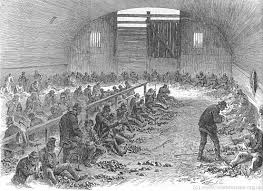
January and February were bad months for the working man and especially for the poor and insecure. Almost every trade experienced a lull after the Christmas rush of work and unemployment became widespread as the weather became more severe. Even so.. there was warmth and shelter in the town even if work was impossible to come by, soup to be obtained at public kitchens, open to all comers, Night Refuges and Asylums in place of the Workhouse, public works (always started up by the Vestries when the weather was particularly severe) in place of the humiliations of the Parish stoneyard

Public works sounds like a reasonable idea. I wonder if the present Government has it in hand