Articles

Beard Friendly Pub of the Year Vote closes at noon on Sunday

In Uncategorized on January 13, 2018 by kmflett

Beard Liberation Front

January 13th

Contact Keith flett                                           07803 167266

BEARD FRIENDLY PUB OF THE YEAR VOTE CLOSES AT NOON ON SUNDAY
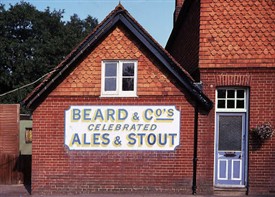
The Beard Liberation Front, the informal network of beard wearers, has said that the annual vote for the Beard Friendly Pub of the Year closes at noon on Sunday January 14th with competition for the accolade still bristling.

The winner in 2017 was the Cock Tavern in central Hackney with the Crafty Devil Cellar in Cardiff the most beard friendly outside London.

BLF Organiser Keith Flett said, will the result be a close shave or will closing time be called on the challengers to last year’s winners. We’ll know on Sunday afternoon.

The criteria for the Award include:

Beard Friendly Pub: a pub that welcomes the hirsute and often has a significant number of hirsute customers, including but certainly not confined to those with modern styles of beards .

Beard Friendly Ambience: a pub that may have fewer hirsute customers but is welcoming to the hirsute through some bearded bar staff and beard friendly beers, and has a generally relaxed atmosphere for all.

The campaign group says it welcomes diversity in both appearance and drinking. The truly beard friendly pub will have a genuine mix of customers not just a load of old blokes grumbling about life.

Notes

Some hostelries on the list style themselves as bars not pubs. This distinction is for others. The BLF is about beards.

Nothing here is meant to suggest that pubs not on the list are unfriendly to beards. This is about pubs that are particularly and emphatically beard friendly

The Beard Friendly Pub, Bar, Tap of the Year Short List 2018

The Axe, Hackney

Bag of Nails, Bristol

Bundobust, Manchester

The Chesham Arms, Hackney

Cock Tavern, Hackney

Dukes Head, Highgate

Hanging Bat, Edinburgh

Hop Locker, Waterloo


Jolly Butchers, Hackney

Mother Kelly’s (Bethnal Green/Vauxhall)

Small Bar, Bristol/Cardiff

Stoneworks, Peterborough

Whitelocks/Turks Head, Leeds

Beavertown/Pressure Drop Brewery Taps, Tottenham

Crafty Devil Cellar, Cardiff

Magic Rock Brewery Tap, Huddersfield

A Beard Friendly Pub, bar or taproom you think should be a winner not on the list? Please use the write-in option. It’s checked regularly and if there is support additions to the poll are made.
Articles

Brewdog Hopworks, Essex Rd, Islington to proceed (with caution)

In Uncategorized on January 13, 2018 by kmflett

It has already been an interesting new year for Brewdog. They have announced the opening of a new bar in the vicinity of Seven Dials (the location of the last attempt at an armed rising in England by London Chartists in August 1848 as I assume most readers of this blog already know).

The details of this are here:

http://goodbeerhunting.com/sightlines/2018/1/11/brewdog-expands-its-london-bar-estate-within-thriving-tourist-district

In addition on 4th January Islington Council’s Licensing Committee gave approval to turn the former Punk Kitchen on Essex Rd N1 into a Hopworks.

The Licensing application, which makes interesting if lengthy reading is below.

Key points include:

The previous restriction to sell beer only with food has been lifted though pizzas made with brewers yeast will be sold

The capacity is limited to well under 100 people

The opening hours have been cut back to 11pm with 30 minutes drinking up time

There were objections from local residents in the immediate vicinity and these were not entirely of the temperance variety. Some point out that when they moved in the premises had been retail, then became a restaurant and will now be a bar with outside seating.

Anyway Brewdog have a licence for a small bar, a ‘brew your own’ facility and off sales.

It will be interesting to see how it works..

Click to access SIGNED%20-%20Report-BrewDogHopworks%20EssexRd-29-31-PremNew-04Jan18.pdf

Articles

The Guardian Berliner 12.9.05-13.1.18

In Uncategorized on January 13, 2018 by kmflett

The Guardian Berliner 12.9.05- 13.1.18The first Fletters

The Guardian cost 60p in 2005…

The Guardian changed from a broadsheet to a Berliner format on 12th September 2005 in response to the now ex-newspaper the Independent and the Times launching tabloid editions in 2003. The Guardian itself is to go tabloid from 15th January and the 13th January is the last Berliner edition.

Below are the first two Fletters that appeared in the Berliner Guardian.

The first in Guardian Education, the day after the Berliner first appeared. The second a week after in response to a spoof columnist Norman Johnson. The irony about the latter (probably Catherine Bennett) was that the opinions Our Norman spouted are not only to be found regularly inhabiting social media nowadays but are far from absent among Guardian commentators themselves 12 years on (and they think they are being serious).

Anyway, here’s to the tabloid’s letters page..

________________________________________________________________________________

Suited for the job

Peter Knight (Opinion, September 6) weighs up what it takes to be a vice-chancellor but unaccountably misses out the key requirements. Namely that you must be white, male and in possession of several good suits.

Keith Flett

London N17

Guardian 13th September 2005

Norman Johnson (Free radical, September 17) is no David Aaronovitch. Aaronovitch supports the war, but he can have a go at trying to explain why. Johnson simply makes cheap shots at George Galloway. Still, there is always hope. Johnson mentions Orwell so he must be in favour of staring reality in the face. And he mentions Muswell Hill, so he must know voters there ejected their MP in May for being pro-war.

Keith Flett

Guardian 20th September 2005

Articles

Nine Elms, Chartism & Donald Trump, 1848-2018

In Uncategorized on January 12, 2018 by kmflett

Nine Elms station

The new American Embassy in Nine Elms Lane, which Donald Trump has declined to open, is a short distance from the old Nine Elms Station which was the original terminus of the rail line that now runs into Waterloo. The passenger station (knocked down and now the site of the relocated Covent Garden flower market) was closed on 11th July 1848.

https://en.wikipedia.org/wiki/Nine_Elms_railway_station

It was itself a short distance from Kennington Common where on Monday 10th April 1848 the Chartists rallied for the vote, causing Queen Victoria to flee to the Isle of Wight.

Perhaps Trump, if he knew anything of history, might be concerned that Nine Elms is not the place for hard right-wing politicians. He might want to ponder however that on 13th March 1848 300 special constables were sworn in at Nine Elms Station ready to counter the Chartist challenge 170 years aago.

Articles

Referendums, Brexit & the left

In Uncategorized on January 12, 2018 by kmflett

Referendums,Brexit and the left

Failed right-wing politician and general lowlife Nigel Farage has raised the question of whether there should be a second referendum on EU membership. In itself his attention seeking statement can be ignored but the call for such a vote is more widely backed in some quarters.

One issue is what the precise status of Referendums is in a democratic process.

We do know that Switzerland is keen on them and that while the June 2015 one was called by a Tory Government, Tories have generally not been enthusiasts. However in the constitutional crisis of 1910/11, over the role of the House of Lords and its ability to block measures agreed in the House of Commons, they did suggest one.

On the left historically speaking the referendum was much more popular.

The view of Britain’s first Marxist organisation the Social Democratic Federation in the 1890s and beyond was that ‘issues of principle would be put to a direct vote…legislation could be drafted in line with referendum results’. That suggests something quite like the High Court decision on Brexit.

The SDF also supported the ‘right of initiative’ which meant that a ‘certain proportion should be able to refer a legislative proposal to the general vote’.

The SDF General Election Manifesto in 1895 attacked what it called ‘Fabian Caesarism’ where experts (think Sidney Webb who co-wrote the 1918 Labour Party Constitution) decided on laws rather than the people voting in referendums.

The SDF was critical of what it called the ‘impudence of the official’ or what Michael Gove might call an ‘expert’ perhaps.

The matter was hotly debated on a spectrum between absolute support for decisions being made in Parliament to important matters being decided by a Referendum. Politically this ranged from support for a politics of Parliamentary democracy, with the left standing in Elections to an anti-Parliamentary position, where elections were shunned.

The latter was espoused by William Morris’s Socialist League which had split from the SDF and contained a current of anarchists.

These different positions on the importance of Referendums or Parliament represented a deep rooted strategic political debate about what mechanism would be the most effective in achieving change for working people.

But there was much broader terrain to the debate than just the British left. While George Bernard Shaw memorably argued that referendums led to disaster they remained the policy of the (Second) Socialist International.

In 1900 it declared that socialists should ‘acquire and maintain everywhere the referendum and initiative as the prerogative of popular sovereignty’.

This is an important point because it underlines that support for the idea of popular democracy or sovereignty was something shared across at least the European left in the period before World War One.


Until the 1970s the idea of Referendums seems to have disappeared on the left. Why is not completely clear but there are some material factors.

Firstly until 1924 it was not thought possible that there could be a Labour Government that might be able to legislate directly in the interests of working people. Secondly organised labour- trade unions- grew in strength and effectiveness meaning there was another strategy of pursuing change as well.

The 1970s saw an upsurge in class struggle and with it the idea that other forms of democracy than Parliament had validity, whether workers direct action or Referendum. Tony Benn successfully lobbied for the first Referendum on EU membership.

Pandora’s Box has been re-opened.


Articles

Mother Kelly’s joins Beard Friendly Pub of the Year vote

In Uncategorized on January 11, 2018 by kmflett

Beard Liberation Front

January 11th

Contact Keith flett                                           07803 167266

MOTHER KELLY’S JOINS BEARD FRIENDLY PUB OF THE YEAR VOTE

The Beard Liberation Front, the informal network of beard wearers, has said that with the contest for the Beard Friendly Pub of the Year closing at noon on Sunday January 14th Mother Kelly’s has been added to the shortlist after a social media campaign

The winner in 2017 was the Cock Tavern in central Hackney with the Crafty Devil Cellar in Cardiff the most beard friendly outside London.

BLF Organiser Keith Flett said, Mother Kelly’s only just missed out on the original shortlist and it’s now up to voters to see whether it can give the competition a close shave

The criteria for the Award include:

Beard Friendly Pub: a pub that welcomes the hirsute and often has a significant number of hirsute customers, including but certainly not confined to those with modern styles of beards .

Beard Friendly Ambience: a pub that may have fewer hirsute customers but is welcoming to the hirsute through some bearded bar staff and beard friendly beers, and has a generally relaxed atmosphere for all.

The campaign group says it welcomes diversity in both appearance and drinking. The truly beard friendly pub will have a genuine mix of customers not just a load of old blokes grumbling about life.

Notes

Some hostelries on the list style themselves as bars not pubs. This distinction is for others. The BLF is about beards.

Nothing here is meant to suggest that pubs not on the list are unfriendly to beards. This is about pubs that are particularly and emphatically beard friendly

The Beard Friendly Pub, Bar, Tap of the Year Short List 2018

The Axe, Hackney

Bag of Nails, Bristol

Bundobust, Manchester

The Chesham Arms, Hackney

Cock Tavern, Hackney

Dukes Head, Highgate

Hanging Bat, Edinburgh

Hop Locker, Waterloo

Jolly Butchers, Hackney

Mother Kelly’s (Bethnal Green/Vauxhall)

Small Bar, Bristol/Cardiff

Stoneworks, Peterborough

Whitelocks/Turks Head, Leeds

Beavertown/Pressure Drop Brewery Taps, Tottenham

Crafty Devil Cellar, Cardiff

Magic Rock Brewery Tap, Huddersfield

A Beard Friendly Pub, bar or taproom you think should be a winner not on the list? Please use the write-in option. It’s checked regularly and if there is support additions to the poll are made.
Articles

How 1968 influenced Tony Benn

In Uncategorized on January 11, 2018 by kmflett

1968: the Year that turned Tony Benn to the left

It is the 50th anniversary of the events of 1968, events that shook the world west and east and did a good deal to give rise to many of the ideas and movements, from women’s and gay liberation to a new left politics that were to be key features of the decades that followed.

They certainly for example informed the socialist politics of the current leadership of the Labour Party.

How 1968 is remembered and assessed 50 years on is, as it were, up for grabs.

It is a moment when those who were there will, either want to make sure their contribution makes its way into the historical record, or depending on their position in society now, do everything possible to make sure it doesn’t.

The 20th anniversary in 1988 saw a number of books including David Caute’s The Year of the Barricades and the 30th anniversary in 1998 saw the publication of Tariq Ali and Susan Watkins Marching in the Streets.

More recently Michael Rosen’s memoir So They Call You Pisher! has interesting passages on being a radical student in 1968.

Its likely that the drift of much of the coverage will be how young people were radicalised in 1968 and what happened to them subsequently, whether they stayed radical or not.

Donald Trump will not want to be reminded of the first notable date of the 50th anniversary-the Tet offensive at the end of January 1968. The Democratic American administration was claiming that they were winning the war in Vietnam. The Vietcong’s attack on South Vietnamese forces underlined that on the contrary US imperialism was definitely not on the winning side 50 years go.

Outside of this narrative a little, but just as interesting is what Tony Benn was doing in 1968 and how it affected him.

He was a mainstream Cabinet Minister in Harold Wilson’s Government 50 years ago.

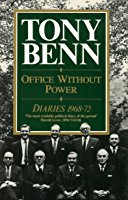
His diary for the period begins with an assessment of 1968, noting that it was the events of that year that started him on his long journey to the left.

Benn’s analysis of 1968 is also interesting because he looks not just at what the left was doing, but also how the right was preparing its counter-attack.

Benn summarises the global impact of 1968 like this:

Internationally, 1968 was the year in which the USA and Europe were in turmoil: protests against the Vietnam War reached a climax, and students were engaged in demonstrations against state bureaucracy, demonstrations which were interpreted as popular disenchantment with politics. But these movements were not confined to the West. In the same year in Czechoslovakia Dubcek launched his experiment in liberalisations..

This is likely to be the way 1968 is seen by many commentators this year.

But there are other aspects to the year which also deserve to be recalled.

Benn notes ‘at the other extreme Milton Friedman was working on his theories of monetarism in Chicago’.  By 1970 the Tories at their Selsdon Park conference had embraced his ideas and Labour was not far behind in echoing them. Benn argues that it marked the end of the influence of Keynesian ideas on British Government.

On 20th April 1968 speaking to a meeting of Conservative activists in Birmingham Enoch Powell made his racist ‘rivers of blood’ speech. It might be seen as the beginning of a hard and far right politics that remains with us. In 1968 though London dockers marched to underline that his reactionary views were welcome.

Benn concludes by simply noting that 1968-1972 ‘was the period my own radicalisation took place’ and he began to formulate socialist policies.

This post appeared in the Morning Star 10th January 2018

Articles

Dry January, Temperance & the left

In Uncategorized on January 10, 2018 by kmflett

It’s Dryanuary and indeed also Tryanuary.

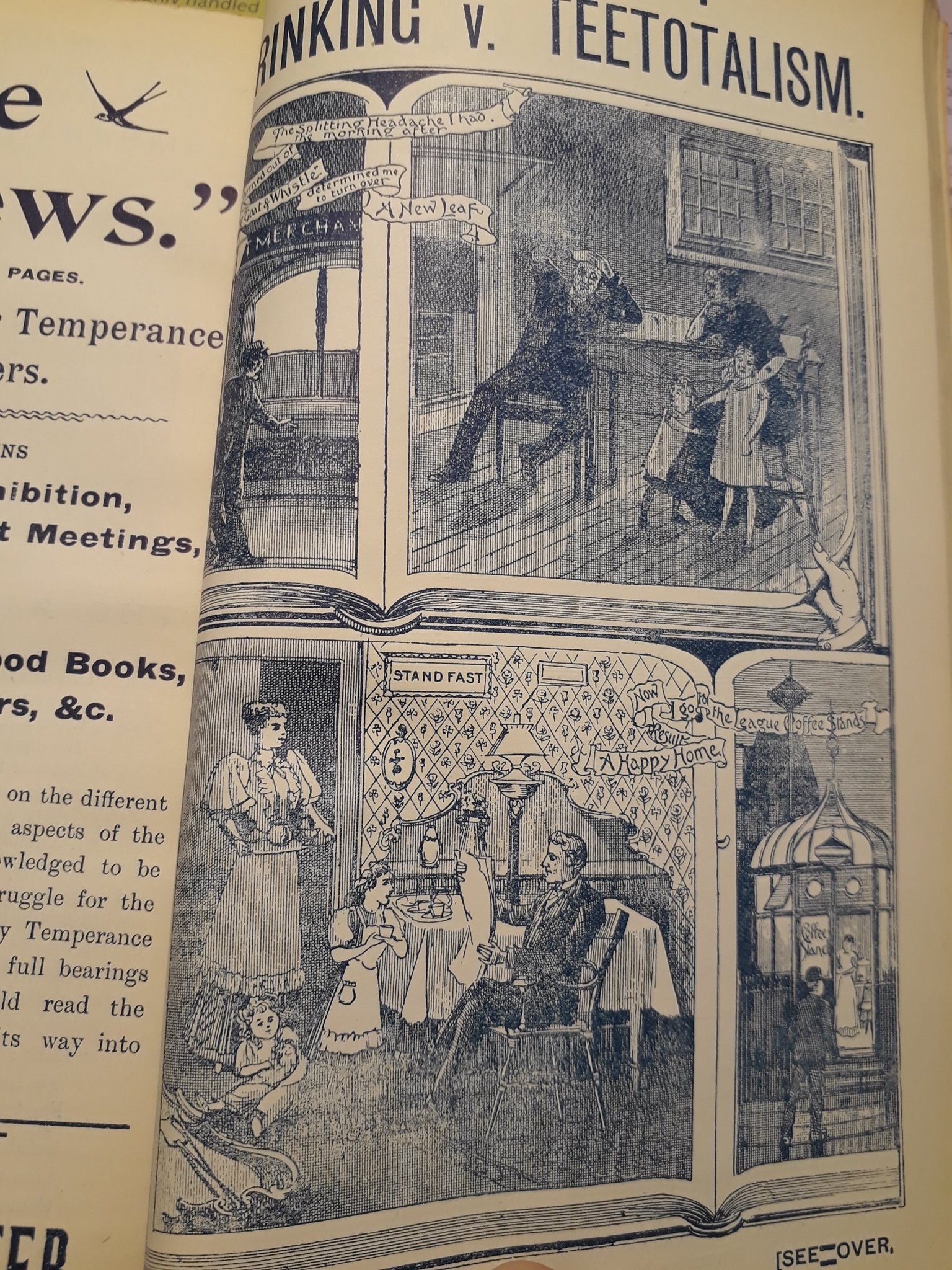
Temperance was once an important part of working-class and labour politics as the graphic above reminds us.

We might however also be reminded what the Labour MP Victor Grayson had to say about efforts to promote temperance in law in the House of Commons over a hundred years ago:

In October 1908 the Labour MP Victor Grayson tried to adjourn a Licensing Debate in the Commons so the question of unemployment could be considered. The next day he underlined the point: ‘there are thousands of people dying in the streets while you are trifling with this Bill’.

Articles

David Bowie: the man who changed the world (a little bit)?

In Uncategorized on January 10, 2018 by kmflett

The moment of David Bowie: the man who changed the world?

I wrote the below two years ago when David Bowie died. It seems as the world has gone since still to have some relevance

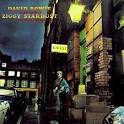
ziggy

I’m so old that I got Hunkdory and Ziggy Stardust when they were first released in the early 1970s.

Bowie was an iconoclast in terms of music and ideas so you could certainly never say he was a man of the left in political terms.

Yet the world is often not so simple. There are those whose professed aim is to make the world a better place who achieve little in that respect (sometimes not for want of trying) and there are those who manage to change things a bit even though it was probably wasn’t particularly the main thing they had in mind. Bowie I think is in the second category.

As Tom Robinson tweeted after Bowie’s death, the Ziggy persona and arguably Aladdin Sane too gave hope to a generation of LGBT youth that it was ok to express their sexuality. In 1970s Britain that was something rather significant.

The Thin White Duke of the Heroes period may have been an impressive persona but it was not something that could be lived with on the left. Bowie was looking at fascist ideas and imagery at a time when the genuine fascists of the National Front were a growing force in Britain.

I doubt too many NFers saw the videos of Heroes (the German language one in particular is memorable, though hardly for the best of reasons) and certainly the impact was nothing like the remarks of Eric Clapton that led to the founding of Rock Against Racism.

Bowie later donated money to the Anti-Nazi League, a reminder that above all he was playing with ideas and music, experimenting with forms, rather than aiming to make overt political statements.

Aside from noting that Bowie looked better without a beard, perhaps his legacy, aside from great music, is a discussion about whether a musician now could have the wider impact on society he had in various ways in the 1970s, even though, as above, it was probably not something he was striving to have.

His flirtation with fascist ideas and symbolism cant be ignored but it was one moment in a complex artistic career. Another was in the early 1970s when he helped to shift the stifling social and sexual relations of post 1945 Britain into a rather better place


Articles

Campaigners accuse Theresa May of pogonophobia as new Cabinet has just one MP with a beard

In Uncategorized on January 9, 2018 by kmflett

Beard Liberation Front

Media Release

9th January

Contact Keith Flett 07803 167266

Campaigners accuse Theresa May of pogonophobia as new Cabinet has just one MP with a beard

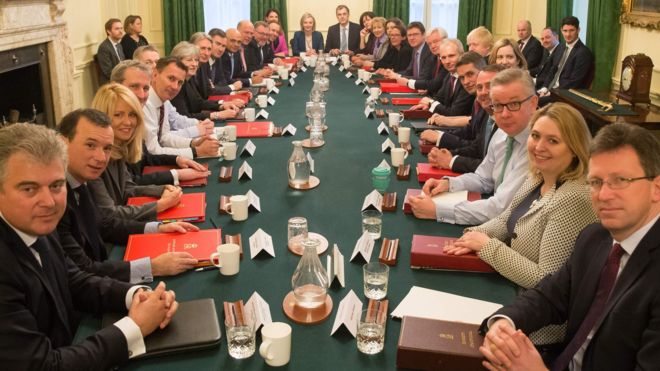
Clean Shaven Cabinet January 2018

The Beard Liberation Front the informal network of beard wearers has accused Theresa May of pogonophobia after the first meeting of the new Cabinet on 9th January revealed that it has just one MP with a beard, Scottish Secretary David Mundell.

The campaigners say that the failure of the Prime Minister to promote several of the now quite numerous hirsute Tory MPs to Cabinet rank reflects a lack of diversity in her approach and very possibly a deep fear of beards related to Jeremy Corbyn’s electoral threat to her Premiership

BLF Organiser Keith Flett said, it looks like Theresa May still does not understand that filling her Cabinet with a majority of middle aged clean shaven men in suits does not represent what Britain looks like in 2018