Articles

The price of beer: a matter of class

In Uncategorized on August 27, 2017 by kmflett

The price of beer: a matter of class

The beer writer James Beeson who has highlighted high prices for beer in London has argued that unless the matter is addressed beer will cease being a drink working class people consume and be confined to a well-off clique of beer enthusiasts.

Well, up to a point Lord Copper.

If you are on JSA or the Living Wage paying even £4 a pint for beer in a pub is a luxury and you may prefer, for example the 4 cans for £6 or less offers that most supermarkets offer for Punk IPA.

Whether beer is particularly an exclusively or even mainly working-class drink is I think more questionable.

Certainly Marx and Engels drank beer while neither Keir Hardie or Jeremy Corbyn did or do (or any other alcohol).

Temperance has been a strong labour movement tradition and with good reason. No one will be changing the world even slightly for the better when they are drunk. I’m noted for being puritanical on the matter. I take a very dim view of drinking before or during any meetings I chair or speak at. After is absolutely fine.

Moreover there are numbers of working class people who don’t drink for religious reasons and may not want to go to pubs (but be careful not to stereotype, some may).

There is also a gender issue. Women didn’t always drink draught beer because, awkward reality, women drinking beer In pubs sometimes get pestered by men, who may not be sober.

Of course lots of women do drink beer and the world is changing so men pester less (we hope).

And again some of all genders and sexualities may prefer wine. I’m far from against a glass myself on occasion.

It’s true I think in defence of James Beeson that the organised labour movement does do beer and pubs, albeit less so than in my day. As a union officer I’d say a visit to the pub after union executive meetings or conferences is not entirely unknown. Stories I could tell of course, but they can wait for my memoirs.

Looking more broadly I think CAMRA has promoted as sort of Popular Front of beer drinking where it is the drink of all classes coming together in class harmony in the pub. Well, it can happen and it is no bad thing in terms of promoting the glue that holds together a society that, for example, stands against racism and for community. But it’s an ideal really more than a frequent reality.

Beeson is right that it will stand more chance of being a reality if beer prices are kept under control. One way of doing that is to reduce duty on beer of course, even if it does annoy the temperance campaigners who won’t speak their name (hello Alcohol Concern)


Articles

Grenfell Tower: the importance of protest

In Uncategorized on August 26, 2017 by kmflett

_________________________________________________________________________-
After Grenfell, crowds and mobs

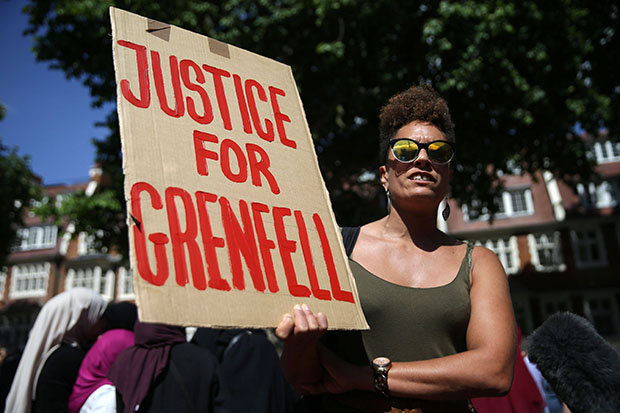
The Notting Hill Carnival this weekend will mark events at Grenfell Tower in an appropriately respectful way, but the importance of protest will continue to be a theme.

The tragic and quite possibly criminal events at Grenfell Tower in Kensington brought a predictable reaction from the gutter press.
The Sun reportedly sent a reporter to pose as a relative of a victim to gain access to a hospital ward. The Mail meanwhile claimed to have identified the man whose fridge they suggested had started the fire.

It wasn’t long however before more serious questions arose well beyond yellow journalism.

As anger rose at the lack of Government response to the tragedy, both at national and local levels, protest marches were organised both in central London and in Kensington itself.

The march in Kensington in particular attracted media attention. It was reported that protesters had ‘stormed’ Kensington and Chelsea Town Hall with a series of demands that they wanted the local Council to respond to.

In reality, as one of the protesters pointed out on social media, the Town Hall is a public building and they had gained entry to it by the usual method of opening the door. No storming had been required.

As the protest continued media commentary started to focus on whether or not there would be a riot and what a bad idea riots are. Clearly these commentators actually believed the Kaiser Chiefs song that riots can be predicted. They cannot.

What can be predicted is that on most occasions which appear to those in authority and those not involved as being likely to conclude in a riot they do not. This is because while the gathering of people who may potentially riot is mostly spontaneous, on most occasions there is a core of organised political direction present.

The fact that the media often report riots as being mystifying events simply reflects that they are too far away from reality to understand who and what is behind them.

The classic riot, dating to the pre-democratic period of the eighteenth century was over the price of basic food stuffs or the quality of them. As E.P. Thompson noted, here the strategy was clear. The aim was precisely not to riot but to give the appearance that unless the demands of protesters were met then a riot might occur. It was a very successful way of winning concessions.

Another related question occurs. The protesters who were at Kensington and Chelsea Town Hall were mostly described as just that but several commentators suggested that what was involved was the ‘mob’.

The use of the term ‘mob’ has a long history dating back to the conservative writer Edmund Burke who used it to describe those who made the French Revolution in 1789.

In Burke’s usage the associations are essentially with criminality and conspiracy.

In more recent times that has provoked considerable historical literature.

George Rude identified the use of ‘mob’ as being reactionary and suggested that a much less loaded word to describe those who engage in protests is ‘crowd’. His book The Crowd in History details his approach.

Despite being a chronicler of riots E.P. Thompson was slightly less sure pointing out that while crowds often gathered for progressive ends this did not by any means rule out more reactionary gatherings.

He had a point. Its difficult to think that the Sun and the Mail would be anything less than enthusiastic about eighteenth century ‘Church and King’ protesters for example.

That of course is not what is happening after the Grenfell fire and it is important to underline that those who are protesting are not a ‘mob’ but rather they are about making a point democratically where democratic processes have fallen short.

This piece appeared in the Morning Star on August 23rd

Articles

Beard wearers warned to avoid exposure to sun in Bank Holiday heat

In Uncategorized on August 26, 2017 by kmflett

Beard Liberation Front
PRESS RELEASE
26th August
Contact Keith Flett 07803 167266

Beard Wearers warned to avoid exposure to sun in Bank Holiday heat

The Beard Liberation Front, the informal network of beard wearers which campaigns against beardism, has issued advice to the hirsute on how to take special care of their beards in the unusually warm Bank Holiday weather in some areas of the UK.

The campaigners say that media reports that scientists have found that a beard protects against the sun indicate a poor grasp of the beard-sun interaction that typically occurs in warm weather. The beard may protect the skin but itself can be damaged by exposure to the sun.

BLF organiser Keith Flett said, there is no need to shave off the beard in the UK during warm weather. However the BLF has provided guidelines on the wearing of shorts and sandals with the beard during the summer period.

The campaign group says that after a period of cooler weather, a change to hot temperatures can mean that the beard is unused to the conditions and follicles may dry out and wither unless precautions are taken.

Tips for maintaining the Beard in warm weather

•If the beard is above six inches in length moderate summer pruning may be in order.
•If the beard starts to overheat immersing it in the freezer cabinet of the nearest supermarket will provide an instant remedy; The beard should not under any circumstances be immersed in ice cool lager. This will damage the follicles
•Hand held fans may be used to ventilate the beard
•If the beard starts to dry out in the heat and follicles become brittle regular immersion in a glass of craft beer will moisturise and nourish the beard

Articles

What we did on our holidays: Marx & Engels at the Victorian seaside

In Uncategorized on August 24, 2017 by kmflett

What we did on our holidays: Marx and Engels at the seaside

There is a solid tradition of socialism and the British seaside and we need look no further than Marx and Engels to discover it.

Official histories of the town struggle to acknowledge it, but Eastbourne was Engels favourite holiday destination.

Engels regularly went to Eastbourne in the summer and sometimes other months, particularly after he took early retirement from the family business. He stayed at 4 Cavendish Place Eastbourne near the pier. He wrote to Sorge on March 18 1893 that he had spent two weeks in the place and ‘had splendid weather’ coming back ‘very refreshed’. Engels also spent time at the seaside, Ramsgate for example, when he was pondering major theoretical works and concerns.

Engels had a fondness too for Ryde on the Isle of White. He visited in September 1857 when he went to Carisbrooke Castle and returned on several occasions in the 1890s.

Marx had other seaside venues in mind and for other reasons than simply holidays. Indeed as early as 14th July 1857 Engels was urging that Marx ‘go to the seaside’ as soon as possible because of his poor health.

In 1866 he wrote that he had been ‘banished’ by his Doctor to 5 Lansell’s Place in Margate. He complained that it was very quiet in March, vegetating before Londoners arrived for the bathing season. Even so he found the ‘air is wonderfully pure and invigorating’
On 25 August 1871 Marx was in Brighton writing that ‘my doctor found it necessary to banish me for a few months to this place, with the strict injunction to do nothing’.

By September 1879 Marx had moved a little to The Plains of Waterloo in Ramsgate where on 11th of the month he noted that ‘the weather here is partly good and partly bad, the latter having a tendency to predominate’.

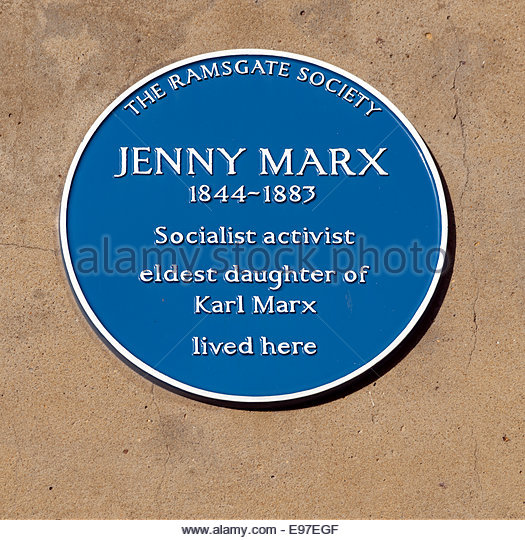
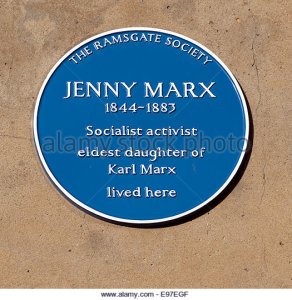
By this time Marx’s eldest daughter Jenny was living in Ramsgate.

Marx had visited Ramsgate previously in 1872 and 1874.

In August 1880 Marx gave an interview to a journalist from the radical New York paper The Sun, partly on Ramsgate beach. It was published in the paper on 6th September 1880.

Marx spent months at the end of his life in 1882 and 1883 in Ventnor on the Isle of Wight. The area has not changed so much since he lived there and the house he stayed in, 1 St Boniface Gdns, which is in central Ventnor, has a plaque to mark his stay. Just six years later Churchill was in the town and the veteran Chartist George Julian Harney also visited. People came because of the temperate climate and the beneficial impact on their health particularly in the winter months.

What did Marx and Engels do while at the seaside?

Certainly as Victorian gentlemen did, they went for walks both on the seaside and inland. Marx visited Canterbury on one occasion in 1866 when staying at Margate. He walked the 17 or so miles there and returned the following day on the train.

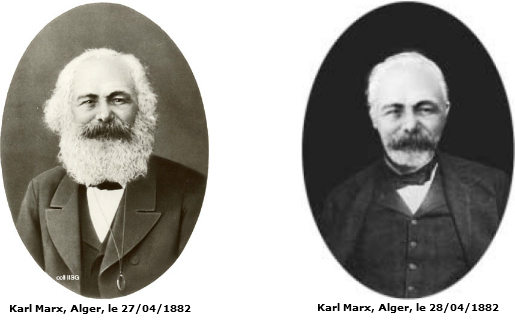
This was also the time of the growth of commercial photography and snaps of Marx at Margate and Engels in Eastbourne still exist. I’m afraid however that neither is to be found in a bathing costume and the Collected Works make absolutely no reference to paddling in the sea.

We can conclude from all this though that Marx’s favourite seaside resorts were Ramsgate and in his last years Ventnor. Margate and Brighton were popular but less so, while Eastbourne was visited when Engels was in residence.

Extracts from letters Marx wrote while at Margate in 1866 (From MIA Frankfurt site)
Margate, 18 March 1866
5 Lansell’s Place
My dear Child,
From the address you will see that I have been banished, by my medical adviser, to this seaside place, which, at this time of the year, is quite solitary. Margate lives only upon the Londoners, who regularly inundate it at the bathing season. During the other months it vegetates only. For my own part right glad I am to have got rid of all company, even that of my books. I have taken a private lodging which fronts the sea. In an inn or Hotel one might have been exposed to the danger of falling in with a stray traveller, or being pestered by local politics, vestry interests, and neighbourly gossip. As it is, ‘I care for nobody, and nobody cares for me’. But the air is wonderfully pure and reinvigorating, and you have here at the same time sea air and mountain air. I have become myself a sort of walking stick, running up and down the whole day, and keeping my mind in that state of nothingness which Buddhism considers the climax of human bliss. Of course, you have not forgotten the pretty little diction: ‘When the devil was sick, the devil a monk would be; when the devil was well, the devil a monk was he.’

Withdrawing a little from the seaside, and roaming over the adjacent agricultural districts, you are painfully reminded of ‘civilisation’, because from all sides you are startled by large boards, with governmental proclamations on them, headed: Cattle Disease. The ruling English oligarchs were never suspected to care one farthing for ‘der Menschheit ganzes Weh’ [all misery of mankind – Schiller], but as to cows and oxen, they feel deeply. At the opening of Parliament, the horned cattle gentlemen of both houses, commoners and lords, made a wild rush at government. All their talk sounded like a herd of cows lowing, translated into English. And they were not like honest king Wiswamitra, ‘der kämpfte und büsste für die Kuh Sabalah’ [who wrangled and suffered for the cow Sabalah — Heine]. On the contrary. They seized the opportunity to ‘battre monnaie’ [coin money] out of the cows’ ailings at the expense of the people. By the by, the East sends us always nice things — Religion, Etiquette, and the Plague in all forms.

Margate, 6 April 1866
5 Lansell’s Place
Dear Fred,
I have been greatly restored here, and not the smallest sign of a return of the atrocious carbuncles… I have now been here for nearly 4 weeks and have lived for my health’s sake alone. It is time to put a stop to that soon.

Articles

Test Match Special: keeping it relevant

In Uncategorized on August 24, 2017 by kmflett

Test Match Special at 60: keeping it relevant

Test Match Special, the BBC’s coverage of international and more recently cricket in general, is 60 the same age as myself.
My recollections of earlier years are here:

Test Match Special at 60: still a beacon of public service broadcasting

But as the 60th anniversary exhibition match is played at Leeds on Thursday before the Second Test I thought I’d offer some brief thoughts on TMS now.

Perhaps the view is that TMS is stuck in a timewarp with great and seemingly timeless characters like Blowers (Henry Blofeld) who is in fact retiring from commentary this summer.

Of course TMS has a great past but that’s not what keeps it going.

The widening range of commentators and the very welcome introduction of women commentators on Tests has underlined that TMS is up for the challenge of relevance for new generations of cricket listeners.

It recently won broadcasting rights until 2024 and with Jonathan Agnew at the helm, a man who straddles past, present and future with consummate ease, hopefully TMS will be around for another 60 years.

What cricket will look like in 2077 is another matter…

Articles

Campaigners offer guidelines on beard trimming to Nick Robinson

In Uncategorized on August 24, 2017 by kmflett

Beard Liberation Front
Media release 24th August
Contact Keith Flett 07803 167266

Campaigners offer guidelines on beard trimming to Nick Robinson

The Beard Liberation Front, the informal network of beard wearers, has said that after Nick Robinson told The Times Diary he was unsure how to trim his beard it is re-issuing its guidelines on this important matter for the hirsute:

Guidelines for Beard Trimming (aka Pruning)

1] Allow the beard to grow so it covers the lower face. This will normally take a week to two weeks
2] Wash regularly and remove any split ends during this period
3] After a maximum of two weeks review the beard for style and impact
4] Unless an ‘Uncle Albert’ is required trim back white and grey hairs.
5] Trimming can be done using an electronic trimmer available from chemists etc. However these can be difficult to control. The BLF preferred method is to use a pair of fine scissors together with a comb to carefully trim and shape the beard until the desired shape and thickness is reached.

BLF Organiser Keith Flett said, Nick Robinson needs to decide what style of beard would suit him. A full Nick Timothy or Brian Blessed might not work for example and a hipster beard is probably not his thing. On the other hand a short-ish and well groomed beard could add style and gravitas.

Times Diary (23rd August)
There is a slight snag to his ambitions: “On a serious note, I’ve no idea how you trim a bloody beard.”


Articles

Peterborough Beer Festival 2017: the slow one now will later be fast

In Uncategorized on August 23, 2017 by kmflett

Peterborough beer festival 2017: the slow one now will later be fast

The 40th Peterborough beer festival opened on Tuesday, under canvas in a city centre location. It is the largest UK beer festival after the Great British Beer Festival.

Don’t expect to read about it on the beer blogs though. For a start it’s in the Midlands and it’s full of ordinary drinkers who enjoy a beer but know there are other things in life too. It costs £5/6 to get in (less for CAMRA members) and there’s lots of music if that’s your thing. Programmes are free.

Secondly it coincided anyway with an historic yeast event at Carlsberg in Copenhagen that seemed to have attracted a good many of the UK’s beer writers.

I’m sure it was interesting but they would have learnt a lot more about what is happening in UK beer had they been in the perhaps less exciting location of Peterborough.

PBF is not the GBBF despite its size so it has long been able to do things that don’t happen at Olympia, and it does.

For a start, and it’s not the first year, there was the Jolly Good Beer, keykeg bar, or keycask as the programme a little confusingly called it. From memory there are 13 beers on rotation from a list of 40.

That wasn’t the only keykeg at the festival since the Nene Valley Festival bar also had some. Their New England pale was as murky as you’d expect in a beard and beer bar but not at a CAMRA festival perhaps.

The same was true for what me was the beer of Tuesday at the festival Three Blind Mice’s Four Go Wild (or possibly) Mad in the Fens. Not one feels a beer brewed in the Cromwellian spirit (he was a local man) it was murky New England pale on cask.

Peterborough also has a ‘singles’ bar featuring one-off brews. I didn’t get to try the Elgood’s Mango Sour but again, what an interesting development from the brewery that does Coolship.

There were also some barrel aged cask beers around including a 6 year old Adnams Broadside at 10%.

It’s what old Marxists with beards call combined and uneven development or as Bob Dylan had it ‘the slow one now will later be fast’.

The festival also has the unmissable Purely Pickled Eggs btw and if you’re in Peterborough a visit to the Stoneworks Bar right in the centre near the Cathedral is essential. If you’re used to the beard and beer bars of London you’ll be amazed at the interest and range of the craft keg list and the (reasonable) prices.

Update: Thursday

Its a Bank Holiday weekend, the weather is decent and Peterborough is easy to get from Tottenham so I visited again on Thursday with my partner Megan. I should mention the Bimble Inn micropub, another excellent addition to the Peterborough beer scene, close to the Oakham brewery tap (leave the station by going past Waitrose).

The beer at the festival was an interesting as Tuesday. There was murk where the beer was meant to be murky, complete clarity and excellent condition otherwise and the keykeg bar was still going strong. Ample seating and pickled eggs and there is still time to get there. I particularly enjoyed on Thursday a third of Bexar County/Three Blind Mice coffee imperial stout Bitter Invention of Satan. I don’t recall seeing the beer in London, or indeed either of those East Anglian breweries at all.

PBF runs to Saturday

http://www.peterborough-camra.org.uk/index.php?bf=1


Articles

We need to talk about Geoffrey…

In Uncategorized on August 23, 2017 by kmflett

We need to talk about Geoffrey

Geoffrey Boycott has unreservedly apologised for remarks that he made at an event related to last week’s day-night Test at Edgbaston that some would certainly see as racist.

Boycott is quoted to the effect that he didn’t see anything wrong with the remark at the time, meant, he says, as a joke. However the Times reports that his apology comes after talks with his lawyers and the BBC. The BBC meanwhile have stated that he will stay with Test Match Special for the current West Indies series.

I suspect Geoffrey may be near his last innings as a commentator. We all say unfortunate things from time to time, although as a union officer, I can’t recall the last time I dealt with an issue related to a racist remark- even racists understand such comments are off limits in public arenas like workplaces. The problem is Boycott doesn’t seem to understand why it is a problem and that means he is quite likely to do it again.

His background around rebel tours to apartheid South Africa is well known as is his recovery from cancer, suggesting a strength of character one would suspect from his steadfast batting.

He knows a lot about a cricket, although there are other views, but the world is moving on. Test Match Special has a range of younger commentators and analysts, female and male now.

The BBC’s cricket commentator Jonathan Agnew deserves full credit for bringing what we might call late period Geoffrey Boycott to the airwaves in ways that informed and entertained but I suspect in future we may need to check his Telegraph column for his thoughts

Articles

Campaigners urge Nick Robinson to keep his new beard & resist BBC Pogonophobia

In Uncategorized on August 22, 2017 by kmflett

Beard Liberation Front
Media Release 22nd August
Contact Keith Flett 07803 167266

Campaigners urge Nick Robinson to keep new beard & resist BBC Pogonophobia

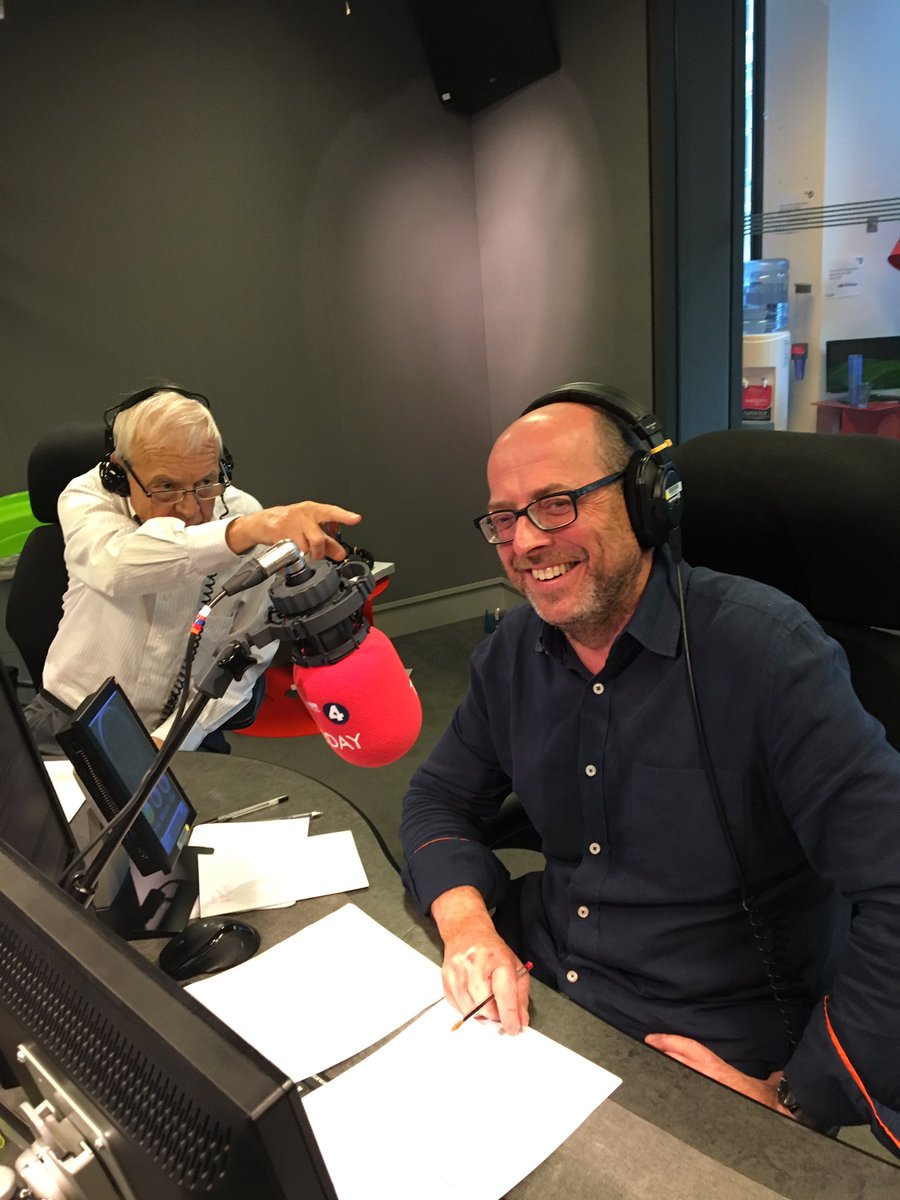
The Beard Liberation Front, the informal network of beard wearers, has urged BBC Radio 4 Today presenter Nick Robinson not to give in to BBC pogonophobia and keep his newly grown beard.

The campaigners say that after Jeremy Paxman accused the BBC of being pogonophobic in 2013, and subsequently shaved off his beard, there continue to be questions about the broadcaster’s attitude to facial hair.

Earlier this month Jeremy Vine shaved off his beard, before returning to the air from holiday, after the Sun suggested he looked ‘scruffy’.

BLF Organiser Keith Flett said, its time someone made stand and what better person than Nick Robinson. We urge him not only to keep his beard but to nurture it

Articles

August 1839: not a bank holiday but a grand national holiday

In Uncategorized on August 22, 2017 by kmflett

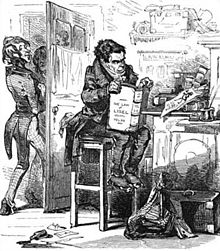
William Benbow caricatured in an 1848 edition of Punch

The Grand National Holiday: when the pubs shut to bring down capitalism

August is a peak month for holidays. School is out in many areas of the UK, official institutions such as Parliament and the Courts take a break, and the weather is supposed to be decent.

Historically in many northern manufacturing districts- at least before Mrs Thatcher got to work- this was also the period of Wakes Weeks when factories and mills shut down for a fortnight.

There is nothing particularly radical about any of this except of course that the right to paid time off had to be fought for by trade unions and the labour movement and did not become an established feature of working life for many until the 1930s and often later.

Yet there is also a radical tradition of ceasing work associated with August, the Grand National Holiday.

The ‘Holiday’ was an idea promoted by William Benbow (1784-1864). Like many radical activists in the nineteenth century he ranged across a variety of occupations, from pornographer to coffee house keeper to grocer and journalist, to survive.

Benbow was influenced by the radical ideas of Thomas Spence, and he popularised the idea of a people’s jubilee, or open-ended cessation of work, with the plan of ending capitalism.

He had been pushing the idea of a ‘Sacred Month’ for decades in radical circles with no great immediate impact. He did however publish it as a pamphlet in the early 1830s and this was widely read.

Benbow’s plan might well have stayed simply an interesting idea were it not for the fact that the Chartist Convention of summer 1839 adopted it as policy and determined to put it into operation in August of that year, starting on the 12th of the month.

We are familiar with General Strikes around the world which are in protest at something or which are demanding specific things. The Grand National Holiday was neither of these. It simply planned to disengage from capitalism until the system stopped working.

This meant that not only was no work to be done, but that supporters of the Sacred Month should withdraw any savings they had in banks or other institutions. They were also required to abstain from all excisable articles such as drink and tobacco. On 12th August 1839 in many, mainly northern areas, the pubs were shut.

It was argued that aside from anything else this prevented any disorder and drunkenness as the month got underway.
How was the call for the Sacred Month implemented?

The weekly Chartist newspaper The Northern Star for the 17th and 24th August 1839 reported meetings across the north, often with very large turnouts comprising a majority of the working population of particular areas, which then proceeded to march to surrounding locations to pull others out in support of the popular Jubilee.

There is not a uniform picture of how long people stayed out for- some days in a number of areas- but not the whole month. The practicalities were complicated.

Perhaps some had small holdings that allowed them to survive without wage labour, possibly being only recently agricultural workers. This was part of the project that became in the later 1840s the Chartist Land Plan.

Even in areas where the strike did not take hold there was at least symbolic support. In London on 12th August there was a mass Chartist meeting on Kennington Common for example.

Almost 180 years on the events of August 1839 have a strikingly modern feel. A People’s Jubilee against not this or that aspect of capitalism but the whole system.

This post first appeared in the Morning Star 21st August 2017