6th August is IPA day. Enjoy but keep in mind the imperial heritage
I tend to view it primarily as a commercially focused opportunity to promote IPA but I’ll be drinking a glass of St Austell, Proper Job, which was the Champion Bottled Beer of Britain 2025, a bottle conditioned IPA
The link with various aspects of far from always great British imperial history is difficult to avoid.
What did the ships that took IPA to India return to Britain laden with? As often the sadly late Martyn Cornell had an answer, in relation to a ship returning from Calcutta in 1838:
cargo including raw cotton, 83 elephants’ tusks, coffee, wool, pepper, ginger – and opium
Whichever tactical genius it was who decided to release the information, via a statement by Angela Rayner, that a small number of allotments are being repurchased for social housing. The process has been underway for a while and requires consultation with the Allotment Society and local authorities.
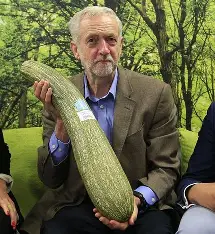
Speculation on social media is that it was released in what is traditionally known as the summer ‘silly season’ to annoy veteran allotment holder Jeremy Corbyn.
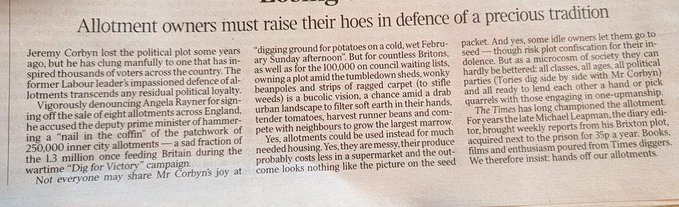
If so it has backfired very badly. Firstly Corbyn wrote an article in the Daily Telegraph defending allotments against Rayner’s plans. Now (7th August) a Times Editorial has backed him. True its only on the allotment question but as the Editorial makes clear it is something that is very close to Times’ readers worldview..
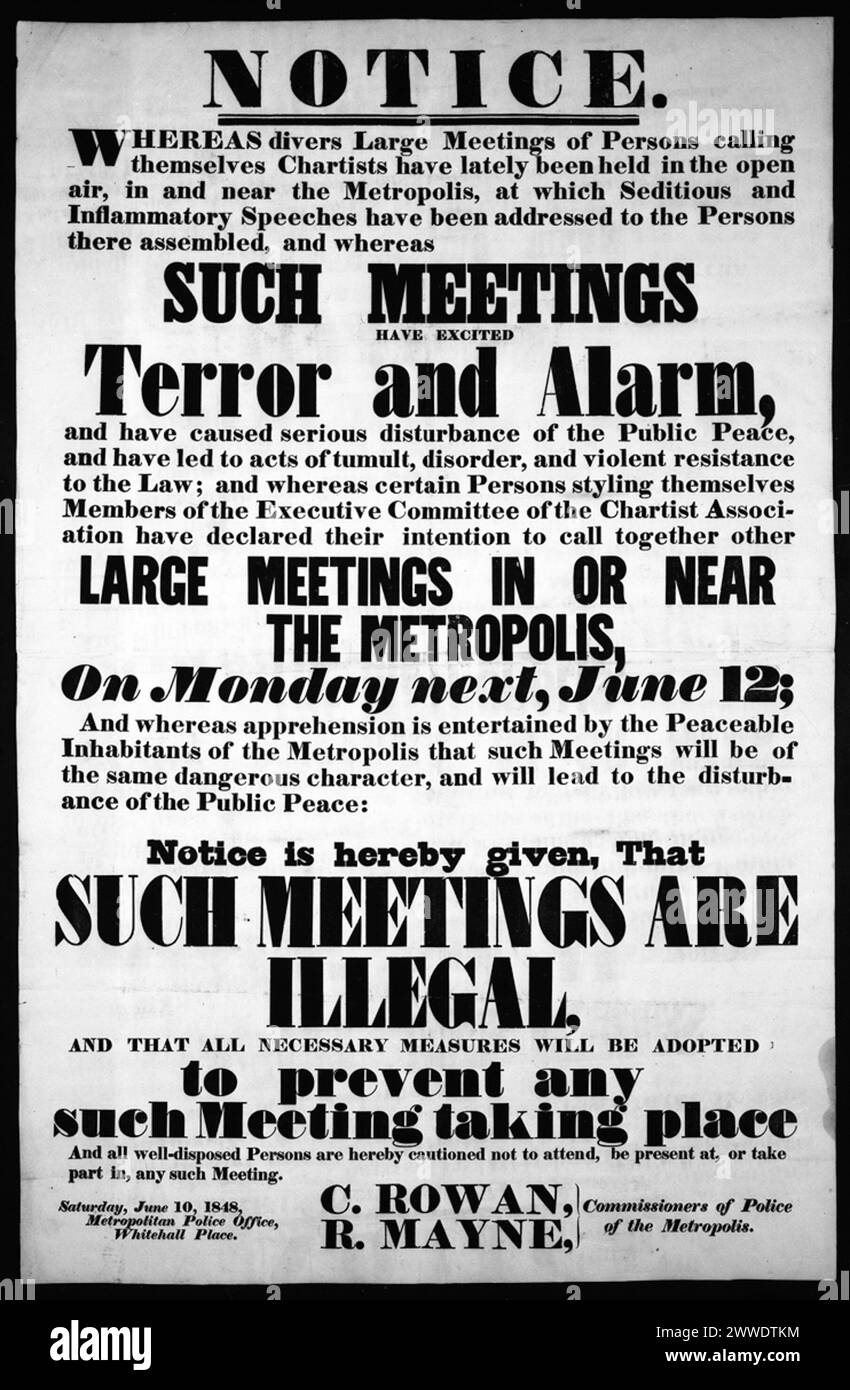
August 1848: Chartists meet daily to plan an armed rising in central London
It’s a part of London’s radical history Keir Starmer probably and Yvette Cooper definitely do not want to know about. Frustrated by peaceful attempts to secure the vote, sections of London Chartism decided to try an armed rising instead.
There had been a gradual move towards militant action after the failure of the petition for the vote which had been presented from the meeting on Kennington Common on 10th April 1848. There were militant meetings (far from just in London) in June and July 1848. By the beginning of August this had turned into planning for an armed rising in central London, designed to take control of the Capital.
There was a long history of conspiratorial politics in London and elsewhere but the majority tradition certainly represented by the weekly Chartist paper the Northern Star was for open organising and campaigning.
The details below are only part of what was happening in London in the first weeks of August 1848. There were parallel meetings of Irish reformers concerned to protest at a significant State crack down on political activity in Ireland. On occasion the reformers, or repealers, met at the same location and were certainly present at the same demonstrations
Below are the details of where those planning the armed rising (due to take place on 16th August at Seven Dials) met during August.
We have the details because the meetings were infiltrated by what are now known as SpyCops. A significant and known issue with the conspiratorial tradition. The picture of radical activity in London in early August is likely to be far from complete. The Northern Star didn’t carry reports until the conspirators were arrested and trials took place. Even there we have to rely on what was likely to have been the unreliable evidence of Government spies.
Most of the meetings were in coffee houses, reflecting perhaps the teetotal traditions of some Chartists, but also the reality that such places did not require a licence or official oversight and hence more difficult for the authorities to keep an eye on.
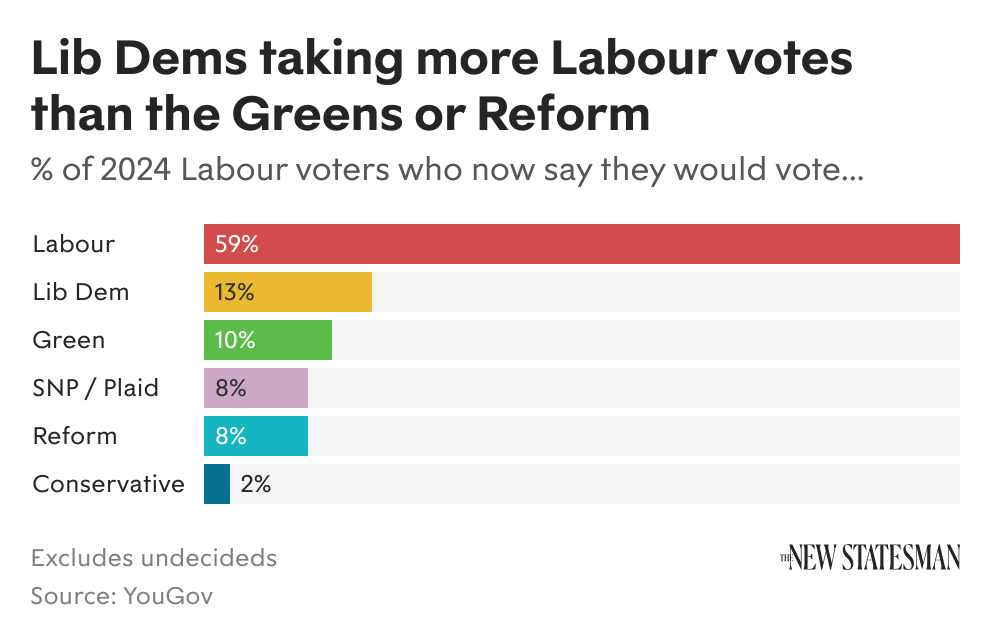
The above YouGov poll graphic comes from the New Statesman. YouGov political polling used to be unreliable and Tory biased. Those days are gone. YouGov is now a commercial polling organisation and it cant afford to simply produce eye catching polls of the Luke Tryl variety simply to get media coverage.
I’m not now and nor have I ever been a LibDem voter. I opposed the Clegg-Cameron Government and I am much less impressed than Ed Davey is with the EU (I voted Remain).
Even so with 72 MPs the LibDems have the largest third party presence in Parliament since 1923, the year in which they were being eclipsed by the rising Labour Party. In 2025 however it is part of the Tory vote they are attracting. Of their election target seats 26 out of 30 are currently Tory held.
Davey has recently complained, and rightly so, to BBC DG Tim Davie that Farage and Reform gets lots of coverage with a very small if endlessly variable number of MPs while the LibDems get little. The NS reports that while the LibDems are not pitching to the left of Labour as they did in 2010 one issue they find attracts support from both Labour and Tory voters is that of Netanyahu.
Why Labour voters, at least a potential 13%, might be switching to the LibDems can be speculated about but the interesting thing, LibDems aside, is that very few are going to Reform.
Of course the interest now is how a new left political formation impacts on all this and the opportunities it may open for positive change if not particularly at Westminster in the short term but at the grassroots in communities and workplaces..
Your guide to the day’s best TV shows, across terrestrial and digital platforms.
MasterChef BBC One, 8pm After months of controversy and an investigation that saw John Torode follow Gregg Wallace out the door, the latest series, which had already been filmed prior to their exits, finally arrives on our screens.
Tbh as a regular watcher of MasterChef down the years I have tended to think of it is a food programme with no particular at least overtly political angle, except for the appearances of William S*itwell the Telegraph’s hard right restaurant etc critic.
With the latest series starting on the BBC on 6th August (also on IPlayer) I suspect things have changed. The Daily Telegraph ever up for a culture war and reliably anti-Woke promotes the programme to its No.1 evening TV viewing choice. Not accidental it must be suspected…
In case anyone is tempted to carry this as a placard on demonstrations over the next few days its important to underline that carrying a copy of a satirical magazine is not an arrestable offence
Why Angela Rayner decided to announce a small scale repurposing of allotment space for social housing during the Parliamentary summer recess and when she does not have the power to do this without consultation with the Allotment Society (which seems to have taken place) is of course subject to social media speculation.
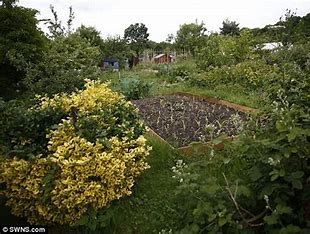
What is certain is that it inspired veteran North London allotment holder Jeremy Corbyn to write in defence of allotments in the Daily Telegraph (paywalled but his comments are below). There are reportedly 330,000 allotment holders in the UK. I’m not much of a gardener myself but my North London experience is that allotments are highly prized and difficult to get- there are often waiting lists.
Allotment holders have clearly now joined the rather long list of people which the Government has decided it wants to annoy. The political mindset that leads to this kind of strategy is, well, interesting
Corbyn in the Telegraph (5th August)
The loss of allotments makes us all poorer
By Jeremy Corbyn
News that Angela Rayner may approve allotment sales will fill many with deep dismay.
Allotments have always been under threat from developers. Now, that threat seems to have government backing, which makes the future of these precious spaces even more perilous.
Those advising government and local authorities should have some regard for the troubled history of land ownership, and the struggle over access by those who simply want to grow their own crops.
The debate goes back to the English Civil War, when the King wanted to secure control of the land he had gained, while Cromwell claimed to speak for the farmers. In truth, it was the Diggers who were the real revolutionaries. They wanted land to be in common ownership.
Despite the restoration of the monarchy, huge areas of land were known as the Commons and survived for almost another two centuries. That is, until the greed of big landowners won out once again.
The Enclosure Acts, one of the most grotesque abuses of power by Parliament, took away the growing and grazing rights of the rural poor. A monstrous attack on working-class life, the enclosures represented the widespread theft of public land, sanctioned by a parliament that was dominated by landowners.
The rural poor, left with nothing and facing starvation, were forced to migrate to industrial cities. It was in these rapidly growing industrial cities – notably in Birmingham – that allotments started to grow. Allotments, then, grew out of opposition to enclosures and the privatisation of common land.
Allotments were regulated in the late 19th and 20th century and, even though numbers have since fallen, there are about 330,000 allotment plots. At least 100,000 people are on waiting lists.
‘Once lost, they never return’
Allotments have been crucial in times of national stress. Many came out of the Second World War. Indeed, many that were established in the First World War, such as the one I enjoy in north London, have survived to this day.
Once lost, they never return. Their loss makes us all poorer, as we become more and more detached from how food is grown and how nature interacts with us.
Allotments provide a vital space for community cohesion, biodiversity and social solidarity. These parcels of land, that cannot be individually fenced, provide growing space for many people.
Many people have no access to their own garden, and an allotment gives them the opportunity to grow vegetables and fruit and observe nature.
Allotments are particularly important for people who experience stress and mental health problems. I speak to many people who would love access to them for this very reason.
Property developers have always had their eyes on these parcels of land. Together with local authorities, they construct various arguments for building over them. Instead of contemplating sales of these wonderful spaces, the Government should be encouraging the growth of allotments, or where there is insufficient land, the growth of community and school gardens.
In my own borough of Islington, community gardens have played a vital role in bringing the community together and encouraging sustainable food production.
Of course, social housing is desperately needed, but we need not sacrifice these vital green spaces to build it. We can build on ex-industrial land and take over empty properties. Even then, we should ensure social housing is accompanied by community gardens and adequate growing space.
Is this Government going to put the nail in the coffin of the joy of digging ground for potatoes on a cold, wet February Sunday afternoon? The battle for the grass roots is on!
Jeremy Corbyn is the independent MP for Islington North
The last season of the Hundred V1.0 got underway at Lords on 5th August. A double header between the Invincibles (Sarf) and the Spirit (North). The Hundred V2.0 with the franchisees in charge starts in 2026
As in earlier iterations the women’s match saw decent cricket with the Spirit winning.
The men’s match where the Invincibles won with 36 balls (out of 100) to spare was dire.
26,000 or so attended (the men’s game anyway) but the star was a fox that did a circle of the pitch.
A reminder of previous rounds of the Hundred. The women’s matches are of a good standard with potential selection for England at stake. The men’s games are essentially mostly journeymen cricketers playing in just another franchise competition.
What the new franchisees made of that one might wonder and what they will do about given the money invested one might wonder even more…
Jeremy Corbyn is right on allotments as part of People’s History
Kevin Ovenden posting on FB correctly pointed to the propensity of the Government to hit on issues that manage to unite unlikely bedfellows against it. In this case it was Angela Rayner’s decision to repurpose some allotments for social housing.
Its August and the story has an element of culture war about it. The number of allotments involved was small in number and Rayner cant do it without consulting the National Allotments Society.
Even so the direction of possible policy seems clear and it led to Jeremy Corbyn writing a piece in defence of allotments in, er, the Daily Telegraph. Corbyn himself is a veteran allotment holder (in East Finchley since you ask). Certainly in North London allotments are hard to come by and highly prized.
I’ll post further on Corbyn’s Telegraph article (which is paywalled) but he is right to position allotments in people’s history. The right to grow vegetables and keep a pig was eroded as land was enclosed and the right to common land has been a political struggle ever since.
E P Thompson in the Making of the English Working Class touches on the issue.
He notes that ‘the yearning for land arises again and again, twisted in with the outworker’s desire to ‘independence’ from the days of (Thomas) Spence to the Chartist Land Plan and beyond. Perhaps its vestiges are still with us today, in allotments and garden plots. Land always carries associations- of status, security, rights- more profound than the value of its crop.
Dark Mild wins Champion Beer of Britain 2025. Calling time on the enormous condescension of posterity
The Campaign for Real Ale’s Great British Beer Festival is underway at the Birmingham NEC from 5-9th August.
As usual on the opening day the Champion Beers of Britain are announced. From time to time there is comment about the partiality of the judging process but this year’s winner underlines that it is based entirely on what the judges find is the best beer on the day.
The winning was a 3.6% dark mild from the Penzance Brewing Co. Its produced by a brew pub with a five barrel brewing length. In short that means that unless it is contract brewed somewhere as the CBOB (it can happen but is a considerable commercial undertaking) the chances of tasting it beyond a visit to Penzance or the NEC may be limited.
However if it promotes the style of mild, dark of light, its still a very good thing
The beer writer Pete Brown had a lengthy Q&A about all matters beer in the Sunday Times magazine on 1st December 2024. It was of course well informed and entertaining. He posed, to give one example, the question ‘does anyone drink mild anymore’ to which he answered simply ‘no’.
I’m not sure whether this was a joke (fair enough) or a personal view but either way it is of course not true. Mild has long been characterised as an old man’s drink, and I am an old man (well 68 anyway) so I would say that. Except I’ve been drinking mild for decades even when I was younger, so much younger than today etc.
Pete Brown later atoned for the comment by featuring a selection of mild’s in a more recent Sunday Times column.
Mild is of course not a strength of beer but a style or arguably styles as it comprises light and dark milds.
At the annual CAMRA Pigs Ear Beer Festival in Hackney in early December 2024, I tried the annual release of a Victorian Mild from Kernel and Redemption Breweries. It was first brewed in 2011 and in recent years has made a pre-Christmas appearance.
The Kernel version was in a wooden cask at 5.5% and that gave it in my personal view fuller flavour. The Redemption version was 6%.
I had a brief chat with Evan from Kernel and Andy from Redemption where the consensus seemed to be that the latter’s version is better that year.
You can of course form your own broader view by drinking some mild and at the same time proving Pete Brown wrong but the judges of the Champion Beer of Britain right.