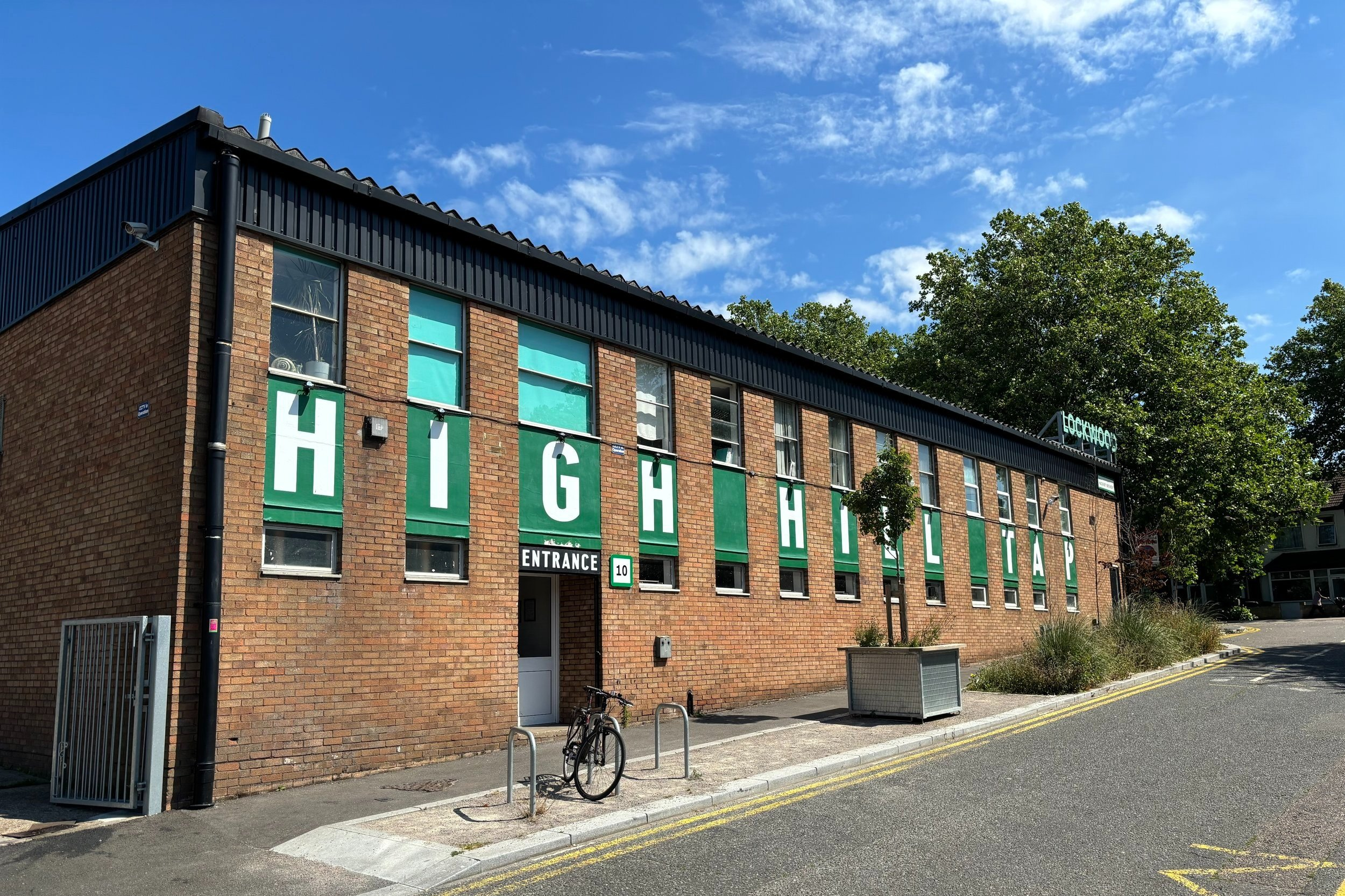
No reason is given but there have been exchanges between the brewery and its landlord Waltham Forest Council where financial difficulties over an extended period were clearly an issue.
It’s a pity not least because Hackney brewed some decent beers down the years.
If Beer Guide London’s figures are accurate (and I am certain they are) this takes the number of active London Breweries to under a hundred (99 in fact) for the first time in a while.
The Walthamstow Beer Mile is looking a bit shorter after Wild Card (opposite Hackney) closed in the autumn of 2024 again following financial difficulties.
In Mid-March Beerblefish also closed. The current issue of CAMRA’s London Drinker has a detailed piece by Christine Cryne looking at the reasons, which perhaps can be summed up by ‘it wasn’t much fun anymore’
It can all seem a bit gloomy but in reality as often the picture is mixed. Queer Brewing have just opened their own brewery and tap at Lea Bridge, while the owners of the Cock E8 and the Southampton Arms NW5 have just opened a new pub, the Pocket, off Upper St N1 (Highbury Corner end)
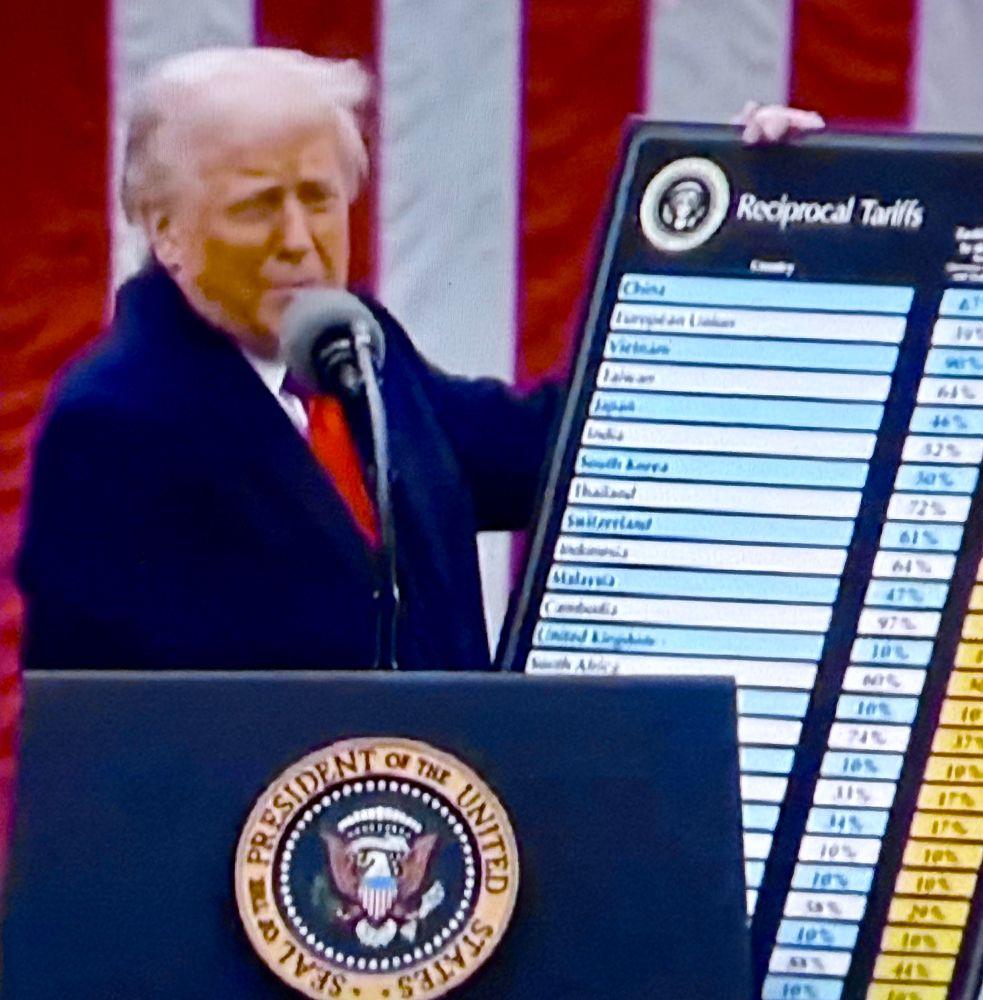
Trump has (in so far as anything Trump does stays around for long) proclaimed the biggest shake up in world trade since the 1930s. Some might query why what Engels wrote about the US and protectionism is of interest since he died in 1895. The point being that Marx and Engels were looking at and trying to understand how capitalism did and did not work with a view to getting rid of it.
They were both committed Free Traders arguing that Protectionism represented a backward and reactionary capitalism (obviously that’s a very general summary!)
Trump has argued that the US did best when it was a Tariff country from 1870 to 1913 when no income tax was levied. Below is Engels view from 1888
Engels on the US & Protectionism
Protection is at best an endless screw, and you never know when you have done with it. By protecting one industry, you directly or indirectly hurt all others, and have therefore to protect them too. By so doing you again damage the industry that you first protected, and have to compensate it; but this compensation reacts, as before, on all other trades, and entitles them to redress, and so on ad infinitum. America, in this respect, offers us a striking example of the best way to kill an important industry by protectionism. In 1856, the total imports and exports by sea of the United State amounted to $641,604,850. Of this amount, 75.2 per cent were carried in American, and only 24.8 per cent in foreign vessels. British ocean steamers were already then encroaching upon American sailing vessels; yet, in 1860, of a total seagoing trade of $762,288,550, American vessels still carried 66.5 per cent.
The Civil War came on, and protection to American shipbuilding; and the latter plan was so successful that it has nearly completely driven the American flag from the high seas. In 1887, the total seagoing trade of the United States amounted to $1,408,502,979, but of this total only 13.8 per cent were carried in American, and 86.2 per cent in foreign bottoms. The goods carried by American ships amounted, in 1856, to $482,268,274; in 1860 to $507,247,757. In 1887, they had sunk to $194,356,746. Forty years ago, the American flag was the most dangerous rival of the British flag, and bade fair to outstrip it on the ocean; now it is nowhere. Protection to shipbuilding has killed both shipping and shipbuilding.1888: On the Question of Free Trade
From Wisconsin 2025 to Westminster 1807, Elections, Bribery and Democracy
On 2nd April 2025 the Democratic candidate for a vacancy on the Wisconsin State Supreme Court was declared the winner over the Republican candidate. Views on the politics of the US Democratic Party will vary but this at least stopped the politics of Trumpism from running amok in the State.
The unusual feature of the election was that unelected far right business owner and Trump sidekick Elon Musk tried to buy the election for the Republican candidate with millions of dollars being used in the campaign. He failed
It’s a reminder that sometimes the rich and powerful don’t always get there way.
There are historical parallels. In the Making of the English Working Class the late historian E P Thompson discusses the election for a two member seat at Westminster in the General Election of 1807.
Two radical candidates Burdett and Cochrane triumphed. What was interesting about their victory was that it was down to an independent campaign of electors determined to keep the election free of bribery and patronage
The radical journalist William Cobbett campaigned on the basis that electors, freeman, traders, artisans should free themselves by their own exertions from patronage, bribery and deference…
Thompson writes of the ‘effectiveness of a new form of electoral organisation dependent not on the wealth or influence of the candidate but on the voluntary exertions of the electors
Despite his apparent interest in the UK I don’t think Elon Musk knows any British history
Why did E P Thompson focus on the English working class when 60 plus years on some might argue that it should have been the British working class. One reason of course is that given the book was not far off a thousand pages long it would have required further volumes. Thompson himself in the 1963 preface had other specific reasons.
He argued that ‘it is possible, at least until the 1820s, to regard the English and Scottish experiences as distinct since trade union and political links were impermanent and immature’
However when it came to Cato St, the unsuccessful London conspiracy to murder the Cabinet as a reaction to Peterloo in February 1820, Thompson actually noted the links between English and Scottish trade unionists. It’s fair to say that these links must have been built over time and deliberately so given this was a time before mass communications.
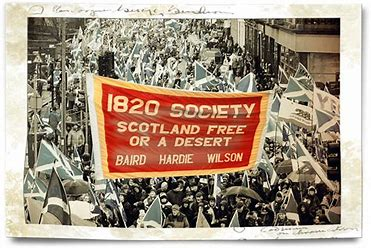
How far the Cato Street Conspiracy was linked to any genuine national plan is unclear. There were three attempted risings shortly after the arrest of the conspirators-one in Glasgow and two in Yorkshire. In the neighbourhood of Glasgow small parties of weavers rose on 5 and 6 April (with their famous banner, Scotland Free or a Desart), there was a sharp encounter with the military at the ‘Battle of Bonnymuir’… It seems that the insurgents believed they were acting their part in a plan for simultaneous risings in Scotland, Yorkshire, Lancashire and Carlisle- in all the weavers strongholds.
E P Thompson, The Making of the English Working Class
Battle of Bonnymuir
An Account of the Battle which took place at Bonnymuir, on Wednesday the 5th April, 1820, betwixt about 50 of the Radicals and a party of the Military;
Kilsyth, 5th April 1820
This morning a gentleman residing in this parish belonging to the Falkirk troop of Yeomanry Cavalry; left home to join his troop at Falkirk, and had proceeded a short way from his own house, when he came up with between 25 to 30 Radicals, all armed with pikes, muskets, and pistols, who stopped him and requested him to give up his arms, which he refused to do, and showed them a disposition to resist. They told him (at the same time presenting at him several pistols) that resistance would be vain, as they would kill him on the spot. He, however, got off retaining his arms and meeting with an Orderly from Kilsyth going with dispatches to Stirling, informed him it would be improper to proceed. They accordingly both returned to Kilsyth and reported, when the Commanding-Officer there ordered ten men and a serjeant from the 10th Hussars and as many of the Yeomanry Cavalry, to escort the Orderly and the other Gentleman on their several roads, and to endeavour to fall in with these armed Radicals if possible. The Radicals, in the interval, had been joined by a number more, who proceeded along the Canal Bank towards Bonny-muir, having taken several fowling-pieces and a pitch-fork from farmhouses in the neighbourhood of Bonnybridge.
The Cavalry, on their arrival at Loanhead, being informed of their proceedings, immediately went to Bonnymuir in search of the Radicals, and, on coming up with them, they showed a disposition to fight rather than fly; having taken their position behind an old dyke, they allowed the Cavalry to come within thirty yards of them, when they fired a volley; the Cavalry instantly charged, firing a few shots when going over the dyke; the Radicals received the charge with their pikes, and made all the resistance in their power, but they soon found themselves in a bad situation, and throwing away their arms, endeavoured to escape, when the Cavalry secured nineteen prisoners; three of whom are wounded, two remained on the field so badly wounded as not to be able to be carried to Stirling Castle, where the prisoners are lodged. Eight or ten of those who escaped are said to be wounded, and have not been able to go from the place where the affair happened. The whole number of the Radicals did not exceed forty or fifty. None of the Cavalry are severely wounded; two are slightly in the hand; and one horse severely wounded in three different places (since dead) and a number of horses slightly.
It is reported that the whole of the prisoners belong to Glasgow, except one of the name of Baird, said to be their leader, who lately resided at Condorrat. It is said that the whole had been drilling in the Calton Green of Glasgow this morning, that they left that place about four o’clock, and went over the country in a straggling way till they arrived at Bonnymuir, where they expected to be joined by a number from all parts of the country during the evening and tomorrow.
The one-dimensional politics of Starmerism in historical perspective
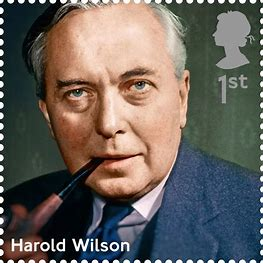
Andy Beckett (Guardian March 28th, link below) puzzles over how to relate the current Labour Government to those that have gone before. He notes that despite it being characterised as right-wing it is pursuing some left-wing measures, for example on net zero and workers’ rights. However the Wilson Governments of the 1960s legalised homosexuality and abortion, while Blair introduced the minimum wage. Just as Rachel Reeves is cutting benefits, so in 1976/7 Labour Chancellor Denis Healey pushed through cuts and austerity measures that prefigured Thatcher.
On that occasion there was opposition from the left, including Tony Benn at Cabinet level. In contrast Starmer has spent the last five years purging the Labour left, to the extent that there are now several hundred thousand ex-Labour members out there. It’s not so much that Starmer is right wing- he certainly is- but the fact that he has engineered a situation where opposition within the Labour Party is largely marginalised. Such one-dimensional politics rarely ends well.
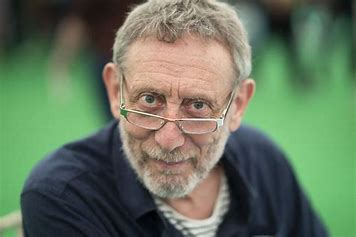
Below is what an AI tool answered when the Beard Liberation Front asked why Michael Rosen’s beard is award winning. It missed the key point. It’s award winning because it wins votes in a democratic poll…
Michael Rosen’s beard has gained recognition and awards due to its cultural impact, resilience, and the positive public image it has helped project, particularly through the efforts of the Beard Liberation Front (BLF), an organization dedicated to celebrating facial hair. Here’s why his beard is considered award-winning, drawing from available information:
Consistent Recognition by the Beard Liberation Front: Michael Rosen, a well-known children’s author, poet, and broadcaster, has been celebrated multiple times by the BLF for his beard. The BLF organizes awards like Beard of the Year, Beard of Summer, Best Beard of Lockdown, and Lifetime Achievement Awards for beards that make a positive impact. Rosen’s beard has been singled out for its “gravitas” and consistency, even during challenging times such as his recovery from COVID-19 in 2020-2021. For example, he was named Joint Beard of the Year 2020 alongside Michael Sheen, and he won the title again in 2021, as well as receiving a Lifetime Achievement Award in 2021. These awards highlight how his beard has become a symbol of endurance and public appeal.
Public Appeal and Cultural Significance: Rosen’s beard has been praised for enhancing his public persona as a beloved figure in literature and media. The BLF and its organizer, Keith Flett, emphasize that the awards aren’t just about the physical attributes of the beard (like length or style) but about the “positive image” it projects. Rosen’s beard has been seen as iconic, especially during the COVID-19 pandemic, when he spent time in intensive care yet maintained his hirsute appearance, which resonated with fans and the public. Posts on X and articles note that his beard became a point of admiration during lockdown, with polls showing he won significant support, such as 62.39% of votes in the Best Beard of Lockdown poll in July 2020.
Starmer, Trump, tariffs & the importance of golf diplomacy
The Prime Minister of Finland Alexander Stubb played golf with Trump at Mar A Lago recently. Stubb almost became a professional golfer before descending into politics. He suggested after the game that golf diplomacy was a useful way to interact with Trump
The Telegraph reported in the autumn of 2024 that Keir Starmer had turned down free membership of the golf course associated with Chequers the Prime Minister’s official country residence.
Keir Starmer grappling with how to deflect Trump’s trade tariffs has, so far, a bad record on golf diplomacy.
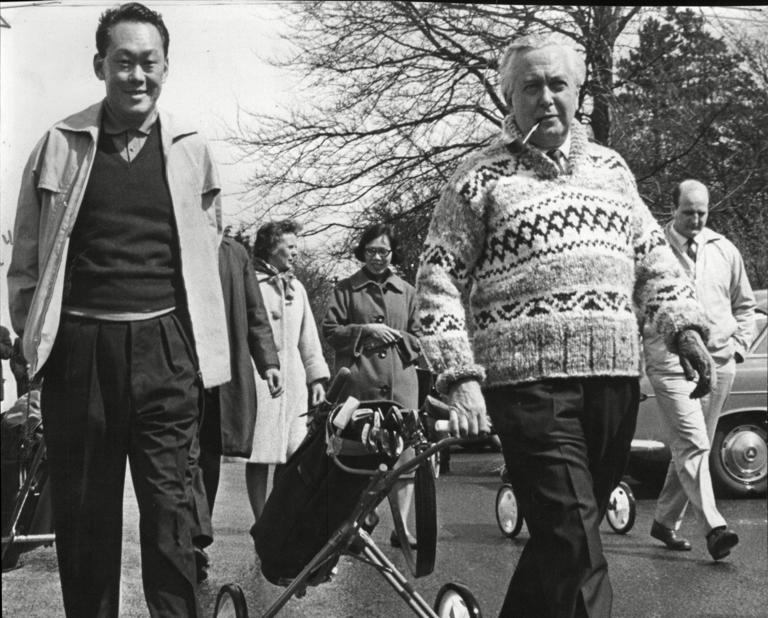
Ellesborough Golf Club has offered free membership to every PM since 1921 after Chequers became an official residence in 1917 and Starmer has been the first to turn it down. Attlee, Wilson and Blair all played on the golf course.
Starmer of course is an Arsenal season ticket holder and may not be interested in golf. Whether he is aware of the class war that perpetually goes on around the golf course is not clear.
The late miners leader Mick McGahey described golf as a waste of time. At his election victory party in November 2024 Trump had as the guest of honour Bryson DeChambeau. He is a championship winning golfer, aside from being extremely annoying, which no doubt endears him to Trump.
The class divide is clear from a historical perspective too. Eric Hobsbawm noted in Labouring Men that in the late nineteenth century as the male working class was identifying itself by wearing a cap, the middle class turned to golf courses. Twenty-nine golf courses were laid out in Yorkshire between 1890-95. Before 1890 there had been just two.
Starmer needs to brush up on his golf and try a game with Trump at Mar A Lago
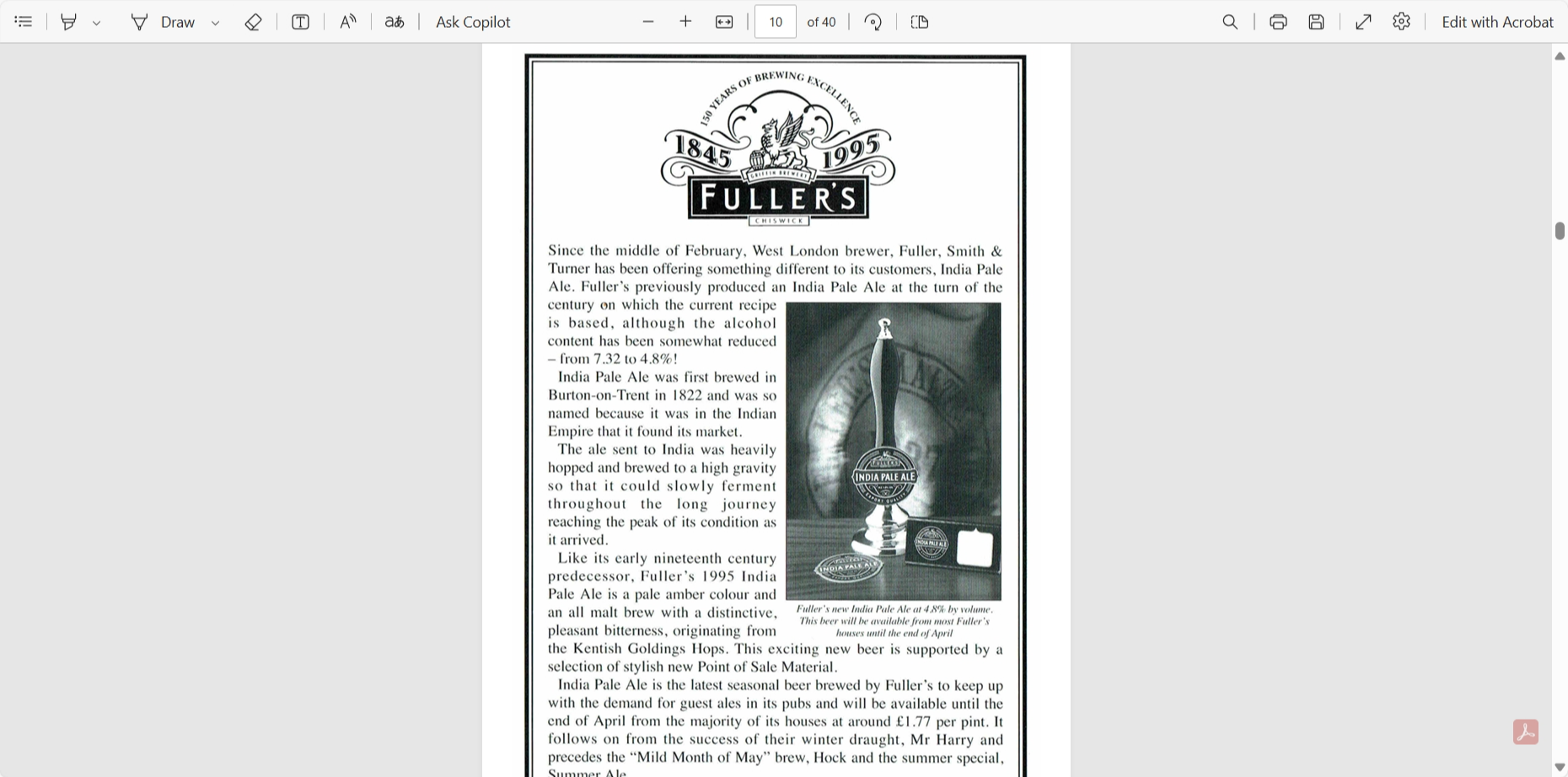
The above advert is from the April 1995 edition of the London Drinker, the still very much published of the London Branches of CAMRA.
I’ve been drinking Fullers ESB since the 1970s but I don’t recall this seasonal special. Fullers have very few pubs in North London so perhaps that is not surprising. Judging by the description the beer may have been more malt focused and less hoppy than the West Coast IPAs that can be found today.
The strength of 4.8% is probably also a bit lower than might be expected now.
Fullers brewed a 5% IPA, Bengal Lancer, from 2009 which seems to have been recently discontinued by Asahi, who own Fullers Brewery (but not Fullers pubs)
In London in 1995 the only IPA you were regularly likely to come across was Charrington’s IPA which was definitely a malty beer.
April sees prices rises for energy, water, and other bills and food price inflation has risen to over 3%
Meanwhile the Government is intent on an economic policy that focuses on cuts in spending and benefits leaving millions worse off but with higher bills to pay.
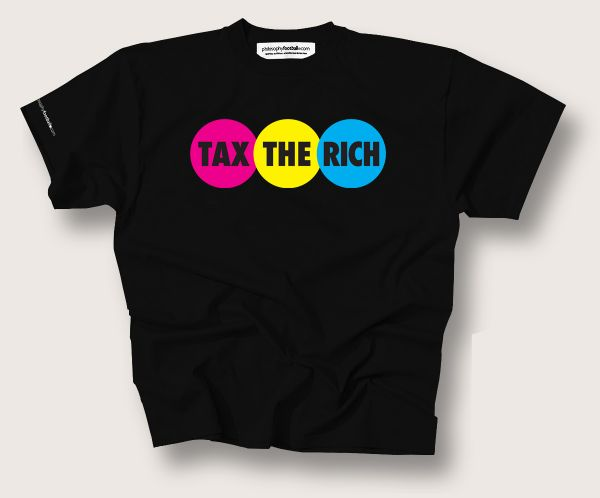
There is a political alternative and its not Nigel Farage but a wealth tax on the rich and a cap on the profits of energy companies.