Below are the opening paragraphs of a post I did 5 years go on March 19th 2020.
It was in the period between Boris Johnson announcing that people should swerve pubs (shut March 20th) and implementing a full lockdown (23rd March).
While hand hygiene is always a good idea, we now know that COVID transmission is largely airborne. Brewdog masks would have been a better idea but it was a good while before mask wearing became common.
Finally thanks to further developments I do not drink Brewdog beer anymore or frequent their bars
I have my criticisms of Brewdog, both with respect to (some of) the beer they produce and also the gap between the image they push and the reality of their business (much like many others in fact).
However I still drink in their bars from time to time and enjoy the experience.
Obviously I’m not doing that currently due to COVID-19.
I was pleased however to see that one response of Brewdog was to start producing hand sanitiser and giving it out free. A publicity stunt of course but in these times actually a worthwhile one.
They have however reportedly laid off workers who are on probation, which is not great.
Liz Kendall & the Less Eligibility Principle. A return to the Workhouse?
The 24 hours news media of 2025 is notoriously bad at history, special investigations aside.
So when Liz Kendall revealed her cuts to benefits on 18th March no one mentioned the ‘less eligibility principle’. Part of what Kendall was after was making it clear that being in a job, even if this was a tough choice for an individual, would be better in some cases than being on a health related benefit.
The principle is not new, although it was officially abolished in 1929 in Britain. It was at the centre of the 1834 Poor Law Amendment Act, Carried not by a Tory but a Liberal Government it set up Workhouses.
In the 1830s Workhouses were called Bastilles by radicals and attempts were made to destroy them. The principle was that if someone could not support themselves then they could go to a Workhouse. Central to that was that life was so unpleasant in the Workhouse that anyone even vaguely capable of working would endeavour to do so rather than enter one.
E P Thompson in the Making of the English Working Class touched on the Utilitarian principles on which Workhouses were run.
He quotes one Poor Law Commissioners as reporting that the ‘intention was to make the Workhouses as much as prison as possible. Another said the idea was to make the discipline ‘so severe and repulsive as to make them a terror to the poor’.
Given the Government cant find enough prison places, largely thanks to the previous Tory regime but also due to sending people like climate protesters to jail who shouldn’t be there building and staffing a 2025 Workhouse won’t be happening.
The perspective of making life without a job as miserable as possible however remains, even if that is, as often, because employers will not make the adjustments they are legally required to do to make jobs do-able. Labour’s right to try a job is perhaps a sort of nod to that but its certainly not the headline story.
The exchange below took place on social media on 15th March and surfaced partly on BlueSky. The tone is a mixture of serious and less serious (myself mostly) a common feature…
Keith Flett
Reading Stuart Hall (Marxism Today, October 1988) who asks ‘are we thinking
Michael Rosen
A Q I ask myself everyday. I mentioned to my students how stimulus-response is an inadequate way of talking about reading-reflection-understanding-interpretation, and how we need a dynamic ‘biofeedback’ model of reading with a reflective mind, not passively receiving stimuli
Keith Flett
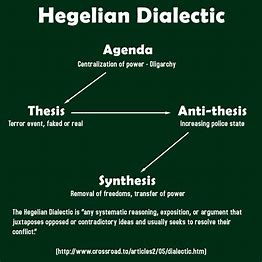
I can see that the dialectical synthesis here would be a Juke Box Jury style hit or a miss verdict on a text
MIchael Rosen
Even the educator is educated. Biofeedback loops, the person affecting others is themselves affected. On and on and on.
Keith Flett
Hence while E P Thompson’s Making of the English Working Class is a book which does it what it says on the cover (provides a history) it is actually a sort of manual of activism for the 1960s New Left..
Michael Rosen
I remember that moment well: History Workshop conferences, wonderful mini-thesis booklets from the seconded trade union students at Ruskin, history from below as a dynamic process of history in the present, informing the present.
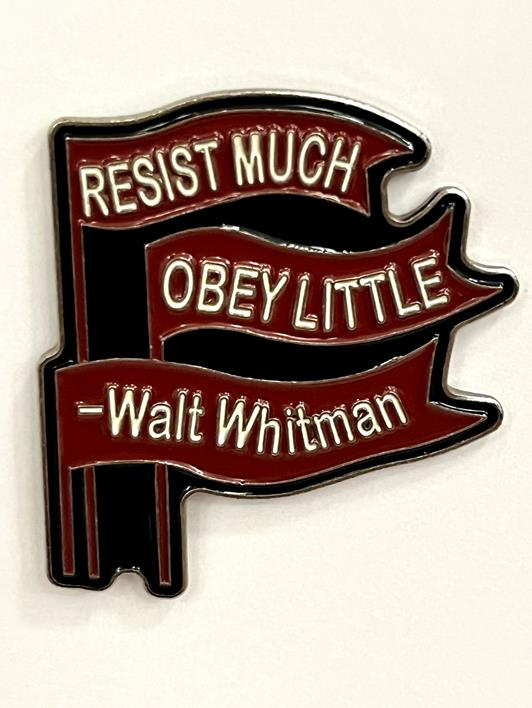
TO The States, or any one of them, or any city of The States, Resist much, obey little; Once unquestioning obedience, once fully enslaved; Once fully enslaved, no nation, state, city, of this earth, ever afterward resumes its liberty.
From New to Newer Labour on Wealth Taxes (1993-2025)
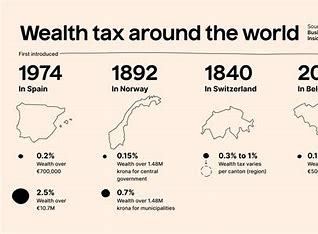
When still Shadow Chancellor in August 2023 Rachel Reeves stated that a future Labour Government would not introduce a wealth tax or indeed do anything at all about taxing wealth. It rightly attracted criticism. There was and is nothing even mildly social democratic about the proposed inactivity.
It is however not new. Tony Benn noted in his diary 17th August 1993
Gordon Brown, the Shadow Chancellor, was on television saying that Labour is not a high-tax, high-spend party and certainly does not intend to penalise the rich. The most ridiculous statement ever..
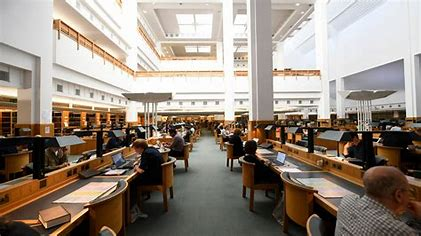
Ive been a reader at the British Library since 1984 and still stop by on a fairly regular basis- driven by my research agenda.
In the Library on 17th March looking at some books, I was interested to be told that my seat number was no longer required to collect the items I’d reserved (remotely as that is now working again) and take them to my desk.
I’m not sure when the requirement to give your seat number dates from but I sense it was at least around in Lenin’s day since its known what desk he sat at in the old Bloomsbury Round Reading Room.
In those days when you ordered books by a paper slip from a printed catalogue there were good reasons for it. There was of course no way of knowing whether the book you’d reserved was out and in use to another reader. If it was a librarian could check with that reader at their desk whether they were actually using it, and if not reassign it.
In addition as Victorian Turkish Baths points out on BlueSky in the days of the Round Reading Room the seat number meant that in due course a library assistant would deliver books to your desk. The move to St Pancras abolished slips (although they made a brief return in 2024) and meant the reader collected books from the issue counter
At St Pancras pre the October 2023 cyberattack anyway ordering books was done electronically you could (and can now) see whether a book is available or not before you visit the Library.
Progress in history but the tradition of giving my seat number may be hard to break!
The former Labour Prime Minister Harold Wilson argued that the labour movement owed more to Methodism than Marx. Socialists will dispute that but there is no doubt that in the nineteenth century a good deal of the imagery and words used in workers struggles came from the Bible. That is not a surprise when its considered that Marx’s Capital was not available in English until 1887.
One line from the Bible (Thessalonians) which was much used in the first decades of the nineteenth century and remains relevant now is ‘he that does not work neither shall he eat’
It’s a view that is firmly lodged in the mind of right-wing social democracy. After Labour was elected in 1997 Tony Blair tried to push through welfare cuts- in that case to incapacity benefits- and suffered in May 1988 a rebellion of 80 Labour MPs.
The logic was that the money was needed to invest in reforming Government and services and it’s the same logic that remains in place with the current Government’s plans to cut personal independence payments.
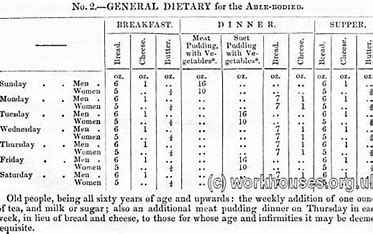
Yet this logic is not, historically, a Labour one. The 1834 Poor Law Amendment Act introduced the Workhouse (abolished 1929) where people who could not support themselves were sent. In return for lodging and a basic diet, menial work was required. The Act was introduced not by the Tories but by the Whigs (Liberals).
It was only after 1906 with the first appearance of Labour MPs in the Commons that the start of a modern welfare state, the State pension in particular, began.
Keir Starmer has previously said that those who are on sickness benefit should be looking for work. He has claimed that Labour is the Party of Work. That is certainly not what Sidney and Beatrice Webb, who wrote the original 1918 Constitution of the Labour Party thought.
Clause IV amended in the Blair years essentially framed the Party as one for the many not the few. All those who did something to promote the wealth of the country by hand or by brain, were labelled producers and were welcome. The Webbs in an explanatory document were also clear who was not welcome ‘the idle rich’ who lived off the labour of others.
There is dignity in labour, a long held labour movement perspective. At work you can join a union, organise and start to change things. However if you are unable health wise to work-think, for example, long COVID- that just doesn’t work.
The Chartists in the 1830s and 1840s popularised the ‘he who does not work, neither shall he eat’ slogan for the rich who lived well, not from their own labour but from exploiting others, while those who worked could not afford to eat.
In this period and indeed up to at least the early twentieth century there were many who were unable to work, or unable to earn enough from work to provide for the essentials of living.
Engels book on the condition of the working class (1845) and investigations into the state of the poor in London and elsewhere by journalist Henry Mayhew in 1849/50 underlined the point.
The two World Wars in the Twentieth Century led to demands for spending on welfare-including Labour’s 1945 Welfare State in Britain. There was an understanding that in a capitalist economy there was a need for a social safety net.
The current Government is moving away from that historic compromise and promoting warfare over welfare, while taking little action to tax hugely wealthy companies and individuals.
It represents a significant break from the history and traditions of the left and the labour movement
A history of the present, socialist history seminars at the Institute of Historical Research March 2020-March 2025. From Covid to Zoom & back
On Monday 16th March 2020 I cancelled a socialist history seminar at the Institute of Historical Research for the following reasons:
The historians say that encouraging people to travel to central London when they may not otherwise have had a reason to be there, and meeting in the relatively confined space of a seminar room, was not felt to be a sensible thing to do.
Rhys Williams gave the cancelled paper on Tom Mann in Australia, from Australia via Zoom in October 2020
The world had changed. For the previous 25 years of the seminar speakers had only even been ‘in person’.
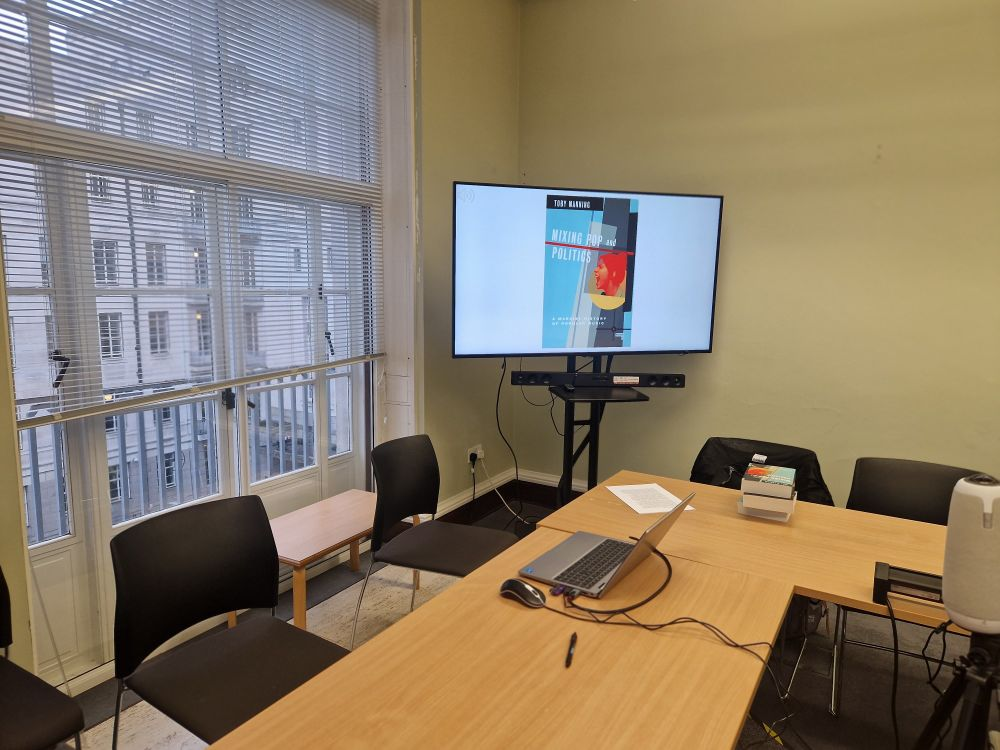
On the equivalent day 5 years on Toby Manning delivered a paper on the Pop Chart as an Index in person to a decent audience and a good discussion followed (report to follow). It was almost certainly the first time in its long history that the Institute of Historical Research had echoed to Slade’s Cum on Feel the Noize and the Sex Pistols God Save the Queen.
Five Years, as David Bowie sang on Ziggy Stardust…
As often with Nigel Farage what you see is not what you get.
On Monday he ‘unveiled’ what he claimed were 29 new Reform UK Councillors. The Independent reported that in fact only 9 were new and of those only three are standing in the May Council elections.
Farage denied that the event was designed to distract from the civil war in Reform about, essentially, just how racist it should be.
Boris Johnson Monday 16th March 2020. On Covid measures. No lockdown but take things seriously
5 years ago Boris Johnson was still prevaricating about a COVID lockdown even though he knew, that it was rampant in London. He suggested people take ‘seriously’ advice about swerving pubs and restaurants.
Eventually a shutdown was ordered on Friday March 20th and a lockdown from March 23rd. Johnson knew people were getting ill and dying but he delayed. Eventually of course he also got ill himself..
And it’s now clear that the peak of the epidemic is coming faster in some parts of the country than in others.
And it looks as though London is now a few weeks ahead.
So, to relieve the pressure on the London health system and to slow the spread in London, it’s important that Londoners now pay special attention to what we are saying about avoiding non-essential contact, and to take particularly seriously the advice about working from home, and avoiding confined spaces such as pubs and restaurants.