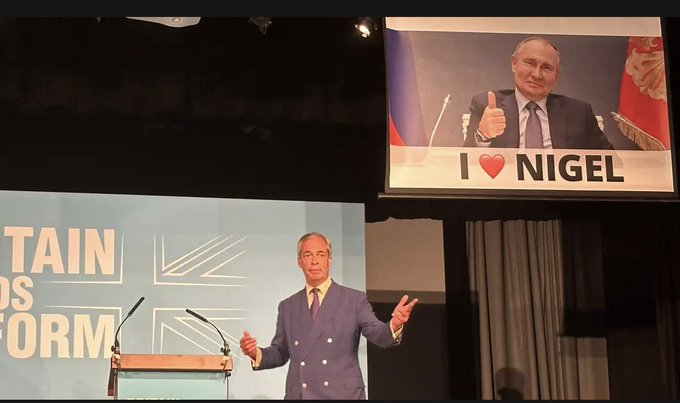
The German election underlines a worrying advance for the far‑right Alternative für Deutschland (A country divided: Five key takeaways from the German election, 24 February). Yet the advance was checked a bit by an energetic campaign by Die Linke. It polled considerably better than predicted and led the polling among 18- to 24-year-olds, with the AfD second. When it comes to opposing Reform UK, such grassroots campaigns rather than grand statements from 10 Downing Street look a better bet. Keith Flett Tottenham, London
The above appeared in the Guardian on 25th February. Of course it raises many questions but letters need to stand as they are rather than coming with footnotes.
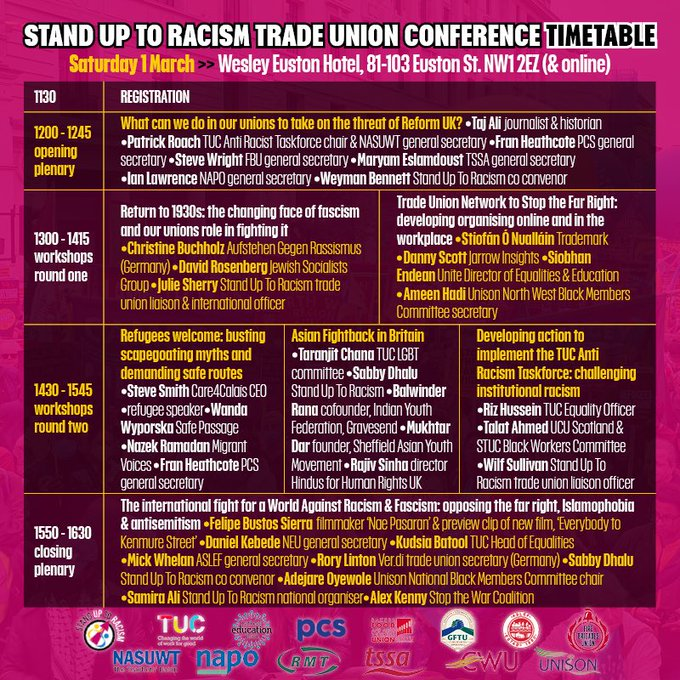
There is a Stand Up To Racism trade union conference on March 1st where this very important discussion will continue
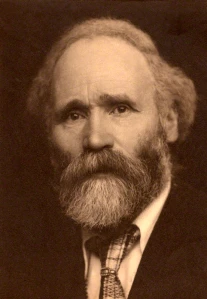
by George Charles Beresford, sepia-toned platinotype print, 1905
The Labour Representation Committee was formed at a conference held in Farringdon St, central London, on 26 & 27th February 1900. Its aim was to secure Parliamentary representation for the interests of working people, that is ‘labour’. It was not to obtain a majority Labour Government. Such a matter was un-thought of at the time..
In 1906 29 MPs were elected under the LRC banner and the Parliamentary Labour Party was formed. The vote for who should lead it was tied on the first round and on a subsequent vote Independent Labour Party member Keir Hardie just edged ahead.
Naturally there was a good deal of interest in who the 29 Labour members were.
Many were from Lancashire- where the Liberal vote had been weak but anti-Tory feeling still strong. There were also trade union officials and leaders with a minority being ILP socialists like Keir Hardie, Ramsay MacDonald and Philip Snowden,
There were no women- female suffrage did not yet exist. The split between moustaches and beards in the ranks of the LRC MPs was more or less even with Philip Snowden clean shaven.
W T Stead Editor of the Reviews of Reviews sent a questionnaire to the 29 MPs asking them about their reading habits and favourite books.
Stead and more particularly the only significant commentary on Stead’s piece by Bealey and Pelling (1958) are quite condescending about the responses received, unjustifiably so.
Hardly any of the 29 had read Marx and only a few any work by a well-known socialist such as Robert Blatchford.
Will Thorne, a Marxist and an SDF member had read Marx while Charles Duncan an ILP member had read Blatchford’s Merrie England and George Barnes was familiar with the work of William Morris. Some had read Fabian Tracts
Leading ILP member Philip Snowden meanwhile said he had been influenced by an American critic of socialism, Richard T Ely.
I’m not sure that it is really a huge surprise that few of the 29 LRC MPs of 1906 could be called committed and well-read Marxists.
What is perhaps more interesting is the depth of their, at least professed, reading across more general works. Some had consulted the Bible which is hardly a surprise as nearly all the 29 MPs were Methodists. It’s fair to say that from its pages they had taken some kind of radical thoughts.
Others had read Henry George- who wrote on land nationalisation- and numbers were familiar with Charles Dickens and Thomas Carlyle.
Overall those 29 MPs- the first to represent the Labour Party in Parliament were a well-read bunch. They were mostly not well up on the Marxist critique of capitalism but they had certainly read widely on what might be called the ‘human condition’, about poverty and the struggle to survive in a profit led society.
Most were union officers who most on the left nowadays would regard as being uncomfortably close to the interests of the employer.
However, as with Taff Vale, the employer wasn’t always interested in having a close or any relationship with unions. Those MPs did at least have a reasonably good grasp, through experience and reading, of the conditions those who voted for them experienced, even if they didn’t always do much about it.
You may have missed it because it seems to have been reported only in the Daily Express which is the print version of GB News but Dominic Cummings is backing Reform UK. The coming falling out between Cummings and Farage will be great theatre
It may come as a surprise to those who know Dominic Cummings from his Vote Leave and No.10 period but he took a first in history at Oxford, studying under the late Prof. Norman Stone.
Stone was a right-wing historian and fan of Mrs Thatcher and idiosyncratic in his views. Of historical actors in the modern era he favoured Churchill and Bismarck as significant historical figures.
Cummings picked up his interest for Bismarck from Stone and has blogged about the German Chancellor (1815-1898). Bismarck, the ‘Iron Chancellor’ who was instrumental in creating a unified German State. His Wiki entry notes that he ‘distrusted democracy and ruled through a strong well-trained bureaucracy’.
Cummings returned to the Bismarck question in answers to questions to subscribers to his social media site. Not just Stone but Eric Hobsbawm supported the historical significance of Bismarck. Cummings may warrant a footnote in the history of post-Brexit Britain.
Studying Bismarck was the best help to understand what politics really is and how it’s possible to radically outperform – but also that you should never ever expect anybody to say ‘oh I was wrong you were right’. In politics you never really know if what you’ve done is a mistake! And even very smart people struggle to escape fashion and gang mentality
And in another answer he said:
If you want to study effective action in politics there is no better case study than Bismarck.
He was playing a completely different game to everybody else and you can trace a lot of how he did it and how he thought in the record.
Guardian report 21st June 2021
Bismarck was not an enthusiast for democratic politics and judging by the views of Dominic Cummings neither is he.
I don’t expect too many would disagree but political change happens via a democratic vote not because those who think they know better than others say it should. That doesn’t make Cummings a fascist but he is clearly a supporter of a significantly more authoritarian society than Britain currently is. There will be those who argue that this isn’t possible even given how dismissive of civil liberties the current Government currently are. It is. Look around Europe for examples.
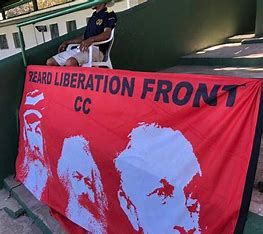
I’ve been organising the Beard Liberation Front since the mid-1990s. Its aim has always been to promote people being able to dress and appear as they want but the focus is facial hair.
It is as always described an informal network and there is plenty of guidance and advice on hand from that network. Ultimately, based on that, as the organiser I get to decide.
On 26th February Trump posted an AI produced video about Gaza on his social media. It was a disgraceful intervention, typical of Trump. It featured beards and I received a number of social media comments that the BLF should piggy back on it.
This did not happen. The BLF will never promote the far right propaganda of someone like Trump.
It does however point to the wider issue of the politics and pitfalls of the BLF.
The BLF is UK based and is well aware of the UK approach to facial hair, otherwise known as the man with a beard syndrome. The BLF’s approach is a mixture of humour and the serious where discrimination occurs. This is less frequent in the UK than it was but not absent.
Looking wider there is a need for caution. A focus on Macron’s (little displayed) very hairy chest or Justin Trudeau’s disappearing beard is fine. Elsewhere however what facial hair someone does or does not where can be a reason for political persecution or worse. It is not a matter for humour. Understanding the lines where the BLF can and cannot go has seen us through thirty years of light hearted campaigning and we are not stopping now.
Comers & Goers: The Victorian world of work in January and February
Despite a focus on casual labour, zero hours contracts and precarious work, far more people are in long-term employment now than was the case in Victorian Britain. Before the rise of mass production (the mills were an exception to the time frame, as was the coal industry) far more work was specifically seasonal.
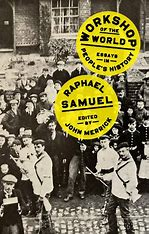
The uncertain nature of work characterises the current period not because it is the dominant one but because it is a trend that the neo-liberal labour market is keen to exploit. The end of the ‘job for life’ and the gig economy are matters very much in the mind of many employers. Raphael Samuel wrote a detailed study of Victorian seasonal labour, Comers and Goers, in H J Dyos’s the Victorian City (1973) and republished in a collection of Raph’s essays, Workshop of the World (ed John Merrick 2024). Looked at from almost 50 years distance Samuel focuses on male rather than female labour. Some work has been done to address that but a lot more research could be done were not a focus on work and the labour process rather unfashionable historically. Likewise there is a good deal of scope for more study of the work that was not seasonal- railways for example- and how this developed.
That said Samuel’s research provides both fascinating detail about Victorian labour practices and echoes of how the world of work still goes on 150 years later.
The cold winter months of January and February did provide employment for those able to do heavy manual labour. Gas works required a larger workforce than in the summer months and the building trade which proceeded regardless of season was always happy to employ those who might in the summer period be involved in agricultural labour.
Samuel noted however that ‘January and February were bad months for the working man and especially for the insecure and poor. Almost every trade experienced lull after the Christmas rush and unemployment became widespread as the weather grew more severe’.
Samuel went on to note that even so being in the town early in the year was preferable to the countryside even for the unemployed. Warmth and shelter could be obtained outside of the hated Workhouse and soup kitchens provided sustenance.
Samuel does however point out that the bad weather did bring some possibilities of work. There were frost fairs, now a thing of the past. When it snowed men would go from door to door offering to clear the snow for a fee. As austerity cuts into the ability of local authorities to fund snow clearance perhaps that will become a new winter trade.
That underlines if it needs underlining that in a market capitalist economy the only way to make sure that jobs are decently paid with appropriate terms and conditions is to get organised in trade unions. The Victorians learnt that lesson but it needs to be re-learnt in each period
With the Hundred now newly franchised partly to IPL owners and partly to football club owners, a new system has already been introduced. Previously (as with the IPL) there a was draft where players were picked based on a number of criteria- salary, bowler, batter etc
Now ahead of the draft the franchise teams were allowed to pick a non-UK player at the top of the salary structure for men
The £200,000 Hundred players in that process were:
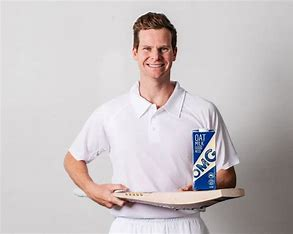
Steve Smith, Welsh Fire
Marcus Stoinis, Trent Rockets
David Miller, Northern Superchargers
Trent Boult, Birmingham Phoenix
On Wednesday 12th March there was the first part of the draft which seemed (The Hundred does rather tend to make it up as it goes along rather like a well known US President) to focus on overseas players and England and Wales players who have international experience. Apparently a further draft will be held for rank and file, lower paid, domestic players
Some more players have now joined the £200,000 group
Jamie Overton (Spirit), Afghanistan’s Noor Ahmad (Manchester Originals), David Willey (Trent Rockets) and New Zealand’s Michael Bracewell (Southern Brave) all secured £200,000 deals (Guardian)
Despite the ECB being tasked with narrowing the pay gap between men and women in the Hundred they have in fact increased it. No Women’s Hundred player will get anything like £200,000
Midnight in the Century is a book by the international socialist Victor Serge focused on the mid-1930s with both Nazism and Stalinism becoming dominant forces in the world
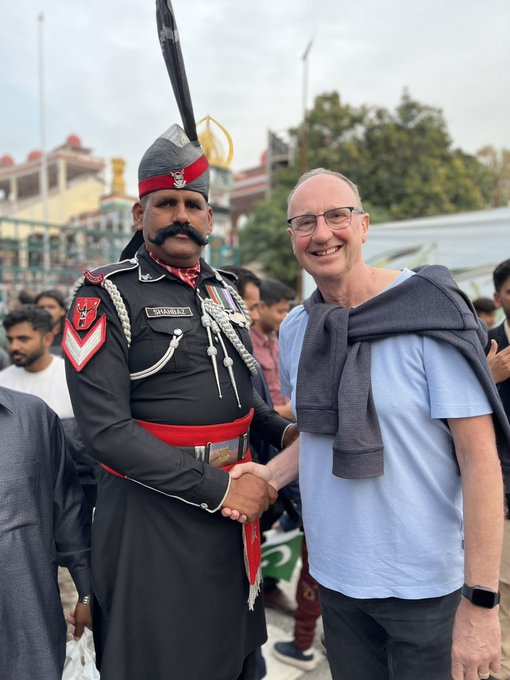
The Beard Liberation Front, the informal network of beard wearers, has called on veteran Test Match Special commentator Jonathan Agnew to grow a gravitas adding Jimmy Edwards style moustache (example above).
Ahead of England’s controversial cricket Champions Trophy game against Afghanistan some of the TMS team visited the border between Pakistan and India. The picture shows ‘Aggers’ meeting one of those involved in the daily ceremony there.
BLF Organiser Keith Flett said, of course Aggers already has considerable gravitas but a handlebar moustache which he could twirl on appropriate occasions would give him even more
Harold Wilson’s Moral Crusade & Keir Starmer’s cut to international aid
Keir Starmer has made what he describes as the difficult decision to cut significantly international aid and use the money to boost funds for defence.
Starmer is not much of a history man but a brief thought that socialist historians would point to Labour’s back pages may have very briefly troubled him.
If we travel to another era, February 2021 Keir Starmer made a speech on 17th February about the way forward for Britain post-pandemic and referenced more Labour history than is usual in a Labour leader’s speech, at least since the arrival of Tony Blair.
He spoke a fair bit about the 1945 Labour Government and concluded with quoting a line that Harold Wilson made in a speech on the 1st October 1962 to that year’s Labour Party conference
Harold Wilson once said that the Labour party is a moral crusade or it is nothing.
He was right.
Our moral crusade now is to address the inequalities and injustices that this crisis has so brutally exposed – and to build a better, more secure future.
Keir Starmer 17th February 2021
Wilson is credited with being the founder of War on Want (the idea more than the organisational detail) after reading a letter from Victor Gollancz (a left-wing publisher) in the Guardian in 1951. The use of the term ‘crusade’ reads, at best, a bit oddly in 2021 but decades ago frames of reference and thinking were different. That is an historical point not a judgement.
Anyone familiar with the Wilson Premierships (1964-70 & 1974-76) would probably struggle with a link between Wilson and morals and morality although as time goes on it might be argued his positive achievements- and there were some-do stand out more.
There is an argument that the left is after not so much industrial power (though some of us still are) but what the historian E.P Thompson called a moral economy.
That is a society where other things than profit and the market are the priorities. When Harold Wilson’s early involvement with War on Want termed the Labour Party a ‘moral crusade’ it was not necessarily all that left-wing and certainly not revolutionary but it did suggest that there are other values than those of the market worth pursuing.