Heineken has announced its 2024 results with profits up 8.3%
Key areas of growth include India, Brazil, Nigeria and Vietnam
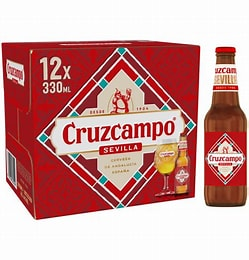
The UK market warrants a mention thanks to sales of its new ‘Spanish’ lager Kruzcampo, sales of Inch’s cider up 40% and of course Murphy’s stout thanks to the issues with Guinness.
Heineken also produces cask ale- John Smiths- although how much is not clear. It also owns craft brewer Brixton where production has moved to Beavertown at Ponders End, although the Heineken website is completely silent about its ownership for some reason.
For my wider thoughts on global big beer in 2025 see a recent piece in Culture Matters
15th February 2003 march against the Iraq War-15th February 2025 march for Palestine. An essential tradition of protest
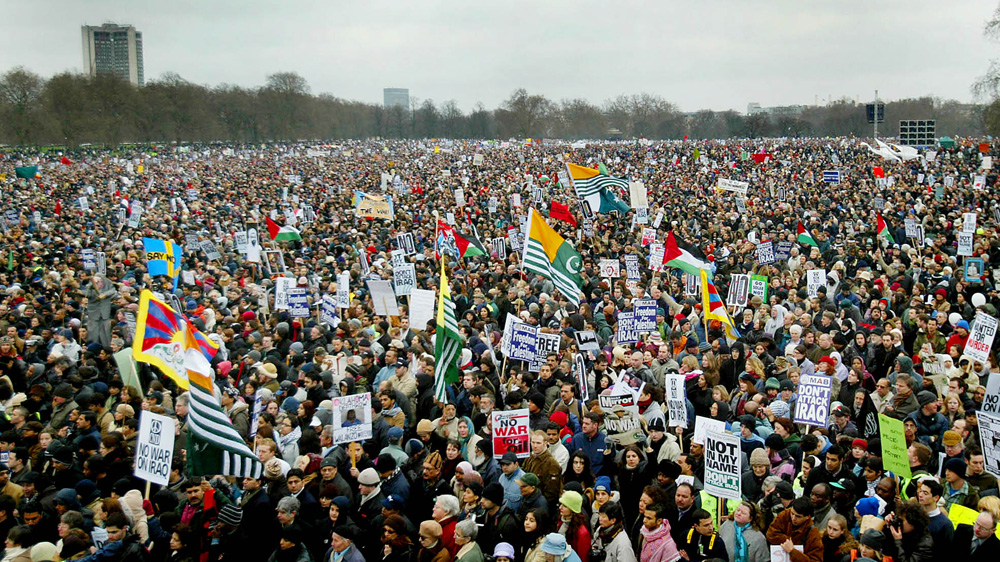
Hundreds of thousands marched in central London today to support Palestine and to protest Trump’s plan to turn Gaza into a piece of US controlled real estate.
It was also the 22nd anniversary of the largest march ever in British history, against War with Iraq. The weather was quite similar and some of those who marched then were still keepin on keepin on. There were also of course a new generation of marchers coming into protest for the first time over the last 15 months.
The tradition of protest is essential and it has an impact even if not always an immediate one. Below is something on 2003
The Historical lesson of 15th February 2003- Keep Marching On
Many readers of this will have been on the central London demonstration called by the Stop the War Coalition on Saturday 15th February 2003 as I was myself.
It was the biggest demonstration in British history and remains so.
The British Government still has imperial ambitions. But whereas before that cold Saturday twenty two years ago it would have been a minority of left and peace voices that spoke out, today it is legitimate for a broad range of opinion to question why the country is intervening in wars elsewhere and what purpose it serves.
The media are unlikely to be devoting special supplements and programmes to the anniversary although in truth that is what it deserves.
Making sure the demonstration is remembered and underlining the historical point that popular mobilisations make a difference is important.
While there were many young people on the march, the fact remains that there are people in their twenties and thirties today who are too young to have either been on the march or to remember it. If in today’s environment it was said,’ we can mobilise well over a million in people in central London for an important issue’, eyebrows might well be raised. Less so after the 24th march for Palestine in 15 months.
Making sure that the event is remembered and remains in the popular memory is an important task not just for historians but for the left generally.
For those who were there, and it was estimated that someone from most households across the UK was, the question twenty two years on remains one of what impact was made, and whether marching changes anything.
Here history can provide some pointers.
As the historical sociologist Charles Tilly argued in his book Repertoires of Contention- looking at Britain in the late eighteenth and early nineteenth centuries- people fighting injustice can follow a range of strategies. These can vary from petitions through strikes to armed revolts and from riots to large indoor meetings that agree to lobby Parliament.
It depends what is thought to be effective at the time and what mobilises numbers for the maximum impact. In recent times a march with a large and broad turn-out, although far from the only strategy, has often made a significant and sometimes lasting political point.
There is another angle made by the late Peter Sedgwick in his introduction, Farewell, Grosvenor Square to David Widgery’s 1976 volume about the left in the 1960s.
Sedgwick argues that until the rise of CND in the late 1950s the idea of going on a demonstration to make a political point seemed an odd one for many. If you wanted change you wrote to your MP and voted for a Government from time to time.
The minority who did march were watched by many more from the nearest pavement.
From the 1960s all that changed. As Sedgwick noted when delivering leaflets door to door for a protest the reaction was no longer puzzlement from the householder but ‘thanks luv see you at t’demo then’.
Even if a march does not have the precise consequences that were desired it often does beg significant political questions and may do so long after the last marcher has returned home.
That’s why it is important to keep remembering that cold Saturday of 15th February 2003 and to keep in mind that it can happen again.
But while we are remembering 15th February it is important not to forget some other points.
The march did not stop the drive to war with Iraq as the usual suspects have been busy reminding us. But the war itself did not come until a month later on March 19/20th 2003. At that point the aim of anti-war activists was to take protests beyond demonstrations towards walk-outs and industrial action. Numbers did take place, but not sufficient numbers to reinforce the impact of 15th February. It suggests that in the circumstances of the time the mass march was far from being our best strategy to stop the war but in fact the best shot we could muster. Unfortunately it was not enough
Finally a literal footnote. Despite the concern of the Royal Parks and the then Culture Secretary, the late Tessa Jowell, the grass in Hyde Park survived the march and last time I checked was still thriving.
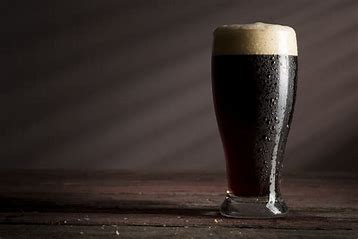
The biggest impact of global big beer in the UK in the last period has been from Diageo. They are of course a global drinks business well beyond beer, owning Johnnie Walker whisky and according to their most recent results in January 2025 promoting higher end, higher profit products, such as tequila in some markets. They also own Guinness and the media has been full of stories that there is a shortage of it in the UK. Why does not seem to have been satisfactorily explained but it is at least partly related to a surge in the popularity of the drink possibly extending to other stouts and porters as well. One interesting impact which reflects how global beer and independent brewers interact in the market has been to boost the sales of London Black, like Guinness a nitro beer, which is produced by the South London craft brewer Anspach and Hobday. However it boosted even more sales of Murphy’s Stout, now owned by Heineken.
Guinness is a very fashionable beer in nitro-keg format. You can even find a Tik Tok clip of Nigel Farage splitting the G (not recommended viewing). But it represents amongst the biggest of big beer impacts on bar tops.
What should socialists and socially responsible drinkers do? What can we do?
The above is a slightly edited extract from a longer piece on the Culture Matters site. A second piece will address the issue of what is to be done
The Guardian has published an interesting long read on the activities of Reform UK Ltd. Quite a bit of it is familiar reading for anyone aware of the history of the hard and far right in Britain over the last 20 years or so.
A detail which the Guardian does not fully explore is what Reform UK Ltd and Farage are up to in Clacton. It notes that a Reform UK Ltd sign on an office door directs deliveries to the Big Fat Greek Taverna. This is in fact a restaurant of the Royal Hotel, 1 Marine Parade, Clacton. It appears that Clacton Reform UK Ltd occupy a side room at the restaurant. There is a Tik Tok clip of Farage splitting the G with a pint of Guinness at the Taverna. The only surprise there being that he remembered to stop before just necking the whole pint.
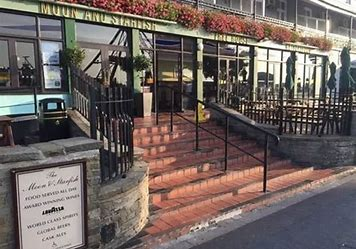
Conveniently also part of the same Royal Hotel building complex is Clacton Wetherspoon’s the Moon and Starfish where Farage was involved in a pre-Election incident.
The Guardian also reports that Farage has at last bought a house in the Clacton Constituency in well to do Frinton on Sea. Frinton is well known for in 1998/9 refusing permission for a Wetherspoons to open in the town centre.
As ever with Farage what you see is not what you get.
Saturday 15th February sees another national march for Palestine which will go from Whitehall to the US Embassy at Nine Elms. It comes after police disrupted the last march, placing restrictions on it and arresting people. Several cases are in the judicial system together with calls for an investigation of the policing of the demonstration.
The right to protest and the State’s efforts to undermine it are of course not new as the details below show
The current political climate, perhaps enhanced a little by social media is raising some issues about where the left is able to meet and put across points that may be controversial to some.
The situation is not new, although the present conjuncture provides a particular focus. Anyone who has organised events for the left or the labour movement will know that there are some venues that are relaxed about allowing meetings and some that just wont entertain the idea.
What is less usual are venues that will accept bookings from the left and labour movement cancelling because of threats from individuals hostile to the left. Traditionally, though I think it must be accepted that this is not a better alternative, they would have tried to break the meeting up, often violently.
However there is a long history of the authorities trying to frustrate the left’s right to meet and speak out.
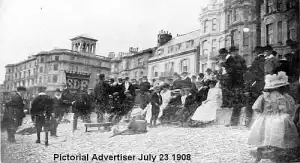
Perhaps one of the best known examples is in pre=1914 Hastings when the Social Democratic Federation (formed 1881) was banned from holding meetings in the town and had to resort to holding them on the beach. On occasion speakers had to use a boat just offshore to address crowds on the beach to avoid arrest.
One of the SDF’s activists in Hastings at the time was Robert Tressell (Noonan) who was working as a painter while writing the Ragged Trousered Philanthropists.
The SDF had been part of the 1900 meeting which set up the Labour Representation Committee, which led to the formation of the Labour Party but continued to operate independently. It split over the issue of support or otherwise for the First World War and some anti-war members joined the Communist Party from 1920. It had a specific focus on free speech for the left which reflected its own approach to politics. That is for another post though.
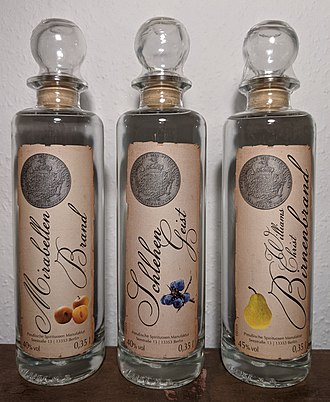
It seems extremely unlikely that Donald Trump has ever read anything by Marx and Engels. However with Trump starting a trade war with much of the rest of the world, Engels points to a way tariffs can be used (or not used) to guard against the more or less inevitable result of Trump’s policies. The key take away for Trump here is, don’t put more tax British whisky imports….
It is even open to question whether or not that state of dullness in which the North German workers passively witnessed the events of 1830, without being affected by them, was not due largely to schnapps, which at that time had them more than ever in its grip. Serious and especially successful uprisings occurred only in wine-producing regions, or in those German states which had more or less protected themselves against Prussian schnapps by means of tariffs. That was not the first time that schnapps had saved the Prussian State
Engels, Prussian Schnapps in the German Reichstag, February 1876
Contact BLF Organiser Keith Flett @keithbeard.bsky.social
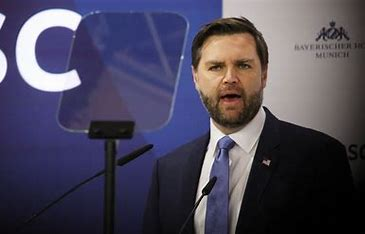
Beard Liberation Front renews ban on JD Vance after Munich speech
The Beard Liberation Front, the informal network of beard wearers, has renewed the ban it put on US Vice President JD Vance after he made a speech in Munich on 14th February.
Vance was originally banned during the 2024 Presidential campaign after he made a number of statements that clearly brought the hirsute into disrepute.
The campaigners say that Vance’s Munich speech focused on democracy and immigration and was clearly designed both to regularise the activities of unelected and unaccountable Elon Musk and also aiming at boosting the vote of the fascist AfD in the forthcoming German elections.
BLF Organiser Keith Flett said, JD Vance is one of the world’s most prominent beard wearers but the Beard Liberation Front has principles and the Vice President falls well short of them
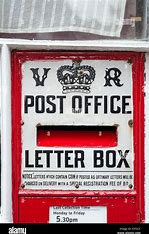
Before the current commercialised Valentine’s Day, which dates from the 1950s, there was a peak in the nineteenth century. Ronald Hutton in Stations of the Sun notes that by 1825 the London Post Office handled 200,000 more letters on 14th February than any other day. In the 1840s the decorated Valentine’s card had arrived and by the 1860s could be found across the country. In the 1870s low cost coloured Valentine’s cards were available and in 1880 the Post Office handled one and half million of them, a peak.
The extract below is from Charles Dickens Household Words
For the sacks were great sheepskin bags of letters tumbling in from the receiving-houses. The mysterious visitors closely scrutinised the letters that were disgorged. The clerk counted the stamped letters like lightning, and a flash of red gleaming past showed the inquirers that one of their epistles was safe. In 1840 came the uniform penny, and for that year the number was 162,000,000, or an increase of 93,000,000, equal to 123 per cent. The Post-Office is, however, a thermometer of commerce: during the depressing year 1848, the number of letters increased no more than 9 per cent. But last year 37,500,000 epistles passed through the office, being an augmentation of 8,500,000 upon the preceding year, or 11 per cent. of progressive increase.
My Hairy Valentine 2025. Idris Elba, Michael Rosen & Alexei Sayle voted sexiest beards
The Beard Liberation Front, the informal network of beard wearers, has concluded its annual search for My Hairy Valentine ahead of Valentine’s Day on 14th February.
2 Beards that are loved because they add a reassuring presence to public life and should be celebrated. After an on-line poll the vote for Michael Rosen and Alexei Sayle was classed as splitting hairs and they have been declared joint winners
There was a round of voting covering each category with the winners of both contests sharing the title in 2025
BLF Organiser Keith Flett said, we know that not all beards are sexy, think Jonathan Gullis, but at Valentine’s each year we celebrate those that are. Congratulations to the sexy beards of Idris Elba, Michael Rosen and Alexei Sayle, all loved on Valentine’s Day in their different ways
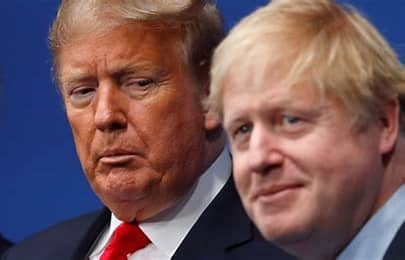
Boris Johnson was the only UK politician that actually got an invite to Trump’s Inauguration and the two are quite similar characters, never letting reality get in the way of something.
Speaking at the World Government Summit in Dubai Johnson has noted that he had been to Mar A Lago and found its spacious beaches just the kind of place people from Gaza could be resettled. In a rare visit to reality Johnson did go on to say that the residents of Gaza had a right to stay put.
I wrote a Fletter to the Guardian on 6th February making a similar point. It was not published-no complaints there-but it was a pity that no other epistler making the ironic comparison found their way into print
Dear Editor
Where the residents of Gaza choose to live is of course entirely up to them and nothing to do with Donald Trump. I suspect however that a few might be tempted by an all expenses paid temporary resettlement to Mar A Lago.