Keir Starmer may have eschewed a summer holiday but Tony Blair, along with Cherie and Euan has been on a yachting holiday in Sardinia. Its one of those for the few not the many affairs as its being paid for by the world’s 5th richest man Larry Ellison.
Ellison has donated and is donating many millions to Blair’s Institute for Global Change. The specific aim reportedly is to encourage research and create jobs in the UK. Its better than starting wars.
However the key issue is that Blair was pictured not wearing socks. This has not gone down well with people who comment on men’s fashions but it is the first step for Blair to belatedly gain recognition from the Beard Liberation Front. All needs down are sandals (not shoes) shorts and a beard. Progress in history can be very slow
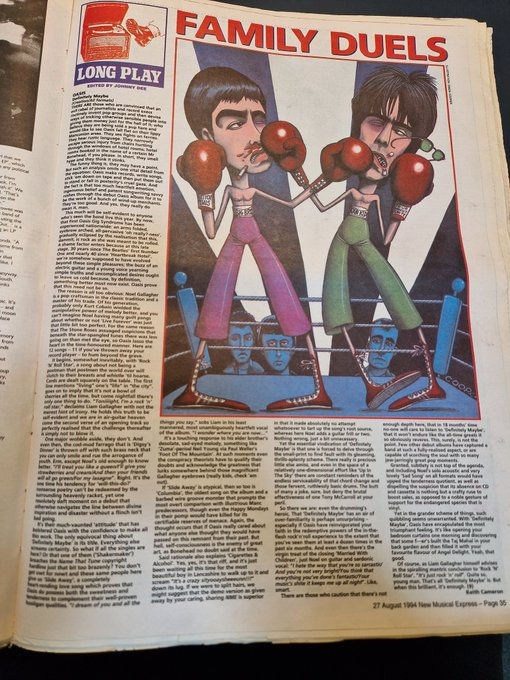
I’m looking at the Oasis 2025/6 starting this week in Cardiff as social history, so above is the NME review of Definitely Maybe published 31 years ago this summer. It gives a clue of the impact of the record, 30 years ago.
For the record I liked that record, later ones not so much.
30 years on its not just about the music for many but remembering their earlier selves. Some might prefer Dylan’s ‘I was so much older then I’m younger than that now’.
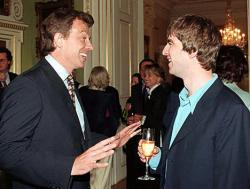
The music aside it was very much part of the New Labour Cool Britannia 1997 moment. Noel Gallagher met Tony Blair at a Downing St reception and his politics appear to remain frozen at that moment. Enough said perhaps, he’s far from the only one. Liam Gallagher was not invited on that occasion on the advice of Oasis management, so enough said there as well..
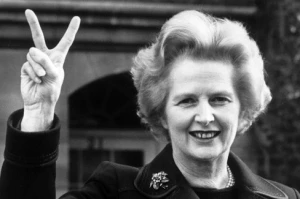
Its still the Silly Season and for the right wing media that means culture wars. Reportedly Keir Starmer has had Thatcher’s portrait at Downing St moved because he finds it unsettling. That is clearly the understatement of the year.
Global brewers Asahi have announced that Dark Star Hophead, one of the iconic beers of hop forward UK brewing will be reduced in strength from 3.8% to 3.4%. It means Asahi pay less duty but of course the price on the bar won’t change.
Asahi say they have carried out careful matching to make sure the taste of the beer is not different. We shall see. Its quite possible to brew excellent low strength beer. Think of Kernel Table Beer, Redemption Trinity at 3% or more recently Pressure Drop Ja! at 3.2%.
Those beers however were specifically brewed at that strength.
Dark Star started in the basement of the Evening Star pub in Brighton. A stand alone brewery ran in Sussex from 2001 and was bought by Fullers in 2018. Fullers sold out to Asahi in 2019 who moved brewing of Dark Star beers to Meantime in Greenwich. Asahi then shut that and the beer is now brewed at Chiswick.
With the Starmers moving into Downing St, the family cat JoJo has also appeared. There has been no update on the plan to install a cat flap so JoJo could use the Downing St garden which has been delayed due to security concerns. Starmer’s biographer Tom Baldwin also reported in the Times that Starmer was considering acquiring a further cat for his daughter.
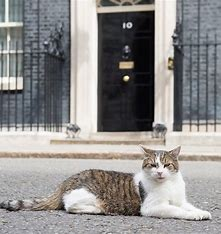
All this leaves the question of Larry the No.10 cat often to be seen wandering around on TV news broadcasts. Larry is 17 years old, and Rachel Reeves might be considering his allowances, were it not for the reality that Downing St staff cover his upkeep.
Larry is reportedly arthritic but currently well. However 17 is ‘getting on a bit’ for a cat.
Civil Servants, again reportedly, have drawn up plans for when Larry departs, using the code Larry Bridges (also used for Royal departures). There are pictures and media announcements ready to go. One hopes there will also be a tribute from catman Keir Starmer when the time comes.
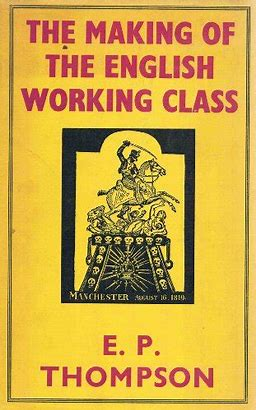
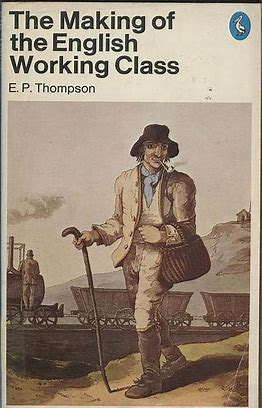
E P Thompson wrote the Making of the English Working Class over some years, while working as a Leeds University Adult Tutor in Yorkshire, researching in archives and helping to build the post-1956 new left.
How all this began to come together can be seen in this extract below. The ULR joined with the New Reasoner and became the New Left Review in 1960
E P Thompson, Universities & Left Review 6, 1959
First, working-class history is not the record of a coherent “way of life”; it has always been a way of struggle, between competing moralities. At any given point a whole complex of objective and active, subjective factors determine which morality is dominant. The objective factors are most obvious: in times of relative prosperity and social flexibility, when it is possible for individuals or groups to “better themselves,” the acquisitive ethic and the status-striving assert themselves. Conversely, in times of hard-ship, when it is most clear that the working class (or groups within it) can only defend themselves or advance by collective action, the communal ethic flowers and active, subjective factors determine which morality is dominant. This way of struggle, against class rule above, and between competing moralities within the working class, has never been a blind, spontaneous reflex to objective economic conditions. It has been a conscious struggle of ideas and values all the way. It has been possible for working-class organisations to hold fast to the vision of collective good, in the face of the acquisitive surge in times of prosperity. It has been possible for treacherous leadership (as at the time of the General Strike) to shatter that vision for a decade. And, the more closely we study it, the more we are forced to a recognition of the role of the politically active minority. In times of brutalisation and degradation, working people have asserted their humanity only by revolt against these conditions; and the most conscious, morally-engaged form of revolt has been in political organisation. For 150 years the political minority has been the carrier of the aspirations of the majority; it has been the point at which the diffuse ideal of community has come to effective expression.
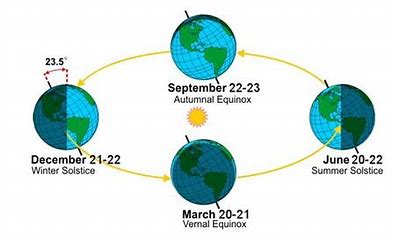
September 1st was the start of the Metrological Autumn and hence officially the end of summer. Astronomical summer ends on September 23rd.
Of course the actual end of summer may be determined by things like the end of the school summer holidays in England and Wales, what the weather is like and so on.
I am most definitely not a weather forecaster, not even in the Bob Dylan sense. That can be left to the professionals at the Met Office.
Climate Change seems to meet both higher average temperatures some increasingly hot days and heavier rain too.
All these things determine summer, as no doubt do the nights drawing in. However it is also socially determined.
I noted adverts, as often, in the first half of August talking about the end of summer which aiming to sell things like school uniforms.
Its not a new issue. In fact until August 1965 the August Bank Holiday was on the first Monday of the month (it still is in Scotland). It was then moved to the last Monday because the developing tourism and holiday industry (this was the period of the post-war boom) argued for an extended summer period. The TUC did too because the demand in early August made breaks expensive and crowded.
At his Rose Garden press conference on 27th August Starmer was inevitably asked what he thought about Oasis reforming. He appeared equivocal while noting that Don’t Look Back In Anger is a great song.
On 30th July 1997 the event that came to be known as Cool Britannia took place at 10 Downing St. Blair welcomed celebs from the arts and entertainment. Noel Gallagher was there. Liam Gallagher wasnt. Alistair Campbell notes in his diaries that he wasnt invited on the advice of the management of Oasis..
Most don’t seem highly enthused about an Oasis comeback. Keir Starmer speaking in the Rose Garden on 27th April was equivocal. Perhaps we just hope it doesnt inspire a Blair comeback tour
To mark the second anniversary of Truss becoming PM (5th September) a new book on her Premiership by Anthony Seldon was published last week. Seldon is a veteran of political biographies of Prime Ministers and very much as Establishment man, although not apparently on Liz Truss’s Woke list.
The book reveals that in early August 2022 while she was still Foreign Secretary but also a Tory leadership candidate Truss held several meetings to canvass ideas.
One (August 6-7 2022) was at her Greenwich home. Another (8th August 2022) was at the Foreign Secretary’s residence Chevening in Kent.
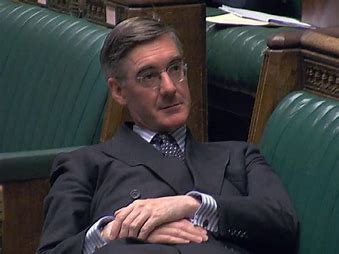
One person who attended both was ex-Tory MP and current KGB News presenter Jacob Rees-Mogg. According to Seldon he presented a series of ideas considerably more whacky than those of Truss. They included:
Replace all direct taxes with a 20p flat rate income tax (cost £41 billion)
dock a nuclear submarine in Liverpool and plug it into the national grid to show small nuclear reactors could address energy issues
Abolish inheritance tax
remove tax relief on civil servants working from home
Rees Mogg wanted to be Chancellor the job that went briefly to Kwarteng. A reminder that if Rees Mogg had succeeded things would have been even worse.
Rees Mogg has pocketed a considerable sum out of the winding up of a Company he was involved with and is still talking of an eventual return to politics. In the meantime despite being vociferous opponent of working from while he was a Minister he mostly appears doing just that from his Somerset mansion
E P Thompson died aged 69 on 28th August 1993. He had suffered a long illness and was found reportedly in his Wick Episcopi garden. I recall hearing the news reported on a Radio 4 news bulletin, not something that perhaps would occur today.
The Modern Records Centre at Warwick holds a letter he wrote to Eric Hobsbawm in November 1963 just before the publication of the Making of the English Working Class. Hobsbawm had read a pre-publication copy and Thompson made reference to Hobsbawm’s forthcoming New Statesman review.
Thompson dismisses the idea as ‘ludicrous’ that he he ‘should ever write a historical masterpiece’.
He felt his strength was in linking ideas and values with real movements a ‘sociology of ideas’.
He suggested that if a ‘big’ history book was required Hobsbawm was the person to write it. Thompson argued he didnt have the ‘the patience, the system, the equipment’ to do it. By the last he meant economics and languages.
Compared to Hobsbawm he had a point. Thompson was arguing that he could connect ideas and movements, no doubt helped by his years of political activism. The Making did just that brilliantly, and at just under 1,000 pages it was a big book. One of the most influential of the post-1945 era, it was published in hardback by Gollancz 61 years ago in November 1963