Things did get a bit better after Tony Blair and New Labour were elected in 1997 but the Iraq War detracted from that and also promoted a focus on areas where things did not get better.
However the Sunday Times Rich List 2024 reveals that the Blair Dynasty is still doing rather well. Blair heads up the global Tony Blair Institute, in essence a consultancy and research body. He doesn’t take a salary but the Guardian estimates he is worth £47m. His son Euan meanwhile, now 40, runs Multiverse with Sophie Adelman. It is pitched as an alternative way of getting on in life without attending University and his share of it is estimated to be £375m
The Blairs have done well for themselves and no doubt would argue they are still trying to promote social progress. In reality it is far too soon to say even if some will have reached interim judgements.
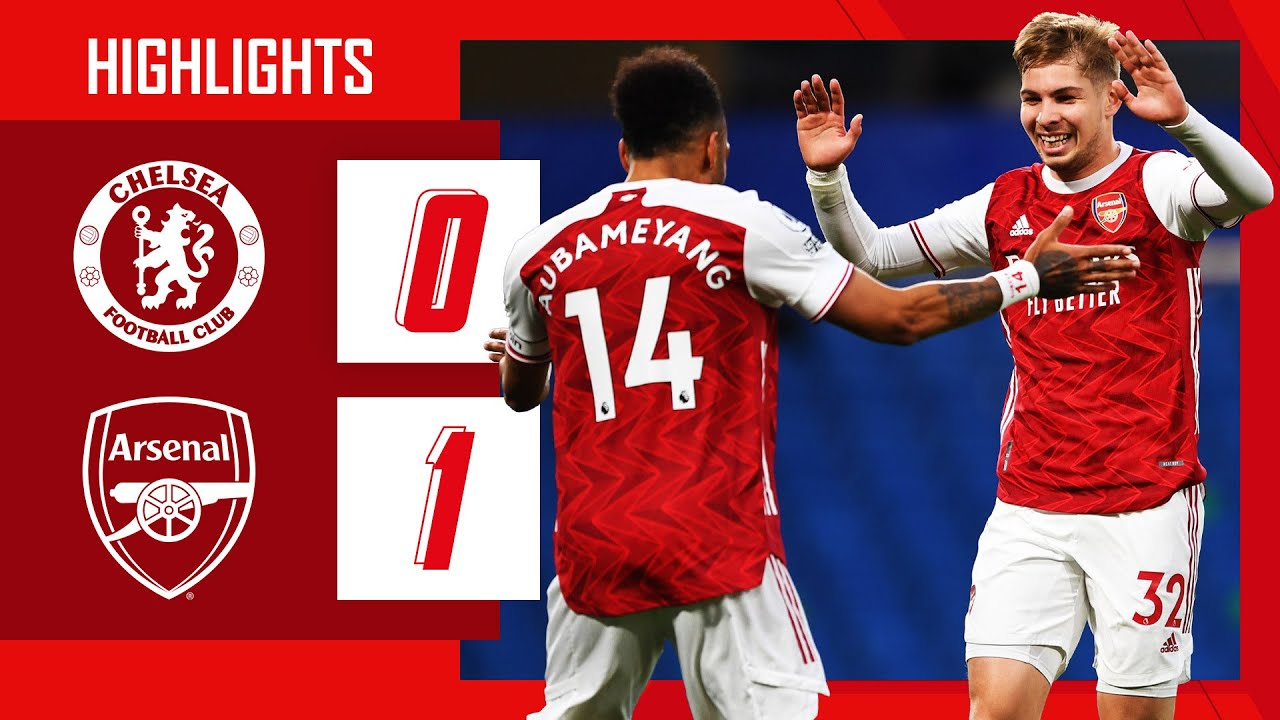
Simon Jenkins says he’s an Arsenal fan, but complains that football is too often low-scoring (Opinion, 16 May). Has he not heard of the classic result “1-0 to the Arsenal”? Keith Flett Tottenham, London
James Watt delivers final verdict on Dog Eat Dog, Islington ‘what were we thinking?’
The Brewdog site in Essex Rd Islington, just a few minutes walk from Islington Green (but arguably in the wrong direction) was not been blessed with success.
Opening in the autumn of 2015 it was originally a beer and hotdog outlet, DogEatDog. I thought it was OK but it didn’t work, and it was shut and briefly replaced by the Punk Kitchen. The idea here was to host month long street food pop ups but it lasted only a couple of months and closed towards the end of 2016.
In 2017 the premises was been empty and, reportedly, on the market. That didnt work either as Brewdog submitted a licensing application in the Autumn of 2017 for a Hopworks outlet.
The Hopworks concept revolved around installing small brew kits where people could brew their own beer with the help of Brewdog operatives.
That didn’t work either and after three attempts Brewdog gave up and the site became an indy craft beer bar of decent but no great distinction (Essexhouse). That closed during the course of the pandemic. I pass by the site occasionally on the 73 bus but thanks to @kientan74 for alerting me on X that its currently Hollow Rocks a sports & social place, or as they describe it a boutique gym..
Watt’s comments came in a Q&A on his Insta site on 16th May when asked about things Brewdog had done that he didn’t like.
It rather suggests that Brewdog are still stuck with the lease.
Craft beer originally was perhaps about locality, community and values different to those of Big Beer. Yet Brewdog which has opened and closed numbers of sites in London doesn’t seem great on understanding the ebbs and flows of the Great Wen.
The road with bars and restaurants in central Islington is Upper St. Essex Rd, which runs immediately parallel a short distance away is a rather different space as James Watt presumably now reflects particularly as he now partly lives not that far away.
The Sunday Times has published its annual list of the 350 wealthiest people in the UK in the last year. While the methodology of creating the list can always be questioned it remains a useful index.
At No.245 up from No.275 in 2023 Sunak and Murty have seen their wealth rise to £651m up £122m on the year. The wealth derives from hedge fund investments and the Infosys tech company. Murty’s shares have increased in value in the last 12 months by £108.8m to almost £590m in total.
Meanwhile Sunak’s wealth in the past year stands at £2.2m. Just 6.5% of that is accounted for by his MP and PM salary and its 60 times the average UK salary
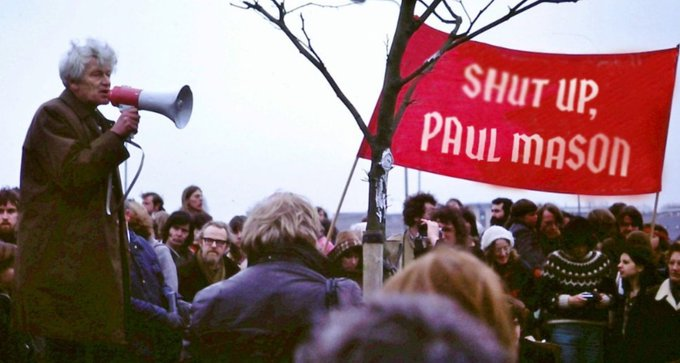
The speaker here is veteran socialist historian and peace campaigner E P Thompson who died in 1993 when Paul Mason was still a member of Workers Power. The banner is of course photoshopped. The original belonged to another left group, the Workers Socialist League
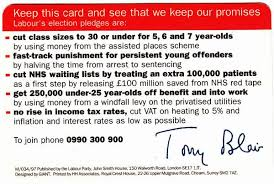
The media is generally not great at history but most have noticed that Keir Starmer’s launch of a six point pledge card is rather similar to Blair’s 1997 pledges, although he had five.
A useful, if certainly unreliable, source for the process which led to the New Labour pledge card are Alastair Campbell’s Diaries.
He recorded on June 18th 1996 that Gordon Brown felt the pledges were too small and ‘lacked ambition’.Campbell notes that the ‘public are tired of grand promises and want to be able to believe the promises that are made’. He goes on ‘trade union reform was obviously a bit sensitive’, and suggested it wasnt clear where John Prescott and Robin Cook stood on the matter.
Rights at work did not appear on the 1997 pledge card (1999 Employment Relations Act) anymore than the New Deal appears on Starmer’s 2024 pledge card
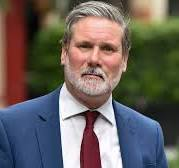
The Beard Liberation Front, the informal network of beard wearers, has said that Labour’s pledge to crackdown on anti-social behaviour must include putting a stop to rude comments about beards and beard wearers.
The campaigners say that far too often the hirsute are subject to abusive language with insults such as ‘beardie’ and ‘get a shave’. The claim that beard wearers have the remains of their breakfast in their beards is also widespread.
BLF Organiser Keith Flett, anti-social behaviour towards beard wearers is widespread. We hope Labour’s pledge will finally take action to put a stop to it
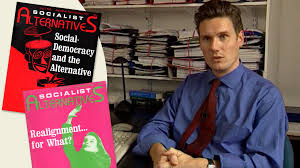
The then Editor of Socialist Alternatives Benjamin Schoendorff looks at what the 1980s project was trying to achieve and reflects on the input of one of its most well known contributors, Keir Starmer
The struggle for workers control means.. effective defense of the unions, supporting national and local pickets and a principled advocacy of solidarity action.
The only reason for the creation of the Hundred was to establish entities that were not member owned (15 of the 18 Counties are member owned) and therefore to establish vehicles for private investment. An injection of private capital was always the intention
I’m a lifelong Spurs fan, living in central Tottenham near enough to the stadium to hear the crowd cheer, or more often groan, when Spurs are playing.
On 14th May Spurs played Manchester City at WHL. As usual I wanted Spurs to win, while doubting on recent form if this was likely. As it happened Spurs had a decent game although they ended up losing 2-0.
Like much else in life there were wider contexts. The Manchester City victory meant they were almost certainly Premiership winners. A defeat would have given Arsenal a chance at that.
Some Spurs fans, tribalists, appeared to be supporting Manchester City because of the Arsenal angle.
The reality is that while the rivalry between Arsenal and Spurs is genuine there is more that unites North London than divides it. Arsenal winning the Premiership would have dented Manchester City’s hegemony at the top. Not something Man City fans would have liked but the hegemony is leading to the Premiership eating itself.
Still London, the North West, South Wales, and parts of Yorkshire and the North-East are the main working class and Labour voting areas in England and Wales (historically, this is not about a current Labour vote). So there is a wider unity here too.
Eric Hobsbawm made the point that football in London from the start has been about class and tribalism, while arguably part of that, is not the best of it
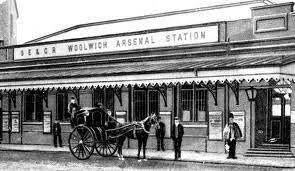
There is not and has never, I think, been a football team bearing the name of London. All the celebrated teams of the capital are named after neighbourhoods, except Arsenal, which moved to North London from its original location as a works club in Woolwich. They belonged to Queens Park, the hills round Crystal Palace, to Charlton, Leyton and Tottenham, or to West Ham—another team which began as a works club.
Now, this way of defining communities is directly relevant to labour movements. Out of the twenty-three metropolitan branches of the Amalgamated Carpenters and Joiners in the 1870s, eighteen actually had the same locality names as either music halls or football teams or both. And if we take an area like Woolwich, it was by general consent a town within a city, a defined community whose working class was based on the great Arsenal, which generated both the football club and the Royal Arsenal Cooperative Society which eventually colonized other parts of London. (The other metropolitan cooperative society of importance, the London, was originally based on the railway workshops in Stratford.) And if we take West Ham, whose Thames Ironworks generated the famous ‘Hammers’ team, its character as a separate proletarian community was so marked that it was the first district in Greater London to elect a Labour majority on its council, having already, in 1892, elected the socialist Keir Hardie to Parliament by means of a coalition of the Irish with the local Left.
Hobsbawm in his conclusion looked at the impact that changes in Cities, class and employment had on labour politics. He noted that even where divisions existed on the football field, these were often overcome on the political field with a desire to promote a progressive working class politics
For in the big city ‘labour’ was at the best of times never as cohesive as in the smaller industrial communities, even when these were not single-industry settlements. It was always a much more miscellaneous and heterogeneous stratum, held together by a common style of working life—the life of manual work—and by a common consciousness of class, of relative poverty and low status. It was this which allowed labour parties to become simultaneously containers for class and other minority interests. They were, like the Democratic Party in the usa, alliances of minority interests, but they were not only such alliances, since the concept of a ‘working class’ provided a common denominator for otherwise different and even divergent groups. This was so even when labour movements did not stress their special appeal to minorities such as, say, the Irish or the Jews. Protestants and Catholics in Glasgow, whose mutual hatreds are evident on the football field, could both join together in a single camp for purposes of city politics.
Passages in bold From New Left Review No 1/166 November/December 1987 Labour in the Great City