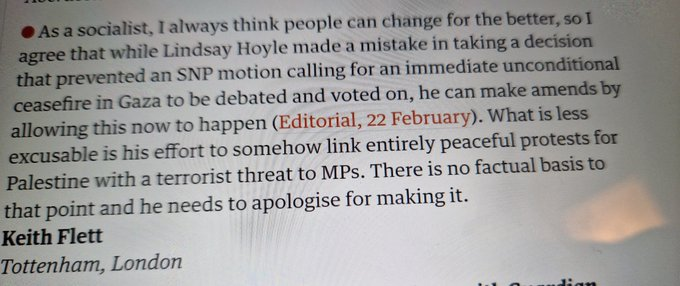
Link to more letters on the subject (Guardian 24th February)
https://www.theguardian.com/politics/2024/feb/23/the-case-for-overturning-commons-conventions

Link to more letters on the subject (Guardian 24th February)
https://www.theguardian.com/politics/2024/feb/23/the-case-for-overturning-commons-conventions
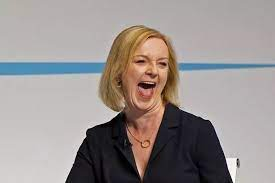
Liz Truss’s Oxford tutor on the contradictions in her ideas
Marc Stears(now at UCL) wrote about the time he was Liz Truss’s tutor during her time as an undergraduate at Oxford in the Murdoch Sunday Times (31st July 2022)
According to Stears Truss’s time at Oxford was marked by an ability to come up with unusual angles on issues and stick to them even when informed that facts showed she was wrong. Secondly an ability to fiercely argue a position only to drop it and equally fiercely promote something different.
The more we hear, unfortunately, from Truss the more Marc Stears seems to be right
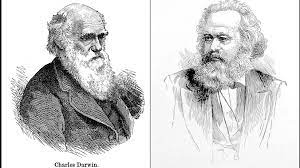
In June 1873 Karl Marx sent Charles Darwin a copy of Capital Volume One with a note saying he was a ‘sincere admirer’.
The link between two of the greatest theorists of the nineteenth century, one advancing knowledge of the natural world, the other of economics, is perhaps broadly obvious.
Darwin’s copy of Capital has been subject to restoration but is going on public display again after 5 years.
The Telegraph story (22nd Feb) reports that Darwin replied in October 1873 saying that ‘though our studies have been so different, I believe that we both earnestly desire the extension of knowledge.
In the nineteenth century the Telegraph notes books were produced with pages uncut to avoid damage, leaving the reader to cut them. However Darwin’s copy of Capital has only the opening pages cut, suggesting he did not (like Harold Wilson) read the whole book.
The implication of course is that Darwin thought Marx not worth reading.
To be fair the report does go on to give the real reason. In 1873 Capital was available in German only and Darwin’s German was not particularly good.
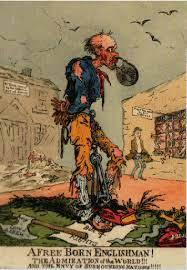
Lord Walney, the right to protest & the Freeborn Englishman
The former Labour MP John Woodcock, now Lord Walney, has had an unedifying political career
https://en.wikipedia.org/wiki/John_Woodcock,_Baron_Walney
While he sits in the Lords as a crossbencher his appointment was made by Boris Johnson.
He also acts as an unpaid advisor to the Government on political violence and disruption. He has no obvious qualification for such a role at all and the various edicts that appear from him seem to relate entirely to expositions of his own right-wing prejudices.
This of course is a guarantee that they are covered in and taken seriously by much of the media
A recent edict from Walney suggested that face coverings should be banned on demonstration. This is not law but it of course did not stop the Met Police from trying it on, on a recent Palestine demonstration. There are obvious issues with it- for example people may wear a face covering for health reasons. Perhaps Walney thinks such people should not be allowed on protests.
A further communique from His Lordship then appeared. He wants to ban protests outside of Parliament and Town Halls. Lobbying MPs and Councillors has been part of a British political tradition for a very long time. No matter. They are on Walney’s banning list.
Walney’s latest proposed ban is on MPs talking to campaigns he doesnt like such as Just Stop Oil and Palestine Solidarity.
Walney’s time as a Labour MP does not seem to have included familiarity with the labour movement and its history.
The Freeborn Englishman was a term used in the late eighteenth and early nineteenth centuries when many fewer people had the vote and they were nearly all men.
It was designed to summarise an informal compact between the Government and the people as to what democratic rights they had, and rights that the Government was bound to stick to.
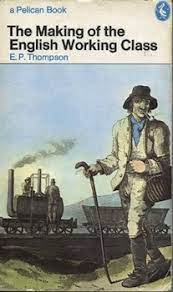
E P Thompson in the Making of the English Working Class writes extensively on the matter but also provides a summary:
Freedom from arbitrary arrest, trial by jury, equality before the law, liberty of thought, speech and conscience, the vicarious participation in liberty afforded by the right of parliamentary opposition and by elections and election tumults..the right to parade, huzza and jeer on the hustings..
Judging by the activities of Lord Walney these are democratic rights that need to be defended yet again.
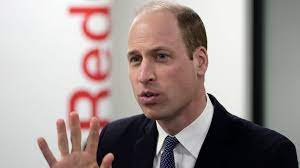
Prince William who is first in line to the throne has spoken out on Gaza. He said that too many had died, that both sides should cease fighting, aid was urgent and the hostages should be released. There were no qualifications or equivocations.
A YouGov poll(Times 22nd Feb) found 47% of those polled supported him,24% didn’t.
Nigel Farage didn’t agree with this and neither did the Times Editorial which saw it as a breach of protocol. The Chief Rabbi on the other hand backed him.
The left having any kind of dalliance with the monarchy is both a diversion and not a good idea, as the Queen Caroline affair after Peterloo underlined.
Even so William’s sentiments, a sort of basic humanitarianism, throw into some relief just how bad Sunak and Starmer are on the defining issue of the moment
MPs & protest. A tradition of the Freeborn Englishman
A reported reason why the Speaker called a Labour motion on Gaza in the Commons on February 21st when a SNP motion was meant to be the subject of debate, was that Keir Starmer had persuaded him that MPs who didn’t back an unconditional ceasefire in Gaza (despite the verbiage Labour’s motion did not)would face protests and ‘threats’.
There is no doubt that social media has amplified the possibility of making unpleasant threats and not just to MPs. In recent times several MPs have been murdered, one by a fascist and another by someone with health issues.
MPs safety is a reasonable concern but they are representatives not delegates and need to be able to listen to and respond to the views of constituents. The Parliamentary system of whipping militates against this but if Parliament can’t reflect the mood in the country, and protests and opinion polls suggest the mood is for an immediate ceasefire in Gaza, then there is a serious democratic deficit.
Protests around elections and MPs are part of the tradition of the Freeborn Englishman, as much as attempts to prevent them are part of a different reactionary tradition.
In the Making of the English Working Class E P Thompson writes of the 1803 Election held after a brief respite from wars with France, where several Jacobin candidates came forward.
In Lancaster a ‘Jacobinical mob’ was addressed by a lady who told them the ‘contest was between shoes and wooden clogs, between fine shirts and coarse ones, between the opulent and the poor and that the people were everything if they chose to assert their rights’
While in Nottingham a reformer was elected with William Cobbett, at this point on the side of reaction, commenting that the crowd was a ‘republican revolutionary mob’. The Commons voted to unseat the victorious candidate on the basis that electors had been intimidated by rioters
All part of Our Island Story, whether Government and Opposition currently in Parliament like it or not
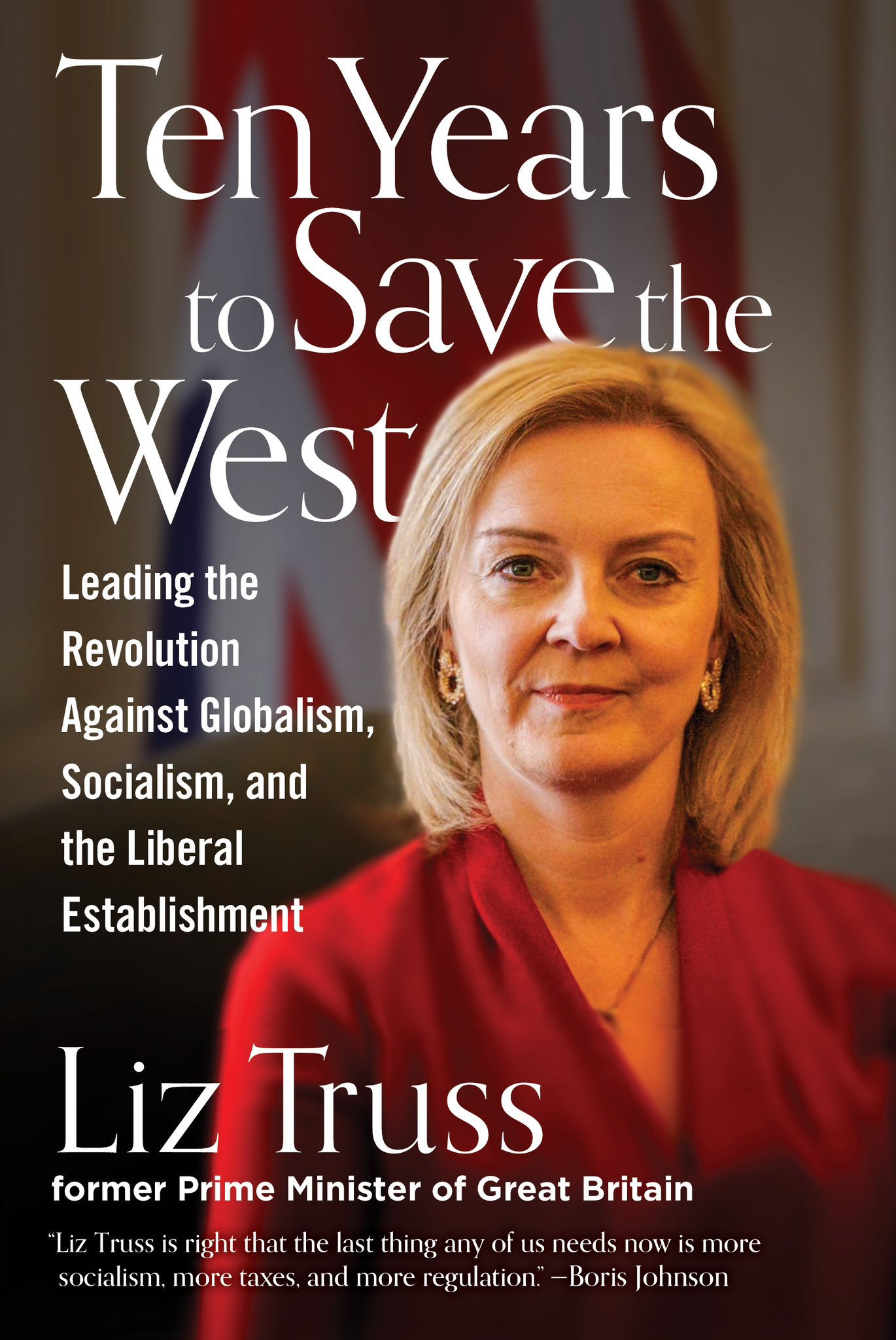
Updated list of the Woke
Gathered from the thoughts of Liz Truss, Jacob Rees Mogg, Suella Braverman etc
President Biden
The Bank of England
The IMF
Tony Blair
Gordon Brown
New Labour generally
Simon Case (Cabinet Secretary with beard)
Greta Thunberg
Just Stop Oil
The bond markets
The Office for Budget Responsibility
The Environment Agency
Judicial Appointments Commission
The BBC
Mark Carney
International economic bodies
Institutional bureaucracy(civil servants)
Trans activists
Enviromental extremists
The Occupy Movement
Academic Institutions and Think-Tanks
Woke Diversity Policies
Faux leather sandals
Skimmed milk
Anyone that lives in North London
Guardian readers
Tofu eaters
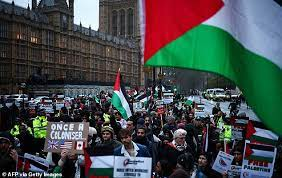
The Guardian had the story that Keir Starmer fixed the agreement with the Speaker in Parliament on 21st February that a Labour amendment calling for a conditional ceasefire in Gaza would be called. Parliament was meant to be debating an SNP motion that called for an unconditional ceasefire.
The SNP can of course be accused of politiking but the party has had a consistent position since October.
Starmer has changed his position under pressure from mass protest outside of Parliament and electoral threats in some constituencies. His main concern was to stop a vote on the SNP motion with the possibility that 100 Labour MPs would back it,
He was successful which helped the desperate in Gaza not at all.
The fact that Parliament debated Gaza was a result of what the Victorians called pressure from without, extra-Parliamentary politics. Starmer disdains them but his actions mean they will become yet more important in the weeks ahead.
The news on 26th February that the Speaker has refused to re-table the SNP motion for debate underlines that yet more pressure from without is required. If Parliament cannot even discuss and debate on an immediate unconditonal ceasefire in Gaza, more democratic campaigning and lobbying is needed

The conversion of what is now the BT Tower to a hotel has been reported. It opened as the Post Office Tower in October 1965. The revolving restaurant on the 34th floor was not officially opened until 19th May 1966 however.
Sir Billy Butlin had secured the contract to run a ‘high end’ restaurant at the top of the tower in 1963 when construction work started.
It seems an odd choice from the perspective of 2024 but the state of British cuisine in the early 1960s was not great, something that had inspired Raymond Postgate to start the Good Food Guide a few years earlier.
The restaurant closed to the public in 1971 after a bomb went off in the toilets and closed finally in 1980. It was however hugely popular in its early years with the revolving floor giving panoramic if mostly somewhat distant views across London.
At the official opening Sir Billy Butlin and Tony Benn dined on prawn cocktail & T Bone steak. Very Sixties
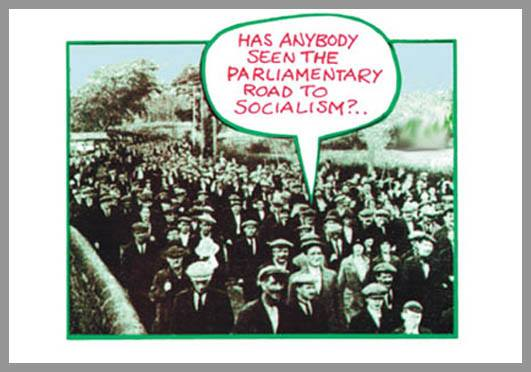
Labour, Parliamentary Socialism & the Gaza debate. A crisis of political legitimacy
It may seem very much beside the point given there is a genocide in progress in Gaza, but the debate on it in Parliament on 21st February underlined an important point about Starmer’s Labour
A row has broken about because while in the Commons process it was an SNP opposition day, where the party can raise its own issues for debate- and did so with a motion calling for an immediate ceasefire in Gaza-in reality it appears that the Speaker Lindsay Hoyle was prevailed upon to also call a Labour motion. This called essentially for a qualified ceasefire dependent on Israel agreeing to it
Labour has its own opposition days- a lot more than the SNP- but has not used them to raise Gaza.
The context here is the opening section of Ralph Miliband’s Parliamentary Socialism (1961). He noted that of those parties ‘claiming socialism to be their aim’ Labour is one of the most dogmatic not about socialism but about the Parliamentary system.
He notes ‘its leaders have always made their devotion to that system their fixed point of reference and the conditioning factor of their political behaviour’
Starmer of course has ditched any pretence of socialism and got rid of most connections to social democracy too. By prevailing on the Speaker to, how shall we say, innovate on Parliamentary processes, he has now moved away from the other pole of Labour’s politics- a fixation on the rules of Parliament.
Of course the Tories play fast and loose with these frequently. If Labour also does, as Kevin Ovenden has pointed out on social media, a crisis of political legitimacy is increasing
View more by category: Uncategorized (14,176). .


