My Hairy Valentines 2024, Beards that are loved voting open
The Beard Liberation Front, the informal network of beard wearers, has said its annual search for My Hairy Valentine ahead of Valentine’s Day on 14th February is nearing a conclusion with voting in the second Beards that are loved round now open.
The contenders are Ricky Tomlinson, Alexei Sayle, Michael Rosen and Billy Bragg. Hairs have bristled in early voting but the poll runs until midnight on Monday 12th February
In 2024 there are two categories:
1 Beards that are sexy, allowing for the reality that this is in the eye of the beholder
2 Beards that are loved because they add a reassuring presence to public life and should be celebrated.
There is a vote covering each category with the winners of both contests sharing the title in 2024
In 2023 the winners were Idris Elba and Michael Rosen.
BLF Organiser Keith Flett said, we know that not all beards are sexy, think Jonathan Gullis, but at Valentine’s each year we celebrate those that are. It underlines that in an appropriate context beards can be romantic
Beards that are sexy
George Elokobi, football manager
Jurgen Klopp, football manager
Mikel Arteta, football manager
Roy Keane, football pundit
Voting for this round has now concluded. Votes will be verified & the winner announced on Tuesday
Beards that are loved
Ricky Tomlinson
Michael Rosen
Alexei Sayle
Billy Bragg
Voting for this round is now open, pinned @kmflett X account
With Helen away for some weeks, Adam is in charge at the dairy. It may be recalled from his time at Home Farm that Adam is useless at being in charge of things, as even he eventually recognised. As might be expected at the dairy he is also useless. Clarrie and Susan know the job inside out and should be left to run things themselves
Once again on Hilda
Tony has been victimising Hilda the cat and is now trying to expel her from Bridge Farm. We say put Hilda in charge and get rid of Tony. Alternatively if Hilda can meet an agreed mice catch quota perhaps relatively peaceful co-existence can prevail
A farewell to Harry?
Harry is snooty and annoying. Hopefully he will go away
Farmers protests
Farmers protests perhaps particularly in France where they have been underway for several weeks have a mixed political composition, small and big farmers, left and right politics. Previous UK farmers protests have been orchestrated by the hard to far right and achieved nothing. The Ambridge Socialist has reporters on the story
Kenton & the NHS
The Tory inspired issues with the NHS are well known but Kenton discharging himself from hospital simply made extra work for hard pressed services. A visit from the district nurse to change dressings and a visit from a physio. These things could have done more easily in hospital until Kenton was actually fit to be discharged. As for being in a ward with other difficult patients- Kenton’s reason- perhaps this just broke through the sometimes rather cosy world of Ambridge…
A YouGov survey has revealed that a majority of men now wear facial hair.
34% of those surveyed have a full beard and moustache rising to 70% amongst younger people.
Others have sideburns, moustaches or pre-beard stubble.
The BLF has welcomed the news but has underlined that facial hair is still under represented in many areas of society. The examples of TV newsreaders, senior politicians and bank managers are cited.
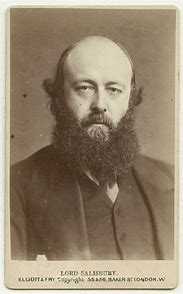
BLF Organiser Keith Flett said, we welcome the news. Its a sign that our campaigning has had an impact. At the same time there hasnt been a Prime Minister with a beard since 1902 drawing attention again to the gap between Westminster and the wider world
50 years ago on 11th February 1975 Margaret Thatcher won the second round of voting for a new leader Tory leader to replace Ted Heath and became Leader of the Opposition
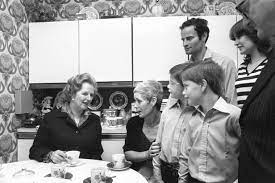
Thatcher promoted an image of herself as a housewife doing the cooking for Denis Thatcher. It was a political image as much as Harold Wilson’s pipe. Thatcher was a powerful politician who didn’t have the time to spend much time cooking even if she wanted to.
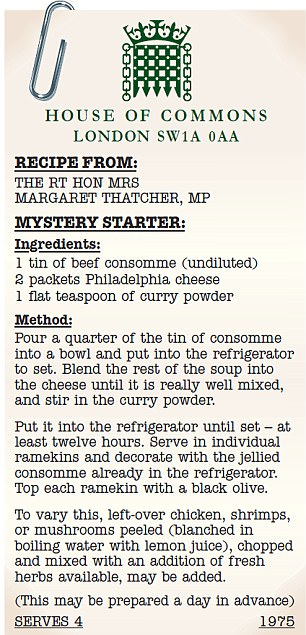
Her papers however do reveal her recipe for a dinner party starter. The details were first revealed in 2017 but have recently had currency again not least in the Times. Indeed a Times letter writer noted that they had eaten Thatcher’s concotion and found it delicious.
The Beard Liberation Front, the informal network of beard wearers, has said that it is officially supportong the celebration of Chinese New Year on 10th February by encouraging the eating of dragon’s beard noodles
The noodles are said to have first been cooked by a chef during the Ming Dynasty and to resemble the hairs of a Chinese dragon.
BLF Organiser Keith Flett said, we are pleased to be associated with the Year of the Dragon, although we would caution that dragon’s beard noodles are not actually beard friendly
Household Budgets to Maxed Out Credit Cards: Thatcher & Starmer on ideological economics
Margaret Thatcher didn’t start it. There is a long history of politicians misrepresenting decisions on the economy invariably to try and disguise the reality that they will leave the worse off in society more worse off.
Even just going back in living memory Harold Wilson when the 1966-70 Labour Government devalued the pound against the dollar claimed that the pounds in peoples pockets would still be the same.
Wilson despite a reputation for being less than straightforward on occasion was a modest exponent of the political art compared to what came later.
Margaret Thatcher compared the national economy to a household budget and the issues that arose if it went into debt.
Chancellor Rachel Reeves has now echoed the point again telling Nick Robinson that managing the economy is just like how her mother managed the household budget to make sure that income and spending was in exact balance.
The comparison is entirely fallacious. Household budgets don’t have to fund public services, the army and national infrastructure. Thatcher used the comparison to promote spending restraints which the Blair Government stuck to, albeit only for a limited period.
Keir Starmer claimed in 2024 that because the Tories had ‘maxed out the credit card’ Labour’s spending commitments on green investment and no doubt much else would be scaled back.
There is no question that Liz Truss’s 49 days in Downing St did do significant damage to the British economy- something she is entirely unprepared to take ownership of. However the problems of the British economy have a much longer history than that.
Moreover the economy does not run on the basis of Keir Starmer or Rachel Reeves credit cards.
After 1945 Britain was effectively bankrupt and had to rely on a loan from the US to keep going. That did not stop the Attlee Government from financing a house building programme and introducing the NHS.
It’s a matter of political choice and Starmer and Reeves are making the wrong one, albeit we must hope not for the same underlying reasons that Thatcher did
He deserves to be remembered for a variety of reasons and some at least will argue whether they are all entirely positive ones. I am prepared however to err on the side of mostly positive while far from ignoring some significant potential downsides.
Hall was part of a generation, essentially the first new left, which was the one before that I am personally in. So I saw him speak on occasion but by the time I myself was speaking on platforms and organising conferences Hall’s health unfortunately meant that he often wasn’t.
In 1979 just on the cusp of the arrival of Thatcher I was a teaching in Birmingham and living in Worcester. Stuart Hall and the Centre for Contemporary Cultural Studies which he had run were a not insignificant presence in staff room discussions amongst the left in those days. Some of the studies of the Centre had looked at West Midlands youth and done so in a useful and interesting way.
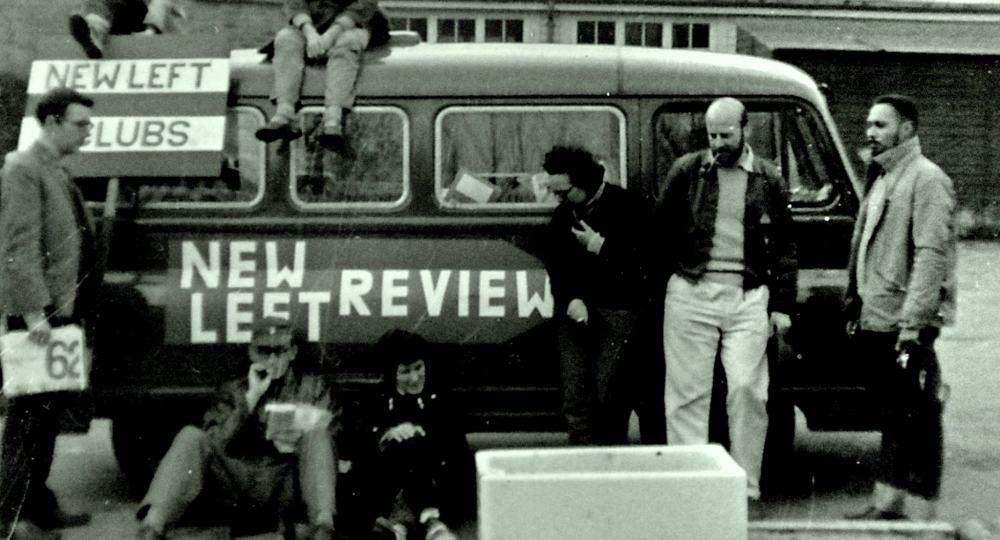
Hall himself had been around a while by then. He had been associated with Universities and Left Review in the post-1956 era and then became for a relatively brief period an Editor of New Left Review in 1960 in the moment when EP Thompson was still a central figure.
Hall had moved into the area of cultural studies from the early 1960s.
For many, what much of cultural studies subsequently became may have seemed often rather long and sometimes incomprehensible words and paragraphs. It is important to remember the times however.
When Stuart Hall alighted on cultural studies it was something much of the left treated with disdain. Popular music and TV were not something warranting an engagement with by the left, although there were obviously even then important exceptions. One need only mention CND to realise that ‘youth culture’ and the left were not totally divorced. How far Hall was ‘on board’ with a rising youth culture in the early 1960s is perhaps a matter for debate.
Hall went on to do useful work around race, class and authority and became associated with Marxism Today which was nominally the theoretical organ of the Communist Party.
It would be reasonable to suggest I think that Hall did at least produce some important theory, but he was also very much associated with the Thatcherism analysis of the time, the idea that the working class was changing or perhaps just dead and so on.
That led into some theoretical underpinnings for New Labour and I don’t think there is anything to be gained by not making the point clear.
Like others who remained on the left despite this dalliance with Blair & Co, Hall subsequently recognised the strong element of neo-liberalism in the New Labour project.
Stuart Hall certainly deserves to be remembered for his work with the early New Left and the important role he played at the Birmingham Centre for Contemporary Cultural Studies. Obviously I’m rather less enthusiastic about his Marxism Today period and the dalliance with New Labour.
However he kept going over seven decades and that deserves respect, albeit as I’ve noted sometimes critically so.
There has been a focus on research assistants since Rachel Reeves noted that she had assistance with her recent book on women economists (an important subject btw). They were unnamed and the inference seemed to be that they might be to blame for some of the plagiarism in the book.
Research assistants are a well known and invaluable feature of historical investigation, particularly those that are detailed and wide ranging.
E P Thompson’s Making of the English Working Class was all his own work. He gathered material during the day across the West Riding in particular while working as a Leeds University extra-mural lecturer teaching evening classes across Yorkshire.
Later he did use a research assistant for some projects particularly Whigs and Hunters and his essay Threatening Letters. Thompson had met EE Dodds in one of his night classes in the 1950s. Dodds was a head teacher and an historian of the West Riding.
He became reacquainted with him in 1964. It appears that the two briefly met while researching in the Public Office Record (now the National Archives). Dodd had his own research projects but also did some paid research for other historians.
Thompson employed him to search out particular documents and references. Dodd by then was in his 70s. He was particularly keen not only to pay him for his various research requests but also for his travelling time.
During this period Thompson had a full time role running the new Social History Centre at Warwick, so no doubt E E Dodds assistance was invaluable. It was of course both declared and paid as would be expected.
From Labour First Chancellor in 1924 to Rachel Reeves. Labour & Fiscal Rules
Labour’s first Chancellor was Philip Snowden who presented Labour’s first ever budget in April 1924
Snowden was the son of John Snowden who had been a Halifax Chartist in the late 1850s and became a Liberal. Philip himself started as a Liberal but during a period of ill health he joined the ILP and became a leading figure in it.
He was a temperance man and his socialism did not depart from the Liberal economics of his youth. He was said to be philosophically in love with the Governor of the Bank of England and worked closely with the Treasury rather than Labour Ministers on his Budget.
Snowden’s view was that little could be done without a robust market economy and that meant prudent financial management not public spending commitments.
Fast forward 100 years and it sounds very much like the fiscal rules of Labour Chancellor Rachel Reeves who has a Bank of England background. Reeves shares with Snowden what the socialist economist James Meadway calls ‘Treasury Brain’
The argument is that the Tories have wrecked the economy and with 49 day Truss that is largely correct although the problems of the British economy are more complex than that. Hence there is no money for spending commitments.
Indeed Rachel Reeves explained to the Telegraph before the Election her approach to the national economy. In a presumably conscious echo of Margaret Thatcher she noted that her mother showed her to balance the books at the kitchen table. Thatcher knew and I’m sure Reeves does too that this is a specious analogy even if it works ideologically. The householder may struggle to get a loan or incur debt to cover a financial problem, certainly at reasonable costs. National Governments rarely have such issues
After 1945 when Britain was effectively bankrupt the Attlee Government took a rather different view. It took a loan from the US (Marshall Aid) and with it came the NHS and a Council House building programme.
It might be agreed that Tory plans to open more hospitals and reopen rail lines were built on sand. That doesnt mean that such projects, reassessed, would have considerable economic and social benefit. That is not happening because of Treasury economic dogma which Reeves is fully bought into.
However Philip Snowden was not the only model out there and neither a century on is Rachel Reeves