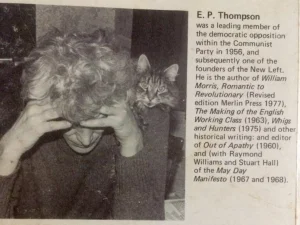
One incidental issue on the 100th anniversary of his birth is whether or not E P Thompson liked cats. The answer is yes as this picture underlines:
Furthermore Thompson made specific reference to his cat in the Poverty of Theory (1978).
He noted that Marchais, a leader of the French Communist Party in the 1970s and 1980s had said that when he came to power he would be kind to animals. ‘My cat, who read this over my shoulder, laughed’. Several paragraphs later Thompson writes ‘I have asked my cat’ (about the evasions of Stalinism) ‘and he has explained that it is all this which made him laugh’.
Thompson also has an interesting reference to a cat in the Making of the English Working Class. Thompson notes the ridiculing of George IV despite the repressive atmosphere post Peterloo. Cruickshank’s satirical Slap at Slop (1822) appeared in a mock issue of the Government backed New Times. It carried a mock newspaper stamp (papers were subject to a Government tax) with the design of a cat’s paw and the motto ‘on everything he claps his claw’
On a related subject Thompson also noted that ‘all dogs are doggy ‘they smell, bark, fawn on humans’
Snow & Ice Guidelines for beard wearers. Act now to prevent frozen follicles
The Beard Liberation Front, the informal network of beard wearers, has issued updated guidelines to beard wearers after many areas of the UK are set to have snowy and icy conditions on Thursday
The BLF says that while beards have been protecting against cold weather since 1854 it is also important to protect the beard itself against snow and ice penetration.
One way to do this may simply be to remain indoors and away from all possible contact with snow and ice.
However this is not possible for all including many workers and those who must venture out for essential reasons.
When venturing out in the ice and snow, the following guidelines for beard wearers are advised-
Snow and Ice Guidelines for Beard Wearers
1] Protect the entire beard with a scarf or roll neck jumper. If snow is heavy a snood is advised.
2] Sweep any drifting snow from the beard on a regular basis. Do not allow snow to accumulate in the beard under any circumstances.
3] Comb the beard through regularly to remove any residual snow
4] If the beard becomes chilled or frozen due to snowy or icy weather it is essential to thaw it out slowly.
5] When temperatures drop below zero freezing follicles can be a significant issue
6] If follicles do freeze or develop icicles these should be thawed slowly but also as quickly as possible
7] Dry the beard slowly in a warm room and check for any damaged hairs and follicles
BLF Organiser Keith Flett said snow or ice in the beard can cause serious damage to hairs and follicles and the hirsute are urged to make sure they are protected before venturing out in snowy weather. If snow does accumulate in the beard or follicles become frozen it is essential to follow the BLF guidelines to prevent serious damage. In particular if the beard suffers from icing, gradual thawing following the guidelines is equally important to avoid damage.
For E P Thompson the moral economy was a customary right, also to be found at the very least in common law, which was used not as a challenge to rising market values- it was not put forward as an alternative political economy- but as a corrective and restraint to it.Thompson was writing about the eighteenth century
Yet the idea that there are certain basic human values- in particular that people have a right to essential foodstuffs at affordable prices- and certainly prices that do not allow farmers and middlemen to exploit shortages, can be seen to have an application today.
The idea that although the economy and society are not equal,meaning there is rich and poor, there is still a framework that caps how much unfairness and discrimination there is
Rishi Sunal who went to Winchester and is the richest MP in Parliament has clearly never read E P Thompson and his actions just this week suggest that he is someone who believes not in a moral but an immoral economy
He agreed a £1000 bet with Piers Morgan on refugees being sent to Rwanda this year
He mad a transphobic jibe in the Commons at probably the most inappropriate moment to do so
He reportedly blocked a proper pay rise for doctors because it might mean a decent pay rise also for other health workers
As E P Thompson noted when society ignored the basic framework around how wealthy the rich could be and behave and how everyone else was able to exist there were protests and even riots
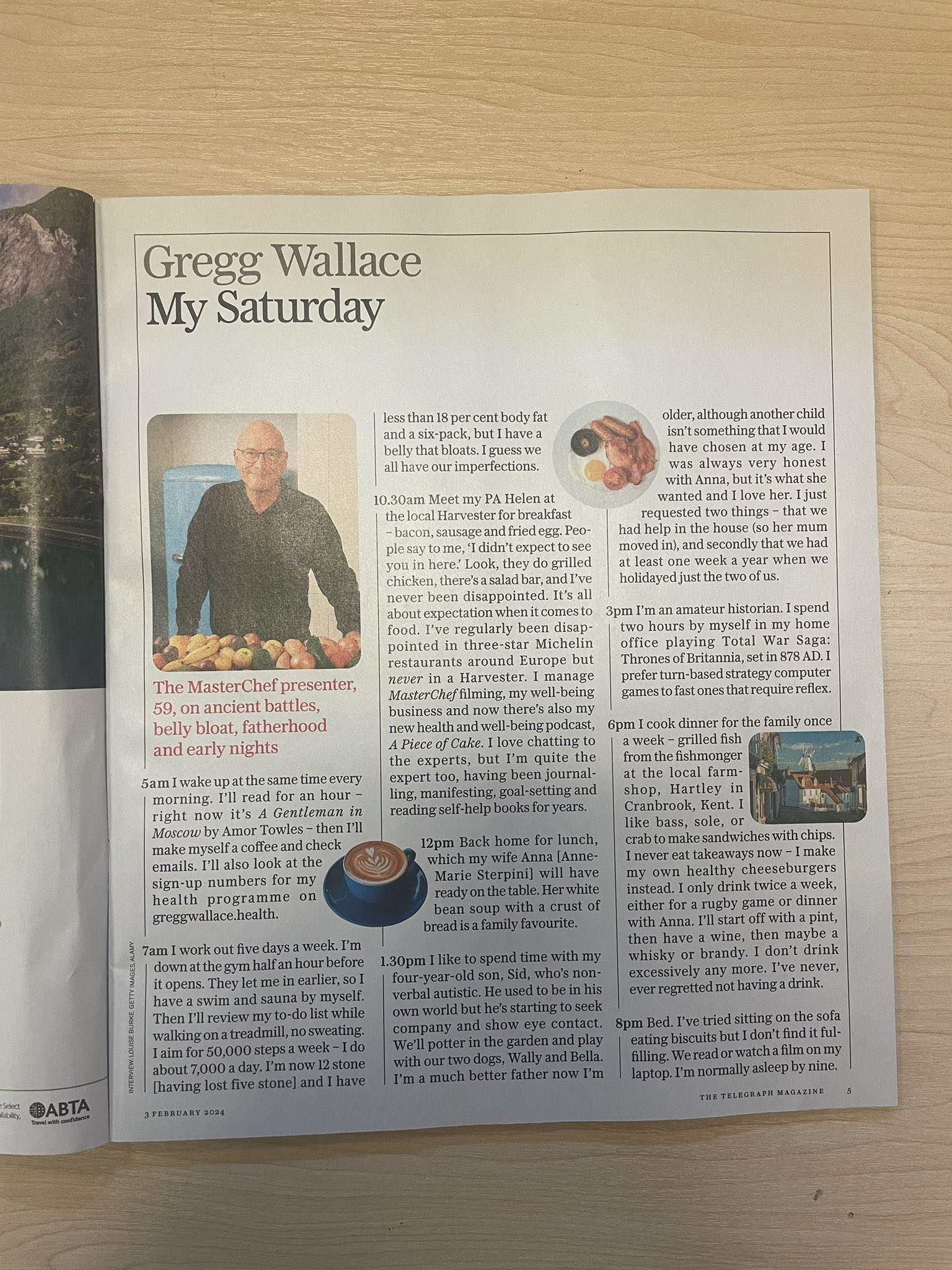
In a piece published in the Telegraph in February 2024, former Master Chef and Inside the Factory Host Greg Wallace detailed some of the activities of his week.
One is playing a computer game set in a Britain (or more accurately an England perhaps) of 878 AD. Wallace declares himself an ‘amateur historian’. Perhaps the comment is a little tongue in cheek, but it was picked up by the media.
Its worth recalling that one of Britain’s most well known post-1945 historians E P Thompson who was born just over a 100 years ago in1924 also fits, for the most part, the description.
Thompson spent most of the 1950s and early 1960s working for the University of Leeds teaching evening classes for adult students across West and North Yorkshire. While he combined this with doing the research for what became the Making of the English Working Class, he was also focusing on English literature. His later work on William Blake and his published fiction and poems underlines the point.
He took up a post in the mid-1960s as the Director of the new Centre for Social History at Warwick and stayed there until 1971. These were the only years when he was employed full time as a professional historian.
After 1971 he did take up visiting Professorships from time to time,but mostly worked an independent scholar, writer and activist.
Its a world away from Gregg Wallace who said that he had overshared and was upset at the ridicule his daily routine had been subject to:
A reminder that we shouldn’t sneer at the amateur historians, whatever their interests.. Showing interest in any aspect of the past can add perspective and perhaps a degree of self awareness too. Unfortunately in the case of Gregg Wallace it hasn’t worked
King Charles has been diagnosed with cancer and has started treatment. No more details are available but it is known that treatment for cancer is often temporarily debilitating and recovery takes time.
The 1937 Regency Act provides for Counsellors to step in and perform some of the Monarch’s duties if they are indisposed.
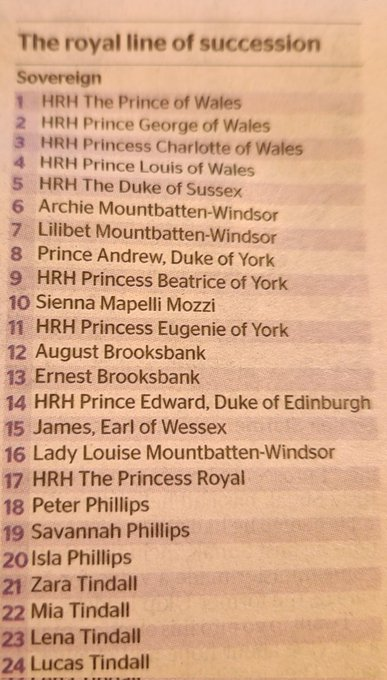
Counsellors consist of the Queen and the top 4 Royals over 21 in line of succession. Currently these are
1 Queen Camilla
2 The Prince of Wales
3 The Duke of Sussex
4 The Duke of York
5 Princess Beatrice
Harry is barred because he doesnt live in the UK (reportedly) and the Duke of Edinburgh and Princess Royal are on the list. The official reason is so Andrew can be swerved but this is as much about invented tradition as law so we shall see.
While many may wonder what the Royals actually do aside from shake hands and attend dinners, the mantra has been that if there is not a demonstrable public presence and image, then demand for an end to the monarchy will grow.
If Harry doesn’t return to the UK (who knows or cares) will the reported Royal resourcing crisis have to be resolved by deploying Prince Andrew, albeit with no hand shaking allowed
Below is a piece I wrote about the British Library a years ago on February 17th 2024.
I still visit regularly (once or twice or month depending on research requirements) and I was there again on 17th February 2025.
The good news it that, thanks to hard work by Library staff, progress is being made.
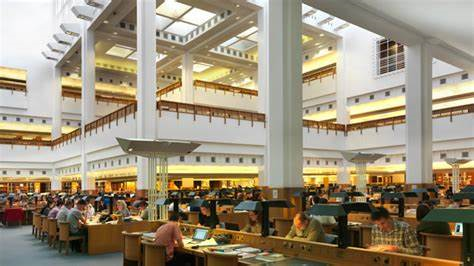
It is half term week in London so the library itself (the public areas) was busy and the Humanities 1 reading room was reasonably well populated. There is still no computer access in the reading rooms so its via your own tablet or laptop using the BL’s current wi-fi.
The current (remote) ordering process for books (a several page form) is cumbersome prior to the pre-October 2023 system but it does work. The shelves at the issue desk which hold books ordered still seem rather unpopulated compared to then
Further good news is that access to the e-newspaper database has now been restored (in the reading rooms on personal devices) which should be useful to many researchers.
Its taking time and arguably it should have been addressed more quickly and energetically by the Culture Department rather than just leaving it to the Library. See my note of a year ago, below
From February 2024
Noting another article on the impact of the end of October 2023 cyberattack on the British Library a brief note about my most recent visit.
For those unfamiliar, and given that the BL is Britain’s national library and a major cultural asset, news and political concern has been limited, since October 31st nothing has worked in the Library e-wise. The on-line catalogue has been off line, no books could be ordered. No computers in the reading rooms worked etc etc.
Since January 15th some progress has been made, thanks without doubt to some very hard work by Library staff.
There is a read only catalogue on-line. You can search for material held at St Pancras, but you can only order it in person.
I ventured in and ordered a book via paper slip very similar to those used in the days of the Round Reading Room (Ive been a reader since 1984). There were some people in the main Humanities One reading room but it was far from thronged.I successfully ordered a book and consulted it. It did not appear there were many others doing so on that weekday afternoon.
Getting back an on-line catalogue to allow remote ordering and getting access to the BL’s digital collections is urgently needed but recovering from a cyberattack and urgency don’t work. It would be appropriate for the DCMS to promote getting things sorted and the local MP, quite a well known figure I understand, might have a word.
Yet another group of hard to far right Tories are holding a conference in Westminster today. Some of the speakers, Liz Truss, Rees Mogg, Lee 30p Anderson may seem somewhat familiar.
Reading the Runes is an interesting exercise with what are essentially a gathering of culture warriors. They have moved on from being anti-Woke and now want an end to finger wagging.
As Bob Dylan noted, there is no success like failure
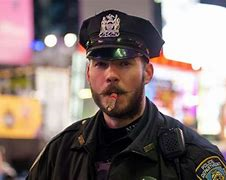
The Beard Liberation Front, the informal network of beard wearers, has said that an attempt to reimpose a ban on beards in the New York Police Department (NYPD) won’t work.
In recent times a beard ban was relaxed for Sikhs and there is now more widespread facial hair in the force.
The head of the NPYD John Chell is reported as wanting to bring back the traditions of the NPYD.
The campaigners say that provided beards are well maintained opposition to officers wearing them is simply suggesting a fear of facial hair.
BLF Organiser Keith Flett said, like many police forces the NYPD has some concerning traditions. The more recent one of relaxing a ban on facial hair is not one of them. Unless beard patrols to check on officers facial hair are planned the ban won’t work
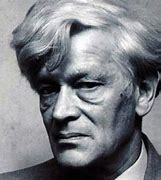
The centenary of the birth of the marxist historian E P Thompson was marked on 3rd February 2024
One byway is that he never knowingly wore a beard and had a somewhat disdainful attitude to them.
Whether this was a result of his army background during World War Two or his membership of the Communist Party until 1956 (moustaches only were acceptable to that point)
Thompson in Warwick University Ltd (1970) made clear his disdain for ‘hairy’ students with long hair and facial hair. He saw in this a possible link to intellectual laziness and general irregularity of habit when it came to the need to oppose capital.
In the Making of the English Working Class Thompson associates hirsuteness with millenarianism finding ‘beard prophets’ and noting that some followers of the millenarian prophet Johanna Southcott were obliged to wear beards.
That is the only reference to beards in the nearly thousand pages of the Making.
He stands accused of ignoring his own point on the enormous condecension of posterity
50 years ago this month. Miners strikes, three day weeks & a General Election
50 years ago, Christmas 1973, a Tory Minister John Davies wished his family a happy Christmas and urged them to enjoy it as it might be their last.
This remark has gone down in history and is generally held to mean that Davies felt that capitalism in Britain was about to collapse.
It is possible that this was at least one aspect of Davies’s meaning. However looking at a summary of what Davies later told the late Guardian journalist Hugo Young at a Chatham House rules event at the Institute of Historical Research in London, it seems clear that the dominant thing in Davies mind was something perhaps related but also a little different- and more relevant to us 50 years on.
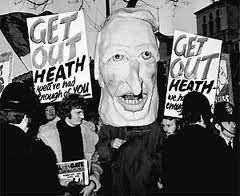
A miners overtime ban had started on 12th November 1973 and was to end in February 1974 with the ejection of Heath’s Tory Government and its replacement by a minority Labour administration. Heath had called the Election on the question of whether he or the trade unions governed the country. The electorate responded by ejecting the Tories from Office
A three day week in industry and rolling power cuts had been started by Heath from the 31st December 1973. 885,000 workers signed on as unemployed for two days a week. The three day week and power cuts did not end until early March 1974
The Tories blamed the impact of the miners overtime ban but even evidence available at the time suggested this was unlikely to be true. The miners action had its effect but in reality coal was still reaching power stations and oil fired stations were unaffected.
As we know with the benefit of hindsight the Tories were already developing an obsession with the miners that was to lead the 1984/5 strike.
Davies however had a wider concern and this was the crisis in oil supplies and the huge increase in their cost. The price hike was sufficient to provoke an economic crisis, which led to the subsequent Labour Government taking a loan from the IMF in 1976 and ushering in the era of cuts in public spending that we have been in ever since. The oil crisis had been immediately sparked by the war between Israel and Egypt. Egypt lost and one result was that oil supplies were reduced and prices increased by Arab oil countries.
The post-1945 era of cheap energy was over as was the economic boom based on it. Without question John Davies grasped this as did, based on his Diaries at the time, Tony Benn who was a Shadow Minister responsible.
The entries in Benn’s Diary for December 1973 and early 1974 are well worth reviewing. There was a palpable and mounting sense of crisis with a real feeling that the capitalist system itself was in question. The miners action framed this and the three day week underlined it but it was the energy crisis and its economic impact that was the longer term issue. It is one that remains with us 50 years on.
It is not a version of contemporary history that you are likely to easily stumble across. The current populist TV historian of the moment Dominic Sandbrook won’t suggest that one lesson of the study of recent history is that the foundations of modern capitalism are built on sand.
Moreover there is now at least one generation active on the left that is probably for the most part unaware that within living memory a group of workers, the miners, could challenge the Government and, in effect, bring it down.