Articles

Reflections on the 60th anniversary of E P Thompson’s Making of the English Working Class: influences & ommissions

In Uncategorized on December 10, 2023 by kmflett

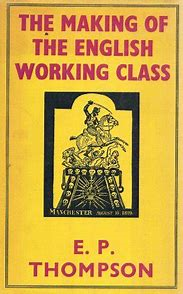
Radio 3 has broadcast a series of five talks on the 60th anniversary of the Making of the English Working Class written by E P Thompson and published in hardback in 1963. The paperback remains in print. Below are some thoughts on the talks, all available on BBC Sounds

Sheila Rowbotham on E P Thompson’s Making of the English Working Class at 60

Sheila Rowbotham has written about her relationship with Dorothy and Edward Thompson in her memoirs. It covered an extended period from when Edward was writing the Making in the early 1960s to Rowbotham’s own ground breaking socialist feminist histories from the late 1960s onwards.

On Radio 3 at 22.45 on Monday 4th December Rowbotham discussed the continuing influence of the Making sixty years on.

She recalled the times she met the Thompson’s in Halifax and her familarity with many of the locations in the book, growing up in Yorkshire. She was critical of the absence of women in the Making noting that in the 1950s and early 60s Thompson’s sources were mainly of male activists. She also reflected on the lack of a focus on slavery. She concluded though that while the book at sixty may be outdated in some ways, the approach Thompson took, of history from below with a focus on the activity of ordinary people was still an influential one.

Rowbotham’s commentary can be heard on BBC Sounds at the link below. There are four more programmes this week looking at issues such as what Thompson learnt as an adult education tutor, the absence of slavery in the book, and the impact of Thompson’s break from the Communist Party.

https://www.bbc.co.uk/sounds/play/m001svv9

On 5th December Geoff Andrews looked at the influence of the adult education classes Thompson taught in the 1950s on how the book was written. He goes on to discuss his own experiences of Ruskin College and History Workshop in the late 1960s and the threat of the Business University to history from below.

https://www.bbc.co.uk/programmes/m001svy9

E P Thompson’s The Making of the English Working Class at 60. The missing imperial dimension
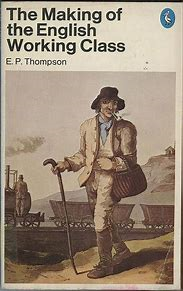
On Wednesday 6th December the historian of the Caribbean and Britian Christienna Fryar highlighted a significant gap in the book- its failure to deal with slavery,the slave trade and significant black figures.

In 2013 the London Socialist Historians Group ran a roundtable at the Institute of Historical Research on the Making. Marika Sherwood spoke on the absence of black history in the book. Significant figures such as Robert Wedderburn and William Davidson a black man and one of the Cato St Conspirators (1820) are either ignored or mentioned only in passing. The reality is that the making of the English working class was inextricably linked with slavery and the slave trade is absent.

Fryar brings a very sharp focus to this in pointing out that the 1832 Reform Act provided only a limited suffrage. The Emancipation Act 1834 did not free slaves in the British West Indies as such but declared them apprentices. In the same year the Poor Law Amendment Act set up Workhouses for those who couldnt provide for themselves.

Its message with a contemporary relevance. In a speech in the Commons on 6th December Suella Braverman called for Britain to leave the European Convention on Human Rights so that asylum seekers, environment protesters and those who want statues of racists taken down can get summary justice.

Why did Thompson’s book have such a gap on matters relating to race and imperialism? The book relies on thick description, detailed archival research which Thompson undertook while an adult education tutor. Perhaps the evidence was not in the sources, perhaps he was not looking.

Thompson and his family had a long connection with India and anti-imperial struggles and as a socialist activist he certainly campaigned against the various tyrannies of British colonialism. He did he argued that the reason why the British left had not developed more Marxist theory was because it had ‘so bloody much to oppose’ when it came to the activities of its own ruling class.

A conundrum but one on the book’s 60th anniversary that deserves serious discussion and yet more research

60 years since The Making of the English Working Class. Who was E P Thompson rescuing from the enormous condecension of posterity?
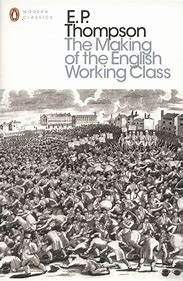
60th anniversary of the Making of the English Working Class. Who was Thompson rescuing from the enormous condescension of posterity?

On Thursday long ago CPGB member and Times columnist spoke on ‘Rescuers’. To be honest it was hardcore and probably more for those us who remember (for better or worse) the days before 1990 when the old CPGB still existed.

Aaronovitch focused on Thompson’s argument with the Polish historian Leszek Kowalowski. Thompson argued that he had happened Marxism with the Stalinist bathwater and hence by implication there was something worth rescuing in Thompson’s view.

Aaronovitch focused on the section in the introduction to the Making where Thompson talks of rescuing utopians and defeated workers and causes from the enormous condescension of posterity. Thompson’s argument was, 60 years ago, that these causes defeated in Britain might yet be won elsewhere in the world. In the meantime South Africa has ditched apartheid and Vietnam ejected the US so perhaps there a point, even if limited there.

Aaronovitch by contrast seemed to be arguing that the Making was rescuing something in official Communism. Obviously Thompson made the point that his methodology was precisely not that of mechanical Marxism and agency is central to the book.

Aaronovitch who mentioned both Thompson’s elder brother Frank-shot as a partisan in World War Two and the fact that before 1956 the CP Historians Group had been relatively free from Moscow telling it what the historical line was seemed to have in mind the Making rescuing something or other in the CPGB tradition.

What I wasn’t too sure but again the point often made is the popular front tradition which relates to popular struggles and peoples history. It is a strand in the Making but not the only one suggesting the book was also part of the making or remaking of Thompson’s own political and historical perspectives

The Making of the English Working Class at 60: its influence on class politics today
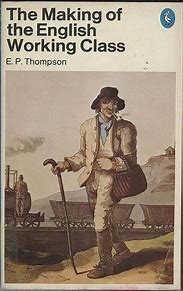
The Making of the English Working Class at 60: its influence on class politics today

To mark the 60th anniversary of the publication of E P Thompson’s Making of the English Working Class Radio3 has run five brief discussions of the book, all available on Sounds (22.45). The last was on 8th December when author Natasha Carthew.

Carthew was born and lived in poverty on a working class estate in Cornwall. She has gone on to be a well known author writing a series of books reflecting on working class life and nature. She also organises working class writers workshops.

In the discussion she notes that she picked up a second hand copy of the Making and read the entire 900 pages. The view has been that due to its length many readers dip into the book rather than read it cover to cover.

Carthew had no particular insights about Thompson’s methodology in writing the Making or bits of the book that sixty years on seem to significantly underplay the history of working class women and the impact of slavery.

Rather for her the book was important because it gave a sense of the history of the class to which she belongs, not always a central feature of Our Island Story. It also demonstrated how that class was made, in discussion and interaction, rather than being born at a particular moment.

Carthew demonstrated a subject too little discussed. The impact of the Making in 2023 on those looking for the context and history of class politics, their own politics.
Articles

The retreat of Wetherspoons from North London continues.

In Uncategorized on December 10, 2023 by kmflett

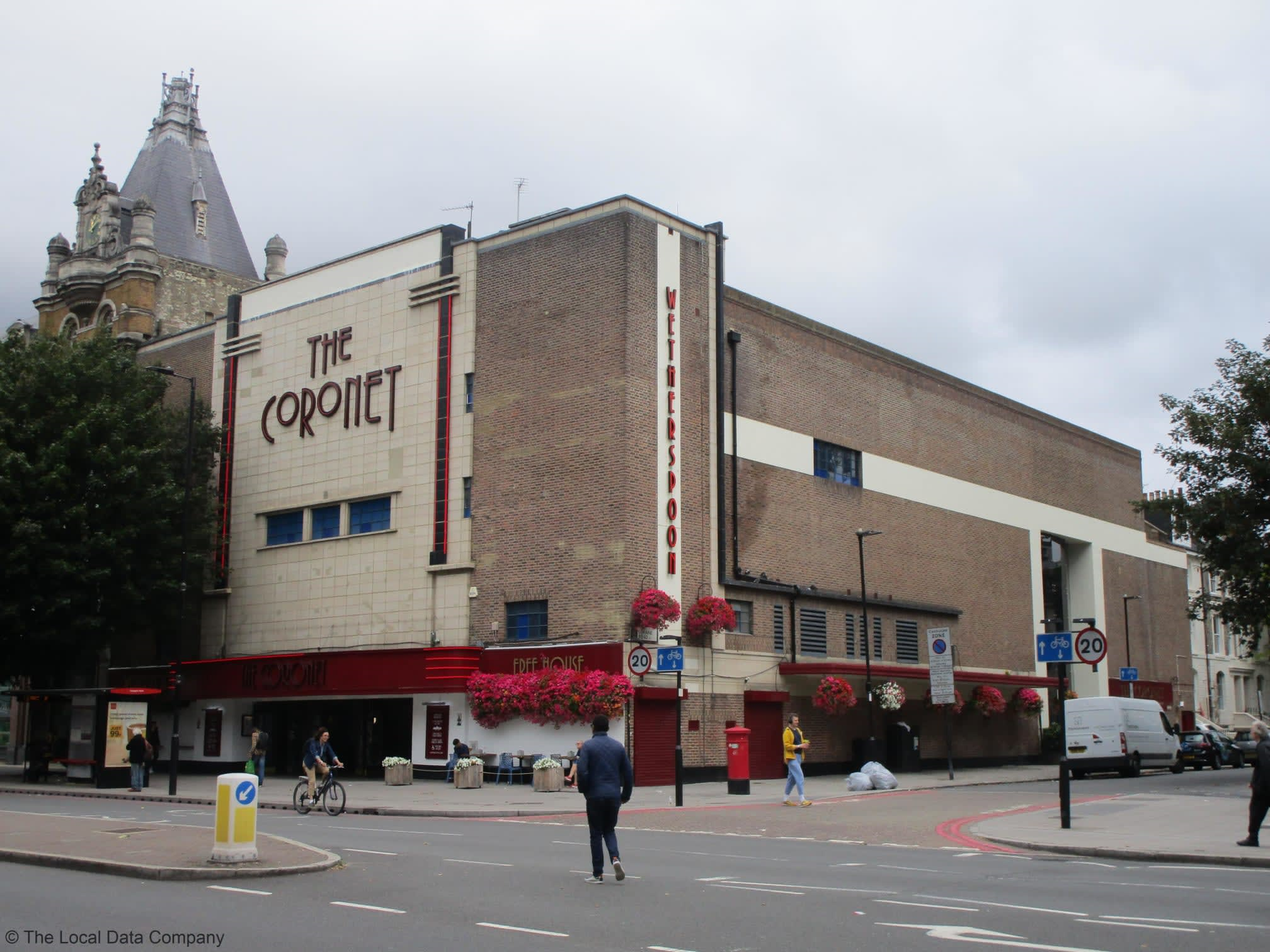
Wetherspoons is shutting the Coronet on Holloway Rd on 10th December, a former cinema opened in 1996. Its been a good while since I’ve been in but it is an impressive edifice and no doubt in times like these expensive to run.

Wetherspoons started out in North London in the late 1970s- with Marlers bar in Muswell Hill. Tim Martin lived in Wood Green and for a time more and more Spoons opened in Haringey and adjacent areas. Obviously before long he worked out that the business model would work elsewhere.

Wetherspoons has been retreating from North London for a while. I won’t go into the history of that here but this year the Tollgate in Turnpike Lane and the Angel at Islington have closed. Both are open as pubs again and the Coronet will reportedly also re-open as a pub. The Spoons model will be absent though.

Wetherspoons view is that they close pubs where there are other Spoons nearby. In this case the White Swan at Highbury Corner is a short-ish bus ride. This is London remember so buses are plentiful at all times.

Of course many avoid Spoons and I rarely go in myself these days. There are better though certainly not cheaper places. Most cask at the White Swan costs £3.22 a pint. Further there are several Spoons pubs in NE London in the 2024 Good Beer Guide- the Mossy Well in Muswell Hill and the Rochester Castle in Stoke Newington.

The reality is that if you like a drinkable pint in a social atmosphere and you don’t have much spare cash- there is a cost of living crisis- Wetherspoons aren’t bad places to be. Despite what the media think there are a lot of not very well off people in North London-someone has to do the work- and the retreat of Spoons from the area is not great news, amongst a lot of not great news.

Articles

Histories of the present: Jenrick reminds us of his bigotry again

In Uncategorized on December 10, 2023 by kmflett

Histories of the present: Jenrick reminds us of his bigotry again

The media is bad at history, even very recent history. Recently resigned Tory Minister Robert Jenrick spoke to Laura Kuenssberg on her Sunday morning and claimed that migrants don’t integrate into British society. He gave as an example the thousands who have marched calling for a ceasefire in Gaza. Of course he has a point Jenrick’s Tory principles include war not peace, even if that is a minority view generally.

Following his resignation there have been attempts to suggest that his lurch to the right is a recent thing. It isn’t.

When he was Communities Minister in 2021 Jenrick has announced in the Sunday Telegraph that he planned to make any changes to historic statues and monuments subject to planning laws.

https://www.theguardian.com/politics/2021/jan/17/robert-jenrick-statues-must-be-protected-from-baying-mob

In doing so Jenrick used Trumpian language. Anti-racist protesters are a ‘baying mob’ while democratically elected local councillors are ‘cultural committee’ of town hall militants and woke worthies”. If we were to lower ourselves to Jenrick’s level what he is actually proposing is to over ride local democratic processes with decisions by a coterie of racist Tory Ministers.

Jenrick is part of a Tory Great Moving Right Show and it could end up moving very far right indeed based on present performance

Articles

The Ambridge Socialist. Ruling Class Ambridge in crisis as Lilian ejects Justin

In Uncategorized on December 10, 2023 by kmflett

The Ambridge Socialist

10th December

Ruling Class Ambridge in crisis as Lilian ejects Justin

Ruling Class Ambridge has been plunged into crisis this week after Lilian discovered that Justin had leaked her plans to bid for land Oliver is selling at Grange Farm to Shula. Lilian’s plans involved some sort of horse thing but Justin wants the land for his own purposes. All this occasioned the arrival of Shula from exile in Sunderland and a row that led to Lilian ejecting Justin from the Dower House. One slight problem is that Justin owns the Dower House. Justin has moved in with Brian.

A crisis in progress

Grundy’s try charm offensive with Oliver

After depicting themselves, correctly, as victims in the class war, the Grundy’s have changed tactics and are trying a charm offensive with Oliver instead. Eddie has brough Oliver lunch at the Bull. It won’t work.

The Auction has resulted in an anonymous bidder getting the Grange Farm land. Identity as yet unknown. Quite possibly Keir Starmer to stable his ponies

Meantime the Grundys facing rural poverty are looking at almshouses

Peggy exits to the Laurels

Peggy has determined that its time to sell up and move into the Laurels- safe now that Sykesy has moved out. This will mean Kate has to find somewhere else to live. As usual this is all about Kate

Articles

The Making of the English Working Class at 60: its influence on class politics today

In Uncategorized on December 9, 2023 by kmflett

The Making of the English Working Class at 60: its influence on class politics today

To mark the 60th anniversary of the publication of E P Thompson’s Making of the English Working Class Radio3 has run five brief discussions of the book, all available on Sounds (22.45). The last was on 8th December when author Natasha Carthew.

Carthew was born and lived in poverty on a working class estate in Cornwall. She has gone on to be a well known author writing a series of books reflecting on working class life and nature. She also organises working class writers workshops.

In the discussion she notes that she picked up a second hand copy of the Making and read the entire 900 pages. The view has been that due to its length many readers dip into the book rather than read it cover to cover.

Carthew had no particular insights about Thompson’s methodology in writing the Making or bits of the book that sixty years on seem to significantly underplay the history of working class women and the impact of slavery.

Rather for her the book was important because it gave a sense of the history of the class to which she belongs, not always a central feature of Our Island Story. It also demonstrated how that class was made, in discussion and interaction, rather than being born at a particular moment.

Carthew demonstrated a subject too little discussed. The impact of the Making in 2023 on those looking for the context and history of class politics, their own politics.

Articles

After the UN ceasefire vote: marching has made & does make a difference

In Uncategorized on December 9, 2023 by kmflett

After the UN ceasefire vote: marching has made & does make a difference

On Saturday 9th December a further march for Palestine, calling for ceasefire will take place. There will also be other marches-in Cardiff for example.

It comes just a day after a UN vote calling for a ceasefire was vetoed by the US. Britain and abstained and everyone else voted in favour.

Netanyahu was quoted this week in the Financial Times as noting that the Israeli onslaught on Gaza depended on US support and weapons but was checked by mass protests around the world.

It could not be clearer that marching makes a difference. Of course the White House and Downing St don’t care as such how many march. It’s the political impact and potential instability that grows from protest that is the concern, as well obviously, the global economic impact.

In short protest is a key part of getting Israel’s war to stop.

It’s appropriate to relate back to the 60,000 or so who gathered in central Manchester for the vote on 16th August 1819 because, while the immediate impact was negative- there was a massacre of protesters- over the following decades change did occur and the Government did not attempt another Peterloo.

I’ve been on many marches down the years from those opposing racism and cuts, to the Iraq War, the poll tax, abortion rights etc.

Some achieved little, others made quite an impact. Each one needs to be looked at individually to draw any general lessons. Certainly the composition of a march, the timing, and the strategy pursued to get change are key elements.

There are two wider points. Firstly marching is not the only way to get change. There is indeed what the US sociologist Charles Tilly called a repertoire of contention, of possible strategies, from riots to meetings, petitions and lobbies. All have their place depending on context.

Finally however on the 55th anniversary of the 27th October 1968 anti-Vietnam war demonstration its worth reflecting that most of the largest marches in UK history have taken place in the last 50 years.

It represents a change from people relying on others to make the point for them to wanting to make it themselves. Of course it’s not always effective but it reflects a society where people want to make their voice heard and expect it to count. The age of political deference has gone.

Articles

TUC Special Congress: A brief history of defying Tory anti-union laws

In Uncategorized on December 8, 2023 by kmflett

TUC Special Congress: a rare intervention

The TUC is holding a special conference on 9th December to discuss what is to be done about the Tories widely discredited Minimum Service legislation. A Culture  War measure with no obvious genuine practical implementation it could even be used to force workers who had voted to strike to work instead. If they refused they could face the sack and unions who fail to police this would face sanctions.

The TUC wants an incoming Labour Government to repeal the legislation which it is committed to do. The history here is mixed. The 1974 Labour Government did repeal the Tories 1971 Industrial Relations Act. The 1997 Labour Government did not repeal the numerous anti-union laws passed by the Tories from 1979 but introduced a new law on union recognition and representation.

Secondly the TUC says it will support any worker who is sacked under the Act. How this is to be done will no doubt be debated. Some will call for the law to be defied, others may look to legal action.

The last Special Congress was held on 5th April 1982 to oppose a Tory anti-union law known as Tebbit’s Law. A lot of it dealt with the closed shop, where workers had to be members of unions. The 2023 equivalent is the right of workers to be in unions and have them recognised by employers. It also outlawed secondary and solidarity action.

The Congress voted to defy the law and there were mass pickets at the Stockport Messenger dispute where Eddie Shah busted unions out of production of his new Today newspaper. Mass police mobilisation won the day for the Tories and defeats for the miners and printers followed. In short the words of the Congress did not lead to effective action.

The Tories 1971 Industrial Relations Act which set up a National Industrial Relations Court that could intervene randomly in disputes did not provoke a Special Congress. The annual 1971 Congress agreed to defy the law and most large unions did so. Some smaller unions didn’t and were temporarily excluded.

What broke the Tories legislation however was the Pentonville dockers dispute of July 1972. Dockers had been secondary picketing a cold storage unit. They defied Court orders to stop and were jailed at Pentonville. The TUC planned a General Strike but before then the Tories found an Official Solicitor to get the dockers released.

In short talking about defying Tory union laws did not stop them. Actually defying them did.

Articles

60 years since The Making of the English Working Class. Who was E P Thompson rescuing from the enormous condecension of posterity?

In Uncategorized on December 8, 2023 by kmflett

60th anniversary of the Making of the English Working Class. Who was Thompson rescuing from the enormous condescension of posterity?

Radio 3 has been a series of short pieces on the 60th anniversary of E P Thompson’s Making of the English Working Class first published in hardback in 1963.

On Thursday long ago CPGB member and Times columnist spoke on ‘Rescuers’. To be honest it was hardcore and probably more for those us who remember (for better or worse) the days before 1990 when the old CPGB still existed.

Aaronovitch focused on Thompson’s argument with the Polish historian Leszek Kowalowski. Thompson argued that he had happened Marxism with the Stalinist bathwater and hence by implication there was something worth rescuing in Thompson’s view.

Aaronovitch focused on the section in the introduction to the Making where Thompson talks of rescuing utopians and defeated workers and causes from the enormous condescension of posterity. Thompson’s argument was, 60 years ago, that these causes defeated in Britain might yet be won elsewhere in the world. In the meantime South Africa has ditched apartheid and Vietnam ejected the US so perhaps there a point, even if limited there.

Aaronovitch by contrast seemed to be arguing that the Making was rescuing something in official Communism. Obviously Thompson made the point that his methodology was precisely not that of mechanical Marxism and agency is central to the book.


Aaronovitch who mentioned both Thompson’s elder brother Frank-shot as a partisan in World War Two and the fact that before 1956 the CP Historians Group had been relatively free from Moscow telling it what the historical line was seemed to have in mind the Making rescuing something or other in the CPGB tradition.

What I wasn’t too sure but again the point often made is the popular front tradition which relates to popular struggles and peoples history. It is a strand in the Making but not the only one suggesting the book was also part of the making or remaking of Thompson’s own political and historical perspectives

Articles

After the Elizabeth line. Once again on toilets

In Uncategorized on December 8, 2023 by kmflett

After the Elizabeth line. Once again on toilets

If you travel in and out of Paddington station on a regular basis as I do you’ll probably have noted the news story about trains on the Elizabeth line stuck near the station for some hours on Thursday evening due to overhead wire damage.

Overhead wire damage delays are not exactly unknown on the rail. Retford being a frequent offender as the electrification on LNER was perhaps not done to quite the highest standard back in the day.

One issue about the Paddington debacle was however that Elizabeth line trains have no toilets. Given that they run from Reading to Shenfield/Abbey Wood which can take over 100 minutes that reflects an interesting detail of modern British life. Its true that London Overground trains run by TFL don’t have toilets but journeys on them are not usually that long, although Hackney Wick to Clapham Junction is a stretch.

Toilets are a vanishing part of British public life. As someone in their late 60s I find I need to visit one quite frequently (partly due to medication) and that means planning where I can visit one when I go out.

It is of course part of the privatisation of the public domain. After all, where is the profit in toilets? In a varied career I was once a building facilities manager and that included responsibility for bogs and basins. In a workplace they are essential.

Toilets get blocked, need cleaning and leak. All this costs money. The unfortunate reality is that however marvellous a refurbished toilet (at some expense) looks it remains just that- a toilet. Clearly there are more interesting and profitable things to invest money in.

I don’t expect much in the way of even modest reforms from a Starmer Government but given he is now 60 and must need to pay a visit from time to time, perhaps the public toilet issue could be addressed.

Articles

Official Politics, Gaza & the view from below. Christmas update. A political rage is growing

In Uncategorized on December 7, 2023 by kmflett

Aditya Chakrabortty has been to Luton and reported for the Guardian

https://www.theguardian.com/commentisfree/2023/dec/07/young-britons-massacre-gaza-luton-israel

What he found, as he notes, is little reported in the media and when it is sneeringly so, as if organised by old men with beards behind the scenes (hello there)

As E P Thompson wrote in the Making of the Class of Richard Carlile’s radical paper shop in Fleet St in the 1820s where those minding it were regularly arrested and jailed, it was in fact never left untended. As soon as someone was carted off someone else, unknown to them arrived to do it. They came out of a culture Thompson notes, and from all over England.

No doubt there was some organisation behind that but at root it was a reaction from below to events.

Chakrabortty found college students walking out to attend a mass rally on Gaza. They had no doubt heard the official words of Sunak and Starmer and then they had looked at their screens and talked to each other. Images of death and destruction to stretch the imagination, on the horror scale.

Official politics so far makes gestures about the murder of thousands of Palestinians and does little. The Luton students by contrast are taking action as are many others.

After days of deliberation the UN has agreed that more aid be sent to Gaza. There is no ceasefire and the murderous forces of the IDF press on, even as Israeli Government’s lies are exposed even now in mainstream media. Palestine is the historical source of the Christmas story but there will no peace and goodwill from the Tel Aviv regime in the coming days. A political rage continues to grow, not in the corridors of power but in communities and on the street.

If we return to Thompson he made the distinction between what he called Experience 1 and Experience 2. Theoretically it can be discussed and challenged as a framework. In practice though it draws a distinction between what people are told is happening and what they actually see is happening. In the gap, yawning in the case of Gaza, politics develops. Whose politics is of course up for debate and discussion but it wont be those of Keir Starmer who still can’t manage to call for an immediate ceasefire