Articles

45 Years On: John Lennon 9 Oct 1940-8 Dec 1980. From Can’t Buy Me Love to Revolution

In Uncategorized on December 7, 2023 by kmflett

John Lennon 9 Oct 1940-8 Dec 1980. From Can’t Buy Me Love to Revolution.

John Lennon was shot and killed 45 years ago on 8th December 1980, aged 40.

In the days long before 24 hour news, social media, the interwebs and mobiles news travelled more slowly. I recall hearing of Lennon’s death at a trade union committee meeting in New Barnet. I was 24 and even that age slightly too young to have been around for the Beatles peak period in the sense of buying their records, at least until the late 1960s.

45 years after his death Lennon has passed into history himself now (20 years being one benchmark between history and the present broadly speaking). How he will be remembered by those who do remember him and those who don’t is an interesting question. The Lennon of Cant Buy Me Love or the Lennon of Revolution? Or both perhaps…

The Beatles released the John Lennon song Revolution on 26th August 1968 and sat at No.1 in the charts for 12 weeks.

Revolution was the ‘b’ side to a rather better-known Beatles song, Hey Jude. If that song has primarily endured as something that audiences at major events worry Paul McCartney may pop up and try to sing, Lennon’s thoughts on revolutionary politics remain of interest.

The chronicler of Beatles songs, the late Ian McDonald, noted that the musical range that spanned Lennon’s earlier song, I Am the Walrus, and Revolution was unmatched by any post-1945 musician.

The song was rejected as an ‘A’ side officially because it was too slow but really because McCartney, at that time, regarded it as politically controversial. The singer later changed his position and released Give Ireland Back to the Irish, as a single which was promptly banned by the BBC. Revolution never was.

Revolution was recorded in May 1968 as the Paris ‘nights of the barricades’ reached their peak. However alternative and longer versions of Revolution appeared on the Beatles White Album.

But it was not the music of Revolution, essentially a slow blues, that caused comment and controversy but the words.

In particular debate centred around Lennon’s words that ‘when you talk about destruction’ you can ‘count me out’ which on an alternative version he sang as ‘count me in’.

Those used to British TV in 2025 may be slightly amazed that a video of the Beatles performing Revolution was aired on the BBC’s Top of the Pops in September 1968.

Lennon’s drift in the song was that change in society had to come through ‘peace and love’ rather than a more combative approach to capitalism.

It was not well received by the left, which considering the furore it caused on the right was unfortunate for Lennon.

Lennon was clearly alive to the Beatles main audience in 1968, a worldwide one of youth who were rapidly becoming radicalised.

The Rolling Stones had very much the same idea with Street Fighting Man, a song which now sounds distinctly odd when sung by Sir Michael Jagger, if it is.

Lennon’s track provoked an article in Time magazine and a critical response in song from Nina Simone that deserves to be better known particularly in the age of Black Lives Matter.

The British radical paper Black Dwarf attacked the peaceful sentiments of Revolution, provoking an exchange on revolutionary politics between Lennon and the paper’s Editors. In the US the new left saw it as a ‘betrayal’ of the movement and a ‘petty bourgeois cry of fear’.

Ian MacDonald nevertheless argued that the song was the first ‘crack in the Beatles corporate façade’, while, no leftist himself, going on to note that by 1987 Revolution was being used by a Nike in an advert to promote its training shoes.

Historical hindsight tells us that Lennon himself was a on a political journey, reflected in the words of the song and his indecision about whether he supported the ‘peace and love’ pacificism of the 1967/8 period or the harder revolutionary politics that began to appear as the 1960s drew to a close.

By 1970 the Beatles had split up and Lennon was in the US, often seen as a participant on left-wing demonstrations and reportedly funding left-wing campaigns. Certainly by that time the man who had sung Can’t Buy Me Love less than 10 years before was regarded by the FBI as a political subversive whose activities needed to be watched
Articles

Beard Liberation Front Official statement: Benjamin Zephaniah: revolting into style, words & appearance

In Uncategorized on December 7, 2023 by kmflett

Benjamin Zephaniah: revolting into style, words & appearance

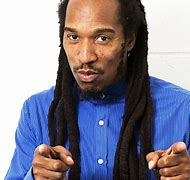
Benjamin Zephaniah whose untimely death at 65 has been reported was someone who revolted into style.

His words on the page but also often spoken, more often than not on a demonstration or protest, as much as a performance stage were powerful. Critical of authority, of racism, of oppression whether South Africa or Palestine.

In the 1980s when he started out, and as a socialist activist, I encountered him often, he was placed in the performance poet genre. He became more than that, a figure of a cultural resistance to all that is shit in British society.

He was also, on a slightly lighter note, a regular feature of Beard Liberation Front award lists. The words were key but his appearance-dreadlocks and idiosyncratic beard- sent a signal. He was not a clean shaven member of the Establishment, literary or otherwise.

Above all, and no doubt the temptations were there- he turned down an MBE- he did not sell out. He remained always on our side.

BLF Organiser, Keith Flett, December 7th

Articles

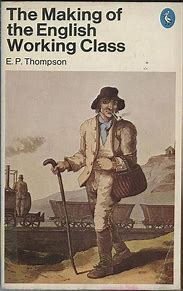
E P Thompson’s The Making of the English Working Class at 60. The missing imperial dimension

In Uncategorized on December 7, 2023 by kmflett

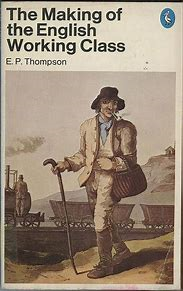
To mark the 60th anniversary of the publication of E P Thompson’s Making of the English Working Class, Radio 3 is running a nightly series of talks on the book (22.45). On Wednesday 6th December the historian of the Caribbean and Britian Christienna Fryar highlighted a significant gap in the book- its failure to deal with slavery,the slave trade and significant black figures.

In 2013 the London Socialist Historians Group ran a roundtable at the Institute of Historical Research on the Making. Marika Sherwood spoke on the absence of black history in the book. Significant figures such as Robert Wedderburn and William Davidson a black man and one of the Cato St Conspirators (1820) are either ignored or mentioned only in passing. The reality is that the making of the English working class was inextricably linked with slavery and the slave trade is absent.

Fryar brings a very sharp focus to this in pointing out that the 1832 Reform Act provided only a limited suffrage. The Emancipation Act 1834 did not free slaves in the British West Indies as such but declared them apprentices. In the same year the Poor Law Amendment Act set up Workhouses for those who couldnt provide for themselves.

Its message with a contemporary relevance. In a speech in the Commons on 6th December Suella Braverman called for Britain to leave the European Convention on Human Rights so that asylum seekers, environment protesters and those who want statues of racists taken down can get summary justice.

Why did Thompson’s book have such a gap on matters relating to race and imperialism? The book relies on thick description, detailed archival research which Thompson undertook while an adult education tutor. Perhaps the evidence was not in the sources, perhaps he was not looking.

Thompson and his family had a long connection with India and anti-imperial struggles and as a socialist activist he certainly campaigned against the various tyrannies of British colonialism. He did he argued that the reason why the British left had not developed more Marxist theory was because it had ‘so bloody much to oppose’ when it came to the activities of its own ruling class.

A conundrum but one on the book’s 60th anniversary that deserves serious discussion and yet more research

https://www.bbc.co.uk/sounds/play/m001sw9c

Articles

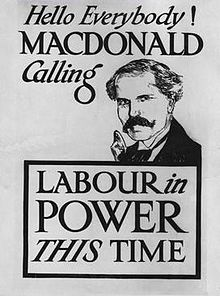
Thursday 6th December 1923. General Election & the first Labour Government

In Uncategorized on December 7, 2023 by kmflett

Thursday 6th December 1923. General Election & the first Labour Government

December General Elections are rare (and unfortunately there isn’t time now for one in 2023) but aside from 2019 the last was in 1923

Whether Tory PM Baldwin really needed to call an Election is a moot point, there were of course various crisis including a financial one and Baldwin thought he could win an increased majority.

In reality the Election saw the brief tenure of the first ever Labour Government headed by Ramsay MacDonald. He was not yet the figure who came to be hated on the left from 1931 onwards when he led a National Government, Rather he was an MP who had up to a point opposed the First World War and lost his Parliamentary seat in 1918 because of it, returning as an MP in 1922 for the Welsh constituency of Aberavon.

In the 1923 Election Labour had built on its trade union support, in some cases recently detached from the Liberals. While the Liberals got 158 seats they were a party in decline, with Labour as the coming force.

The result was:

Tory 258 seats 41.59%

Labour 191 seats 31.06%

Liberal 158 seats 25.69%

When it’s considered that in the 1918 Election Labour had got 42 seats and in 1922 142 seats the trajectory is clear. Labour formed  a brief minority Government with Liberal support

Articles

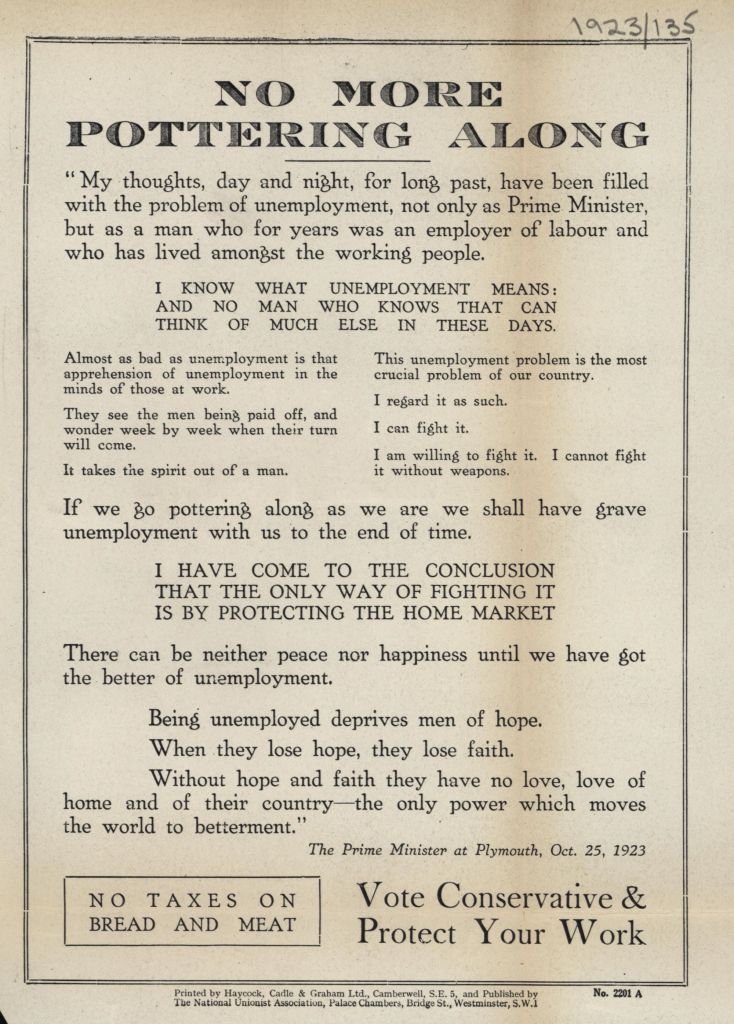
100 years since 1923 General Election. The key Tory message..

In Uncategorized on December 6, 2023 by kmflett

The 1923 General Election took place on Thursday 6th December. The Tories won the most seats but there was a Hung Parliament. Their election propaganda may not have helped

Articles

The Army & Beards. A Culture War beckons

In Uncategorized on December 6, 2023 by kmflett

News that the British Army is considering a change to its very long running ban on soldiers wearing beards for most ranks is to be welcomed. The Navy and more recently the RAF do allow beards, although no doubt with the proviso that they are neat and orderly. We are not talking ZZ Top here.

As the organiser of the Beard Liberation which since 1995 has advocated for the right of people to be able to dress and appear as they want I welcome this.

The change is reportedly due to the fact that the Army is having trouble recruiting people, and thinks allowing beards might help with the numbers of male soldiers. As its advertising used to emphasise, as well as the ‘poor bloody infantry’, professional soldiers themselves, the Army also has large numbers of people with specific skills in its ranks Take for example Signals, which equates to telecoms and tech. This is a highly hirsute occupation in civilian life, and it can be seen that an employer with a beard ban might not appeal.

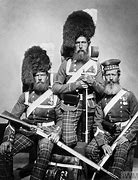
Of course the British Army historically has not been entirely bereft of beards. The Crimean War in the 1850s comes to mind, where soldiers grew bushy beards to keep the cold and frost out. Various other nineteenth century British imperial adventures saw the involvement of hirsute soldiers. Even today a range of ‘special forces’ – for example those that were deployed in Afghanistan – are allowed to have beards.

Hopefully the change to allow all soldiers to wear beards will mean that it will no longer be just a ‘special case’ but something that is routinely accepted. Should the move go ahead we can expect controversy and most likely a full blown Culture War. Somewhere out there are people who have devoted a lifetime to studying and opining on how soldiers in the British Army should dress and appear. We can be sure they will be on talk shows on GB News telling us, while looking somewhat red faced.

Its not so long ago for example that there was a debate in the right-wing media about whether Prince Harry could or should turn up at various Royal occasions wearing his beard. Many column inches were taken up discussing whether it was in line with protocol or not. In the event Harry turned up with beard intact and the world moved on. Clearly the Royal Family is in a position to make its own rules.

Even so there will be objections. Whether a Tory Minister or even Rishi Sunak decides to launch a Culture War on the subject we’ll see. They seem to be highly random events. It is certain however that columnists will denounce the Army as Woke. Age old prejudices will certainly be on display. Beards are seen as dirty, and unkempt and, referencing The Twits, containing left over bits of lunch. They are also a sign that the beard wearer is hiding something and quite probably that they have dubious morals. None of this of course from the perspective of Culture Warriors is what the British Army should be about. While Army beards will no doubt be neat and tidy they will still have variations in style, suggesting that soldiers may be thinking for themselves about their appearance and image rather than conforming to an imperial stereotype where they all look the same.

Yet beyond the archaeic dislike and even hatred of beards the world has changed. As a trade union officer in the City of London I still have a desk – which I visit in the era of flexible working less often than I did. However while 25 years ago I would have been surrounded by clean shaven men in suits, now beards are everywhere. Not just the rank and file but senior managers too.

In 2023 there is an understanding at least amongst those emplyers that are living in the twnty-first century that its not how someone’s appears that matters. Rather it is their skills and how effectively they perform them that is key. I’d like to think the beard helps here but that is probably fanciful to be honest.

Of course, there may also be a downside. The British Army gets deployed in all manner of military and imperial activities which may at least to some appear to be highly controversial. British soldiers with beards being pictured in the media where a hotly disputed encounter has taken place could risk bringing the hirsute into disrepute. It is a consideration, but one that can be countered by the reality that the order for the Army to engage will have come ultimately from some almost inevitably clean shaven politician.

Let’s hope then that the Army proceeds with a very long overdue policy change on appearance and beards, and that it is ready for the opposition from beard haters and clean shaven arm chair Generals that it will almost certainly face.

https://www.theguardian.com/commentisfree/2023/dec/05/british-army-allow-beards-culture-war-woke

Sent via BT Email App

Articles

Radio 3 Series. E P Thompson’s Making of the English Working Class at 60. Geoff Andrews on the influence of adult education, Ruskin,the Business University & History Workshop

In Uncategorized on December 5, 2023 by kmflett

London Socialist Historians

December 2023

Radio 3 Series. E P Thompson’s Making of the English Working Class at 60. Geoff Andrews on the influence of adult education, Ruskin, the Business University & History Workshop

Sheila Rowbotham has written about her relationship with Dorothy and Edward Thompson in her memoirs. It covered an extended period from when Edward was writing the Making in the early 1960s to Rowbotham’s own ground breaking socialist feminist histories from the late 1960s onwards.

On Radio 3 at 22.45 on Monday 4th December Rowbotham discussed the continuing influence of the Making sixty years on.

She recalled the times she met the Thompson’s in Halifax and her familarity with many of the locations in the book, growing up in Yorkshire. She was critical of the absence of women in the Making noting that in the 1950s and early 60s Thompson’s sources were mainly of male activists. She also reflected on the lack of a focus on slavery. She concluded though that while the book at sixty may be outdated in some ways, the approach Thompson took, of history from below with a focus on the activity of ordinary people was still an influential one.

Rowbotham’s commentary can be heard on BBC Sounds at the link below. There are four more programmes this week looking at issues such as what Thompson learnt as an adult education tutor, the absence of slavery in the book, and the impact of Thompson’s break from the Communist Party.

https://www.bbc.co.uk/sounds/play/m001svv9

On 5th December Geoff Andrews looked at the influence of the adult education classes Thompson taught in the 1950s on how the book was written. He goes on to discuss his own experiences of Ruskin College and History Workshop in the late 1960s and the threat of the Business University to history from below.

https://www.bbc.co.uk/programmes/m001svy9

On 20th November Logie Barrow and Keith Flett discussed the Making of the English Working Class at 60 in the socialist history seminar at the Institute of Historical Research.   A link to the recording is here:

https://us02web.zoom.us/rec/share/6-0bImJgrwkIxogj5tnxRdPktNj1rSuJabzqL8Fnwk8oXgBaCBlP7prj_CR37kfj.v33unncAuLJ3j9D-

Articles

Carlsberg-Marston Tour of Destruction continues as Ringwood Brewery closes Jan 24

In Uncategorized on December 5, 2023 by kmflett

Carlsberg-Marston Tour of Destruction continues as Ringwood Brewery closes Jan 24

In the Morning Advertiser Top 10 best-selling (by volume) cask beers of 2023 Carlsberg-Marstons have two entries- Pedigree and Wainwright.  Its good that commitment to cask by a global big beer company continues.

The commitment however has limits. In the last year or so Carlsberg Marstons have shut Jennings and Wychwood Breweries and have now announced that Ringwood Brewery in Hampshire will close in January 2024.

It has been on the market for six months and found no buyers. Carlsberg Marston say that the site has restricted space meaning that modernisation and expansion would be difficult and expensive. And anyway they have large breweries elsewhere that can brew the beer and will. Most of Ringwood’s beers will be produced by Banks and Old Thumper will be brewed at Marstons.

A redundancy consultation has started with 10 jobs at risk. Its to be hoped that those in scope get better than a statutory redundancy payment.

In terms of the beer it will no doubt taste not quite the same removed from its Hampshire roots, and it will be trucked around the UK with an associated environmental impact. However Ringwood beers appear on the Wetherspoons list so it already is.

The bottom line point is that when Big Beer buys a small brewery, well regarded for its beer, it wants not the brewery- brewing can be done more cheaply elsewhere- but at best the brands. For community, local focus and employment and environmental impact it cares not a great deal. After all when your business is global what happens in Ringwood doesn’t seem that important.

Articles

Memories of Decembers past. Boris Johnson & All Yesterday’s Parties

In Uncategorized on December 5, 2023 by kmflett

Memories of December’s past. Boris Johnson & All Yesterday’s Parties.

Boris Johnson is at the COVID Inquiry this week

The Tories are currently reliably 20% behind Labour in opinion polls. They have not been ahead since December 2021. This week marks the anniversary media expose of Boris Johnson’s December 2020 Christmas parties which under then lockdown laws were almost certainly illegal

Boris Johnson when he was the elected leader of a political party didn’t  really seem that interested in doing the job. By contrast he was and no doubt is a great enthusiast for another kind of party-the one involving champagne and nibbles (tbh sausage rolls and crisps don’t cut it). Sonia Purnell’s biography of Johnson, Just Boris, has numerous accounts of parties he has attended. A lot were thrown by his erstwhile employers the Spectator and the Telegraph. When he was married to Marina Wheeler and lived in Islington he was also, according to Purnell, a frequent attender at dinner parties.

When he was elected London Mayor in 2008 he threw his own parties(paid for by the taxpayer obviously) and in that year The Tatler described him as ‘party viagra’.

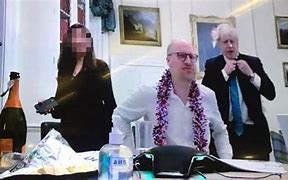
Johnson did not deny that a Christmas party was held at Downing St in December 2020, the one that started off the whole parties investigation. The Daily Mirror published a picture of the Christmas Quiz which took place via Zoom on 15th December 2020 which clearly shows an open bottle of champagne. No problem with that except in the context of the times when COVID laws banned social mixing in London. It clearly was not really a work event either but a social quiz.

Johnson’s evasions about all this eventually led to his resignation as an MP

What though of pre-restrictions 2019? Johnson had just won an Election and was celebrating.

According to the perhaps not totally reliable source of Tom Bower (Boris Johnson, the Gambler) on Friday December 13th 2019 after returning to Downing St from Buckingham Palace where he had seen the Queen, Johnson headed to Brown’s hotel off Piccadilly. The hotel is owned by Brexiteer Rocco Forte and a celebration party was being held.

One party however was not enough for Johnson. He then went to Evgeny Lebedev’s ‘traditional’ Xmas party which was in his house overlooking Regents Park. Unlimited caviar and champagne were available. In 2020 Johnson made Lebedev a Peer..

One wonders what Johnson has planned for Christmas 2023. We can be sure he won’t be paying

Articles

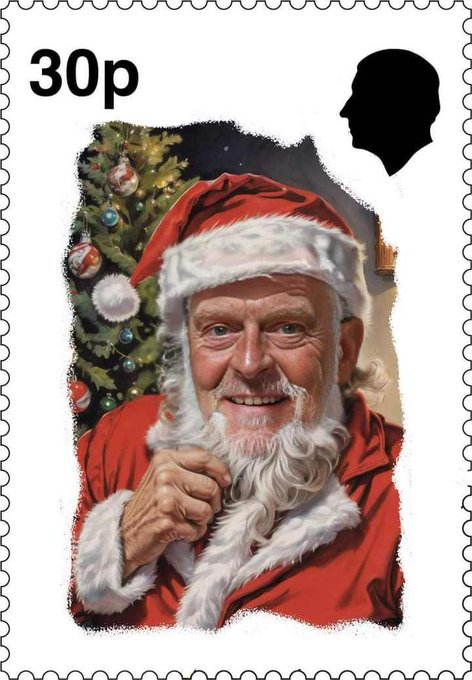
Campaign for Real Santas issues ’30p’ bogus Santa alert

In Uncategorized on December 4, 2023 by kmflett

December 4th

The Campaign for Real Santas which each December promotes Santas with genuine beards and exposes those with absurd fake beards has issued a Bogus Santa Alert.

The Alert relates to a man known as ’30p’ thought to be a Tory MP and possibly Deputy Chairman of the Party on occasion.

The Campaign alerts that self styled ’30p’ does not have a real beard and there is nothing in his persona that suggests that he is qualified in any way to be a Santa

CFRS Organiser Keith Flett said, we urge people to beware of Santas with false beards , ’30p’ being an example