Marx wrote a lot on banking crisis which he saw as endemic to a capitalism based on boom and slump.
These days however they seem to happen more quickly. Just over a week ago Silicon Valley Bank failed and now the giant Credit Suisse is no more taken over by UBS.
The reaction of financial authorities is ‘crisis what crisis?’. We shall see although the aversion of crisis seems to involve many billions which are never available to spend on public services.
Newsnight reported that the speed of banking crisis is due to social media. News and rumours of issues can get tweeted around the globe in an instant and money withdrawn quickly via mobile banking. Oliver Shah in the Sunday Times (19th March) made much the same point
I doubt Elon Musk sees it like this but he is the harbinger of the latest crisis of capitalism
20th March. The Spring Equinox: a new season for labour…
The official start of Spring was 1st March in the UK. The Met Office divides the year into four seasons and so the months of March, April and May are ‘Spring’. To be fair the Met Office do also point out that the start date of astronomical Spring is March 20th, the Equinox.
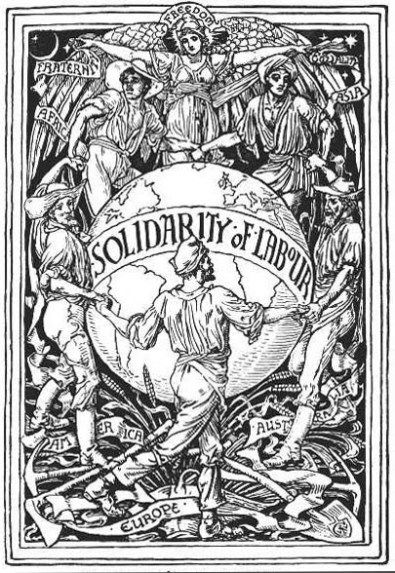
The labour movement festival of May Day which celebrates the new birth of Spring is firmly within that framework, hence all the (Walter Crane inspired) garlands and flowers that go with some of the imagery of the day.
Neither March 1st or March 20th are dates that work for the traditional British Spring however which began during February. The logic of this was that as more daylight appeared fields could be ploughed and crops sown.
Ronald Hutton writes of the date of Spring in Stations of the Sun:
During the Twentieth Century the notional beginning of spring came itself to be moved backwards to the vernal equinox, by a slow process induced by the mass media. This was part of the American system of reckoning seasons from solstices and equinoxes, which works admirably in the climate of most of the USA, but is nonsensical in the rhythm of the British year.
Raph Samuel in his survey of Victorian seasonal labour also noted that the impact of Spring:
The ebb and flow of wayfaring life in nineteenth-century England was strongly influenced by the weather. The months from March to October were the time when travelling people were to be found on the roads, and when they were joined by every class of occasional itinerant.
After Braverman’s visit to Rwanda, E P Thompson on internationalism & refugees
After Home Secretary Suella Braverman was pictured inspecting a new ‘concentration camp’ in Rwanda(Britain invented the concept) she plans to send refugees to its worth reposting the below on the tradition of welcoming refugees and of internationalism that has been a strong strand on the left and in the labour movement for well over 200 years
From the 1790s the left and working-class movement has had a tradition of internationalism, of sympathy and solidarity with those fighting oppression elsewhere in the world and a welcome for those who had to flee and make their way to Britain.
In the nineteenth century Britain had an uncomplicated tradition of welcoming refugees which is why Marx and Engels, for example, ended up here.
E.P. Thompson in the Making of the English Working Class sums up the tradition well. He wrote:
The French Revolution of 1830 had a profound impact upon the people, electrifying not only the London Radicals but working-class reformers in distant villages. The struggle for Polish independence was followed anxiously in the working-class press; while Julian Hibbert , in the Rotunda, carried a vote of sympathy with the Lyons weavers in their ill-fated insurrection, likening them to the weavers of Spitalfields.
Of course the predecessors of the Daily Mail were around at this time too. The Gordon Riots in London in 1780 raised the cry of No Popery, they were against religious toleration and sought to attack both the houses and persons of religious minorities- numbers of whom were also in the UK avoiding persecution elsewhere.
The Daily Mail may always sing from the same hymn sheet but rioters did not.
The Gordon Rioters decided that another target of their hatred was bankers and marched to the Bank of England. At that point the Government which had been relaxed about ‘No Popery’ called out the army.
Keith Flett is the Editor of The History of Riots (CSP 2015)
The Beard Liberation Front, the informal network of beard wearers, has said that following a meeting of its seasonal guidelines committee, new guidance on Spring beard pruning has been agreed.
It is usually for the hirsute to be advised to give up pruning and any shaving in Lent which in 2023 runs from February 22nd to April 6th. During this time the expectation is that beards will grow organically.
However with the Spring Equinox on 20th March the new guidelines advise that beard pruning is allowable with the aim of promoting new Spring growth rather than leaving aged organic hairs in place.
BLF Organiser Keith Flett said, of course the guidelines are advisory only. Our policy remains that people should be able to dress and appear as they want. However we hope they will be useful for those grappling with the Lent/Equinox interface
Where is Brian going? The Ambridge ruling class awaits
Brine has made clear his intention to leave Willow Cottage but the question remained, where is he going? He spent a day at Cheltenham races with Adam without the matter being raised. Brine had a second home in Muswell Hill for many years and is now thought to reside in Hampshire. Will that be it for Home Farm and his role in Borsetshire Land, and if so what will that mean for the ruling class of Ambridge? These questions remain open ones but Brian is set to rent Blossom Hill Cottage from Usha. The cottage was once occupied by one Titchener until Usha evicted him.
Discussion had focused on Brian boring Adam and Ian for a bit which would have been a good solution provided the BBC didn’t broadcast it. Alternatively there was always a tent on Lakey Hill which Kate could supervise.
Syksy is back
Jasper Carrot is back at the Laurels and has had a chat with Jill about a prisoner of war camp which occupied part of Brookfield during the Second World War and an escaped Italian prisoner. We hope for more interesting Syksy stories. He is a too rare proletarian voice in Ambridge.
Ben & Eddie have had birthdays
Ben spent his birthday at the Laurels and Jill bought him a cake. Eddie had to make do with a shop bought cake. Clarrie and Susan spent a couple of days enjoying rural culture while the visitor window was being fitted at the dairy. Eventually the two story lines were tied together.
In Other News
Paul was leaving the Vets but now he isn’t. Good news
Their traditions and ours: Mothering Sunday. Historically it was about cakes & ale
Given the movable date of Easter, Lent invariably contains within it a number of religious festivals which have to be marked and indeed celebrated. Probably the most well-known of these is Mothering Sunday which takes place during Lent.
Traditionally it is not about mothers, that was of course a twentieth century commercial invention. Rather it was about communities and families coming together during Lent . It was marked with a spicy fruit cake- simnel cake- and in some areas such as Lancashire a spiced ale- braggert. In any case drinking was ok after sunset.
So if you are feeling the privations of Lent, Sunday may be a good time to relax them a little and all in the best of traditions, and what better time to come together as a community.
18th March: thousands march to defend refugees;Michael Rosen’s Missing explains why it needs to be done again & again
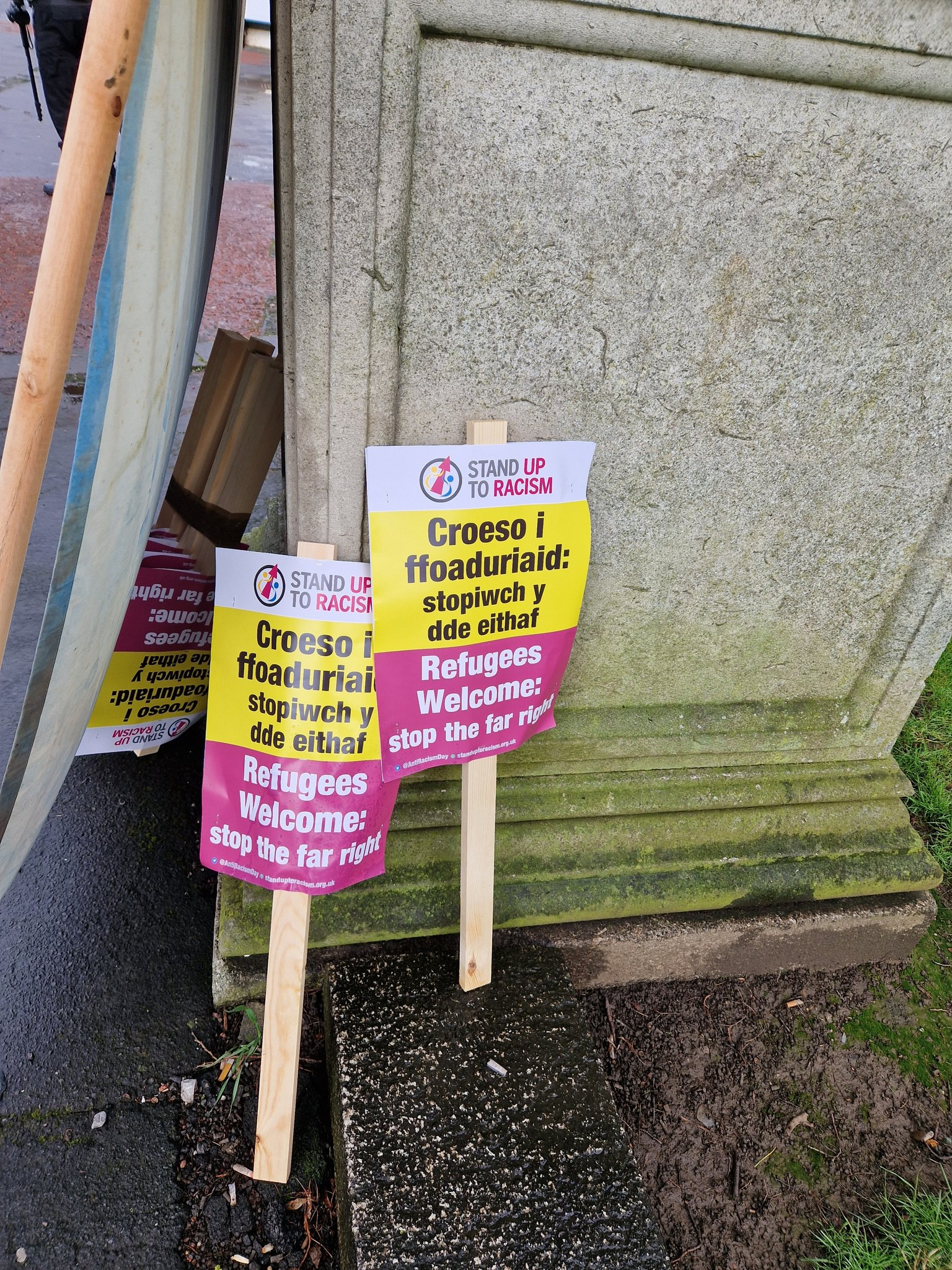
Thousands marched in London, Glasgow and Cardiff on Saturday to defend refugees and protest Suella Braverman’s latest Parliamentary attack on the right to asylum. I was at the Cardiff demonstration which had a broad range of people and speakers and no rain.
The issue of refugees fleeing from wars and oppression has become even more of a focus with the Russian invasion of the Ukraine. There are regular (though often little reported) attempts by refugees from Libya and elsewhere to get into Fortress Europe. Not all make it.
Meanwhile in the parallel Fortress Britain Suella Braverman has spent time promoting ever harsher measures against entirely legitimate refugees.
To find out where this kind of politics leads, a read of Michael Rosen’s The Missing is essential
I wrote the below three years ago on 6th February 2020 and all things considered, albeit with absolutely no thanks to Boris Johnson, it’s good that Michael Rosen is still around to speak about his family and the process of historical inquiry that led him over 20 years or so to piece together the story published as The Missing.
I went to school in Muswell Hill in the 1970s. It was a left-wing (comprehensive)school and the history of fascism and war was certainly not hidden. At the same time I did not start to learn about the Holocaust and its dreadful impact until I became active as a socialist in 1974.
There is some historical work needed to address what remains an absence in too many people’s understanding of recent history. I think the view was that as the Nazis had been defeated, the world had moved on from all that. In Britain with the demise of the Mosleyites, fascism while still around was a marginal presence. Then came the rise of the National Front from the early 1970s as a significant electoral force and to a degree as a street gang. I recall from that time in North London socialist meetings being attacked and smashed up by fascists. In those times I didn’t venture out without keeping a close eye on who was coming the other way and wearing a pair of DMs (Doc Marten shoes with steel toe caps not direct messages for younger readers). Yet the Cable St mural marking the victory of 1936 was not started until 1979.
Hopefully matters have in some ways improved a bit since, not least due to the efforts of Holocaust survivors and anti-fascists and anti-racists to make sure that the history of the Holocaust and what it meant is told and understood in each new generation.
Michael Rosen’s book is an important part of that. It tells a story of what happened to people simply because they were Jewish. Never again.
Amongst other things I’m a research historian. I convene the socialist history seminar at the Institute of Historical Research at the University of London School of Advanced Study and have done for many years.
As socialist historians we’re left-wing of course but we’re robust in our research. Rigour is expected as are awkward questions and uncomfortable findings.
Rosen is known as an author and broadcaster, a socialist and anti-racist and come to that a beard wearer and Arsenal fan.
He is not known as a research historian but that doesn’t mean he can’t be one. After all the great socialist historian E P Thompson started out teaching English literature and only stumbled into history as a byway initially.
The Missing is a brief volume of short chapters and some poems.
It does have references and an index at the end but it lacks the kind of academic apparatus that we look for in research history. Where for example are the footnotes??
Partly the answer is that the Missing is a book aimed primarily at young people, aiming to get across in deeply personal terms what the Holocaust actually meant.
But partly it doesn’t matter. Rosen has spent decades researching his family history and the research methods cannot be faulted.
Of course in the 2020s the internet can be helpful but can’t be relied on as a definitive source. Rosen doesn’t do that. He seeks out obscure books that mention his family and contacts libraries in France to see if they have any records.
What he finds doesn’t make for particularly happy reading but it is important, vital, even reading for our times.
He notes:
With every passing year, the number of Holocaust survivors gets smaller. We need to keep them the memory of them alive: the people who died and those who survived. That’s partly why I wrote this book.
The other reason, Rosen notes, is because the wider message of The Missing is about refugees and that is still with us, although those in political power in the UK at the moment would clearly prefer that it wasn’t.
That means the book is not only fascinating and important history but it has relevance now, as the best history should have.
And the awkward questions raised? Surely why there is not more research on this that gets out of the seminar room and into the public domain, because it needs to be read, understood, discussed and in times like these acted on.
See you on more protests to defend refugees from the Government’s racist agenda then
The 30th anniversary of the illegal Iraq War is on us. Death and destruction on a mass scale followed. What has not so far followed is the holding to account of those who launched the war.
A side angle has now been revealed as to why the whole basis of the war was bogus. According to a report in the Times(16th March) a US Intelligence Officer who interrogated Saddam Hussein after his capture found that there was no way he would ever have supported Osama Bin Laden. He thought his beard made him fundamentally untrustworthy.
Unfortunately for Saddam, who was just a routinely unpleasant dictator of the kind the US happily supported elsewhere, Bush and indeed Blair, obsessively clean shaven politicians, made no distinction between his moustache and Bin Laden’s beard. For them all facial hair was dodgy.
A side angle definitely but an insight into the mindset of warmongers
At 21 years the run up to and the start of the 2003 Iraq War is on the cusp of moving into history. Yet of course it is still very current. So much so that the 20th anniversary of the start of the war warranted Editorials (Guardian) and features (New Statesman).
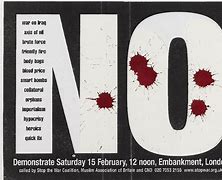
The march against the war organised by the Stop the War Coalition on 15th February 2003 remains the largest ever in British history. There are still very large numbers of people who were on the march around and who can remember why they were on it.
That march was a part of a global anti-war movement, yet the war went ahead.
The Foreign Secretary Robin Cook resigned and made a powerful Commons speech arguing that he could not support a war that did not have the support of Britain’s international allies and indeed the UN. Alastair Campbell notes in his diaries that a ‘second resolution’ which is what Cook was speaking about was not needed for the war to go ahead. Clearly he was right, the war went ahead. That however did not make it legal.
139 Labour MPs voted against the war in the Commons:
On the day war started there were protests by school students across the country. Those who protested will now be in their thirties and no doubt remember what they did. The idea however was to encourage workplace walkouts and stoppages against the war. It didn’t happen on any significant scale.
15th February 2003 was a sufficient mobilisation to make sure the Iraq War remains not just nearly history but also very much a current issue. Sadly it wasn’t quite enough to get the Government to pull back from supporting the war. The death and destruction that followed in Iraq are a reminder of why the effort to stop the war was important and why efforts for an immediate ceasefire in Gaza are vital now
140th Anniversary of Marx’s death (14th March 1883) & a week of banking crisis
Marx who died 140 years ago this week often wrote about banking and financial crisis which he saw as systemic to a market capitalist system. He would have recognised events of the last week.
Last Friday Silicon Valley Bank became insolvent, due to customers withdrawing money. It declared bankruptcy this week. Its much smaller UK operation was bought by HSBC for £1. The crisis developed from here. Some other medium scale US banks had to be shored and Credit Suisse is only surviving so far due to a £45bn loan backed by the Swiss Government.
The crisis relates to significant interest rate rises aimed at controlling inflation. That means that bank assets have dropped in value. The issue is current financial models factor in low interest rate.
The Financial Times (18th March) described it as a ‘week of madness’ and noted that ‘the question on everybody’s minds is what will break next’.
Before the 2008 financial crash Gordon Brown declared that his policies were moving beyond boom and bust. The only way to do that effectively however is to move beyond market capitalism.