Jennifer Aldridge: tribute to a young rebel with a cause
The Ambridge Socialist has paid tribute to Jennifer Aldridge whose funeral takes place today.
Latterly Jennifer was a key member of the Ambridge ruling class, as the partner of Brian Aldridge. Here she was known for her cooking and for her remarkable tolerance of the philandering of her husband.
In her younger years though she was a rebel. Her son Adam was born out of wedlock, the father farm worker Paddy Redmond. This was the 1960s and an young unmarried woman having a child in conservative Ambridge was a big two fingers up at convention.
Jennifer didn’t give in but brought Adam up later with Brian as stepfather.
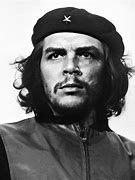
It has also been revealed that in her younger years she had a poster of Che Guevara on her bedroom wall. No doubt there was a certain sexual appeal but the key point was that Guevara was, until murdered by Bolivian soldiers, a key figure in peasant revolutions. What might have been in Ambridge if Jennifer had not met Brian
During a speech to the Tory Conference in 2019 the previous Home Secretary Priti Patel criticised the ‘North London Metropolitan Liberal Elite’.
She did not elaborate as to who such people might be, but was told by the Board of Deputies not to use such language so loud was the dog whistle
There is evidence of one such person. They lived in an area that for a period elected a Liberal Democrat MP post the Iraq War and was certainly heavily in favour of remaining in the EU
Crouch End in North London is not the kind of place where you’d expect to find a Tory in 2022. But it was a little different 50 years ago and the area elected Tory MPs until 1992.
While delving into the (unpleasant) undergrowth and background to the previous Premier’s rise to No.10 I noticed a brief sojourn in Crouch End.
In July 1965 Johnson’s father Stanley and mother Charlotte left Oxford for Crouch End. They stayed only to October 1965 deciding to spend the winter with Boris, who was just over a year old at the time, and newly born Rachel (September 1965) in an Exmoor cottage.
I haven’t (yet) been able to locate where they lived in Crouch End (a blue plaque surely beckons) but perhaps even then the Johnsons were able to detect that the area was not really the kind of place for Tories, at least on Priti Patel’s analysis.
Johnson went on to live in Islington, North London for some years when he was marred to Marina Wheeler. The last PM Liz Truss despite claiming to hail from various places around the UK was a confirmed West Londoner. It’s not known if it has an elite. This did not stop her opining on people who live in North London townhouses during her 49 day reign as PM.
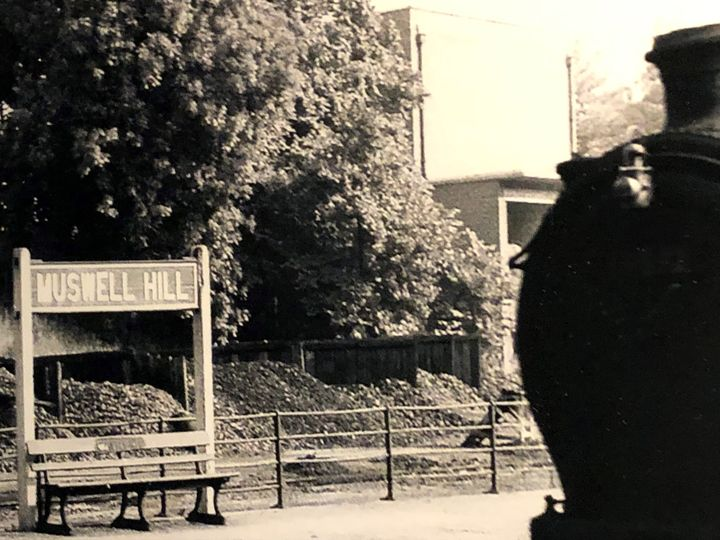
Tory references to a ‘metropolitan elite’ and ‘cultural marxism’ continue. The current regenerated Home Secretary Suella Braverman is an enthusiast for identifying such types, although she hails from Brent in North-West London. Brent is the epicentre of Metroland, the north-west London suburbia identified with the Metropolitan Railway from the early twentieth century.
Tory Deputy Chair Lee Anderson whose job is political abuse recently claimed that his Stoneage views were representative of people living north of Camden Town reflecting his general lack of knowledge about everything.
The current Rishi Sunak appears fully on board with the Tories offensive against North London too. At Prime Minister’s Questions on 1st March he noted that Keir Starmer had made a rare appearance outside North London at Davos recently. Starmer is of course a North London MP who lives in Kentish Town so it might be expected that he is to be seen in the area.
North London is divided between support for Arsenal and Spurs but is united in not having Tory MPs
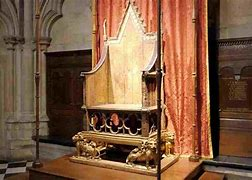
The Times (1st March) reports that work is underway to make sure the historic Coronation Chair is fit for King Charles to sit in at the Coronation. The chair dates from 1300 and it would be a pity if it gave way pitching his Royal Personage on to the floor of Westminster Abbey. It would be a tradition some would celebrate no doubt.
The Chair was made for Edward 1st to house the Stone of Scone which had obtained (i.e stole) from Scotland in 1296. The Stone had been used to crown Scottish monarchs.
The stone was liberated (or as the King would no doubt have it stolen) by Scottish Nationalists in 1950 but recovered in 1951. Since 1996 it has been in Edinburgh Castle but will be used for the Coronation in May.
Oliver Cromwell was installed as Lord Protector on it and in 1914 a small bit was knocked off by a bomb attack, possibly carried out by Suffragettes.
Since 2010 a ‘major project’ to make sure the Chair is fit to sit in and cleaned (every six months).
It is a disputed tradition and one which currently the public purse pays to keep going
World Book Day: turnip pilferers, alehouse scroungers & poachers in E P Thompson’s Making of the English Working Class
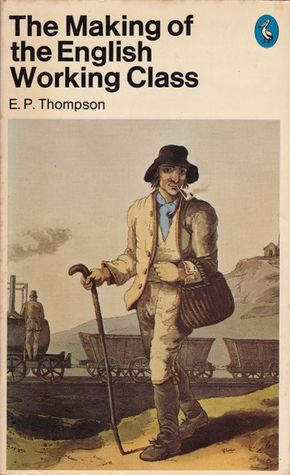
I’d choose E P Thompson’s Making of the English Working Class (1963 still in print on its 62nd anniversary) as my book for World Book Day. I’m conscious of the fact that the day is aimed at younger people and encouraging reading and Thompson’s book is a weighty tome, which might put some off.
That said it is full of characters who might spark interest and indeed passages that can be read aloud.
In fact Thompson compiled a good deal of the detail in the book and arguably some of the approaches to it while teaching WEA night classes in Yorkshire in the 1950s. His engagement with working-class students underlines the point he made in the 1968 postscript that the book is far from being a dry academic tome.
E P Thompson on what people ate in the 1790s
The southern rural labourer refused to abandon his diet of bread and cheese, even when near the point of starvation, and for nearly fifty years a regular dietary class war took place, with potatoes encroaching on bread in the south, and with oatmeal and potatoes encroaching in the north
Making of the English Working Class, Standards and Experiences
Thompson also noted that so low had labourers wages become that some were noted as ‘turnip pilferers, alehouse scroungers & poachers..’ (section on William Cobbett)
The Beard Liberation Front, the informal network of beard wearers, has said that well known beard wearer Michael Rosen reported on social media issues with trimming his award winning beard it is re-issuing its guidelines on this important matter for the hirsute:
Guidelines for Beard Trimming (aka Pruning)
1] Check regularly and remove any split ends
2] Every two weeks review the beard for style and impact
3] Unless an ‘Uncle Albert’ is required trim back white and grey hairs.
4] Trimming can be done using an electronic trimmer available from chemists etc. However these can be difficult to control. The BLF preferred method is to use a pair of fine scissors together with a comb to carefully trim and shape the beard until the desired shape and thickness is reached.
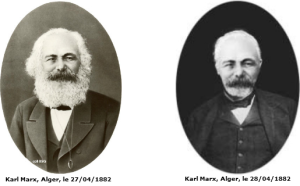
BLF Organiser Keith Flett said, Karl Marx set the template for beard trimming while in Algiers in the Spring of 1882 and we continue to broadly follow his example
St David’s Day in Medieval London: a story of prejudice
In the London of 2024 St David’s Day is marked by a Wales in London Week, and all kinds of Welsh themed activities. It is quite uncontroversial.
Historically however it was the occasion of considerable prejudice against the Welsh.
Ronald Hutton’s book Stations of the Sun on folk customs and traditions notes that from the C16th with the Welsh political establishment becoming a feature in imperial London St David’s Day was symbolised by the wearing of a leek.
The response of at least some Londoners was not helpful. Hutton notes that those wearing leeks on 1st March were called ‘Taffey, or David’ and also that ‘dolls and scarecrows with leeks on their heads’ were hung from windows. it was no doubt what Nigel Farage would describe as just a bit of fun..
The Cymrophobia as it now might be called was meant with a good deal of resistance and in 1661 fights between Welshmen and the London crowd are recorded.
Hutton speculates that as the centuries wore on the prejudice transferred to the Irish and Jewish populations, but it’s a reminder that prejudice can raise its head in many forms and always needs to be challenged where it does
Beard of Wales 2023: Michael Sheen shaves James Dean Bradfield by a whisker
The annual vote which aims to determine the St David’s Day Beard of Wales, the Welsh beard that offers the most positive national image, has reached its conclusion with the final Beard Off vote.
The result was a close shave but Michael Sheen just retained his title over the Manics James Dean Bradfield 42% to 40% of hundreds of on-line votes.
The Beard Liberation Front says that images of St David suggest that the Welsh Saint himself may have had an organic beard
Welsh rugby prop Adam Jones won the Award in 2013, voted for by BLF supporters, just shaving former Archbishop of Canterbury Rowan Williams. Another rugby player Leigh Halfpenny won in 2014. In 2015 the Award went to Thee Faction musician Chris Fox in 2016 footballer Joe Ledley and in 2017 to Charcutier Illtud Llyr Dunsford, with Chris Fox winning again in 2018. In 2019 journalist Grant Tucker shaved the opposition to claim the accolade. Michael Sheen won in 2020 and went on to share the Beard of the Year Award with Michael Rosen in December 2020. In 2021 Michael Sheen again shaved opponents for a second time and won again in 2022
It is the eleventh time the Award has been given following the traditional UK Beard of the Year at the end December each year and the BLF says it is a mark of Wales as a modern nation on St David’s Day that beards are now playing an increasingly significant role in national life.
BLF Organiser Keith Flett said, congratulations to Michael Sheen truly the Beard of Wales. However the Manics James Dean Bradfield really gave him a close shave this year.
There were two preliminary rounds leading to the final Best Beard of Wales 2022 vote on 26 & 27th February
Verdant’s Puttty Triple IPA. Some more unreliable thoughts
A few weeks back Verdant’s annual release of its Double IPA Putty took place. An 8% burst of dankness I enjoyed it both in can and on keg. It was of course reassuringly expensive but that didn’t stop it selling out in short order.
Last week Verdant released a 10% triple version of the beer Puttty. It was even more reassuringly expensive (4x440ml cans £39) but that didn’t stop it selling out in 2 hours on Verdant’s webshop.
I must admit to slightly preferring it to the 8% version both in terms of drinkability and dankness.
Of course these are not everyday beers and certainly not to be consumed ahead of a working day in the morning (unless the plan was not to do much work). Both strength and cost dictate that. They are also niche, aimed at particular sections of the craft beer market.
It’ll be interesting to see how Verdant develop the Putt(t)y brand-if they do. Perhaps the comparable example from earlier is Magic Rock’s Cannonball range. Its annual release used to attract much interest.
Alternatively one might say that there are other very decent triple IPAs out there and Puttty is not the only beer in the fridge or on the bar..
For those who stayed up into the early hours of Tuesday or caught up with it later the result of the second Test between New Zealand and England was gripping stuff. Indeed New Zealand’s victory by one run was only the second such instance in Test history. Coming after they had followed on (batted again)made it even more significant.
Under new coach Brendan McCullum England play a form of cricket known as Bazball. Essentially it is aggressive and robust play with a focus on winning. So far it has been successful-this is only the second defeat. It also makes for watchable cricket since something is always happening. I should note that I am far from averse to cricket where nothing much appears to be happening but can accept that this isn’t likely to interest those currently not fans.
That is one side of English cricket. Another will be on display when the issue of racism at Yorkshire cricket finally reaches a hearing called by the game’s authority the ECB>
Yorkshire have admitted charges of racism after complaints raised by former player Azeem Rafiq, but nearly all those called to account have now refused to participate with the exception of former England captain Michael Vaughan. Hearings start on March 1st and are scheduled until March 9th
Rafiq’s complaints have raised wider issues about racism in English cricket, aired at two meetings of the Commons Sport Select Committee. There is no question there is an issue. There is also the matter about whether, aside from agreeing that point, the ECB is really doing anything about it.
According to media reports Yorkshire cricket is in financial difficulties due to payments made to staff sacked after the Azeem Rafiq complaints where appropriate processes were not followed. Its also reported that Colin Graves who presided over Yorkshire cricket from 2012-15 and then moved to the ECB may return to preside over the club.
If Bazball suggests a hopeful way forward for English cricket there are still a lot of issues to be addressed
Labour’s consistent poll lead over the Tories suggests that a change is going to come in British politics at the top.
Fortunately thanks in considerable part to the activities of Stand Up to Racism and Unite Against Fascism, the change won’t be to the far right, as it already is in Italy and may in future be in France.
The Guardian that was certainly not keen on change in 2019 (although it backed Labour) is pondering if Starmer’s Labour can bring the change required.
Jonathan Freedland quoted a senior Labour figure (25.2) as saying that people’s belief that even modest change is possible is at ‘rock bottom’. While Keir Starmer’s five national missions are broadly worthy enough, I suspect the thought many have is not that change can’t come but that Labour won’t bring it. That surely is why so many people are taking things into their own hands and striking for better wages and conditions.
Nesrine Malik (27.2) made similar points underlining that what Starmer proposes is not sufficient to meet the challenge of the Tories broken Britain.
In the Times David Aaronovitch just wants the Tories to go now although when the chance to achieve this was offered in 2019 he spurned it. Meanwhile Ed Balls, surely a better dancer and cook then he is a politician has argued that Starmer needs to be a lot more specific about what changes he plans.
Paul Nowak, TUC General Secretary, commenting on the 80% vote by public sector members of the professionals union Prospect, said ‘still they come’. The key to the future lies in workplaces and communities more than Starmer’s focus groups and Peter Mandelson’s 1997 Playbook