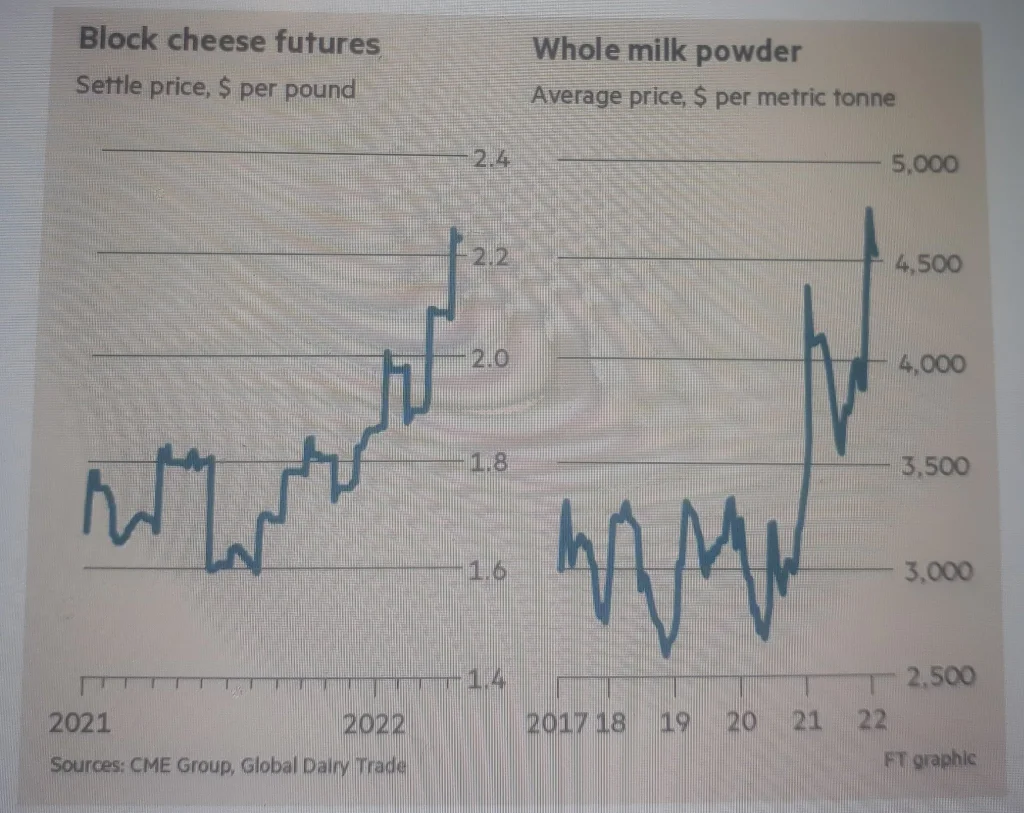
The Financial Times (18th April 2022) reported a cheese crisis. The FT sees things in economic terms so they were looking at a very sharp increase in the US market price for cheddar cheese. It had gone up by around a third since the start of 2021 at that point.
In Europe the price of Mozzarella had gone up 44% since November 2021, while UK cheddar prices had risen by 55% in the last two years. There is a ‘tight’ milk supply for cheese and energy prices are considerably up.
The FT reported that this has led to an increase in cheese thefts. Recently 1600 kilos of cheese were stolen from a Dutch dairy farm. Parmesan thefts, a perpetual issue in Italy are increasing.
While cheese(with bread-see William Cobbett’s Rural Rides) was a staple of the working class diet in England in the first half of the nineteenth century, good quality cheese has never been a cheap item. Cheese mongers were amongst the Yeomanry that rode at Peterloo in 1819. Boris Johnson(as Churchill who liked French cheese) is a cheese lover but no doubt gets someone else to pay for his supplies. As for Liz Truss and cheese.
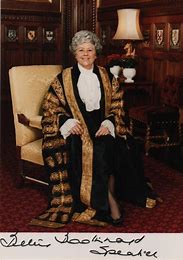
When the late Betty Boothroyd came second to Tony Benn in a vote to be President of the UK
With the death of former Commons speaker Betty Boothroyd at 93 an anecdote that probably won’t make it into her obituaries is worth recalling.
In 1991 the then Independent newspaper declared itself republican with a commitment to report in only the briefest way matters related to the Royal Family.
Tony Benn notes in his diary for 8th March 1996 that the paper ran a poll to see who should be the first elected President of the UK. Benn topped the poll, followed by Betty Boothroyd with Jarvis Cocker third and Helena Kennedy fourth.
A mark it might be said of the wider public esteem Boothroyd had gained in her role as Commons Speaker
126 years since the Labour Representation Committee was formed. What did the first Labour MPs read?
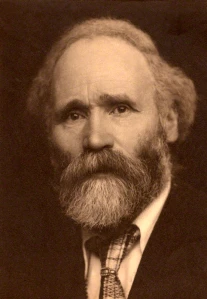
by George Charles Beresford, sepia-toned platinotype print, 1905
The Labour Representation Committee was formed at a conference held in Farringdon St on 26 & 27th February 1900. Its aim was to secure Parliamentary representation for the interests of working people, that is ‘labour’. It was not to obtain a majority Labour Government. Such a matter was un-thought of at the time.
The building still stands (much modernised)and the Memorial Hall is marked by a plaque. I covered the offices it now accommodates as a union officer for many years.
In 1906 29 MPs were elected under the LRC banner and the Parliamentary Labour Party was formed. The vote for who should lead it was tied on the first round and on a subsequent vote Independent Labour Party member Keir Hardie just edged ahead.
Naturally there was a good deal of interest in who the 29 Labour members were.
Many were from Lancashire- where the Liberal vote had been weak but anti-Tory feeling still strong. There were also trade union officials and leaders with a minority being ILP socialists like Keir Hardie, Ramsay MacDonald and Philip Snowden,
There were no women- female suffrage did not yet exist. The split between moustaches and beards in the ranks of the LRC MPs was more or less even with Philip Snowden clean shaven.
W T Stead Editor of the Reviews of Reviews sent a questionnaire to the 29 MPs asking them about their reading habits and favourite books.
Stead and more particularly the only significant commentary on Stead’s piece by Bealey and Pelling (1958) are quite condescending about the responses received, unjustifiably so.
Hardly any of the 29 had read Marx and only a few any work by a well-known socialist such as Robert Blatchford.
Will Thorne, a Marxist and an SDF member had read Marx while Charles Duncan an ILP member had read Blatchford’s Merrie England and George Barnes was familiar with the work of William Morris. Some had read Fabian Tracts
Leading ILP member Philip Snowden meanwhile said he had been influenced by an American critic of socialism, Richard T Ely.
I’m not sure that it is really a huge surprise that few of the 29 LRC MPs of 1906 could be called committed and well-read Marxists.
What is perhaps more interesting is the depth of their, at least professed, reading across more general works. Some had consulted the Bible which is hardly a surprise as nearly all the 29 MPs were Methodists. It’s fair to say that from its pages they had taken some kind of radical thoughts.
Others had read Henry George- who wrote on land nationalisation- and numbers were familiar with Charles Dickens and Thomas Carlyle.
Overall those 29 MPs- the first to represent the Labour Party in Parliament were a well-read bunch. They were mostly not well up on the Marxist critique of capitalism but they had certainly read widely on what might be called the ‘human condition’, about poverty and the struggle to survive in a profit led society.
Most were union officers who most on the left nowadays would regard as being uncomfortably close to the interests of the employer.
However, as with Taff Vale, the employer wasn’t always interested in having a close or any relationship with unions. Those MPs did at least have a reasonably good grasp, through experience and reading, of the conditions those who voted for them experienced, even if they didn’t always do much about it.
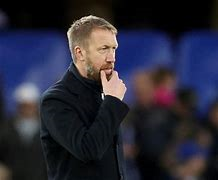
The Beard Liberation Front, the informal network of beard wearers, has said that Chelsea face a beard crisis as the team lost 2-0 to London rivals Spurs on Sunday.
Complaints have been rising about Chelsea manager Graham Potter, who is arguably the most hirsute manager in the Premiership
The Beard Liberation Front says that evidence suggests that many of the issues with Potter relate to beard hatred from a secrion of Chelsea fans. However compared to the Beard Power that Potter had when managing Brighton its clear that his arrival at Stamford Bridge has led to a follicle crisis.
BLF Organiser Keith Flett said, there is a hirsute dialectic at work at Chelsea. Graham Potter’s beard is not on top form and the more Chelsea beard haters complain, the worse it gets.
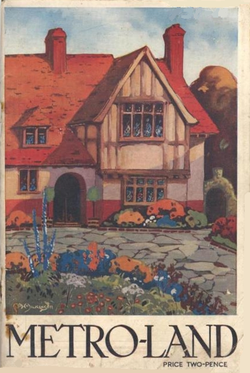
Metroland relates to the Metropolitan railway which from 1915 carried people from its Baker St HQ out into the leafy suburbs of north-west London and beyond. The line moves through Brent and Harrow with either Wembley or Harrow being seen as its epicentre.
While Rickmansworth is mentioned there is no mention that in 1848 it was a Chartist land settlement (the houses are still there), about 20 minutes walk from the station.
It would also be interesting to know if the annual Pinner Fair, mentioned in 1972, still exists
Metroland covers the design of the tube stations on the Metropolitan line but also a certain suburban way of life. It might well have been what Suella Braverman would call the North London Metropolitan Elite except for the reality that her family is based in Brent.
Lest too many assumptions are made, Betjeman appeared in a Labour Party Political Broadcast in 1962 and wrote the original Nooks and Corners column in Private Eye
Brian has taken to dropping round to Kirsty and Roy and when not falling asleep is reportedly holding ranting sessions about issues of the day. What issues could be on Brian’s mind the Ambridge Socialist wonders. Adil has advised Roy to tell Brian to clear off and stop humouring him, although this may simply have been a roundabout way of telling Roy to get on with his work at the new Grey Gables
Lee: should he stay or should he go
The Ambridge Socialist finds Lee somewhat tedious although he is not yet in the Premiership of tedious Ambridge characters. Earlier in the week things looked promising that Lee might follow his daughters to live in the US (where their mother is taking them). Unfortunately this now looks less likely
Air B&B at Brookfield
Lynda is initially unimpressed with David and Roooths attempt to create a new Farmyard Experience Air B&B at Brookfield. It’s so Jeremy Clarkson although fortunately he remains banned from Ambridge. Lynda’s sight of David in his threadbare long johns is definitely an Ambridge moment however
In Other News
Lilian and Tony have reconciled- the ruling class eventually comes together
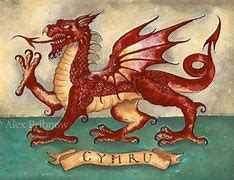
The annual vote which aims to determine the St David’s Day Beard of Wales, the Welsh beard that offers the most positive national image, has reached its conclusion with the final Beard Off vote
The Beard Liberation Front says that images of St David suggest that the Welsh Saint himself may have had an organic beard
Welsh rugby prop Adam Jones won the Award in 2013, voted for by BLF supporters, just shaving former Archbishop of Canterbury Rowan Williams. Another rugby player Leigh Halfpenny won in 2014. In 2015 the Award went to Thee Faction musician Chris Fox in 2016 footballer Joe Ledley and in 2017 to Charcutier Illtud Llyr Dunsford, with Chris Fox winning again in 2018. In 2019 journalist Grant Tucker shaved the opposition to claim the accolade. Michael Sheen won in 2020 and went on to share the Beard of the Year Award with Michael Rosen in December 2020. In 2021 Michael Sheen again shaved opponents for a second time and won again in 2022
It is the eleventh time the Award has been given following the traditional UK Beard of the Year at the end December each year and the BLF says it is a mark of Wales as a modern nation on St David’s Day that beards are now playing an increasingly significant role in national life.
BLF Organiser Keith Flett said, we’re expecting hairs to be split in the Beard Off final. Can Michael Sheen be shaved after winning for three successive years?
There were two preliminary rounds leading to the final Best Beard of Wales 2022 vote on 26 & 27th February
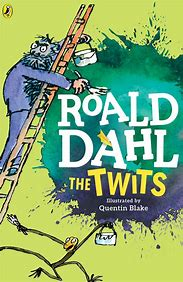
Beard Hatred in Roald Dahl’s The Twits remains entirely unaddressed
The Beard Liberation Front, the informal network of beard wearers, has expressed serious concern that in the culture war over the language used in Roald Dahl’s children’s book, nothing at all has been said about the beard hatred- pogonophobia- used in The Twits.
In The Twits, beard wearers are portrayed as people who take no care of their facial hair and have remains of their previous meals in their beard. These are common anti-beard sentiments, and Dahl was a noted beard hater.
While the Times (Editorial 25th February) along with Rishi Sunak has come out in favour of keeping Dahl’s words in the original, Beard of the Year Michael Rosen has noted that texts are not stable (Times 25th February) and can change in detail over various editions and iterations.
The BLF says that while concern has been expressed about sexist and racist words and imagery that Dahl used there has been complete silence about his beard hatred.
BLF Organiser Keith Flett said, while the hirsute have generally found The Twits to be humorous because its beard hatred is so exaggerated its concerning that in the debate over Dahl’s books not a word has been written about his pogonophobia. The words used to describe Mrs Twit by contrast were, rightly, slightly altered.
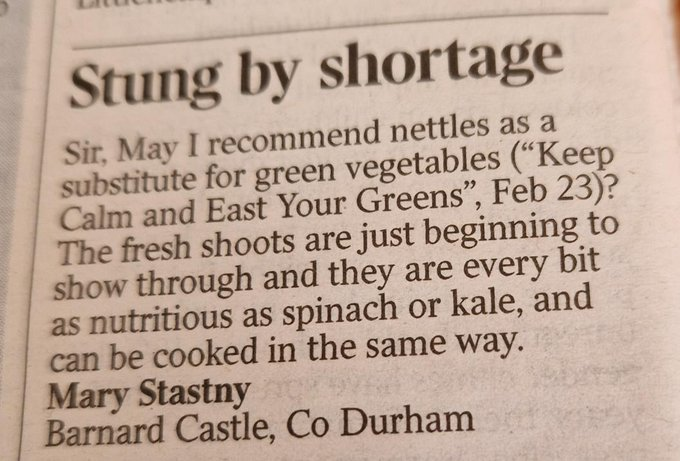
Following Therese Coffey’s advice to eat turnips a letter writer to The Times (25th February) has noted that nettles are coming into season. Cooked they are just as good as other greens and they are free. Wild Garlic is also coming into season by the way and that can be foraged, prudently, for free too.
I’m not offering recipe tips however because there is also a history to nettles. In The Making of the English Working Class E P Thompson quotes from correspondence between the radical Francis Place and the liberal politician Hobhouse. Place is relaying the class antagonisms in Manchester and environs that led to Peterloo in August 1819.
He reported a discussion he had with one Manchester businessman who explained that he checked from time to time on weavers who worked for him (they were home based) and found that they had foraged so many nettles that they had none left for broth. This didn’t concern the businessman as he explained to Place that he could not sell good so cheaply if the weavers could afford (by dint of higher payment) to eat better.
I will be talking about how my memoir, through a series of evocative vignettes, casts light on the impact of being the child of activist political refugees from Nazi Germany. It is often supposed that a person born in the UK will not feel like an outsider but this talk will consider how far the shadow of the past shaped my lived experience and sense of being as well as the contrary ways by which I became a revolutionary