Vince has reappeared after a welcome break. His behaviour drove Ben Archer to a mental crisis. Elizabeth however is at best in two minds whether to tell him clear off, again. Vince has the interesting idea of inviting Daveed and Rooth out for a meal at a fine dining restaurant. Vince clearly has no idea about the impact he has had on Ben and after a while David walks out. The first thing he has done right in 2023. Elizabeth meanwhile plans to continue her liaison with Vince. Interesting times beckon.
Tracy & Jazzer are engaged. The proletarian liaison of the year
Susan has misgivings about the liaison between Tracy, her sister and Jazzer the pig man. She however made up for it(perhaps) with a (sort of) dinner party. During this the spectre of a blow up doll of Jazzer was mentioned.
In Other News
Brian has noticed James Bond is interested in British Farming. Or the Head of MI5 anyway
David has raised a New Year toast to ‘decent milk prices’ & decent wages for farm workers too
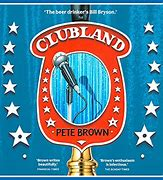
Pete Brown’s Clubland: Really Useful Knowledge about working class culture
Pete Brown kindly sent me a copy of Clubland to read while I was in hospital six months ago. I wasn’t too well at that point and I’ve only just got around to reading it. However since it’s the Book of the Week on Radio 4 this coming week hopefully the review below remains timely.
Despite their centrality to working class life from the later Victorian period there is very little published material on clubs from an historical and sociological point of view. Pete Brown’s book does a lot to rectify that.
I should say that I’m not unfamiliar with Clubland myself having long been a frequenter of what was Wood Green Labour Club, now Wood Green Social Club in North London. A venue for meetings of trade unions and social events while others played snooker or fruit machines. The value of it was from a labour movement perspective, meeting rooms, which were quite separate from the bar area and hence welcoming to those who did and did not drink.
Pete Brown’s book, well researched as are all his volumes, goes back to the origins of the Clubs with Henry Solly in 1862. Solly with upper class patronage had the idea that working class men- mainly those who followed skilled occupations- could ‘improve’ themselves at the clubs, with reading, classes and discussions.
It was not an entirely unsuccessful model but the Club and Institute Union (CIU) which still covers most clubs was developed on the basis of selling alcohol, games and entertainment as well as the improving aspects Solly had in mind. Alcohol sales funded much of the rest.
As Brown notes in the late nineteenth century some clubs were specifically political- see Stan Shipley’s History Workshop pamphlet Club Life and Socialism. That did not last however as political clubs, radical, Liberal, Labour, Tory etc developed as a separate strand as more working class men got the vote and supported political parties.
Brown divides clubs between North and South. While there may not be a fundamental difference my very limited experience of northern clubs does suggest a rather different milieu to mine in Wood Green.
Pete Brown comes from Barnsley and relates his memories of clubs he visited and worked in when he was a teenager combined with discussions with those involved with the clubs now.
Brown covers every aspect of club life and it is quite clear about strengths and weaknesses. The obvious one for many is the term Working Men’s Clubs. The CIU was resistant not so much to allowing women in but to giving them membership and a say in the running of things. There were campaigns but a change to allow women full participation came relatively recently.
The author is clear why clubs had historically been seen as male spaces. Before the days of affordable TV in a house (the 1960s) when a man returned from work there was little possibility or space for relaxation or leisure. Hence the community of the club was a central part of life for many. Of course that does beg the question of what the many women who also worked did in their leisure hours, such as they were.
What kind of working class community it was, or is, Brown also looks at. Some of the comic acts who worked the northern clubs- many featured on the TV programme the Comedians- were racists. That particularly applied to Bernard Manning and Brown is clear about that.
The clubs in the 1960s did in some cases become quite big business. The example of Batley is used which was able to attract international stars and large audiences.
But there was a much wider social and community aspect to the clubs. Bingo of course, but also darts, snooker and fishing trips. Perhaps a pub could do some of this but the club in many cases was better placed to do it better.
The club movement as Brown underlines is currently in decline. The existing CIU HQ is at Highbury Corner in North London but a casual visitor will find a good deal of the space occupied by the White Swan, a Wetherspoons pub.
The decline of clubs in the north can be attributed in part to the destruction of working class communities that Thatcher’s war on the miners in the 1980s represented. There is also the question of changing working class leisure patterns in the world of the internet and the smartphone. Entertainment can be accessed from anywhere. A visit to a club is less essential.
The working class has changed rather than declined and many core jobs remains central as anyone who has tried catching a train or waited for a letter recently will know. In my view a key issue is that many clubs have been too slow to relate to change. It is no easy matter.
Trade Unions have done a lot of work to organise changing workforces in recent times with a recognition that part of the working class is white and male but a lot is not. There has been some success but unions have a direct link to the workplace and the central experience of people’s lives that the clubs don’t have.
Organised leisure in some form will certainly continue. While you are pondering that or not, make sure to get a copy of Clubland. It’s a well written, well researched story about part of who we were and who we are now.
Shadow Chancellor Rachel Reeves has been talking to the Murdoch Times. I’ve read it so you don’t have to.
There is some good news. Reeves thinks the Truss Interregnum of Autumn 2022 went too far.
She has never read Marx’s Capital and doesn’t want to overthrow capitalism. Who knew?
She does however get on well with George Osborne who she has been consulting. Osborne thinks she would be good in Government. By contrast she thinks RMT leader Mick Lynch is ‘rude’ referencing an interview he did on Radio 4’s Today.
Reeves is not asked which side she is on which is perhaps just as well. Based on the interview like too many current politicians she could be at ease in either the Tory or Labour Party depending on context and the times. That is not to argue that all politicians are the same. No doubt in Government Reeves would be competent unlike the current occupants. The question is, in whose interest..
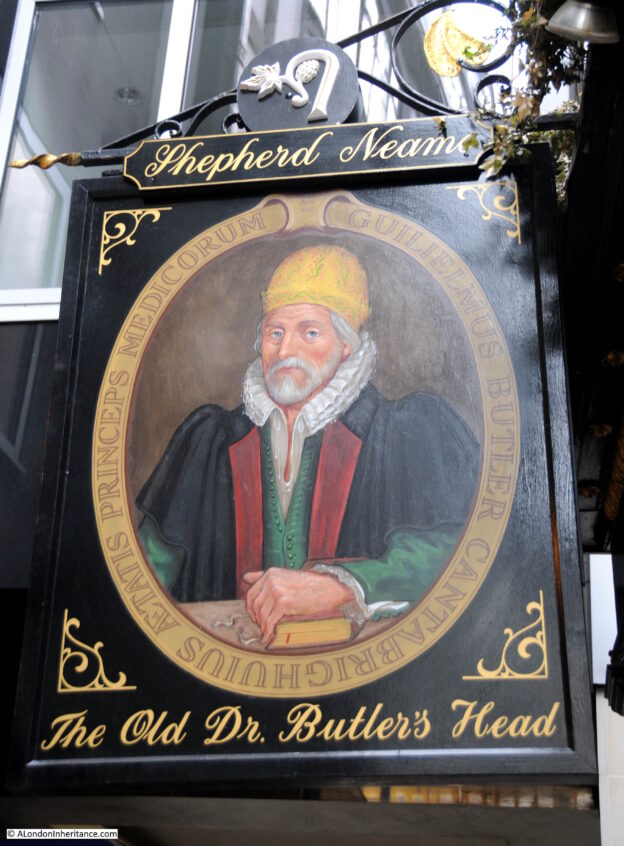
The Beard Liberation Front has said that the vote for Beard Friendly Bar, Pub and Tap of the Year is now open.
The on-line poll will feature two rounds each consisting of four of the most beard friendly pubs. Four are from London and four from elsewhere in the country
The aim of the vote is to promote pubs that are friendly and welcoming to all, and also sell good beer
The Beard Friendly Pub of the Year is an annual feature in January each year, although the pandemic years have disrupted the process.
The last full vote in January 2020 saw the decisive winner in the Beard Friendly Pub of the Year as the Bumble Inn micropub in Peterborough. The runner up was the Cock Tavern in Hackney
BLF Organiser Keith Flett said, it is a hugely difficult time for pubs and those who enjoy a drink in them. As usual we have selected an eclectic list and there are many others that could have been included. Our suggestion is to visit a favourite bar, pub and tap room in the next few weeks to see if it meets the beard friendly criteria. If it does then make sure people here about it through word of mouth and on social media, using the hashtag #beardfriendlypub
The criteria for the Award include:
A safe environment for all.
Beard Friendly Pub: a pub that welcomes the hirsute and often has a number of hirsute customers, including but certainly not confined to those with modern styles of beards.
Beard Friendly Ambience: a pub that may have fewer hirsute customers but is welcoming to the hirsute through some bearded bar staff and beard friendly beers, plus has a generally relaxed atmosphere for all.
The campaign group says it welcomes diversity in both appearance and drinking. The truly beard friendly pub will have a genuine mix of customers not just a load of old blokes grumbling about life.
Beard Friendly Pub of the Year 2023
Beard Friendly Bar, Pub, Tap of the Year. Round One. Outside of London
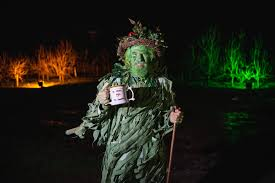
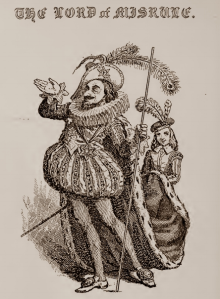
January: The tradition of Wassail. Cakes, Ale & the appointment of a Lord of Misrule
The tradition of wassailing is one of having cakes and ale on Twelfth Night or Epiphany the following day.
However traditions are quite flexible so you can do this at any time up to Shrove Tuesday
This time of year is that of few hours of daylight and scarcity of fresh produce so things like cake and ale were and are welcome.
A tradition was to bake a cake with a bean, or possibly a pea or a coin in and the person discovering it in their piece of cake became the Lord of Misrule for Twelfth Night
The traditional Wassail was to go house to house with the following cry:
we are not daily beggars that beg from door to door
But we are friendly neighbours whom you have seen before.
There is also a case I think for attempting to reclaim a radical tradition of the Lord of Misrule. A giant model of a naked Nigel Farage paraded through the streets sitting backwards on a donkey would add something to the sum of human jollity.
Their Twelfth Night and ours. 5th January, 6th January or 17th February?
British socialist historians have paid some attention to the importance of folk customs (see EP Thompson Customs in Common)primarily as a way of understanding the roots of non-marketised ways of grasping value and importance in society and seeing if the traditions have continued to have any impact in more recent times.
Britain was the world’s first industrialised country and already by 1850 more than half the population were industrial workers rather than being reliant on the land for a living, either as peasants or agricultural labourers. Something that may explain the popularity of the Archers one suspects as a sort of reminder of a lost arcadia.
However the focus on custom and tradition has been patchy and that is certainly true of twelfth night.
I can’t am afraid offer any definitive thought on whether you should take down the Xmas decorations on 5th January or 6th January. The Church of England thinks it should be the eve of Epiphany (hence the 5th) but then leaves the decorations up to celebrate Epiphany. That is the thing about customs. They might be in common but they are often disputed.
Twelfth Night is part of a season of festival, carnival and revolt that starts on All Hallows Eve (Oct 31) and can end as late as Shrove Tuesday.
The appointment of a Lord of Misrule is connected with Twelfth Night but can occur earlier.
The title Lord of Misrule sounds radical but there is no mention of it in Christopher Hill’s The World Turned Upside Down’ about the period of Parliamentary rule after 1649. Some commentary suggests that it was really more to do with poking fun at the established order the better to keep it in place, and in some cases- for example in New Orleans- it became firmly established with a celebration of the old- reactionary- order of things.
Whether it’s the fifth or the sixth it seems clear that in folk custom the tradition of misrule that begins on October 31st does not end with Twelfth Night but continues at least until Shrove Tuesday which in 2026 is on February 17th
When she was still a contender for the Tory leadership in July 2022 Liz Truss threatened to further restrict the activities of trade unions, an enduring obsession of the Thatcherite right.
The detail was inevitably lacking but Truss wanted ‘minimum service levels’ where public sector workers have balloted for a legal strike. The implications of this were and are deeply concerning even if probably not fully thought through now they have been adopted by Truss’s successor Sunak.
RMT leader Mick Lynch writing in the Daily Mirror argued that the Tories want to go back to 1871 the date of the Act that legalised trade unions. Then TUC General Secretary Frances O’Grady warned of a fundamental attack on the right to organise and an assault on democracy as understood across Europe. New GS Paul Nowak has underlined the point.
The Tories may be forced to think again but not without significant campaigning pressure to defend existing trade union rights.
It’s worth looking at what the changes were to trade union law in the years after the formation of the TUC in 1868 to understand a little of the detail of what the Tories plans might mean
In the mid-1860s there were a series of small scale inter-union disputes in Sheffield that however got media attention. A Royal Commission was set up in 1867 to look at the issue of unions. One craft union leader Robert Applegarth was a member. The majority of the Commission saw no reason to change matters- that is unions had no legal status. There were some in the labour movement who backed that. They preferred that the Government and the law kept entirely out of union affairs. In the 1870s with a relatively small State machine this was a possibility.
However it was the Minority of the Commission that won the day when the matter was debated in the Commons. The result was the 1871 Trade Union Act.
For the first time trade unions were recognised as existing in law. That meant for example that union funds now had legal protection against anyone seeking to make off with them- a not unknown issue. Other provisions had wider importance. Union activity including strikes could not be regarded as ‘restraint of trade’ meaning neither employers or scabs could pursue unions for damages.
Further union organisation could not be regarded as a conspiracy, a point going back to the Tolpuddle Martyrs 35 years before.
The 1871 Act was a key part of putting unions and union members on a legal footing but there was more to do.
The Conspiracy and Protection of Property Act 1875 addressed a further key issues in particular it made picketing in disputes legal. The Employers and Workmen Act also of 1875 made all disputes between employers and employees civil matters.
Previously under the Master and Servant Acts workers who left employment before the end of their contract could be pursued by the boss and fined or jailed. Thousands were even in the 1860s when the law was relaxed. This was a major step forward for ordinary workers.
Sunak’s proposals potentially look to transgress the principles of both the 1871 and 1875 Acts. If a worker who had voted to strike was told to work under a ‘minimum service’ law it’s proposed the Union would be found guilty if they refused. And if they did refuse the demand of their employer to work despite have legally voted not to would they then end up in a 2020s version of the Master and Servant Act, fined or jailed because they refused to do what the boss said.
Concerning times indeed and as Mick Lynch and others have said warranting the most robust of responses
Each year around this time a correspondent e-mails me details of those who have most letters published in the Guardian in the year just gone.
An edited summary is below. The correspondent tells me that as recently as 2020 22 Fletters were published. That of course was a time of lockdowns so perhaps more time was available.
Anyway I continue to write letters to the Guardian which are sometimes published. This may come as a surprise to those who tell me they used to read my letters. I still write, but do they still read.
Finally once again its mostly if not entirely men, with or without beards. Progress in history can sometimes be very slow
I take particular note of your “frequent flyers”, namely, correspondents who have multiple letters published. The winner this year (Letters Page 2022) is a bright spark from Devon with 12 letters*. The runner-up with 11 is the UK’s most epistolary narrowboat “Gordon Bennett”. In third place with 10 letters each come a Liverpudlian and a bearded regular (who has been ill this year and is now hopefully fully recovered. In 2020 you published 22 of his letters). A Fr comes next with 9 followed by three frequent flyers with 8 apiece – a figure equal to this year’s entire output from Hebden Bridge.
*Toby Wood points out that he also had 12 letters published in 2022
In pre-industrial times the season of Christmas extended well beyond 25th December and the 6th January into February, concluding with Shrove Tuesday or Lent.
It was time with limited daylight and limited work that could be done on the land. Custom saw Lords of Misrule appointed- Toby Belch in Shakespeare’s Twelfth Night is the most well known fictional character.
It was a time for Carnival and sometimes revolt.
One such revolt took place in Norwich in early 1443. The precise date is not clear but it may well have been in late January. Certainly a Government inquiry was ordered into the events which reported in late February.
A local merchant John Gladman, was appointed King of Christmas- again the period not as closely defined as now- and rode around Norwich with an attendant crowd. The purpose was to highlight a dispute between the local population and authorities and the Church.
The most recent study notes:
The two sides in a long-running dispute over rights and resources between on the one hand the City of Norwich, as represented by the mayor, most of the council, and many common citizens, and on the other the powerful Cathedral Priory, seconded by neighbouring monastic institutions, regional magnates and a faction within the city oligarchy. It culminated on 25 January 1443 when a crowd of commoners initiated a siege of the Priory, trying in vain to break down its gates. When after a few days order was restored, the crown instigated the formal inquisition…..
Government Papers 2023 & New Labour in Office before the 2001 General Election
At New Year the Public Record Office releases a range of Government papers. This used to be covered by a 30 year rule delay but more recently some papers are released after 20 years.
Hence this year’s release covers aspects of the first New Labour Government in the run up to 2001. 170 of the files have been digitised. Many of the files cover Government relations with specific countries, of interest to researchers working in those areas.
There are some more general files. I looked at those covering the House of Lords, fox hunting and Section 28.
Labour had pledged to reform the House of Lords and replace it with a new Chamber. This involved discussions particularly with the Church of England but also the Board of Deputies about how many seats there would be for religious interests. The file underlines that the Government were not too keen to be tied down on numbers.
Fox Hunting was eventually banned but at this point the proposal had provoked large protests by the Countryside Alliance. The Government knew a ban was popular but was concerned by opposition. The file focuses on an all party Middle Way Group which thought it would be sufficient to tell hunts to behave themselves. This seemed to have the backing of Jack Straw who apparently felt that a political argument would be distraction.
Section 28 was eventually abolished in England and Wales in 2003. The file released shows the Government placing a good deal of focus on its family policies (fair enough) but not mentioning much about LGBT rights. Religious opposition was noted.
None of the above is headline material but it does feed into a current discussion about whether Governments are more radical when elected. The three examples of New Labour in practice suggest not perhaps to an extent because of the complexities that arise when policies meet practical questions.