Campaign for Real Santas says forget Suella Braverman, Santa is welcome here
The Campaign for Real Santas, which campaigns for Santas to have genuine organic or knitted beards, has said that with just three weekends to Christmas its the peak time for Santas
Despite what former Home Secretary Suella Braverman may think Santa is not an illegal entrant to the coming. Santa is welcome here.
The Campaign has issued special Xmas guidelines so that if Santa is spotted it is easy to tell if they are genuine or a Tory imposter.
HOW TO SPOT A GENUINE SANTA
1 Tug the beard of the Santa. If it comes away easily, then the Santa is FAKE
2 Tug the beard of the Santa again. If the Santa swears then they are genuine. If they simply repeat a ‘ho ho ho’ mantra they may be a Tory
3 The Campaign for Real Santas says that genuine Santas must have just the right mix of bonhomie and gruffness and a real organic beard.
CFRS organiser Keith Flett said, Santa is a key part of the Christmas story. Someone who travels the globe without papers and hands out presents for free. It’s everything that Suella Braverman and the Tories hate, as well as the beard of course.
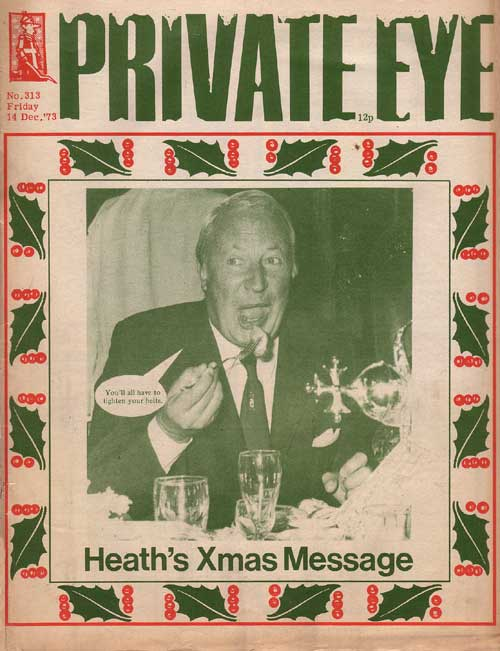
‘A Harder Christmas than we have known since the war’ (Tory PM Heath,1973)
Christmas 2020 is one of crisis for many, albeit a crisis engineered mainly by the Tory Government and in particular 44 day Truss
There is a cost of living crisis, an energy crisis and a climate crisis and a Tory Government intent on waging class war against ordinary working people striking to try and maintain some kind of standard of living in the face of 10% inflation
Is it then the worst Christmas ever? Here it must be remembered that the media has very little or no historical memory and it is getting worse. Nearly all journalists including those who are meant to be ‘serious’ are now more interested in clickbait stories of the moment rather than context.
Let’s think back to Christmas 1973, still very much in living memory.
Slade’s Merry Xmas Everybody was No.1 in the charts (No.2 was by someone we don’t mention anymore).
Yet there was a huge crisis.
The miners (the UK still relied heavily on coal for power) had begun an overtime ban and Tory Prime Minister Heath had announced a 3 Day working week starting in the New Year. This actually happened. The power went off with little specific warning for lengthy periods and that was that until it came back.
Meanwhile the price of oil had doubled in a matter of weeks.
Tory industry minister and ex-industrialist John Davies told his family, ‘We must enjoy this Christmas for it may be our last one.’
In his diary, Tony Benn noted:
‘Dinner with Wilfred Brown, head of Glacier Metals, who believes we are headed for a slump and food riots and that there must be a National Government… At the Commons I saw John Biffen who told me Enoch Powell is waiting for the call.’
Heath addressed the nation and said ‘we shall have a harder Christmas than we have known since the war,
Let’s hope it is the last Christmas for this particular Tory Government
From 1644 until 1660 the celebration of Christmas was officially banned in England.
The reasoning of Puritans and Cromwell’s Parliamentarians for this, as well as Catholic opposition to it, is important but for further posts. Below is an edited summary of what the ban meant in practice.
The words are written by Keith Down of the Royal Armouries Museum in Leeds
Christmas was banned in Britain by a 1644 Act of Parliament, with the Long Parliament of 1647 passing a law which officially abolished the feast of Christmas making its celebration punishable. The ban remained in place until the restoration of the monarchy in 1660.
Puritans wanted Christmas Day to be a day of fasting and humility, but otherwise a normal working day – not a Feast or Holy day as it had been in the past. Indeed, MPs sat in Parliament on Christmas Day 1643 as though it was any other day of the year. Such measures were not uniformly popular, even in Parliamentarian-dominated London. That same Christmas, for example, some angry Londoners keen to follow the old traditions of Christmas, attacked shops that opened.
In January 1645 Parliament set up a New Directory of Public Worship which stated that there were to be no Holy Days apart from Sunday. In June 1647 Parliament passed an ordinance which confirmed the abolition of Christmas, Easter and Whitsun and during the 1650s (during the Commonwealth) legislation put in place penalties on those found attending special Christmas church services, or for closing their businesses for the day. In 1657 the Council of State urged the mayor of London to clamp down on celebrations.
Enforcement of the legislation was another matter, whilst some church ministers were arrested in 1647 for preaching Christmas sermons, many people continued to celebrate the season despite Parliament’s official position. The fact that Parliament had to keep issuing proclamations against Christmas throughout the 1650s shows that, until later on in the decade, many people ignored the prohibition.
Royalists saw the victorious Parliamentarians as ‘killing off’ Christmas. One Royalist ballad of 1645 complained that “Christmas was killed at Naseby fight” – a reference to a major Royalist defeat by Parliamentary forces at the battle of Naseby on 14 June 1645. Royalist clergymen also engaged in writing pamphlets defending the celebration of Christmas and the importance of passing on these traditions to the young.
At Christmas in 1647 in Canterbury the town crier had proclaimed the committee’s commitment to the suppression of Christmas. In response a large crowd gathered to demand the usual traditions be observed. Eventually a riot broke out, forcing the mayor and several magistrates and clergymen out of the town. A few months later Kent rose in revolt in the name of King Charles I. Christmas also remained particularly popular among England’s community of Catholics or ‘Recusants’, who regarded the celebration of Christmas and devotion to the Virgin Mary as essential tenets of the faith.
Christmas traditions really stayed the same from the Middle Ages and throughout the Civil Wars. In many ways, we still observe them today. Despite the official ban many still decorated their homes and doorways with holly, bay, ivy and rosemary. People gave gifts especially to the young and the poor, attended church services, feasted and drank copious amounts of alcohol – including ‘wassailing’ which involved going from door to door singing and drinking from a communal wassail bowl whilst wishing people good health.
Carol singing was an important part of Christmas and some MPs complained that their neighbour’s preparations for Christmas had disturbed their sleep. Mince pies (made with real minced beef) were eaten, as was plum pudding. Morris dancing was another feature of Christmas, as was gambling. As I mentioned previously, Catholics were particularly attached to Christmas and were known for their great Christmas festivities. Some Catholics may have attended illegal Catholic masses in the homes of wealthy Catholic gentry and nobility – one aspect of the Christmas tradition they would have had to have kept secret from the authorities.
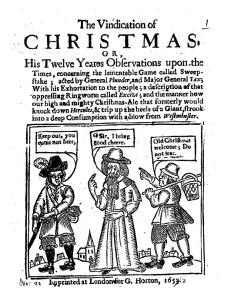
‘Sir Christemas’ had appeared in song in the 15th century, but certainly in the 17th century the personification of Old Father Christmas served as a means of defending the season from Puritans, after all people can generally relate much better to and empathise more towards a person than an idea. In the 1652 ‘Vindication of Christmas’ published by the Royalist John Taylor, a bearded ‘Father Christmas’ defends himself as only bringing “good cheere”
In 1658 Josiah King published ‘The Examination and Tryall of Old Father Christmas’ in which ‘Christmas’ is depicted as a white-haired old man on trial for his life – certainly a deliberately sympathetic image, and naturally ‘the jury’ acquits him. I’m not sure when Christmas is first depicted as an old man, but certainly by the late 16th century.
Their Christmas & Ours. Over Indulgence is bad for you(if you have money enough to make the choice)
There is a cost of living crisis and the bourgeois media is full of the importance and indeed good sense of having a frugal Christmas where over indulgence is frowned upon. For many frugality is a reality not a choice but those who have enough money to choose are determined to make sure everyone joins in.
The Times (23rd December) reports that Nigella Lawson now frowns upon on having a starter at Christmas dinner. She claims that it leads to over indulgence and feeling bloated although she has previously published Christmas starter recipes
Meanwhile the right-wing Spectator magazine has a piece that argues that the over indulgence of the Roman ruling class (not their slaves obviously) led to health issues and that a balanced meal was promoted by more forward looking Romans.
Britain remains a nominally Christian country with an Established Church so it might be thought that mention would be made of the point that Christmas Day was one of feasting because it marked the end of the dietary restrictions of Advent. The rich certainly feasted on 25th December and the poor no doubt did what they could
For many this Christmas it would be nice to have enough money to make the choice between frugality and feasting
Dear Mrs Marx, I take the liberty today of sending you a dozen bottles of wine for the festive season in the hope that they will be to your liking and contribute to the FAMILY’S cheer. The champagne and Bordeaux (Château d’Arcins) can be drunk at once, while the port wine should be allowed to rest a little and won’t be in proper condition until about New Year.
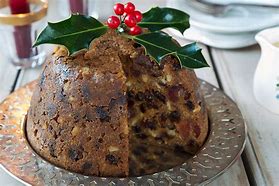
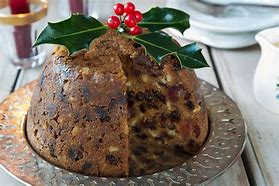
Forget Nigella Lawson: Jenny Marx’s Christmas Pudding recipe, December 1867
Yesterday evening we were all at home together sitting downstairs, which in English houses is the kitchen area from which all ‘CREATURE COMFORTS’ make their way up to the higher regions, and were busy preparing the CHRISTMAS PUDDING with all due thoroughness. We were seeding raisins (a most disagreeable and sticky task), chopping up almonds and orange and lemon peel, minutely shredding suet, and with eggs and flour kneading together the oddest potpourri from the whole mishmash;
Jenny Marx to Kugelmann 24th Dec 1867
It’s not recorded what Karl Marx thought of it, or if he preferred stollen…
From Henry Mayhew to Engels. Christmas, Plum Pudding & seasonal labour
The Plum Pudding was a staple of the Victorian Christmas, even for the poor. Henry Mayhew described how much seasonal employment the pudding and decorating them with holly provided. Engels was also clearly a big enough fan, of the pudding and the holly, to send on to Germany as a Christmas present.
It’s a reminder how much the seasonal trade in December was relied on by those who knew that the months of January and February would be tough.
Victorian capitalism and capitalism in 2024 both rely on a casualised labour market. We still eat lots of plum pudding too- it’s another name for the Christmas pudding, and signified simply that dried fruit was involved. On the market for holly I’m less sure
“Well, then, consider,” said another informant, “the plum-puddings! Why, at least there’s a hundred thousand of ’em eaten, in London, through Christmas and the month following. That’s nearly one pudding to every twenty of the population, is it, sir? Well, perhaps, that’s too much. But, then, there’s the great numbers eaten at public dinners and suppers; and there’s more plum-pudding clubs at the small grocers and public-houses than there used to be, so, say full a hundred thousand, flinging in any mince-pies that may be decorated with evergreens. Well, sir, every plum-pudding will have a sprig of holly in him. If it’s bought just for the occasion, it may cost 1d., to be really prime and nicely berried. If it’s part of a lot, why it won’t cost a halfpenny, so reckon it all at a halfpenny. What does that come to? Above 200l. Think of that, then, just for sprigging puddings!”
Henry Mayhew, London Labour and the London Poor
Engels to Philipp Pauli 16th Dec 1876
Yesterday I sent you, carriage paid, per CONTINENTAL PARCELS EXPRESS and thereon per German Imperial parcel post, a crate addressed to: Dr Pauli, Mannheim (Chemical Works, Rheinau),
Germany, containing a PLUM PUDDING for your wife, a currant cake baked for you by my wife, a book, a small box of handkerchiefs and a small ink-pot for Pumps….
…..The small crate also contains some Christmas evergreen, holly with its ritual red berries, for sticking into the pudding when it’s dished up. The holly’s right on top, so that the customs men get their fingers pricked.
From Scrooge to Royal Mail’s Simon Thompson. What Happened Next?
Dickens wrote A Christmas Carol at speed and it was published on 19th December 1843. It sold 5,000 copies before Christmas Day that year- in a decade that was known as the ‘Hungry Forties’. The similarities with modern Food Bank Britain are striking.
In Dickens’s book Scrooge runs a financial business in the heart of the City of London, off Cornhill, and the author takes us to his ‘counting house’ on Christmas Eve.
Scrooge is in one office and across the way is his clerk Bob Cratchit. The office is barely heated, Scrooge being frugal in most things.
Scrooge comes across people collecting for the poor at Xmas and asks them why this was necessary given that Workhouses existed.
The charitable collector tells Scrooge of the Workhouse that ‘many can’t go there, and many would rather die’. To which Scrooge responds ‘if they would rather die, they had better do it and decrease the surplus population.
Scrooge only reluctantly allows Cratchit ‘the whole day’ off on Christmas Day, before retiring to his nearby lodgings, after dining at a City hostelry.
While the Christmas Carol was a best seller it was not universally well received. Liberal economists, these days known as neo-liberals, complained that while it was all very well making sure that the Cratchits got a Christmas dinner, there was a finite supply of turkeys and plum puddings. It sounds like a Tory Brexit Xmas.
‘If they got these items then someone else would not. Surely it should be up to the market to determine how these things work’ was the view of liberal ideologists in the 1840s.
Dickens was telling a Christmas story but he was also making a political point. He was attacking an economic and political system that saw society as defined by rich and poor with the wealthy rightly doing better than others.
If we look at 2022 we can see any number of Scrooges at work. One example is the Chief Executive of the Royal Mail Simon Thompson.
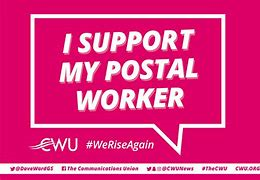
Mr Thompson wants to turn the Royal Mail into a parcels business where it faces any number of competitors and move it away from post-delivery. Yet no one else does that, Royal Mail has a unique advantage in that area and it has a legal service obligation to every UK address to back it up.
Dickens never suggested that Scrooge was bad at business. Scrooge no doubt, before the visitation of the Christmas ghosts, would have argued the frugality was the key to keeping his business going. Keeping heating and staffing costs under tight control being central to it.
Yet Simon Thompson shows no signs of being any good at business but is eager to copy all the worst aspects of Scrooge.
The Communication Workers Union has reported that in some cases managers are refusing to authorise pay for workers who have to take time off because they are unwell. Here we find a direct echo of the Scrooge mentality. He is annoyed that he has to pay Bob Cratchit for a whole day- Christmas Day- when he would not be working.
His response, again familiar from the Royal Mail, is that Cratchit had better make sure he attended work early on Boxing Day, no doubt to catch up with work that should have been done the day before. That also is an echo of Simon Thompson’s frequent, if changing, demands that posties alter their working patterns to suit the demands, and profit requirements of the moment.
The answer to the Scrooges and the Thompsons of this world is to unionise and face down their liberal market schemes.
Dickens in Hard Times, which featured the 1854 Preston Lock Out was aware of trade unions but not a particular advocate of them. However the conclusion to a Christmas Carol does suggest a related form of redemption.
Scrooge of course is visited by three ghosts who make him aware of the error of his ways and how things could be better.
Hence it was that Scrooge not only raised Cratchit’s salary but got coal in to warm his office and then took him for a seasonal drink in a City pub. Perhaps the CWU action of 23rd and 24th December will have a similar impact on Simon Thompson- a reminder of the mess he has made and how it can be sorted out
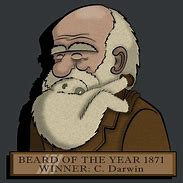
The Beard Liberation Front, the informal network of beard wearers, has said that voting in the final for the coveted Beard of the Year title is underway. The 2021 winner, author and broadcaster Michael Rosen will face off against three contenders.
In the first semi-final Benjamin Zephaniah and Alexei Sayle went through to the Beard Off final.
In the second semi-final Moeen Ali and Michael Rosen shaved opponents
The Award was first given in 2000 when the late Frank Dobson won. Author and broadcaster Michael Rosen won the on-line poll in 2021.
A longlist has been shaved to a shortlist and after two semi-finals and a final the winner will be announced on 28th December
The campaigners say that the criteria for inclusion on the longlist remain the same as in previous years:
A nominee must have had a beard for most of the calendar year
The beard wearer must have provided a positive public image of the hirsute
Beard lengths and styles are not taken into account.
BLF Organiser Keith Flett said, we’re moving into the follicle frenzy part of the year. We expect competition for the coveted Beard of the Year title to bristle
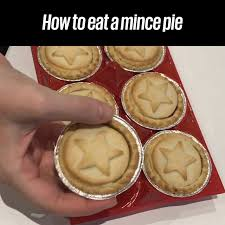
December is the season for mince pie eating, but it can provide particular challenges for the hirsute.
The Beard Liberation Front has identified two key issues:
Icing sugar in the beard: this can have the effect of turning it prematurely white and can be difficult to remove. It may also lead to white beard syndrome and people shouting ‘Oi Santa’ at you.
Pastry flakes and crumbs in the beard: If this occurs it is guaranteed that any pogonophobe within 100 metres will shout ‘oi mate you’ve got the remains of your breakfast/lunch etc in your beard’.
There are several ways of avoiding the issues above:
1] Wear a special mince pie beard snood
2] Focus on eating only beard friendly mince pies. In particular pies where the ratio of filling to pastry lies with the former are likely to be more beard friendly.
3] If time and culinary skills allow you can of course make your own beard friendly mince pies
The Beard Liberation Front continues to research the beard friendly mince pie.
BLF Organiser Keith Flett said, there are some reasonably beard friendly mince pies out there but the hirsute need to choose carefully. For the unwary eater icing sugar and pastry flakes in the beard can be a serious concern