Mark Littlewood, key advisor to Truss on her Premiership & the pizza question
Mark Littlewood formerly an advisor to Dave Cameron and now of the Institute of Economic Affairs was a key advisor to Liz Truss during her 44 day Premiership.
His views on her and his policies are carried in a Financial Times analysis of the Truss weeks (10th December)
You might have the recipe for making the most perfect and delicious pizza, but if the chef is hubristic or crazy or incompetent you are not going to end up with a particularly tasty pizza. Does that mean you shouldn’t eat pizza again? No, it just means you shouldn’t eat pizza cooked by that chef’
The Proletarian Wedding of the Season: Tracy to marry Jazzer
The Archers focuses far too much on the Archers. While the Ambridge Socialist has significant reservations about marriage- civil partnership may be better- the mooted wedding of Tracy and Jazzer will be the proletarian wedding of the seasob
Ben: Mental Health matters
Ben Archers mental health crisis continues and no doubt will continue for a while. Such matters take time to be addressed and hopefully resolved. Of the Dynasty Elizabeth has previously suffered from depression but for a member of the ruling dynasty on the male side to suffer mental health issues underlines that it can and does happen to anyone
Cost of Living and keeping warm in Ambridge
As everywhere there is a focus in Ambridge on keeping warm and how much it costs. The Bull continues to invite people to stop by and warm up with a tea and biscuits at least until Kenton next checks his energy bill. Meanwhile there are logs to be found at the rewilding project. They are free but taking them is illegal. A dilemma for the proletarians of Ambridge in the cold weeks to come
In Other News
Joy and Mick are becoming more friendly even though the hot tub is out of commission
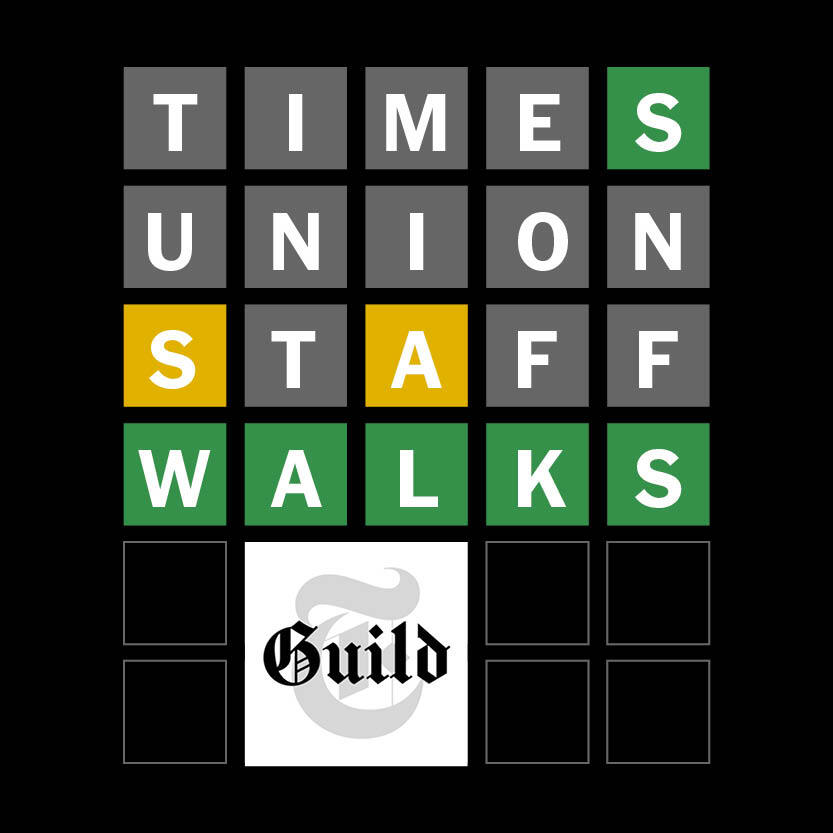
Beyond the New York Times dispute, Wordle: the digital picket line
Earlier this week journalists at the New York Times took a one day strike over pay and conditions. The action organised by the New York Times Guild mobilised large numbers. Let’s hope the NY Times recognises their legitimate issues.
As part of the action the Union asked people who do Wordle, the on-line word puzzle, not to do so. Because of time differences this meant Thursday and Friday. Did it work. Somewhere someone will have the figure for how many logged on to Wordle on those days but I certainly noticed fewer people doing it and reporting the result on twitter.
It raises the wider question of whether digital picket lines can work. Just as in a physical picket line scabs can sneak in or just cross the line, when someone is working from anywhere, it can’t be certain they are respecting the picket unless they post something on-line. Either a solidarity message or evidence they are ignoring it.
If the latter this can clearly be noted and raised. The weakness of the digital picket line is that its more difficult to enforce than a physical one. The strength is that it can be global. Work in progress
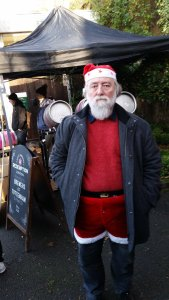
The Campaign for Real Santas, which promotes Santas with genuine organic beards, has warned about an increasing amount of pogonophobia, irrational dislike of beards, as the Santa season gets into full swing.
The Campaign says it has found numerous examples of men with white or grey beards being shouted at as ‘Santa’ and generally ridiculed.
The Campaigners say that while unemployment and under-employment amongst mature men over 50, means there is absolutely no reason for anyone to use an assistant Santa who does not have a real beard, nor is that any reason why people in this category should automatically be assumed to be Santa
CFRS organiser Keith Flett said, the rise in what we might call Santa-phobia is concerning. Not every man with a beard is Santa and while a certain amount of name calling may be seen as just a bit of fun, it is clearly going too far in many cases at the moment.
The Organic Santa of 2023 will be named on December 18th
The Campaign for Real Santas is organised by the Beard Liberation Front
Parliamentary Beard of the Year: the final Beard Off vote
The Beard Liberation Front, the informal network of beard wearers, has said that the final Beard Off vote for the Parliamentary Beard of the Year 2022 is open.
Eight candidates attempted to shave each other for the coveted annual accolade. Jeremy Corbyn received the award in 2021 for a record ninth time. He now faces three other MPs for a place in the final.
Former Cabinet Minister Sajid Javid failed to make the final cut with Colum Eastwood and Andy McDonald winning the first close shave round. Jeremy Corbyn and Toby Perkins won the vote in the second round
The winner of Parliamentary Beard of the Year will be announced on 14th December
BLF Organiser Keith Flett said, Jeremy Corbyn may have won the Parliamentary Beard of the Year vote nine times but past performance is no guide to present success. It’s the impact of his beard in 2022 that counts here.
Parliamentary Beard of the Year 2022
Jeremy Corbyn, (Independent Labour, Islington North)
Andy McDonald (Labour, Middlesbrough)
Jon Trickett (Labour, Hemsworth)
Andrew Stephenson (Tory, Pendle)
Colum Eastwood (SDLP, Foyle)
James Duddridge (Tory, Southend)
Sajid Javid (Tory, Bromsgrove)
Toby Perkins (Labour, Chesterfield)
Voting will start in early December. Two preliminary close shave rounds will provide four finalists for a Beard Off round with the result announced on 14th December
Parliamentary Beard of the Year. Final Beard Off Vote
Charles Dickens Victorian Christmas in London: Then & Now
It is a commonplace that the present Government has it in mind to take the country back to the 1950s, pre the 1956 Suez debacle that signalled the start of the public slide for British imperial power obviously. How successful they have been can be debated, but there is also a sense that, pace Mrs Thatcher’s Victorian Values, another agenda is to return to the highpoint of early to mid- Victorian capitalism in the 1850s and 1860s.
It is difficult to get away from the reality of what has been created since 2010 in the name of a more flexible labour market, of the kind that was first trialled in the 1830s.
It is not just food banks, for which numbers of people actually in work have to rely at some point.
The more difficult parallels are the casualization of labour and the winter night shelters. It is hard to think of two things that better characterise Victorian London in the winter months.
In the Victorian summer many worked in agriculture (limited numbers now do). When the weather turned colder, and Raph Samuel’s masterful essay Comers and Goers documents this very carefully, many turned to the City and London, the Great Wen, in particular.
They came first of all to look for warm places to sleep. These were often railway arches or the nooks and crannies of large buildings that can still be found in central London but the night shelters were opened during November depending on the weather. Secondly they came to try and find casual work. If they could not there were soup kitchens to stave off starvation for most.
Winter night shelters are still very much a feature of London in winter 2014 though the numbers using them will certainly be many fewer than in Victorian times.
In fact the Christmas period was the best of the winter season for those seeking casual employment even 150 years ago. It was after the festivities had ended in January and February that things started to get really tough.
London in December by the 1860s had started to become a significant place of Christmas activity and commerce and the more so as the Victorian era wore on.
As those with money spent it and enjoyed themselves, those without money could at least earn a little by helping the process along.
As Samuel notes the development of Christmas as a ‘spending season’ provided for street sales of novelties and holly and mistletoe. He argues that London in December was a ‘paradise of odd jobs’ whether helping scene shift in pantomimes or haul seasonal post.
However in a sense Dickens’ Scrooge and his clerk who was expected to work at Christmas were atypical of the period. The job had long hours, low pay and poor conditions but it was a regular job.
By contrast much mid-Victorian labour was irregular or casual- certainly if it lacked any skilled element- and the parallel with our own times is growing stronger by the year.
As Samuel noted ‘Christmas was the winter harvest for the wandering tribes. When it was over things changed for the worse. January and February were bad months for the working man’.
Of course the idea of the 1945 welfare state was to remove this uncertain hand to mouth existence dependent on the weather and on finding some kind of job tramping from place to place.
Do you remember the strikes of the 1970s? It’s keeping The Times awake at night
You may old enough to recall the strikes of the 1970s. If so you’ll know that the strikes of 2022 while the largest in recent years, are not yet on that scale.
The Times however is seized by a concern that the 1970s are returning. In February 1974 Tory PM Ted Heath called an election on the basis of who ran the country, the Government or the unions. The electorate backed the unions.
Earlier in the week the paper claimed that Communists are behind rail and post strikes. Harold Wilson claimed in 1966 that a tightly knit group of politically motivated men (one of whom was John Prescott)were behind a national seamen’s strike. The world has moved on. Communists are of course still active in the labour movement but they are not directed by Putin who is very far from being a Communist.
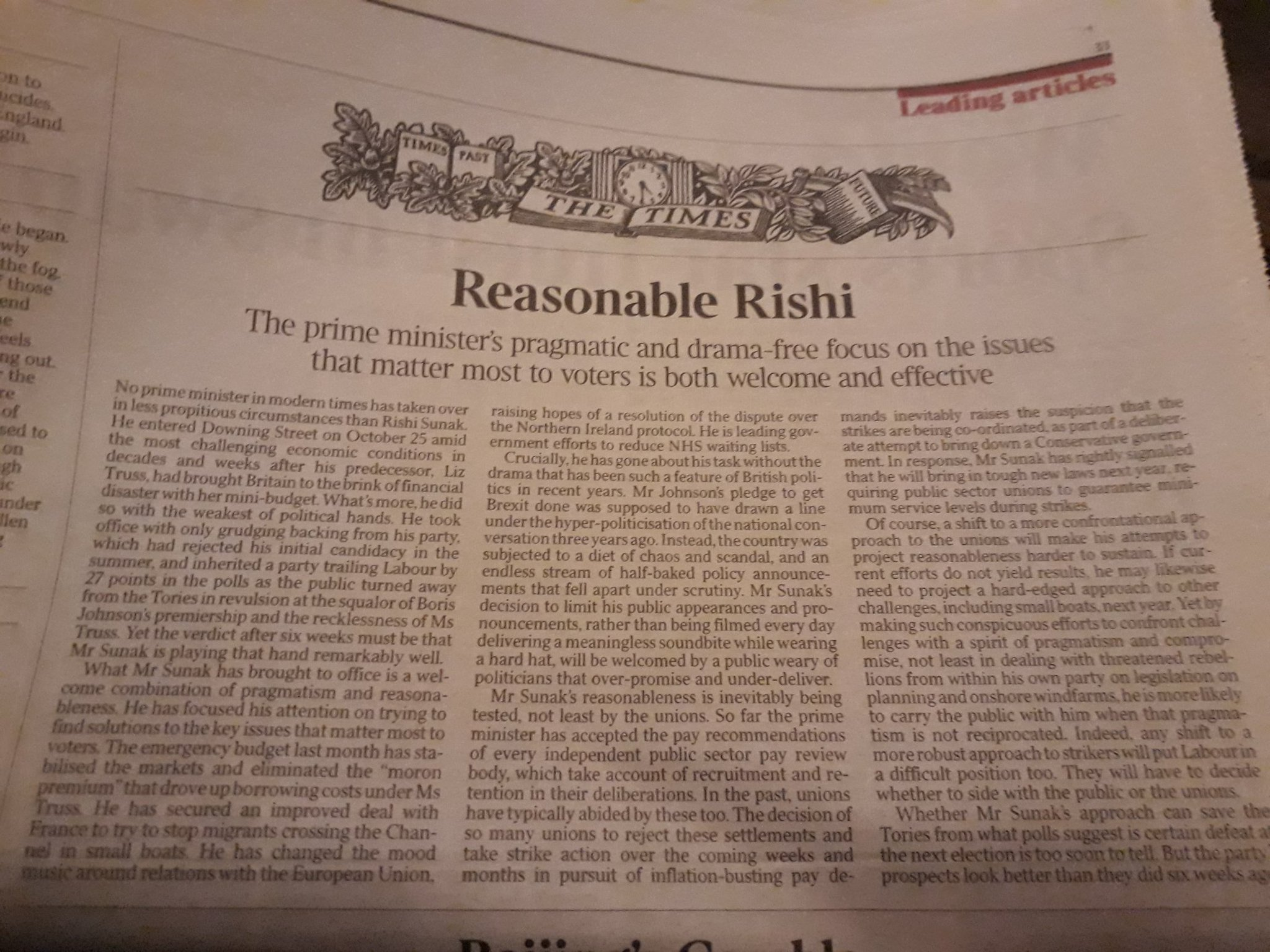
The Times refers to the PM as ‘reasonable Rishi’ (Editorial 9th Dec)because he wont meet unions ‘inflation busting’ wage claims. It has clearly missed that food price inflation is well over 10%. It also claims that union leaders are orchestrating strikes to bring down the Tories. It might be noted that Tory class warriors are orchestrating attempts to resist industrial action democratically voted for in secret ballots by union members. And union leaders don’t get a vote..
Industrial Action & the Cost of Living: A lot done, a lot still to do
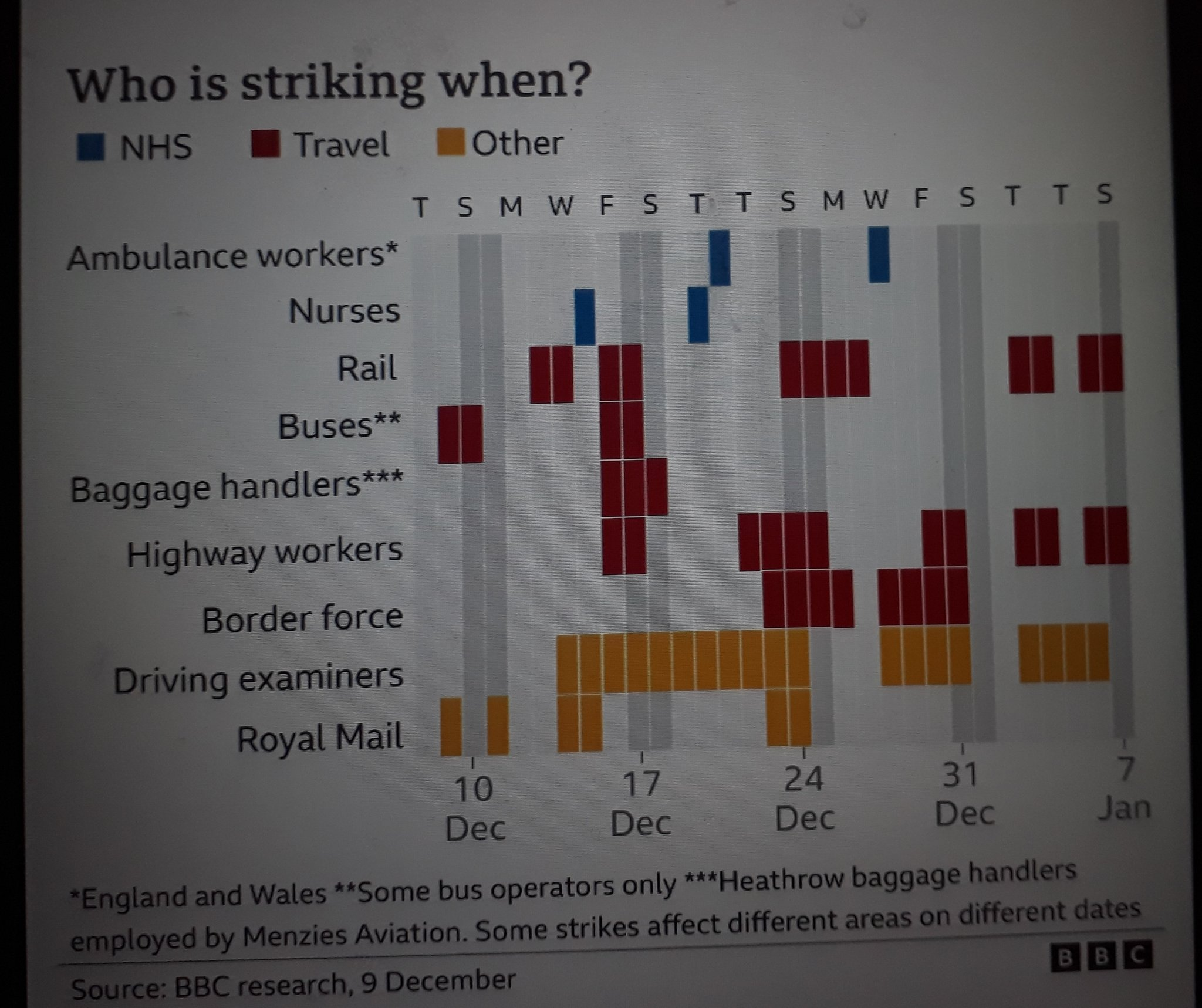
The BBC has published a graphic showing tne range of national strike action in December 2022. Of course there are lots of other strikes at employers around the UK mainly addressing the cost of living and many of these end in a decent result.
The big national action from the CWU, RMT,ASLEF, RCN,GMB and PCS has found making headway more difficult because the Government ultimately holds the purse strings. While settlements could be reached the Tories appear intent on class war and talk of further legislation to limit strikes, while also admitting that this will have little impact or even promote further action.
Yet as the socialist economist James Meadway has pointed out in no year since 1990 have days lost to strikes exceeded 1.4 million whereas before then they invariably did. 2022 has been a peak but still not breaking the post-1990 picture.
Part of the reason for this is the big national actions have been discontinuous. This means that the employer still faces an impact but workers lose less money than with an all out strike. The problem is that momentum and pressure on the employer is less.
It is not a new debate but it’s one that needs to be had particularly at the grassroots of strikes
Qatar: beyond the football, human rights & power politics
The Sunday Times (27 Nov) carried an interesting analysis of the realities of the Qatar World Cup. The stadiums are far from full and the Qatar Government’s human rights record has come under fire.
No matter. The football has cost Qatar a lot of money but it sits on a gas field. In the context of the war in Ukraine that is proving very profitable. Behind the football has been the imperial reality. Diplomats and politicians have been watching games and dining in restaurants. The Qatar take on politics is arguably towards the Taliban end of things, certainly sympathetic to the Muslim Brotherhood.
That has caused issues in the past but not now. The ST reports that Qatar has the largest US base in the Middle East and is regarded as its key ally in the region beyond Israel and Saudi. Britain also has a military presence, particularly the RAF
In short it can be understood why the World Cup ended up in Qatar- power politics
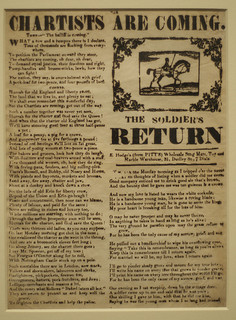
The Chartists on Kennington Common on Monday April 10th 1848. It didn’t snow but there were heavy rain showers in the afternoon as befits April legend.
Hurrah for old England and liberty sweet,
The land that we live in and plenty to eat;
We shall ever remember this wonderful day,
The Chartists are coming, get out of the way.
The Chartists are Coming, Ballad, 1848
According to the weather forecast there may be a chance of snow in London before Chistmas. The forecasts are made by professional weather forecasters, often trade union members of the professional’s union Prospect, they both deserve to be taken seriously and are highly likely to be accurate.
That said you don’t need a weatherman to tell you that in recent times it has snowed infrequently in the Capital. A northern colleague said to me recently that despite it being the middle of winter if it does actually snow in London it will be headline news.
The inability of perhaps particularly London to cope with even modest amounts of snow is legendary.
The expectation of snow in London is one of the great things of London life nevertheless. People peer anxiously out of windows for signs of snow and search for reports of approaching snow (these days much easier to find with social media). In the mid-nineteenth century London, 170 years ago, when it snowed a lot more than now, it was the Chartists who got people looking out of windows, checking for any sign of impending trouble.
Suffice to say that in the revolutionary year of 1848 the Chartists did indeed come, on April 10th 1848, but actually they were rumoured to be coming far more often than they actually arrived.
Snow and the Chartists two of the great imponderables of London life. Actually quite a lot of Londoners liked and like both of them.