Articles

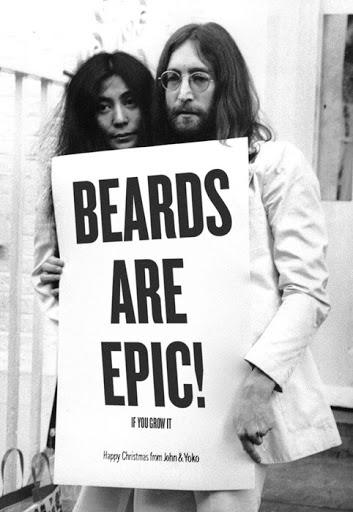
John Lennon 9th Oct 1940-8th Dec 1980. From Can’t Buy Me Love to Revolution

In Uncategorized on December 8, 2022 by kmflett

John Lennon 9 Oct 1940-8 Dec 1980. From Can’t Buy Me Love to Revolution.

John Lennon was shot and killed 42 years ago on 8th December 1980, aged 40.

In the days long before 24 hour news, social media, the interwebs and mobiles news travelled more slowly. I recall hearing of Lennon’s death at a trade union committee meeting in New Barnet. I was 24 and even that age slightly too young to have been around for the Beatles peak period in the sense of buying their records, at least until the late 1960s.

42 years after his death Lennon has passed into history himself now (20-30 years being one benchmark between history and the present broadly speaking). How he will be remembered by those who do remember him and those who don’t is an interesting question. The Lennon of Can’t Buy Me Love or the Lennon of Revolution? Or both perhaps…

The Beatles released the John Lennon song Revolution on 26th August 1968 and sat at No.1 in the charts for 12 weeks.

Revolution was the ‘b’ side to a rather better-known Beatles song, Hey Jude. If that song has primarily endured as something that audiences at major events worry Paul McCartney may pop up and try to sing, Lennon’s thoughts on revolutionary politics remain of interest.

The chronicler of Beatles songs, the late Ian McDonald, noted that the musical range that spanned Lennon’s earlier song, I Am the Walrus, and Revolution was unmatched by any post-1945 musician.

The song was rejected as an ‘A’ side officially because it was too slow but really because McCartney, at that time, regarded it as politically controversial. The singer later changed his position and released Give Ireland Back to the Irish, as a single which was promptly banned by the BBC. Revolution never was.

Revolution was recorded in May 1968 as the Paris ‘nights of the barricades’ reached their peak. However alternative and longer versions of Revolution appeared on the Beatles White Album.

But it was not the music of Revolution, essentially a slow blues, that caused comment and controversy but the words.

In particular debate centred around Lennon’s words that ‘when you talk about destruction’ you can ‘count me out’ which on an alternative version he sang as ‘count me in’.

Those used to British TV in the 2020s may be slightly amazed that a video of the Beatles performing Revolution was aired on the BBC’s Top of the Pops in September 1968.

Lennon’s drift in the song was that change in society had to come through ‘peace and love’ rather than a more combative approach to capitalism.

It was not well received by the left, which considering the furore it caused on the right was unfortunate for Lennon.

Lennon was clearly alive to the Beatles main audience in 1968, a worldwide one of youth who were rapidly becoming radicalised.

The Rolling Stones had very much the same idea with Street Fighting Man, a song which now sounds distinctly odd when sung by Sir Michael Jagger.

Lennon’s track provoked an article in Time magazine and a critical response in song from Nina Simone that deserves to be better known particularly in the age of Black Lives Matter.

The British radical paper Black Dwarf attacked the peaceful sentiments of Revolution, provoking an exchange on revolutionary politics between Lennon and the paper’s Editors. In the US the new left saw it as a ‘betrayal’ of the movement and a ‘petty bourgeois cry of fear’.

Ian MacDonald nevertheless argued that the song was the first ‘crack in the Beatles corporate façade’, while, no leftist himself, going on to note that by 1987 Revolution was being used by a Nike in an advert to promote its training shoes.

Historical hindsight tells us that Lennon himself was a on a political journey, reflected in the words of the song and his indecision about whether he supported the ‘peace and love’ pacificism of the 1967/8 period or the harder revolutionary politics that began to appear as the 1960s drew to a close.

By 1970 the Beatles had split up and Lennon was in the US, often seen as a participant on left-wing demonstrations and reportedly funding left-wing campaigns. Certainly by that time the man who had sung Can’t Buy Me Love less than 10 years before was regarded by the FBI as a political subversive whose activities needed to be watched
Articles

Boycott of Wordle on Thurs 8th December in solidarity with New York Times writers

In Uncategorized on December 7, 2022 by kmflett

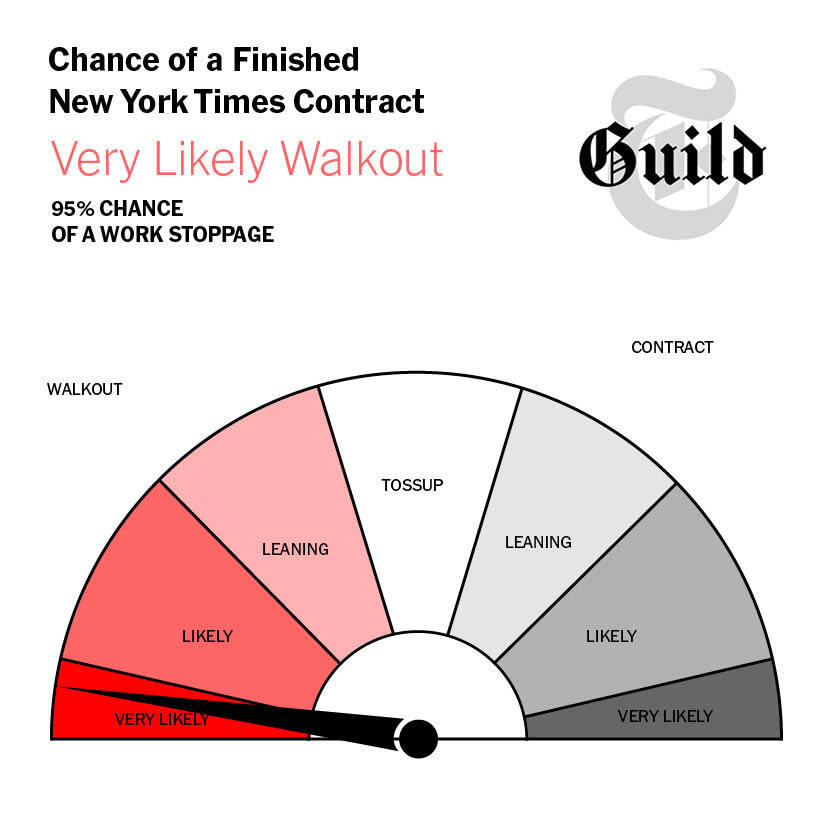
Journalists and writers at the New York Times are in dispute over attacks on their terms and conditions.

London is 5 hours ahead of NY time but one practical act of solidarity the workers are asking for is for people to break their Wordle streak on Thursday 8th December:

Barring a breakthrough, @nytimes staff will walk out from midnight to 11:59pm Thursday, Dec. 8. We’re asking readers to stand with us on the digital picket line and not visit any NYT platforms tomorrow. Read local news. Make something from a cookbook. Break your Wordle streak.

The union is @NYTimesGuild on twitter

Articles

Musk, Marx & Twitter: all that is solid melts into air

In Uncategorized on December 7, 2022 by kmflett

Elon Musk & Twitter: all that is solid melts into air..

Elon Musk who claims to be the world’s richest man (and also probably the most indebted one) has bought the social media site twitter.

In doing so he has sacked, often illegally, thousands of Twitter workers, and raised the question of whether it will continue at all.

As often with capitalism appearance and reality differ. Twitter is a free to use platform for anyone to raise and discuss more or less anything with limited constraints. That means it has numbers of racists and fascists using it, but also significant use by those from marginalised areas of society, which the mainstream media reliably ignores.

The Morning Star’s own Twitter account has flourished for example even to the extent that BBC related accounts tweet the front page of the paper to thousands, where otherwise the paper is deliberately ignored.

Yet as always in a market society behind this is a story of cost and profit. Twitter despite its huge number of users has not been profitable and efforts to sell advertising on the site have had limited traction. Reports suggest that efforts were being made to sell it to Facebook or Microsoft long before Musk appeared on the scene.

Musk has said that twitter should, in effect, be a virtual Town Square. That is a forum for the democratic exchange of views and debate. This seems a laudable idea in principle but ignores the reality of how to grapple with those who don’t respect the ‘rules’ of such debate, which often privilege the status quo.

It might be suggested that even if Musk’s idea for Twitter is a good one, he as a right-wing megalomaniac is not the person to be running it.

The point is not lost of course on Governments who have long been seeking to find ways to regulate twitter. Some of this is prudent. Racists and sexists often breaking national laws and pursuing individuals on the site do need to be pulled up, even if the current Home Secretary Suella Braverman thinks this is a waste of police time.

Governments also however want to deal with politically awkward material that can be found and linked to on twitter. Twitter itself for example has had a focus on preventing a good deal of reporting and discussion on Palestinian rights.

It might be asked at this point, what has all this got to do with labour history? Marx after all did not have a twitter account, and given his propensity to engage in robust debates with opponents on occasion, would probably have had his account suspended before too long.

Marx well understood however the difference between appearance and reality in market capitalist economies and societies and the difference between what the productive forces developed by capital could do, and what they actually did.

He summarised these points in a speech at a dinner organised by the Chartist People’s Paper at the Bell Hotel in the Strand on 14th April 1856

there have started into life industrial and scientific forces, which no epoch of the former human history had ever suspected. On the other hand, there exist symptoms of decay, far surpassing the horrors recorded of the latter times of the Roman Empire. In our days, everything seems pregnant with its contrary: Machinery, gifted with the wonderful power of shortening and fructifying human labour, we behold starving and overworking it; The newfangled sources of wealth, by some strange weird spell, are turned into sources of want.

Hence Elon Musk’s twitter. Potentially a source of democratic discussion and exchange. In actuality a loss making debacle

|This post originally appeared in the Morning Star

Articles

Guardian Fletter on the Chester By-Election, Parliamentary Democracy & Pressure from Without

In Uncategorized on December 7, 2022 by kmflett

Guardian Fletter on the Chester By-Election, Parliamentary Democracy & Pressure from Without

I frequently receive comments that I used to write letters to the Guardian. I still do. Below is one published on 7th December

Your editorial is right to suggest that Keir Starmer needs some more robust policies on the economy, perhaps similar to the ones he had when he stood as Labour leader. The Chester byelection, however, has a wider point. It was the Tories’ worst performance in the seat since 1832. That was the year of the Great Reform Act, and the subsequent general election was a Whig landslide. The act, which started the long process of turning Britain into a parliamentary democracy, was designed to fend off the likely alternative – a revolution.

When the governing party can only secure 22% in an election for a seat that it held for generations but is unwilling to call a general election, there is a democratic deficit. If this is not addressed in parliament, it will be in workplaces and on the streets.

Keith Flett

Tottenham, London

The full discussion is here:

Articles

Campaigners welcome Stephen Flynn, only Westminster Party leader with a beard

In Uncategorized on December 7, 2022 by kmflett

Beard Liberation Front

7th December

Contact: BLF Organiser Keith Flett 07803 167266

Campaigners welcome Stephen Flynn, only Westminster Party Leader with a Beard

The Beard Liberation Front, the informal network of beard wearers, has welcomed Stephen Flynn as the new leader of the SNP at Westminster.

The campaigners say that while Flynn’s beard is a work in progress it still marks him out as the only hirsute Party leader in Parliament.

BLF Organiser Keith Flett said, we don’t expect Rishi Sunak or Keir Starmer to be wearing a beard anytime soon so while Stephen Flynn is unlikely to compete for Parliamentary Beard of the Year, he still represents progress in beard history

Articles

Egg throwing: a great British tradition of protest from the London crowd of the 1790s to King Charles in Luton

In Uncategorized on December 6, 2022 by kmflett

Egg throwing: a great British tradition of protest from the London crowd of the 1790s to Charles in Luton

Egging has a long tradition in political protest

While Charles was the target of an egg in Luton today he can count himself part of a long British tradition.

E.P Thompson in the Making of the English Working Class records that when a perjurer was placed in the pillory in the 1790s the London crowd pelted him with eggs. Yet when a political radical suffered the same fate a few days later the crowd brought him glasses of wine to drink.

In more recent times egg throwing has been officially recognised as a legitimate protest. An anti-fascist arrested for throwing an egg at a National Front march in Wood Green in 1977, known as the ‘Battle of Wood Green’, was acquitted as the judge noted that it was indeed a traditional form of political protest.

John Prescott, who also egged on the campaign trail, didn’t agree (he whacked the egg thrower) but ultimately a point is made and no harm is done beyond making the person egged look silly and a dry cleaning bill.

Of course in the age of Suella Braverman as Home Secretary egg throwers are invariably arrested. She has no interest in or regard for the traditions of democratic protest and under her most recent Public Order legislation even loitering in the egg aisle of a supermarket would probably be an arrestable offence.

That said there is a wider politics here too. There is currently a shortage of eggs (even in Wetherspoons) due to avian flu and because supermarkets will not pay a market price to egg producers. Capitalism gets everywhere even to the politics of protest

Articles

Can Craft Beer survive the cost of living crisis?

In Uncategorized on December 6, 2022 by kmflett

Can Craft Beer survive the cost of living crisis?

Marx’s analysis of capitalism has several points which are relevant to the cost of living crisis and the current state of craft beer. Firstly that capitalism while promoting a free market ideology in fact tends towards monopoly. Secondly that it is a system based on crisis. In order for profit to be made there must regular clear outs of less efficient areas.

None of this helps if your favourite craft beer brewery or bar is struggling but given the wide impact of the cost of living crisis and the Government’s reluctance to do much to help SMEs there will unfortunately be trouble ahead.

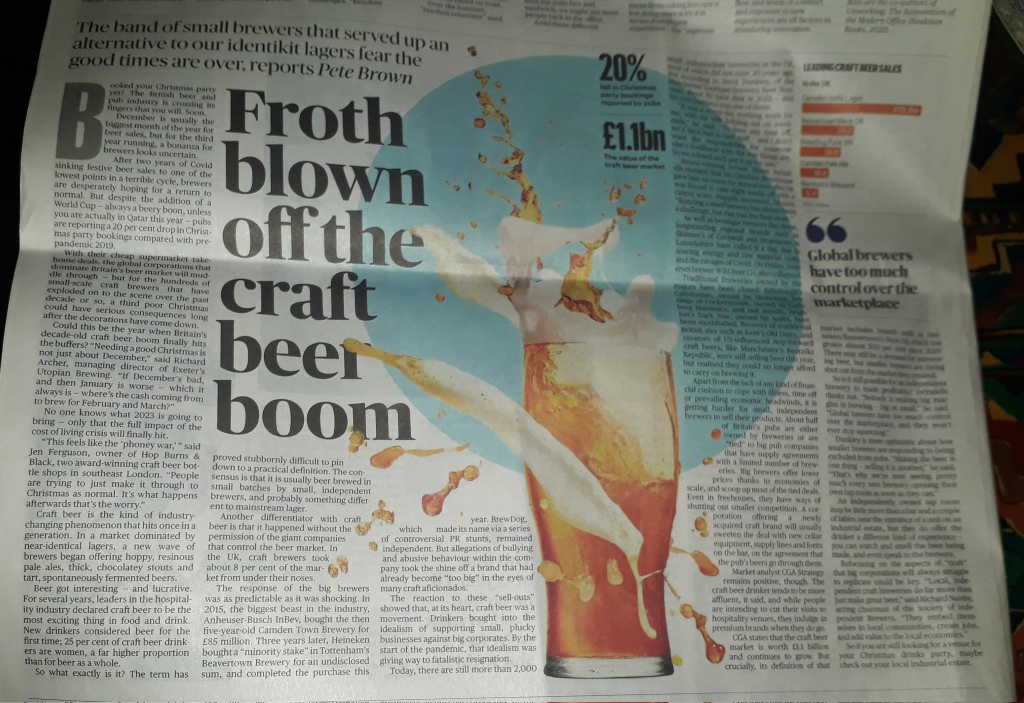
I don’t know if Pete Brown had his copy of Capital Volume One to hand when he wrote about craft beer for the Sunday Times (4th December, paywalled but see photo above) but his article certainly constitutes what nineteenth century radicals would have called really useful knowledge about the state of craft beer.

While numbers of small independent brewers and bars are struggling what many would see as craft beer thrive. I refer of course to the likes of Camden Helles and Beavertown Neck Oil, owned by global brewers ABInBev and Heineken respectively. There is nothing wrong with these beers. Quite the opposite. They are brewed at state of the art breweries in North London (tofu and copies of the Guardian optional)but this is big business. It’s a world away from the quirky craft beer operations designed to meet local tastes and experimenting with new styles that is what many (even those drinking Helles and Neck Oil) associate with craft beer.

The developing crisis has been underlined in the last few days with news that Wild Beer has gone into administration and Twisted Wheel in Warrington has decided its uneconomic to continue.

There are always specifics in such matters. Wild Beer crowdfunded to help build a new brewery in 2017 and raised well in excess of £1m. The brewery has however not been built, or even started, and those who invested are very likely to lose their money. The beer remains excellent and often ground breaking but the finances have looked doubtful for a while. Meanwhile Twisted Wheel started just before COVID in early 2020 and might reasonably be placed in the category of hospitality start ups that however good just don’t make it.

However the wider picture is that if the economy was doing well and people had money to spend such difficulties could have been overcome.

Craft Beer can survive the cost of living crisis but as Pete Brown concludes, this winter it’s a case of use it or lose it. Of course for many struggling to get by that will be an issue in itself. Why not organise to get a pay rise too?

Articles

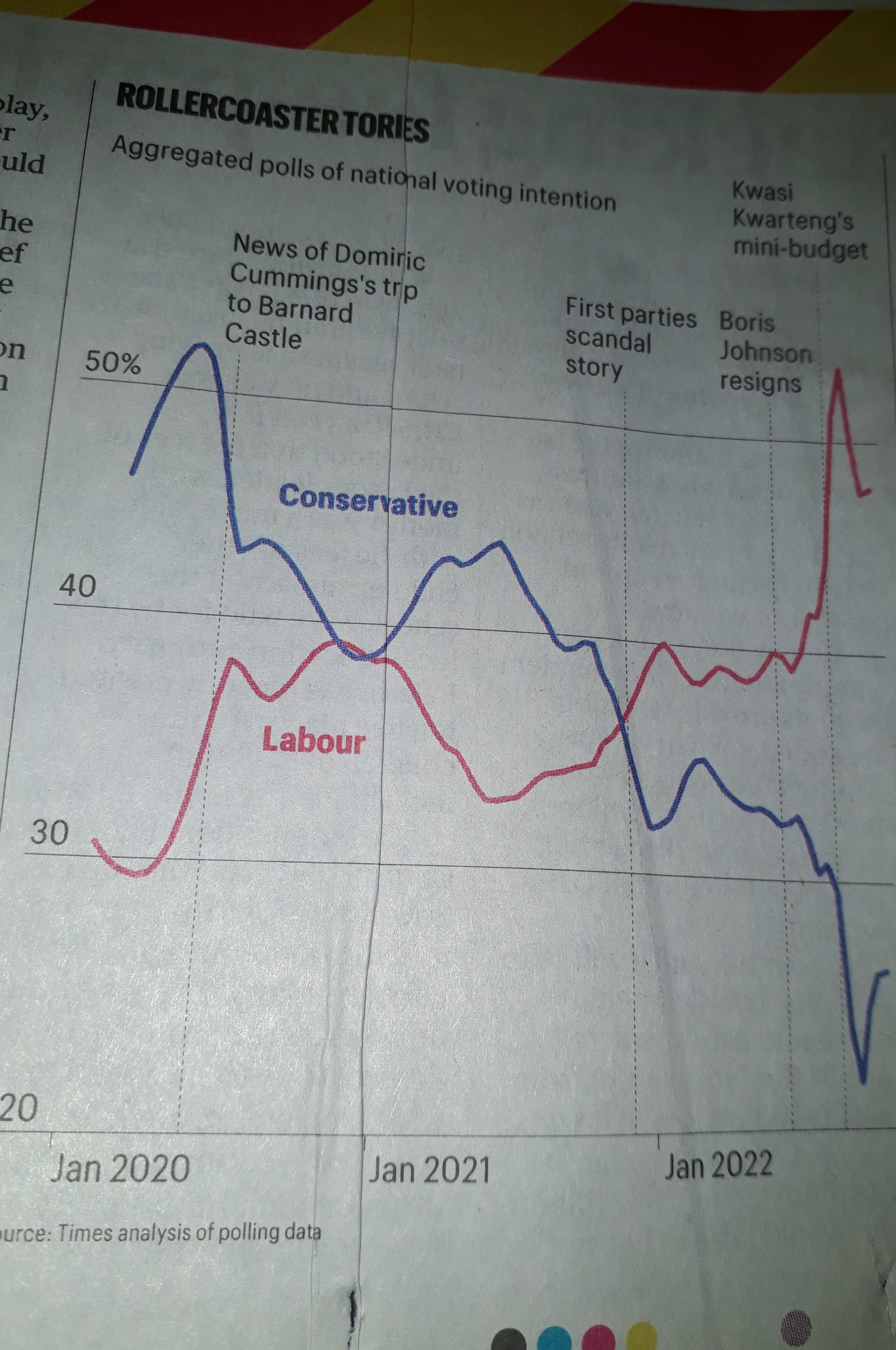
Origins of the Tories Present Poll Crisis: A Year Ago This Week

In Uncategorized on December 6, 2022 by kmflett

Sunday Times 4th December 2022

Origins of the Tories Present Poll Crisis: a Year Ago This Week

The Tories are currently reliably 20% behind Labour in opinion polls. They have not been ahead since this time last year. This week marks the media expose of Boris Johnson’s December 2020 Christmas parties which under then lockdown laws were almost certainly illegal

Boris Johnson when he was the elected leader of a political party didn’t  really seem that interested in doing the job. By contrast he was and no doubt is a great enthusiast for another kind of party-the one involving champagne and nibbles (tbh sausage rolls and crisps don’t cut it). Sonia Purnell’s biography of Johnson, Just Boris, has numerous accounts of parties he has attended. A lot were thrown by his erstwhile employers the Spectator and the Telegraph. When he was married to Marina Wheeler and lived in Islington he was also, according to Purnell, a frequent attender at dinner parties.

When he was elected London Mayor in 2008 he threw his own parties(paid for by the taxpayer obviously) and in that year The Tatler described him as ‘party viagra’.

Johnson did not deny that a Christmas party was held at Downing St in December 2020, the one that started off the whole parties investigation. The Daily Mirror published a picture of the Christmas Quiz which took place via Zoom on 15th December 2020 which clearly shows an open bottle of champagne. No problem with that except in the context of the times when COVID laws banned social mixing in London. It clearly was not really a work event either but a social quiz.

What though of pre-restrictions 2019. Johnson had just won an Election and was celebrating.

According to the perhaps not totally reliable source of Tom Bower (Boris Johnson, the Gambler) on Friday December 13th after returning to Downing St from Buckingham Palace where he had seen the Queen, Johnson headed to Brown’s hotel off Piccadilly. The hotel is owned by Brexiteer Rocco Forte and a celebration party was being held.

One party however was not enough for Johnson. He then went to Evgeny Lebedev’s ‘traditional’ Xmas party which was in his house overlooking Regents Park. Unlimited caviar and champagne were available. In 2020 Johnson made Lebedev a Peer..

One wonders what Johnson has planned for Christmas 2022. We can be sure he won’t be paying

Articles

The House of Lords has been abolished before, in March 1649

In Uncategorized on December 5, 2022 by kmflett

The House of Lords has been abolished before, in March 1649

As part of a plan to democratise British politics and to an extent decentralise it plans brought forward by Gordon Brown and Keir Starmer today propose the abolition of the House of Lords and its replacement by an elected second chamber. We have been here before and not just after 1997 when Tony Blair also promised reform. In the end this ended up meaning fewer Peers but the Tories have since expanded the number again with any number of what most charitably might be described as eccentric figures and trough eaters.

However in March 1649 Oliver Cromwell did abolish the Lords, as a period of Republican Government to 1660 was ushered in following the execution of King Charles 1st in Whitehall on 30th January 1649.

Cromwell was by no means unfriendly with at least the Peers who had backed his battles with the King but came to regard them in general as an obstacle. Abolition of the Lords was one of the democratic and radical demands of the Levellers and one of the few Cromwell implemented.

During the 1650s Cromwell experimented with various kinds of, usually far from radical, Parliamentary Government. However by 1657 he had come to the conclusion that the rule of the Commons alone could lead to arbitrary decisions, often those demanded by senior figures in the Army.

Cromwell planned the Other House consisting of 62 men who represented a far wider geographic spread than the Lords had. They were all appointed but they were all Life Peers. The Hereditary Principle was abolished.

Cromwell needed the Commons to work with the Other House which they declined to do and 342 years on we are still waiting for any kind of democratic second chamber. Whether Keir Starmer gets round to doing something neither Cromwell or Blair couldn’t manage will be interesting to watch

Articles

From Goblin mode to Hobgoblin: still stalking Europe

In Uncategorized on December 5, 2022 by kmflett

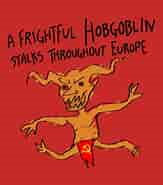
Goblin mode is the Oxford term of 2022 but a ‘frightful hobgoblin’ is still stalking Europe

“goblin mode”, is a slang term describing “unapologetically self-indulgent, lazy, slovenly, or greedy” behaviour. It has been voted Oxford term of the year 2022.

Goblin or Hobgoblin is not a phrase that says anything positive but it can depend from which perspective you are viewing it from

Clearly horse loving Tory Chair Nadhim Zahawi thinks a goblin is holding sway in Europe in the form of Putin. Putin though is much more a Tsar than a General Secretary. The hobgoblin ‘stalking’ Europe are workers taking action on the cost of living crisis

The opening line of the Communist Manifesto talks of not a ‘spectre’ haunting Europe but as the original English translation by Helen Macfarlane in the Chartist Red Republican paper in November 1850 had it, a ‘frightful hobgoblin’ stalks Europe.

BBC Report