Tony Benn from 1985 on why energy production must be in public not private hands
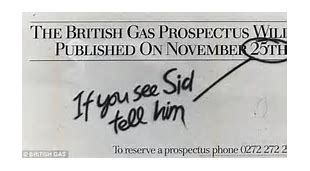
So far there has been no mention of the fact that many people look to gas for security of supply, high levels of maintenance and repair and high levels of safety at a price that they can afford. During this winter, as with every other, many people will be wondering whether they will be able to pay their gas bill when it arrives later in the year. As is well known, people die every winter from hypothermia simply because they cannot afford to pay the price of fuel. Therefore, to look to this industry as a way of making more profit, rather than of meeting a need, shows the real motivation behind the introduction of the Bill.
Once again on The Royals & feudal employee relations
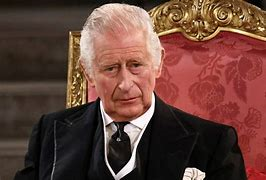
The Guardian broke the story during the period of official mourning for the Queen that numbers of people working for King Charles at Clarence House had been served with redundancy notices. The notices carried the usual employment law rubric that those impacted might be redeployed into other roles or offered enhanced redundancy. The question remains why Charles, now one of the world’s wealthiest individuals, needs to make anyone redundant. Much of the work he had oversight of around the Duchy of Cornwall and as Prince of Wales will now be taken over by William who clearly doesn’t have people on hand to do it.
The story developed further when the Murdoch Times (15th September) that numbers of workers at Buckingham Palace faced redundancy since they had ‘death’ clauses in their contracts that stipulated that their employment ended with the death of the existing Monarch. It sounds feudal and it is. The same or very similar roles will exist under King Charles. No doubt however he wants to bring an entourage with him from Clarence House (those he isn’t sacking).
The Guardian has now reported that 20 employees directly impacted are those that worked for the late Queen. They may be harder to redeploy or prefer to take a leaver payment but the choice should rest with them
The Royals actions hardly speak of good employment practices with fair competition for roles and a commitment to a diverse workforce.
Some Royal Employees are already unionised. After the events of September, others may well be signing up. The reality behind the Royal pomp and circumstance is distinctly shabby
Still reading history beyond Kings and Queens. From Bertolt Brecht to Michael Rosen
The events of September have raised questions of history and historical perspective for some. The German writer Bertolt Brecht wrote on this and Michael Rosen has provided a contemporary view on his blog:
It ihis s reported that Keir Starmer wants the national anthem, God Save the King, sung at the start of this week’s Labour Conference. One might call it perfomative politics.
Both verses were sung a the funeral of Queen Elizabeth on Monday and hawks have called for this at the Labour Conference (the first verse only is usually sung).
The anthem dates to 1745 but there are no authorised words. The current second verse is bowlerised from the controversial words traditionally sung. The lines starting ‘scatter his enemies’ were aimed at supporters of the French Revolution and republicans, hence making the anthem more than a desire to preserve the monarch.
E P Thompson makes the point in the Making of the English Working Class that it was not so much supporters of the French Revolution that concerned the authorities as the popular mood that developed amongst working people determined to claim their rights. One might think this is in part where the Labour Party a century later came from.
Whether the hawks who want both verses of the anthem sung have this in mind we may well find out
God save our gracious king Long live our noble king God save the king Send him victorious Happy and glorious Long to reign over us God save the king O Lord, our God arise Scatter his enemies And make them fall Confound their politics Frustrate their knavish tricks On Thee our hopes we fix God save the king Thy choicest gifts in store On him be pleased to pour Long may he reign May he defend our laws And ever give us cause To sing with heart and voice God save the king Not in this land alone But be God’s mercies known From shore to shore Lord make the nations see That men should brothers be And form one family The wide world o’er From every latent foe From the assassins blow God save the king O’er him Thine arm extend For Britain’s sake defend Our father, prince and friend God save the king
Taking the waters. September 1874. Marx to Engels on a daily diet of spring water, coffee & pilsner
Marx suffered ill health for much of his later life and became keen on water cures. He visited spas at Buxton and Harrogate and in September 1874 visited Karlsbad to take the waters.
MARX TO ENGELS IN LONDON
Karlsbad, Austria, 1 September 1874 Germania, am Schlossberg
Dear FRED,
By next Wednesday I shall have been here for two weeks and my powder, ALIAS MONEY, will just suffice for a third week. If you should write to me, please use the above address, but put Miss Eleanor Marx on the envelope. The cure has done wonders for Tussy; I am feeling better but my insomnia has not yet been overcome.
We are both living in strict accordance with the rules. We go to our respective springs at 6 every morning, where I have to drink seven glasses. Between each two glasses there has to be a break of 15 minutes during which one marches up and down. After the last glass, an hour’s WALK, and finally, coffee. Another cold glass in the evenings before bed. I am not allowed to drink anything but pure Pumpenheimerb; Tussy, on the other hand, DAILY receives a glass of Pilsner beer, which makes me envious.
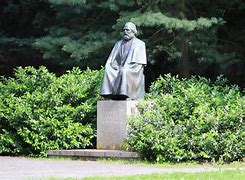
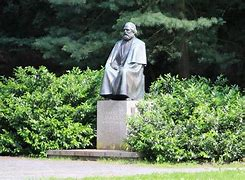
Marx was in Karlsbad taking a health cure. The town was well known for its water springs and its Pilsner beer. Marx clearly made an impact as there is a statue of him in Karlsbad
Labour Party Conference, their anthems & ours. God Save the King v The Roast Beef of Old England
With the appointment of Charles as King the reappearance of God Save the King as the national anthem is a given. It has already been sung on numerous occasions
There is a lot of history here. In the late eighteenth century there was an anthem war between Loyalists to the Crown and Jacobins who supported the French Revolution. This took place according to E P Thompson in the Making of the English Working Class in provincial theatres- places of entertainment and politics.
Loyalists sang God Save the King and radicals the more traditional anthem, the Roast Beef of Old England. Non meat eaters can relax here. The radicals were not eating beef. Thanks to what we call a cost of living crisis they couldn’t afford it. The basic diet was bread. The point was that there was a time when the poor could afford to eat beer.
Thompson reports an incident at a Sheffield Theatre in 1812. South Devon Officers ‘Church and King Bullies’ insisted on the singing of God Save the King. Thompson notes ‘the mobility in the gallery insisted on it not being sung’
Perhaps its time to reinstate the Roast Beef of Old England as the national anthem.
Perhaps a start would be at the start of this year’s Labour Party Conference. While Keir Starmer has tweeted nothing except Royals since 8th September, undoubtedly wears union jack underpants and is he claims a vegetarian, given that Roast Beef is really about the cost of living and is a genuine national anthem perhaps some delegates will sing it as opposed to the God Save Sir Keir has dictated.
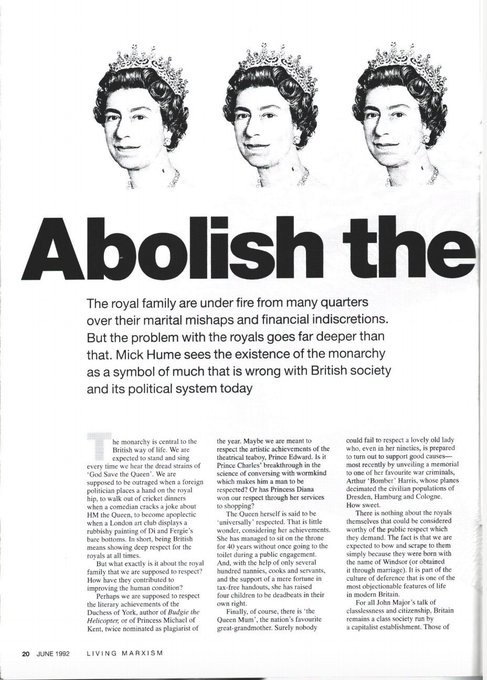
Living Marxism: from contrarians to conservatives & Royalists
The Guardian once printed that I was the Editor of Living Marxism, the glossy magazine, the Revolutionary Communist Party ran in the 1980s. Prudently they printed a correction the next day. I was not then and nor had I ever been the Editor of LM or a member of the RCP. I was of course a socialist beard and remain so.
Not so the RCP (they were never big on beards).In the 1980s they pitched up often as contrarians calling for a ballot in the miners strike and wanting to debate rather than no platform fascists.
LM and the RCP disappeared. While it may be pushing it to suggest that Spiked OnLine is a successor it does have some of the people and strikes quite a few of the same positions. Except over the decades a move has taken place from contrarianism(though that remains on display) to conservatism and indeed arguably Conservatism.
Lady (Claire) Fox who sits in the Lords was briefly a Farage-ist MEP and today Frank Furedi the RCP’s lead theoretician has tweeted in support of the Royal Family.
Elizabeth II gave Britons a connection to a past they could be proud of. She affirmed values that our cultural and political elites have long since trashed and abandoned. She will be sorely missed
There are of course a number of well-worn theories to account for those who start on the left and later appear on the right. The conservatism of age is one, another is that they were only joking in the 1980s. I don’t think either works. Rather you don’t get newspaper columns or a seat in the Lords as a revolutionary Marxist. There is money and influence to be had by making right-wing points while still claiming to have some vague and unspecified affiliation to the left.
More basically though if the Living Marxists did have hope of changing the world for the better 40 years ago, they have in fact succeeded not in doing that but in changing themselves instead. Marx and Engels would have understood. They would not have approved
The Origins of the Modern Monarchy: The 1897 Diamond Jubilee & Popular Protest
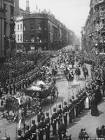
Queen Victoria’s Diaries are now available on-line but the quite extensive entry for 22nd June 1897, the day of her Diamond Jubilee does not really tell us anything new of note. It was a day of celebration of imperial military power.
Antony Taylor [Historical Research Vol 68/167] has looked at the background to late Victorian anti-monarchism and republicanism and noted above all the role of Reynolds’s Newspaper in setting the tone which he describes as ‘disrespectful and insulting, it gloated over royal tragedies’. Yet Reynolds’s a Sunday newspaper sold 300,000 copies a week.
St Pauls Cathedral, the church of Empire, was the scene for the main Jubilee ceremony on 22nd June 1897. Earlier in the day Victoria had been at the central Telegraph Office in St Martins Le Grand to send a message worldwide to her subjects. It was the equivalent to sending an e-mail or arguably posting on Twitter.
1897 was the heyday of the old British Empire. The Empire had a population of 372 million according to Jan Morris’s Pax Britannica and an area of about 11 million square miles. There were British colonies [usually numbers of them] in Africa, the Americas, Asia, Australasia, the Atlantic Ocean, the Indian Ocean and the Pacific Ocean. In addition Britain was militarily occupying Egypt and running Cyprus which was nominally Turkish.
Morris notes that ‘it was the largest Empire in the history of the world, comprising nearly a quarter of the land mass of the earth and a quarter of its population
British capitalism was a dominant world power, still expanding. It policed the world for imperial power with wars across the world on a yearly basis often in a bloody way as John Newsinger’s book on Empire makes clear
Rowena Hammal writing in History Today argued that: Undoubtedly, imperial imagery was commonplace in the latter half of the nineteenth century. Soldiers were proudly depicted on advertisements for whisky and cigarettes. There were spectacular military reviews, such as the 1897 Fleet Review to celebrate Queen Victoria’s Diamond Jubilee. Rising literacy rates followed the 1870 Education Act, and by the turn of the century a new type of newspaper had developed to cater to the large lower middle class market. The Daily Mail was founded in 1896 and the Daily Express in 1900, and both were decidedly jingoistic. The Express declared in its first leader: ‘Our policy is patriotic, our policy is the British Empire’. In the music halls, a tremendously popular form of entertainment at the time, performers sang songs about Empire and national pride.
Queen Victoria’s Jubilee was a celebration of imperial power.
Victoria had not always been a popular monarch. After the death of her partner Albert the Queen had become reclusive and as often seems to be the case the activities of some of the Royal children were an embarrassment. By the early 1870s a strong Republican tradition had developed with the formation of working class republican clubs. The leadership of this movement was not entirely from the left but was to be found with radicals like Charles Bradlaugh and elements of the Gladstonian Liberal Party. They were certainly not consistent opponents of monarchy or imperial power but it symbolised a class divide in society and Victoria was its figurehead.
What of opposition in 1897 itself?
At the heart of the beast in Britain we might argue that it was relatively muted- the SDF , the first openly Marxist party, published an article on the monarchy and democracy- or we could say that there was considerable working class support for the celebration. The late Victorian period certainly had an element of jingoism and popular support for imperial endeavour. That was to fall abruptly by the time of the Great Unrest of 1910-14.
Antony Taylor argues that those who have written of the monarchy in this period David Cannadine, Linda Colley and others have perhaps over played the popular support it had.
Reynolds’s News, as noted a best selling Sunday Paper, which dated back to the Chartist period had a strong record of support for Republicanism and Opposition to the monarchy. It’s issues record some of the opposition there was in 1897.
It reprinted an anarchist leaflet that refers to Queen Victoria as a ‘fat old lady’ and end by arguing that despots should go to hell. Entertaining though it is, its publication in Reynolds’s probably reflected its maximum impact.
Elsewhere the paper reports events. A bonfire built to celebrate the Jubilee on the highest point of the Cotswolds was set alight before the appointed day, and the authorities sought to arrest the miscreant who had done it. Meanwhile in Bristol, the Mayor had invited local trade unions and friendly societies to join a Jubilee procession. They all refused on the grounds that the Jubilee was not something that felt they were included in.
Reynolds’s returned to the fray with its post-Jubilee edition on 27th June 1897.
It reported the sermon of a Durham vicar TJ Dent from Haslington who concluded that the Bible showed that the existence of the monarchy- a ‘worn out fraud’ it was called was delaying the Kingdom of Heaven.
An Editorial on the events noted ‘the Jubilee celebrations with their curious mixture of real enthusiasm with sickening flunkeyism’. It concluded that ‘at last the ghastly farce is over. The Jubilee show has passed’ and argued that ‘Radicalism and servility do not go well hand in hand’. It finally suggested that ‘the final great lesson of the Jubilee is that the people now have to fight wealth’
The detail of the Jubilee day however is perhaps as interesting as the protests. It was a fine sunny day as the Royal procession made its way from Buckingham Palace to St Pauls and afterwards to the poorer areas of Borough via London Bridge.
There were crowds in some places and police horses and troops were used to control numbers. Some who had camped out overnight for a view of the Royal Party complained that they had been pushed into side streets by the police as crowds grew.
However the areas where crowds gathered were quite limited and in most places there were few bystanders. Reynolds’s speculated that many may have preferred to avoid the occasion or leave London for the day, even though in this long before TV age the only way to actually see the event was to attend in person. Another possibility that has a strong contemporary echo is that police closed off roads surrounding the Royal procession so that only those who had arrived very early could get a glimpse.
The fall out, reported in Reynolds’s of 4 July 1897 made the point. A businessman successfully applied to Southwark Council for a return of fees he had paid to erect a stand for spectators in Westminster Bridge Rd. There had it seems been very few takers. In an even odder report several traders applied to a judge for permission to cut up 500 pairs of stilts they had been given to sell for firewood. The owner had disappeared, the police had banned the use of stilts to watch the Royal procession and very few people were interested anyway.
The 1897 Jubilee took place when the modern labour movement, both politically and in trade union terms, was in progress. Dorothy Thompson’s book on Victoria notes that there was place for support for monarchy and royalty amongst organisations that sought a more equal society. Labour politicians like Keir Hardie were almost instinctively, in class terms, against the monarchy. But they did not see its abolition as a priority beyond the political work of changing society.
By the time of the first Labour Government we can see a process underway where the attitude of leading Labour figures was little different to that of their Tory contemporaries. If abolition of the monarchy was not a priority then an accommodation would need to be achieved.
Yet the main opposition was not at the centre of Empire but at the periphery. There were anti-Jubilee protests in Dublin organised by socialists including James Connolly which led to rioting. The Irish nationalist MP Redmond proposed an amendment to the Loyal Address to the Queen outlining the destruction her reign had caused in Ireland back to the Potato Famine and before.
There were also significant protests in India. The Editorial of Reynolds’s on 4 July 1897 had reflected that ‘there is more food for reflection in the condition of India than in the inanities of Jubilee No.2’. It reported a flypost in Poonah that stated ‘none but demons would celebrate a Jubilee when the famine, earthquake and plague prevailed’. Several British soliders were shot and injured during the Jubilee period.
Commenting on the Diamond Jubilee Honours List in Reynolds’s of 4 July 1897 Gracchus noted that ‘militarism is acclaimed as the chief glory of the Queen’s reign’
The opposition to the Jubilee across the Empire is something that is rather missing from UK focused accounts and that does need to be addressed. At the same time the underlying argument of this paper is that opposition to the monarchy ebbs and flows as does support for Republican alternatives. There is an element of calculation about how far pro-monarchy celebrations can be pushed out and it was clearly judged that an event marking the imperial power of the Empire in 1897 would find a public echo. That it did, but we should not take from that universal support or lack of protest.
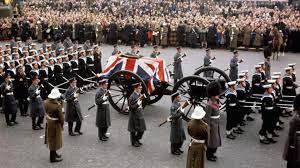
Tony Benn on the last State Funeral: Winston Churchill 1965
How people are remembered (or indeed forgotten) changes in each generation but Winston Churchill remains a controversial figure in Britain’s past
It is interesting to reflect how he was remembered at the time of his death in 1965 by Tony Benn.
Benn records in his Diary that Churchill had been in touch with the family in the 1940s and had been a supporter of his campaign to renounce his hereditary peerage and become an MP again in 1963.
Perhaps it is not surprising that on the day of Churchill’s death Benn wrote in his diary that he was ‘one of the greatest Englishmen of our time’. Partly Benn had not yet fully made the move to the left that he took in the 1970s. Indeed in 1965 he was Postmaster General in Harold Wilson’s Labour Government.
Benn records that politics would be put into ‘cold storage’ for a week and it was probably the case that Churchill was the last political leader- partly because of his wartime role- where there was some degree of national agreement on the significance of his life and death. Certainly there were none of the protests and dissent seen when Mrs Thatcher died.
The Postmaster General’s first move was to approach Wilson with a plan to issue a commemorative stamp featuring the picture of the Queen and Churchill. It related to Benn’s campaign to remove the monarch’s image from stamps altogether and it is clear that even with a figure like Churchill, Wilson regarded the idea as doubtful.
Later in that final week of January almost 60 years ago Benn took his family to see Churchill lying in state at Westminster Hall. He notes that young Joshua Benn thought he was going to a Lyons Steak house and was perplexed as to who Churchill was.
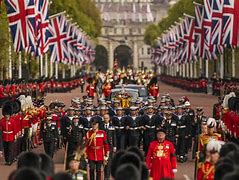
Benn returned to this theme on the day of the funeral at St Paul’s Cathedral which he attended with Caroline Benn. He notes in his diary that ‘there were thousands of troops standing there and the crowds on each side were extremely heavy’.
His regard for Churchill notwithstanding Benn noted that the funeral made him feel uneasy. It was attended by an array of world leaders but Benn thought it the ‘last great Victorian festival’ and left as soon as decently possible.
Some might argue that 50 years on Britain is now a long way off the imperial era represented by Churchill, yet the State pomp and circumstance seen at his funeral is still very much part of the way the British Establishment goes on. The same monarch remained on the throne until very recently and politicians with very much the same kind of class and educational pedigree of Churchill himself sit in the Cabinet.
As the Sex Pistols noted in 1977 ‘there is no future in England’s dreaming…’