Jacob Rees Mogg gets it wrong on Boris Johnson & cakes
As Leader of the House of Commons Jacob Rees Mogg has the job of answering general questions from MPs on Parliamentary business. He doesn’t always address the task with the seriousness some at least might think it deserves and his self-belief often leads him into erroneous points.
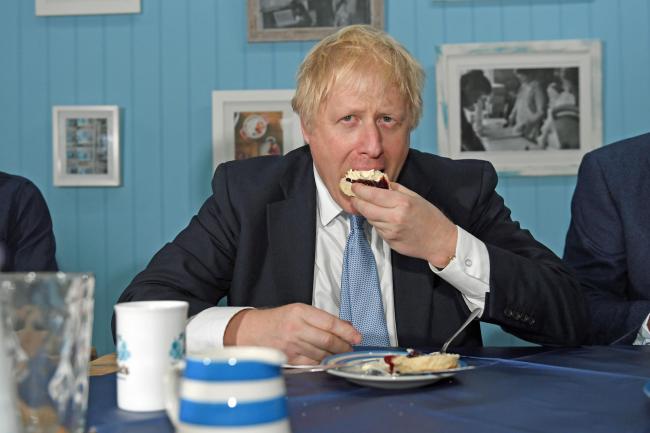
On 27th January for example he criticised Labour’s focus on Downing St and cakes
May I say how pleased I am that she(Annaliese Dodds MP) has finally moved off cake? It has seemed to me over the past few weeks that all the Opposition could ever talk about was cake—whether we have had our cake and eaten it, whether there has been no cake, whether there never was any cake, or what cake there may have been; how it was baked, how many eggs there were in it, whether it was made with margarine or butter, or what type of cake it was: did it have sponge or was it chocolate? All these issues about cake have been an obsession of the Opposition, so I am glad that we are now getting on to some more serious subjects.
Jacob Rees Mogg, House of Commons 27th January
One problem is that Boris Johnson genuinely does have a long term strategy of having his cake and eating it (Sonia Purnell, Just Boris). She quotes a ‘senior Tory MP’ when Johnson stood for London Mayor in 2008 while still MP for Henley: ‘Boris never wants to deny himself the right to have his cake, eat it and then have a bun’.
Holocaust Memorial Day: Forgotten stories need to be reclaimed. Never Again
My late father Graham Flett served in the Durham Light Infantry during World War Two and was one of those who was at the liberation of Bergen-Belsen in 1945. He never spoke in any detail about what he had seen but it stayed with him for all of his life. He was a regular at Anti-Nazi League protests
Speaking at a London Socialist Historians seminar at the Institute of Historical Research in October 2017 the historian Merilyn Moos reminded of the scale of the Holocaust. Not only does the scourge of Anti-Semitism remain but those fascists seek to scapegoat also varies and expands. In 2026 Muslims and refugees are a particular focus as well
Jews were not the only people targeted by the Nazis during the
How Pandemic Restrictions ended in the Nineteenth Century: Profit Before People
Boris Johnson announced the end of most compulsory COVID restrictions in England on 19th January. On the same day it was announced there were 96,545 COVID infections in England and 301 reported deaths. The figures were a reduction but remain high. In 2021 it was suggested in the other three UK nations that to lift restrictions entirely would mean infections had dropped below 50 people in 100,000. In my area of North London cases have dropped to half of what they were at the start of the year and now stand at 760 people in 100,000.
The impact of deaths from COVID, long COVID and economic hardship has been felt in all sections of society. If it hadn’t been Johnson would have done nothing-as indeed he originally planned to do in early 2020- as the ruling classes of Europe did on cholera in previous times until they started dying from it as well.
In fact how Governments of similar politics to those of Johnson dealt with epidemics in the first half of the nineteenth century is strikingly similar to today.
The cholera epidemics of 1831 and 1832 coincided with agitation for political reform. Like anti-vaxxers now protests blamed medics for the disease. While the Government had introduced restrictions by 1832 they had abandoned the use of the military and compulsory hospitalisation concerned about the wider tumult for political change which ended with the 1832 Reform Act.
By the time of the epidemic of 1848 and 1849 there was Europe wide concern amongst ruling class about the economic impact quarantine measures would have. When cholera swept through Britain in 1849 the General Board of Health, set up by the 1848 Health of Town Acts, was able to do little, having little in the way of resources or specific powers to do so. The Government sought to protect profit and avoid protest.
The 1st September 1849 issue of the Chartist Northern Star paper reported on cholera in London in the previous week. Over half of the deaths in the Capital in the week ending 25th August 1849 had been epidemic related. It commented that the efforts made to control the disease looked ‘feeble and insignificant’ contrasted to the ‘vast means and agency brought to bear by the nation in other fields for the protection of life and property. The energy with which part of our institutions work makes the defects of the rest the more evident’. The paper cited the example of Albion Terrace Wandsworth where 19 people had died of cholera in August 1849 and argued that ‘it appears to be taken for granted that blame attaches to nobody’
In England 170 years on we are at a stage familiar to nineteenth century historians. Namely that it has been determined, as it was in 1849, that the economic cost of the pandemic outweighs the importance of controlling it and so ‘let it rip’ in a phrase Johnson may or may not have used at some point.
The difference with the Victorian period is that thanks to science and the NHS we have an effective vaccine which means that while infections remain high at the moment, serious illness and death are much less.
However hundreds are still dying from COVID each day. The disease doesn’t discriminate but class society does. It’s a fair bet that as in the COVID first wave, many of those dying will be the less well off, those in poor housing and poorly paid jobs that can’t be done from home.
Meanwhile whatever their status they are people with names not just numbers, except obviously to Boris Johnson
The late Ralph Miliband wrote one of the best books about the history of the Labour Party, Parliamentary Socialism,1961, albeit of course it doesn’t cover the last 60 years.
Miliband, the father of David and Ed, opens the book by making the statement that as a democratic socialist party Labour had always been amongst the most dogmatic. Not about socialism but about the use of Parliamentary as opposed to extra-Parliamentary forms of struggle.
His view at that time was that Labour under Hugh Gaitskell was not a vehicle for socialist advance and the leadership of the rather more ‘left-wing’ Harold Wilson did nothing to change his mind.
He did however keep the matter under review and sometimes returned to the subject, for example in the Socialist Register 1983:
Here he saw the rise of the Bennite left from the early 1980s as a sign that maybe Labour could be claimed for socialism. Significantly perhaps it appeared in the year that a, then young, Jeremy Corbyn first became an MP.
Tom Watson before he stepped down described an effort to abolish his then Deputy Leader position as going against the idea of Labour as a ‘broad church’. Harold Wilson was probably right that Labour owes more to Methodism than Marx but as Miliband noted the ‘broad’ part of the description is harder to justify historically.
Miliband wrote
Pious references to the Labour Party being a ‘broad church’ which has always incorporated many different strands of thought fail to take account of a crucial fact, namely that the ‘broad church’ of Labour only functioned effectively in the past because one side – the Right and Centre – determined the nature of the services that were to be held, and excluded or threatened with exclusion any clergy too deviant in its dissent.
The Guardian by contrast argued in an Editorial on 22nd September 2019
The Labour party is nothing if not a broad church, encompassing different traditions working with – not against – each other. In a post-industrial world everything is some kind of coalition. If not, the party is simply a religion of true believers in a multi-faith polity. Over decades, Labour activists, interests and voters have broadly agreed on a common purpose – to elect Labour governments that can redress the imbalance of economic, social and political power in Britain. That broad-church approach has served Labour well and has served Britain well too
Socialists can certainly be active in the Labour Party have been and remain so but managing to control it as an institution and grapple with its Parliamentary focus is much harder.
Ralph Miliband never reached a definitive conclusion as to whether socialists could best organise effectively within the Labour Party or outside it, or perhaps both. As some left representatives on Labour’s NEC resigned on 26th January it’s a question that remains relevant.
The key point however is to organise to fight the impact of Tory rule in 2022, debating the best vehicle for carrying that forward flows from that, rather than coming before it.
The Brewdog Playbook. After legal threats James Watt apologises (again)
On Monday BBC Scotland broadcast a programme on Brewdog (available on IPlayer). The programme had three elements. It looked at Brewdog’s marketing and PR efforts, some of which have worked very well, others rather less so. It also looked at Brewdog’s business model. There wasn’t much that was specifically new here. The point was that the details will have reached a far wider audience than the ‘beer bubble’ that already knows about them. In particular since Brewdog plans to float itself as a public company there is the question of how much Equity for Punks shareholders might make from this. The answer depends on what value Brewdog floats at as TSG the private equity investor has a guaranteed percentage return. EFP people don’t. There were also some interesting details about James Watt’s personal financial dealings. These of course are separate to Brewdog
The third part of the programme focused on a number of testimonies from former (and one current) Brewdog worker about the toxic workplace culture. They echoed but much more directly the points made by Punks With Purpose last year.
At the time Watt initially reacted by saying these were malcontents who were sacked for misconduct or theft and had a grievance against the company. That didn’t go down too well so he changed tack and announced a major exercise to review the culture of Brewdog and suggest changes, carried out by a third party. That reported recently and Watt apologised and promised to address issues.
On the BBC Scotland programme the same pattern repeated itself. At first James Watt denied all the issues raised and claimed again they were made by ill intentioned malcontents. Legal action was threatened. It got a good deal of media coverage but little of it was good.
So again Watt has changed tack. He now agrees some of the staffing issues mentioned in the BBC programme might have had substance, apologised and promised to address issues.
What the BBC added to Private Eye’s analysis of Brewdog’s business model
The BBC Scotland investigation into Brewdog broadcast in 24th January drew most attention, rightly, to the final segment focusing on the toxic culture at the brewer and bar chain. It takes a lot of courage to speak out against even an ex-employer. Recognising a union can’t come soon enough for Brewdog.
The programme also covered Brewdog’s marketing strategies and its business model. Its this last that ultimately is the key to the future of the brewer.
Private Eye covered some details in April 2020 and the BBC have now added more:
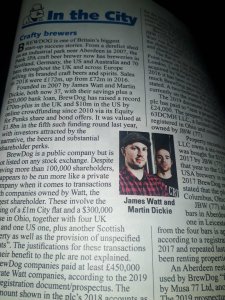
Private Eye (1517) carried a lengthy analysis of the structure and finances of Brewdog. Private Eye generally eschews such new-fangled things as the interwebs but a summary is below
The piece is interesting because Brewdog is far from transparent about how it works despite its Equity for Punks ‘ownership’ scheme.
The nub of the Eye’s analysis is contained in these sentences
‘it is not suggested that any of these transactions are illegal or improper. The question is whether they are appropriate for a company with 100,000 other shareholders’
Of interest it notes that while a profit of £3.8m was made in 2016 this had reduced to £1.4m in 2017 and by 2018 had become a pre-tax loss of £576,000
It also noted:
When the private equity deal with TSG was announced in April 2017, it was stated to have involved a total of £213m, including £100m for new shares to fund Brewdog. The normal private equity playbook would look for an exit by sale or listing within five years.
There was talk of an IPO (a public share flotation) in 2021 and this remains on the agenda for 2022. A key issue is what the valuation of Brewdog will be. Getting this right is key as to whether the IPO works. Brewdog has argued the company could be worth £1.8bn, but it could be much lower. The BBC revealed that when TSG brought a stake a new class of share was created which guarantees TSG an 18% return. If the valuation is correctly high this might be OK. If not the return is provided by Equity for Punks shareholders getting less.
The BBC also noted that Dickie and Watt had personally made a substantial sum out of the TSG deal but chose not to invest this in Brewdog but rather launched another Crowdfunder.
The Eye analysis focused on a Company named JBW77 that appears to be linked to Brewdog founder James Watt and various holdings, transactions and deals that it has been involved in.
The BBC revealed that Watt has funds in the Cayman Islands, a tax haven. He is hardly alone in that but its not very anti-Establishment. It also revealed that Watt has £500,000 worth of shares in Heineken one of the big brewers he reviles. He has tweeted that he has subsequently sold the shares and explained it dates to when Brewdog were considering partnering with Heineken for distribution. These of course are his personal dealings not Brewdogs but James Watt is the figurehead.
Where the toxic culture and Brewdog’s business intersect is in the area that worries a lot of businesses-reputational damage. That might impact a successful IPO particularly if Watt remains in charge.
It’s a pity its no longer just about the beer as it was back in 2007 but the realities of 2022 have to be grappled with and so far they haven’t been.
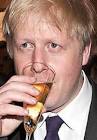
Boris Johnson is the elected leader of a political party a job he doesn’t really seem that interested in doing. By contrast he is a great enthusiast for another kind of party-the one involving champagne and nibbles (tbh sausage rolls and crisps don’t cut it). Sonia Purnell’s biography of Johnson, Just Boris, has numerous accounts of parties he has attended. A lot were thrown by his erstwhile employers the Spectator and the Telegraph. When he was married to Marina Wheeler and lived in Islington he was also, according to Purnell, a frequent attender at dinner parties.
When he was elected London Mayor in 2008 he threw his own parties(paid for by the taxpayer obviously) and in that year The Tatler described him as ‘party viagra’.
He has not denied that a Christmas party was held at Downing St in December 2020, the one that started off the whole parties investigation. It’s almost impossible to see how this didn’t break the then lockdown rules, though that is what is claimed. No doubt the Met Police will now have a think about it in due course.
What though of pre-restrictions 2019. Johnson had just won an Election and was celebrating.
According to the perhaps not totally reliable source of Tom Bower (Boris Johnson, the Gambler) on Friday December 13th after returning to Downing St from Buckingham Palace where he had seen the Queen, Johnson headed to Brown’s hotel off Piccadilly. The hotel is owned by Brexiteer Rocco Forte and a celebration party was being held.
One party however was not enough for Johnson. He then went to Evgeny Lebedev’s ‘traditional’ Xmas party which was in his house overlooking Regents Park. Unlimited caviar and champagne were available. In 2020 Johnson made Lebedev a Peer..
Beard of Winter Beard Off Final. Philip Ardagh to face Virat Kohli
The Beard Liberation Front, the informal network of beard wearers, has announced the final Beard Off list for the Beard of Winter 2021 poll.
The list contains a diverse range of contenders for the annual seasonal accolade.
It is the first of four seasonal awards that lead to the Beard of the Year Award in December 2022.
The Beard of Winter focuses both on fuller organic beards, suitable for winter weather but also on beards that have made an early New Year impact in the public eye.
The first Trim Off round saw Philip Ardagh and Benedict Cumberbatch shave opponents to reach the Beard Off final. The Second Trim Off concluded with Hugh Dennis and Virat Kohli taking the follicular honours.
BLF Organiser Keith Flett said, it is as ever a wide ranging, eclectic, list but one very much focused on the winter season. The Beard Off final is likely to be a close shave
There are two ‘Trim-Off’ rounds from 19-21 January and then from 22-24 January. Each will feature four contenders. The top two from each round feature in a final ‘Beard-Off’ vote from 26-30th January
Campaigners call on Nicola Sturgeon to officially recognise that Burns had a beard
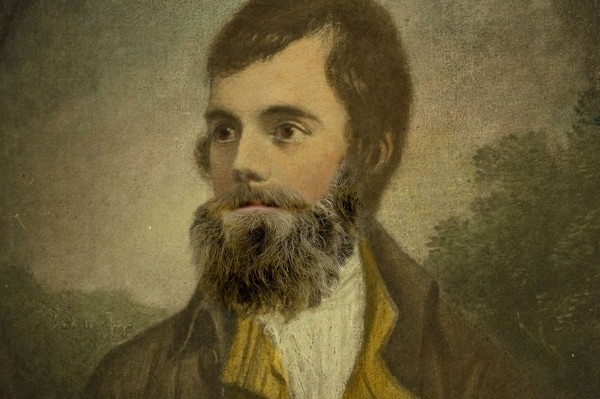
The Beard Liberation Front, the informal network of beard wearers, has called on First Minister Nicola Sturgeon to use Burns Night as an occasion to both celebrate the poet’s work and acknowledge that the traditional image of him as clean shaven was manufactured by those who wanted to promote his work to a London elite.
The campaigners say that while Burns had employment for some years as an Exciseman and was likely to have been clean shaven at times in reality he probably shaved at best two or three times a week and wore a beard for the remainder of the time.
It is thought that images and paintings of Burns which show him as clean shaven date to a period when the London based political and culture Establishment was determined to claim Burns as what it saw as a ‘cultured Scot’, a supporter of the Union, rather than the hirsute anti-Establishment rebel he clearly was.
BLF Organiser Keith Flett said, it’s time for Nicola Sturgeon to rectify an historic wrong and recognise that the real Rabbie Burns had a beard. It would be a significant step in reclaiming genuine Scottish culture from the clean shaven focus of Tory Westminster.
Following an increase in the scandals surrounding Boris Johnson, including his Downing St flat refurb and Downing St Xmas parties in 2020 and in May 2021 and apparently at lots of other times too. Labour has opened a consistent lead of 10% in the polls. Anyone who would like to see the back of not just Johnson but the Tories in general must see this as broadly good news.
Poll leads though are not everything. They usually appear because the incumbent Government is messing things up. They are maintained to a successful Election victory if the opposition in this case Labour is able to harness the discontent to a positive mood to support it
We can see this in the period 1992-1997
We can’t obviously be sure what moves the polls but I do think that there is some evidence that there are particular events which change people’s minds on a long-term basis, as Black Wednesday seems to have done in 1992
By 1992 Thatcher had been forced to resign over the Poll Tax debacle and was replaced by John Major. Major, unexpectedly and quite narrowly, beat Labour, led by Neil Kinnock, in a General Election on 9th April 1992. For the few months afterwards the Tories led Labour on average by 5 points in the opinion polls.
Then came Wednesday 16th September 1992, ‘Black Wednesday’. On that day the Tory Government withdrew the pound from the European Exchange Rate Mechanism (ERM). In order to protect the pound Chancellor Lamont raised interest rates from 10% to 12% in the morning, and then up to 15% in the afternoon.
The following day interest rates returned to 10% but the damage was done in terms of electoral standing. Voters with mortgages, perhaps more inclined to vote Tory, had seen the spectre of the cost rising by 50% in a day. If it had happened once clearly it could happen again.
By November 1992 polls were showing ratings of around 30% for the Tories and 50% for Labour. They changed little until the eventual election in 1997. Labour’s lead was nothing to do with Blair, who wasn’t Labour leader in 1992, rather it was the late John Smith, but with an event so potentially cataclysmic in its impact that it stuck in voter’s minds.
It’s worth pointing out (thanks to Lindsey German for this point)that the October 1992 pit closure crisis underlined and amplified the Tory crisis. The Tories had spent the mid-1980s demonising and defeating the miners on pit closures. But when Heseltine tried again in 1992 the mood was very different. Public support swung behing Arthur Scargill and the NUM’s efforts to stop further closures.
One wonders if the latest scandals to surround Johnson will see the solidifying of the same long term poll trend? The next few months will tell us. Whether you think Starmer is a decent Labour leader or not, it won’t be that much to do with anything he does or doesnt promote, at least at the moment. What 1992 suggests is that it’s about Tory crisis and whether the left and labour movement can galvanise the mood around that which has the real impact. Work in progress