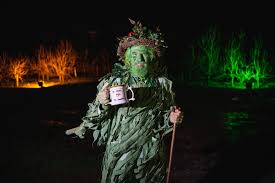
January: The tradition of Wassail. Cakes, Ale & the appointment of a Lord of Misrule
The tradition of wassailing is one of having cakes and ale on Twelfth Night or Epiphany the following day.
However traditions are quite flexible so you can do this at anytime up to Shrove Tuesday, 1st March in 2022.
Since it is Try January, why not do that. It does underline, if nothing else, how out of touch with seasonal traditions Dry January is.
This time of year is that of few hours of daylight and scarcity of fresh produce so things like cake and ale were and are welcome.
A tradition was to bake a cake with a bean, or possibly a pea or a coin in and the person discovering it in their piece of cake became the Lord of Misrule for Twelfth Night
The traditional Wassail was to go house to house with the following cry:
we are not daily beggars that beg from door to door
But we are friendly neighbours whom you have seen before.
In 2022 that needs to be done with care but drinking a glass of ale and eating some cake should still be achievable
There is also a case I think for attempting to reclaim a radical tradition of the Lord of Misrule. A giant model of a naked Nigel Farage paraded through the streets sitting backwards on a donkey would add something to the sum of human jollity.
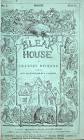
With much of England and Wales seeing(or not depending on thickness) January fog, Charles Dickens’ Bleak House is worth a look to see what fog was like in Victorian London. A brief extract is here:
Gas looming through the fog in divers places in the streets, much as the sun may, from the spongey fields, be seen to loom by husbandman and ploughboy. Most of the shops lighted two hours before their time — as the gas seems to know, for it has a haggard and unwilling look.
The raw afternoon is rawest, and the dense fog is densest, and the muddy streets are muddiest near that leaden-headed old obstruction, appropriate ornament for the threshold of a leaden-headed old corporation, Temple Bar. And hard by Temple Bar, in Lincoln’s Inn Hall, at the very heart of the fog, sits the Lord High Chancellor in his High Court of Chancery.
Never can there come fog too thick, never can there come mud and mire too deep, to assort with the groping and floundering condition which this High Court of Chancery, most pestilent of hoary sinners, holds this day in the sight of heaven and earth.
Dickens was here not just describing the weather but an intellectual condition of clouded minds as he went on to write about Jarndyce v Jarndyce, the never ending Court case that ended in, in effect, the ruin of the contending parties, consumed with legal bills. A perfect parallel with start of 2022 Pandemic Britain one might suggest
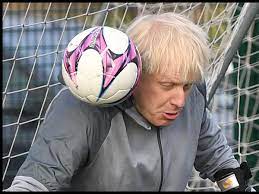
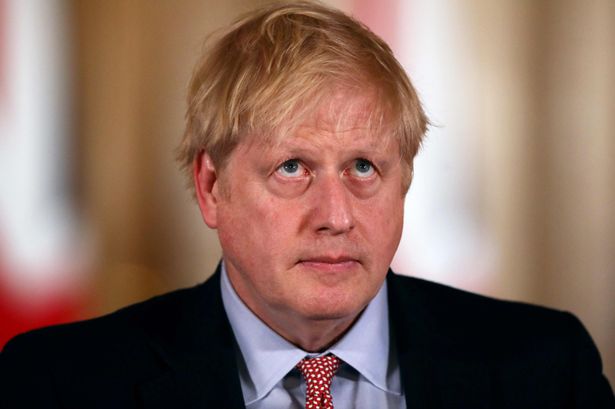
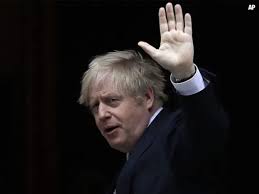
Boris Johnson ‘wishes to apologise for any offence’
Boris Johnson has offered a ‘heartfelt apology’ to the Commons for his participation in a Downing St garden party on 20th May 2020 which he claims he thought was a work event. Johnson’s career is littered with apologies but they are invariably for the impact what he has done is on himself rather than what he actually did.
As Sonia Purnell notes in her biography of the current PM Just Boris he has become an almost habitual apologiser for ‘any offence’ that his earlier words, often racist, have caused.
Johnson has a long standing history of racist comments and of dismissing reports that highlight the role racism had and has in British society, to go along with his history of apologising for these when called to account.
One example is the 1999 Macpherson Report into the murder of Stephen Lawrence that found institutionalise racism in the Met Police. Johnson dismissed the findings as ‘Orwellian’ ‘weird’ and ‘crazy’.
Purnell points out that following discussions with his then wife, prominent lawyer Marina Wheeler, by 2001 he was prepared to concede that Macpherson may have had a point. Not of course that when he later became Mayor of London he did anything about this.
More recently Johnson made a speech about ‘levelling up’ on 15th July 2021. Afterwards he was asked by the Independent if he would disown earlier comments about Muslim women he said:
‘The best thing I can say is that I’ve obviously apologised in the past for the things that I’ve said that have caused offence and continue to apologise for them’.
So carry on apologising and carry on making the remarks and causing offence too
Histories of the present: Johnson lies but he doesn’t resign he has to be sacked
Boris Johnson is not someone given to resigning. It no doubt goes back to his Eton days when it was noted that he felt that rules that applied to everyone else did not apply to him.
This clearly applies to his current job as Prime Minister. Pressed by Keir Starmer and others to resign at PMQs on Wednesday 26th January he made it clear he would not. A brief history of Johnson underlines that he has only ever resigned once and that was because it suited his personal ambition.
Johnson has departed from several journalistic jobs at the Times and the Spectator but he has also been sacked as a politician.
In 2004 when Michael Howard was leader of the Opposition, Johnson was Shadow Arts Minister and Tory Vice-Chair. He had an affair with Petronella Wyatt and she became pregnant. She decided to have an abortion and Johnson tried to keep the matter out of the public domain.
However news of it started to appear in the tabloid press. Johnson tried unsuccessfully to lie his way out of it. Howard decided that Johnson would have to go not over the affair or the abortion but because he had lied about it. He instructed his spokesman Guy Black to speak to Johnson and get him to resign. Johnson refused. After watching a Liverpool football match Howard then spoke directly to Johnson at 6.30pm and sacked him. It was November 13th 2004.
Johnson’s view was that only by being sacked would get sympathy, a resignation would not do it.
There is an exception that belongs in a different category. In July 2018 he resigned as Foreign Secretary in Theresa May’s Government. He had done nothing wrong on this occasion (in fact he had done very little in the role at all). The issue was that he wanted a harder Brexit than May. His resignation was part of the strategy to get elected as Tory leader in get the harder Brexit he wanted.
Many might feel that what he actually wanted was not a particular kind of Brexit but the position of PM which he thought his support would get him- correctly. As ever it was all about Johnson’s personal fortune.
When it comes to his current political position, whether resignation or sacking by his own MPs, he’s got to go
The Downing St garden party May 2020 & the people that Boris Johnson didn’t know existed
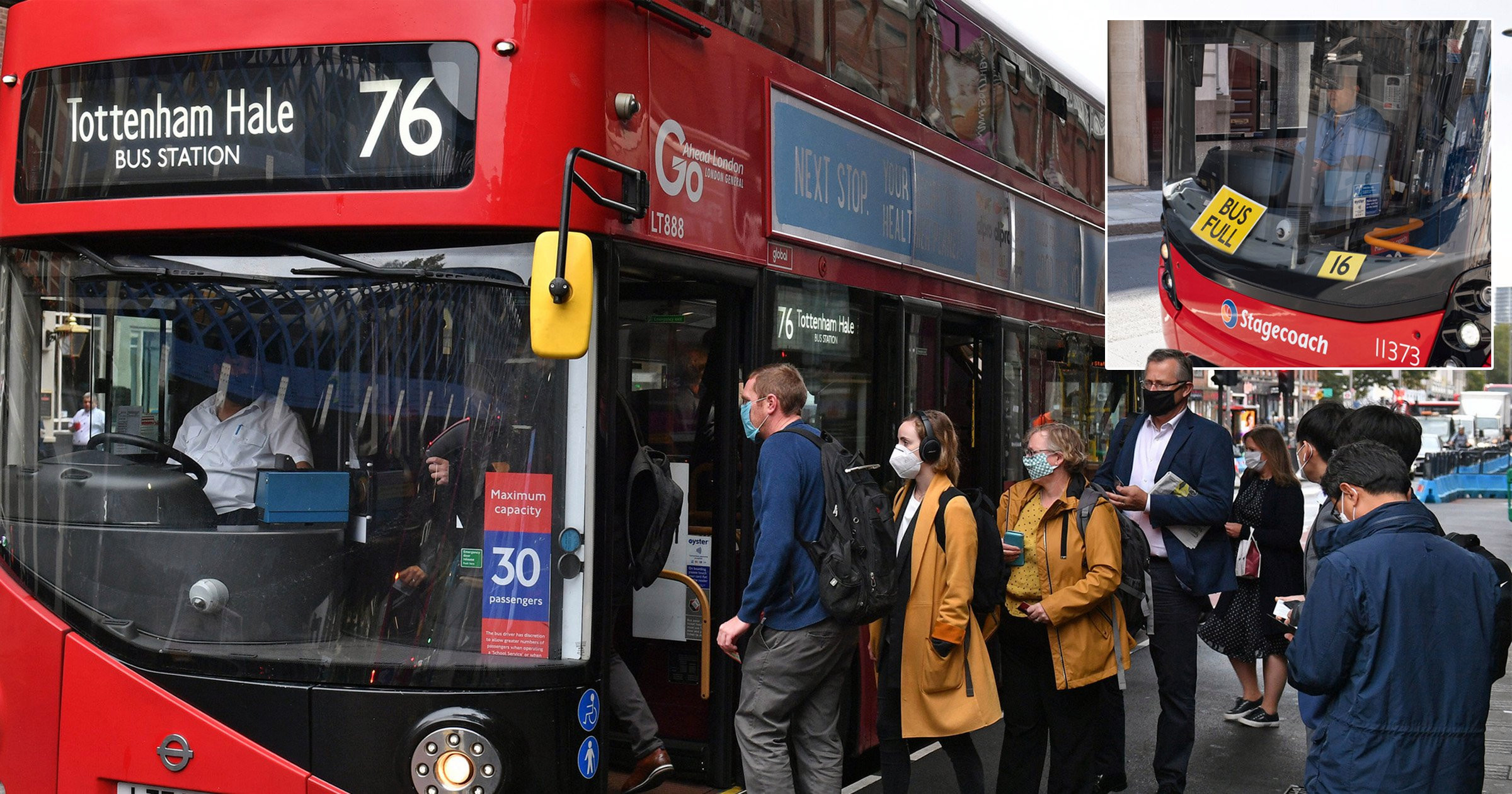
I generally live in Tottenham, North London, in a flat. I’m not usually in much-being out at work in central London, researching in the British Library, or in the pub. From March 2020 none of those were open. Rather than sit in the flat all day, and also because the COVID rates in some London Boroughs were very high in this period (well before vaccines) I spent the time in the rather more spacious central Cardiff house of my partner Megan.
In fact I was there for 122 days returning to Tottenham on July 17th 2020. During that time I went out only to shop or into the garden and saw only Megan and the cat in person. It was very different to normal. When I returned to North London several of my neighbours expressed relief assuming I had in the meantime perished, and one had died- a nurse at the nearby North Middlesex hospital.
No doubt there are many, many stories like this and often very much more significant.
The situation in Tottenham had indeed been very bad.
Hesketh Benoit, basketball coach for the London Borough of Haringey, wrote in the Huffington Post about 37 people he knew in the Tottenham area who died of COVID-19 during April and May 2020. Not just a statistic but real people he and others in the community knew well.
On 24th July 2020 the ONS published updated statistics for COVID-19 deaths to the end of June 2020.
A main point was:
Of the 10 local authorities with the highest age-standardised mortality rates for deaths involving COVID-19 over this period, nine were London Boroughs; Brent had the highest overall age-standardised rate with 216.6 deaths per 100,000 people, followed by Newham (201.6 deaths per 100,000 people) and Haringey (185.1 deaths per 100,000 people).
Local Authorities in these areas (and elsewhere) worked very hard to address this situation. Their reward was to be starved of necessary funds.
When Henry Mayhew started the series of social investigations into the London working-class in 1849 that was to become London Labour and the London Poor he laid out a prospectus in the Morning Chronicle. He wrote of investigating the ‘large and comparatively unknown body of people’ who comprised the labouring poor who lived in slum housing often in insanitary conditions with at best uncertain employment.
He set a pattern that has emerged at times of crisis since.
When Hurricane Katrina hit New Orleans in 2005 revealing a Government and President in George W Bush that was not only unprepared to deal with it but had reduced funding previously for measures that might have helped, the Federal Emergency Management Agency’s Michael Brown said, “We’re seeing people that we didn’t know exist’.
The publication of details, broken down to local authority areas, by the Office of National Statistics of all COVID-19 deaths from March 1st to April 17th also appeared. This wasn’t some exercise in constructing a league table of deaths-important though it is to record every death and value every life.
Rather it focused attention on where COVID-19 deaths had been particularly high and implicitly invited discussion of why this might be.
Of the 11 areas with the highest death rate everyone was in London
The pattern of poverty, housing & health identified 171 years ago by Henry Mayhew in London’s poorest districts continued.
The highest UK COVID-19 mortality rates per 100,000 population in the UK were in the London Boroughs of Newham 144.3, Brent 141.5, Hackney 127.4, Tower Hamlets 122.9 and Haringey 119.3.
Philip Glanville, the Mayor of Hackney, quoted in the Financial Times on the 2nd May 2020 argued that “the links between inequality, poverty, ethnicity and health” were the key to his Borough’s death rate of 127 per 100,000.
Meanwhile not caring or knowing about any of this Boris Johnson and others had a party in the garden of 10 Downing St on Wednesday May 20th 2020.
Its not going to be forgotten or forgiven in North London
Gove plans to hold to account the ‘unacceptable face of capitalism’
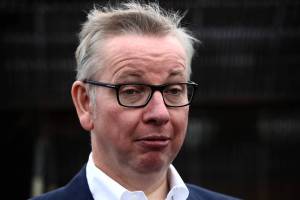
Speaking in a debate on housing safety in the Commons on 10th January the Minister responsible, Michael Gove, noted the ability of some building developers to bodge jobs, pocket the money and then disappear. He suggested they were the unacceptable face of capitalism and he as working on holding them to account.
It did rather beg the question of what an acceptable face of capitalism might look like..
The reference was to a remark made in May 1973 following a Court case when the then Tory Prime Minister Ted Heath referred in the Commons to the activities of London based southern African mining firm Lonhro as the ‘unpleasant and unacceptable face of capitalism’.
The phrase has entered the historical record as an example of a Conservative Prime Minister drawing a moral limit to how far free market capitalism might go.
What the moral economy of Michael Gove might be is an interesting question
Kate Green
(Stretford and Urmston) (Lab)
I note that the Secretary of State said he would extend the right of leaseholders to challenge those who cause defects retrospectively for 30 years, but he will be aware that unscrupulous developers such as Mr Jason Alexander in my constituency exploit loopholes in company law with the result that there is no corporate entity to go after because it has been wound up, struck off or stripped of assets. Can he say what work he is doing with the Department for Business, Energy and Industrial Strategy to ensure that those loopholes in company law are closed? Can he also tell us whether the obligations that developers will now face as a result of his statement today will take precedence over their other financial obligations?
Michael Gove
The hon. Lady makes two important points. On the first point, yes, this has been a feature. I was not fully aware, until I took on this responsibility, of how some within the development industry play fast and loose with the rules and set up special purpose vehicles, shell companies and so on to evade their responsibilities. They exhibit the unacceptable face of capitalism, I am afraid, and she is right to say that work requires to be done to bring them appropriately to account. I will be working with colleagues across Government to do just that.
Historians of the Present: David Olusoga at the Colston 4 trial
As long ago as the late 1950s the Marxist historian Eric Hobsbawm called for the then Communist Party Historians Group to become ‘historians of the present too’. This was a difficult point because while Marxist historians were free to opine and disagree on the seventeenth and eighteenth centuries, the then Soviet Union determined the view on current history.
That has now changed but historical input into present day issues has remained quite limited. One obvious example is the almost complete absence of historical views on how Governments have handled pandemics for example.
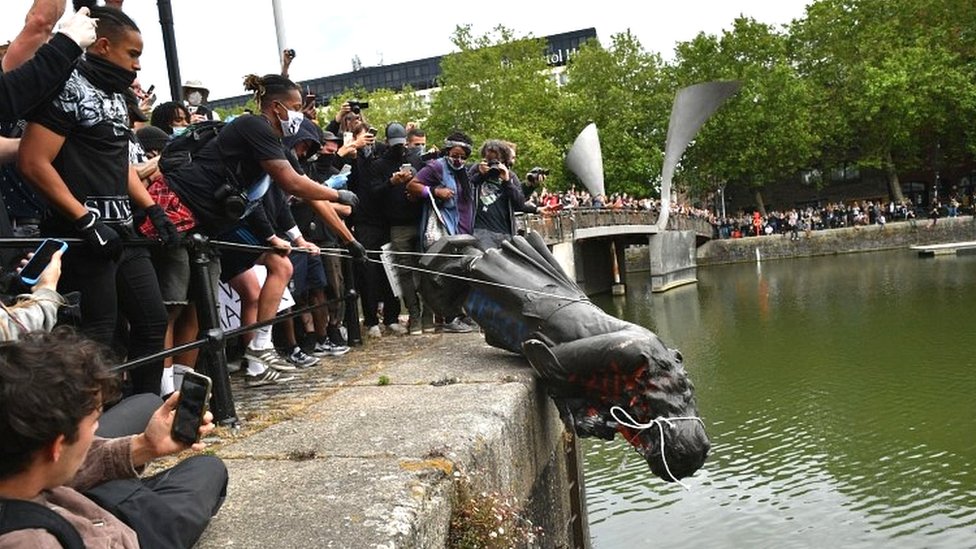
On the other hand a very good example was the expert witness statement that the historian and broadcaster David Olusoga provided to the trial of the Colston 4 in December 2021.
Martin Booth, a Bristol journalist provided the following account:
DAVID OLUSOGA CALLED AS EXPERT DEFENCE WITNESS IN COLSTON 4 TRIAL
By MARTIN BOOTH, Thursday Dec 16, 2021
There were remarkable scenes in Bristol Crown Court on Thursday as one of the UK’s foremost historians was called as an expert defence witness in the trial of the four people accused of criminal damage to the statue of Edward Colston.
David Olusoga took the jury back in time several centuries to the height of the transatlantic slave trade, described the horrifying conditions enslaved people were forced to endure and spoke of Colston’s part in the enterprise.
In front of a packed public gallery, the professor spoke of Colston’s attempts at “reputation laundering” during his lifetime and later the “cult” that grew up around his philanthropy that led to the erection of his statue in 1895, 174 years after his death in 1721.
Olusoga said that the money to pay for the statue was raised by “a tiny group of the city’s elite”, with the wording of the plaque on the now empty plinth “a form of camouflage”.
“This is not an issue of amnesia. This is people aware of his background (as a slave trader) finding a way of not saying it.”
David Olusoga gave evidence on the fourth day of the Colston 4 trial at Bristol Crown Court – photo: Martin Booth
Olusoga told the jury about the “interventions” that appeared on the statue in recent years when it was still standing, including a knitted ball and chain made of red wool, and a “guerrilla plaque”.
He also spoke about an aborted official heritage plaque, whose words were “toned down” by the Society of Merchant Venturers and in particular by Francis Greenacre, one of its members.
Olusoga said that the Merchant Venturers “seemed to be committed to trying to historically minimise” Colston’s involvement in the slave trade “by making it seem more normal”.
“The statue was not just silent about Colston’s business interests. What offended in particular many people was that it was silent about his victims” including the many children who died on his slave ships.
When a reworded plaque was suggested, Olusoga said that “it was felt by mayor Marvin Rees that the final wording was so watered down that it was not appropriate to be erected”.
Liam Walker, representing Sage Willoughby, asked Olusoga if the statue of Colston being toppled from its plinth and rolled into the docks on June 7 2020 was an act of violence?
“I think it is something I can comment upon,” replied Olusoga.
But then judge Peter Blair sent the jury for a mid-afternoon break and when they returned, told them that question was a matter for their own deliberations
All Tomorrow’s Parties. Boris Johnson House of Commons 20th May 2020 ‘the social distancing rules we must all observe’
It has been revealed that on May 20th 2020 a warm Spring Day in London Boris Johnson attended a party in the garden of 10 Downing St with around 100 others. Under the lockdown rules then in place the gathering was illegal. Johnson clearly knew it was because he had made the point at PMQs earlier in the day…
Hansard May 20th 2020
Caroline Ansell (Con Eastbourne)
As a stunning coastal destination built on hospitality and tourism sectors hard hit by the impact of the virus, Eastbourne is none the less looking to bounce back when it is safe to do so and is part of work on a covid-secure kitemark to inspire public confidence. Does my right hon. Friend see merit in this, and when the coast is clear, will he visit?
Boris Johnson
I am sure the coast is always clear in Eastbourne. I will do my utmost to get there as soon as I can within the social distancing rules that we must all observe. We will look at the kitemark idea. The best I can say is that my hon. Friend is a fantastic champion for Eastbourne and its attractions, and I look forward to supporting her in any way I can.
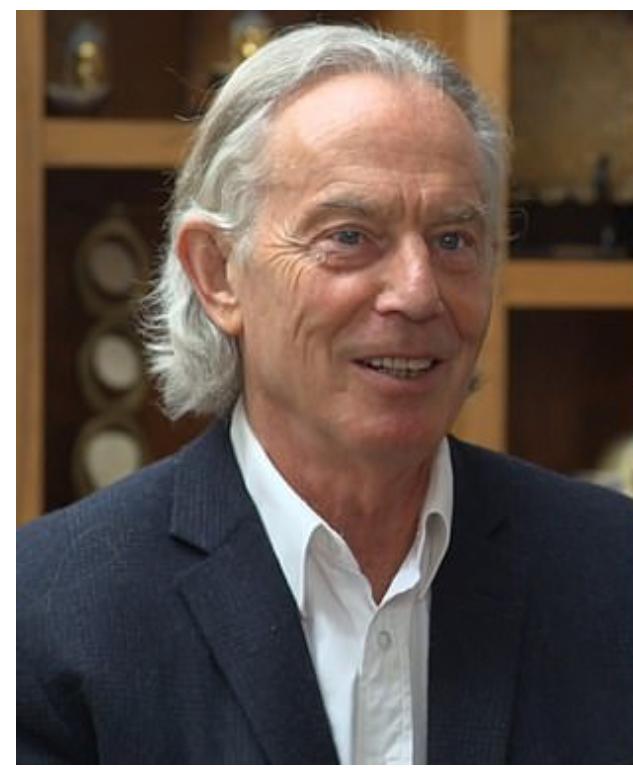
Once again on ‘Sir’ Tony Blair-what was the legacy?
A letter in the Guardian (10/1) manages to link Steve Bell, Simon Jenkins and myself as criticising the Knighthood for Tony Blair and argues that the right shouldn’t define Blair’s legacy. I don’t think the writer meant that this glorious triumvirate were on the ‘right’ since Steve Bell and myself are perpetually wandering around somewhere on the left and Simon Jenkins isn’t that right-wing
Even so the letter has a point. Of course there are people on the right who don’t like Blair. He was after all a Labour PM and successful at getting elected three times. He pursued to some extent an agenda around improving education and health unlike Governments from 2010.
This in part is the problem with petitions, like referendums. The one saying he shouldn’t get a Knighthood (which I’ve signed along with over a million others) can be supported by all kinds of people for all kinds of reasons.
As my recent Guardian Fletter made clear the concern is that the Knighthood is more than anything an official attempt to draw a line under the Iraq War. Yet the demonstration against the War on 15th February 2003 remains the biggest ever in UK history and many think there is outstanding business not least for Blair.
As for Blair’s domestic agenda the letter focuses on the Good Friday agreement. I don’t know how much this was Blair’s work and I regarded its precise format as flawed but it can perhaps be seen broadly as a step forward. Its certainly one the current PM would not have been bothered with.
The rest of Blair’s domestic agenda is in my view very mixed like the Curate’s egg. Privateers were introduced into the NHS to their own but not our benefit, something Labour remains keen on. Rail was not re-nationalised as it should have been and we’ve been paying the price ever since.
One thing we can perhaps all agree on is that as Keir Starmer noted last week Johnson will have no positive legacy worth discussing and certainly shouldn’t get a Knighthood. Starmer of course already has one.
Don’t let the right redefine Tony Blair’s legacy
Those Conservative voices opposing Blair’s knighthood seek only to undermine New Labour’s achievements, from the Belfast agreement to public sector investment, writes Paul Clarke
Letters
Steve Bell, Keith Flett (Letters, 5 January) and Simon Jenkins (‘Sir Tony Blair’? How cheaply knighthoods come in our broken honours system, 5 January) represent a formidable trio to engage in a quarrel for which few Guardian readers would choose to build the barricades: the elevation of a discredited former prime minister to an outdated institution through a corrupted honours system.
Nonetheless, there is arguably a danger in acquiescing in the attack on Tony Blair orchestrated by the press and others on the right that is greater than marching to the front in a lost cause. The case rests on the motives behind this denigration and its intended outcomes. The right have no particular quarrel with bellicosity, under-regulation of financial markets or lucrative consultancies in Kazakhstan.
The real – but concealed – target of their attack is the substantial body of achievement under New Labour: restoring the NHS, rebuilding schools and colleges, establishing Sure Start and committing, more broadly, to an idea of social justice that has since been sacrificed.
Equally important, one of Blair’s finest achievements was surely the Belfast agreement, reflecting his tireless energy and ability to engage with the key players.
Since Brexit requires either a border across the island of Ireland or down the Irish Sea, the posturings of Lord Frost and now Liz Truss pose a real threat to the agreement, and those that support this manifest folly have a vested interest in pretending there is nothing substantial to lose.
The attack on Blair is surely designed to airbrush his most historic achievement out of the record altogether. For no other reason than that, Sir Tony Blair deserves our unwavering support.