Beard of Winter 2022 Vote. Can Gabriel Boric win another poll triumph?
The Beard Liberation Front, the informal network of beard wearers, has announced the shortlist for the Beard of Winter 2021 poll.
The list contains a diverse range of contenders for the annual seasonal accolade. Leading the list is the hirsute President Elect of Chile Gabriel Boric
It is the first of four seasonal awards that lead to the Beard of the Year Award in December 2022.
The Beard of Winter focuses both on fuller organic beards, suitable for winter weather but also on beards that have made an early New Year impact in the public eye.
BLF Organiser Keith Flett said, it is as ever a wide ranging, eclectic, list but one very much focused on the winter season. We have been keen to make sure we don’t miss beards that have been making a significant positive impact in the public eye in the last few weeks.
The poll opens on 19th January and closes on 30th January 2022
There will be two ‘Trim-Off’ rounds from 19-21 January and then from 22-24 January. Each will feature four contenders. The top two from each round will feature in a final ‘Beard-Off’ vote from 26-30th January
According to at least one ‘expert’ 17th January is Blue Monday the most depressing day of the year (the date varies according to ‘expert’). You can read how the concept has developed here:
It is not exactly fake news but if you take it too seriously you may wish to think again. Mondays are traditionally rather depressing and January when it’s cold and dark doesn’t help. Neither of these things however is exactly news
Blue Monday was started by an academic who now markets himself as a happiness consultant or similar. Certainly, checking my case load as a trade union officer, I note that January can be depressing (& it’s not part of my job description to make people happy anyway), but then, depending on context, so can lots of other times of the year.
This stuff is not perhaps entirely made up but neither is it actually true either. Between reality and fake is a vast grey area.
The BBC and Public Service Broadcasting. A qualified defence from the left
I don’t listen to BBC news on the radio or watch it on TV (I do look at the news website). I’m on the left and I find much of the news reported is slanted towards the right. I never listen to the Today programme or watch Question Time, frankly there are better places to find news and views.
Thinking back over the last year there are some things the BBC has got badly wrong- the coverage of the death of Prince Philip for example- which did indeed make it seem like the State Broadcaster that current Culture Minister Nadine Dorries thinks it is, or perhaps should be.
However the BBC’s broadcast output is vast and programmes like the Archers which has run for over 70 years and Test Match Special covering every ball of cricket Tests are just not things that are easily replicated outside of a public service broadcasting model.
Part of the problem I have with BBC News (and indeed much of the 24 hour news culture) is that somewhere along the line it has become acceptable and commonly practiced by at least some journalists to add their personal views to a news report. They of course can have their own views but they are also meant to be professionals who keep such views for other times. To be fair most are and do, but it is the minority that don’t that capture the attention.
Secondly and more complex is the question of whether the BBC is biased towards the Tories. It is in my view a matter of institutional bias. There is an assumption towards the Government of the day, and against change, until change happens.
This attitude has deep historical roots in British culture and can be found in many areas where change is discussed. If there is no clear agreement on change then whoever is presiding will rule in favour of keeping the status quo.
Yet behind all this lies the hard work of thousands of professional BBC employees out there reporting and producing news on a wide range of matters that the print media no longer often does.
As a trade unionist I do think the BBC should listen to its trade unions more, perhaps particularly on the points that compared to the population it serves it often appears too male and white. That’s reflected quite basically in its continuing equal pay issues.
Nadine Dorries has complained that the BBC is not like the nation it serves too. She might usefully look at the Tory Cabinet in that respect. She has also said that the licence fee system wont go beyond 2027. Er, well, she wont be Culture Secretary then and its simply a statement of the reality that the current Charter ends then.
That said the world of broadcasting is vastly different to when the licence fee system was introduced. Perhaps there is a better way of funding the work the BBC does, invaluable or maddening in turn as it may be. However Churchill’s view on Parliamentary democracy might be relevant- the worse way of doing things, except for all the others.
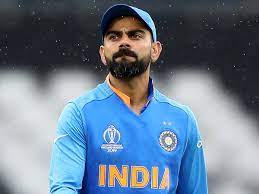
Tribute paid to Virat Kohli’s Beard Power which led to Indian Test success
The Beard Liberation Front, the informal network of beard wearers, has paid tribute to Indian cricket captain Virat Kohli’s expert use of Beard Power as he stepped down from the role after the conclusion of the Test series against South Africa.
The campaigners say that careful analysis, often missed by a largely clean shaven commentariat, shows that at every important stage of the Tests in which he was captain from 2015, Kohli was to be seen stroking and tweaking his beard while pondering tactics.
While the beard stroking may send a signal to the rest of the team, it is also a device to allow the Indian captain to take a little time to review and determine options on the field.
Of the 68 Tests in which he captained India Kohli won 40, lost 17 and drew 11
BLF Organiser Keith Flett said, Virat Kohli deployed his beard on the field in a way unparalleled in recent cricket. He is an icon of Beard Power in Test cricket.
After the Ashes. England Test cricket & class. A Change Is Gonna Come….
The debacle of the Ashes series just ended together with issues of racism in County cricket underline an urgent need for change in English and Welsh cricket. A broadening of its base is one part of that.
Out of the 11 England men’s players to face Australia at Sydney for the Fourth Test just 3 went to State Schools- Ben Stokes, Mark Wood and Jimmy Anderson. That is about average in recent years. A recent statistical survey suggested the figure was around 37%. By contrast the England men’s football team has an average of 86%.
That is not to suggest that the England X1 are anything but good cricketers. No doubt part of the next few weeks will be spent discussing their strengths and weaknesses. One context to that must be the enormous stress and strain the players will have felt playing under all manner of restrictions since the English summer of 2020. That’s a long time now.
It does however still suggest that English cricket is very narrowly class based and is missing out on a huge range of potential talent from State education students.
Indeed of the England Under-19 team currently playing in the World Cup I can find at most 2 who went to State schools. They are part of the future of English cricket but there should be more to it than just the perpetuation public school rule at the top level, good though the players may be.
A further interesting point is that of the three players at Sydney who went to State schools two are fast bowlers and third Ben Stokes is an all-rounder who also bowls. It looks like the Gentlemen (batsmen) v Players (bowlers) distinction which was abolished in the early 1960s still in practice exists. Of course there were some Gentleman bowlers and some batsman who were Players but the general point maintains
Times have changed, or they should have.
Unfortunately I note in the last few days the ECB appear to be planning a further lengthy deal with Sky to show England Home Tests. There is nothing wrong with Sky coverage (providing you can pay for it) but it gets relatively few viewers and certainly wont be ‘selling’ Test cricket to new generations on that basis because they won’t be watching.
Hazel Woolley is right about Ambridge. That’s why it’s so interesting
Hazel Woolley’s latest appearance in Ambridge appears to be a brief one. She has worked out that no one in the village likes her. Hence she has re-let the flat above the village shop that she booted Tom and Natasha out of and reminded Peggy that Ambridge is a small minded shithole.
She’s right of course but this is what makes the place so interesting. We’ve had over 70 years of rural dystopia and look forward to more, unless of course we can get the red flag flying on the village green in which case the future will be bright.
This week's Ambridge Socialist poll.Hazel Woolley described Ambridge as 'parochial, self-satisfied, two-bit' Was she right?
Stella comes to realise that everyone in Ambridge is related to each other
Vince Casey made the discovery last year and now the new farmer manager at Home Farm Stella is coming to realise that in Ambridge everyone is related to everyone else (except Sgt Knacker Burns obviously). In this case she agreed to employ Alice on a part-time basis only to find Ed objecting over a previous incident Alice had been involved. Alice doesn’t work there anymore now.
Mike needs to lose weight
Like many men of his age Mike Tucker needs to lose weight. Drinking down the Bull and eating curries aren’t helping but on the other hand Mike has an active lifestyle which will be helping.
Lockdown breaches in Ambridge
Were there lockdown breaches in Ambridge? Almost certainly as most of the time the residents didn’t seem to be aware they were in one. Fortunately for them they have someone even more effective than the Met at not investigating the matter, the aforementioned Sgt Burns.
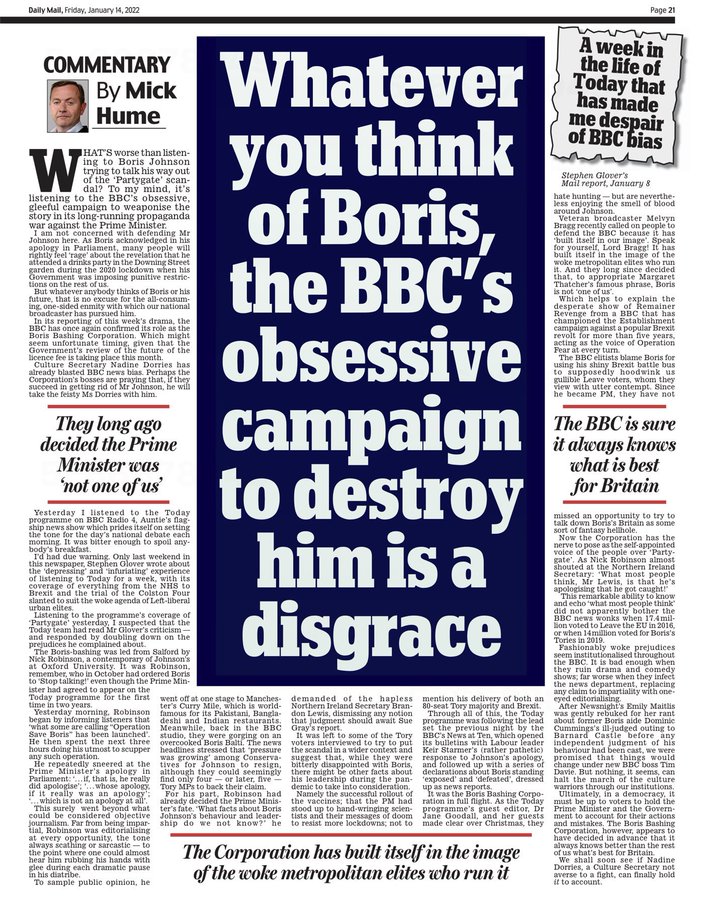
The Guardian once reported ‘Keith Flett’ was the Editor of Living Marxism’ but even I don’t think the BBC is trying to destroy Boris Johnson
There was a time in December 1989 when the Guardian reported that I was the Editor of Living Marxism.
LM was the glossy magazine of the Revolutionary Communist Party and was pitching in competition to Marxism Today on the news stands.
It’s no secret that I am a marxist and socialist activist but LM and the RCP were certainly not my variety of left.
The Guardian report by Nigel Fountain was in error. It noted not only that I was the Editor of LM but that I had denied the paper access to my anonymous HQ. Hmmm.
Anyway the Guardian printed an apology and Nigel Fountain who I knew then and I’m pleased to see is still around explained to me that my name had somehow got into his mind as the LM Editor even though of course he knew the identity of the actual Editor and had met them.
My employer of the time (in fact still my employer) expressed some concern. The politics bit has never bothered them, they were just wondering if I had another job.
Now I note that Mick Hume who used to be the real Editor of LM has claimed in a Daily Mail column that the BBC is trying to destroy Boris Johnson. I must say I hadn’t noticed. I’m sometimes annoyed by the apparent partiality of this or that BBC journalist but that’s hardly the same as the relentless right-wing drivel one finds in the Daily Fail.
Hume himself is in a long tradition of those who have moved from the far or hard left to the hard right. Indeed one former LM writer advises Boris Johnson and another sits in the Lords at his behest. From French Maoists to US Trotskyists one can find examples of those who were once on the left appearing on the right. It’s a minority trend and there are examples of the reverse. Tony Benn for example is a well known figure who started out as a mainstream Labour politician but moved significantly to the left over the years.
The Assize of Ale & the moral economy of the cost of a pint of beer in 2022
Sparked by a tweet from the author and beard wearer Michael Rosen about a family member paying £5 for a half of bitter in a North London pub, I think its time to have another look at the price of beer in 2022 and that means the Assize of Ale.
The £5 was clearly an error- the pub in question sells cask and craft beer for around £5.40-£6.80 a pint but it begs the question of how someone who perhaps does not use a pub regularly knows what a fair price is.
50 years ago while the price of a pint varied around the UK it was within a knowable range. Now it isn’t particularly with the rise of Pub Cos. For example Wetherspoons in London sells locally brewed (& usually very good) cask ales for £1.99. Elsewhere you might pay £4.50-5 a pint
Below is an edited piece that appeared on the Culture Matters site which argues that some form of an Assize of Ale might be a democratic way forward:
The price of beer has been a significant issue in the history of Britain. Until the beginning of the 1800s the cost of a pint of beer was set by law and governed by an Assize of Ale. The law took account of the price of raw materials such as malted barley and allowed different prices for beers of superior quality. It was enforced by ale tasters or ale conners who had the difficult task of tasting beer from brewers. They checked particularly for beer quality and price.
Brewers who transgressed were subject to fines and ultimately if probably rather rarely to physical punishment. The holding of Assizes of Ale was patchy but the principle was underwritten by the idea of what E.P. Thompson called a moral economy. Beer was a staple of the poor person’s diet in pre-industrial England along with bread, which was also subject to price control by an Assize. Water was not safe to drink and lower strength or table beer was the standard liquid consumption.
In the two hundred years or so since the rise of market capitalism and the decline of the Assize of Ale the price of a pint has continued to be a key issue. The State has occasionally intervened directly but more frequently consumer pressure was the important thing. Beer in the public bar, frequented by working people, was less expensive and working men’s clubs (women were allowed in at weekends as guests) also sold beer cheaply.
After World War One the Government did set up a State brewery in Carlisle with associated pubs that sold beer at a regulated price and strength. It was eventually sold to Theakstons. It was though a successful experiment that might be a template for a time when the untrammelled market does not rule all.
Obviously for those on a limited income, pensioners, those in low paid jobs or unemployed a cheap pint is important. The alternative is to suggest that only the well to do should drink beer. This important point is far too easily overlooked. Wetherspoons can be criticised for squeezing brewers profit margins to the bone but if it means someone with little money can afford a pint it is not wholly bad, at least for the drinker.
In short the price of a pint is a matter of as much complexity as it was when the Assizes of Ale sat in judgement on such matters. An attempt to impose a moral economy of beer as opposed to a political economy where profit dominates all is surely in tune with the mood of the times. Profit should not dominate the quality of the beer produced and the price people have to pay for it, even if we accept that if brewers don’t make money they certainly won’t produce beer until we manage to move to a socialist economic order.
With the Assize of Ale if the quality and price of beer were not to the standard expected, remedial action followed. It was a way of controlling the market that took account of the market but didn’t allow brewers to take advantage of it or drinkers to suffer because of it. Putting people before profit when it comes to a staple like beer is as important to the daily lives of many as making sure companies pay their taxes.
Perhaps it is time to bring back the Assize of Ale.
Memoirs of a City of London office worker Spring 2021. Not partying on
While little about what Boris Johnson & Co do or don’t get up to surprises me, given his well documented history continuing stories about parties in 10 Downing St during periods when restrictions on gatherings and so on were in place due to COVID do surprise a little.
I appreciate that some people may think that trade unions and trade union organisation don’t exist in the City of London but they do. I’m a trade union officer who represents managers and professionals in the City and in particular (but not only)at the HQ of one of the UK’s largest companies there.
In April 2021 I was of course not there but working from home as most other City office workers were. My actual office near Blackfriars was closed (for office purposes) but the HQ at the Stock Exchange of the City was open for essential purposes.
When things opened up a bit in the autumn I talked to the building manager, who was there in Spring 2021 to keep an eye on matters, about what the City had been like then. They noted that it was very quiet indeed aside from tumbleweed blowing about.
Indeed a few people had been in the office, safely. Essentially those who for one reason or another could not work from home. Then there were those who retired at that time. The matter could not be marked in the office with goodbyes and then a drink at a nearby pub (they were shut). The building manager explained that on occasion people had been allowed to bring their families in to show them where they had worked.
The black leader of London Chartism, Hobart & the 5th Ashes Test
Hobart in Tasmania is hosting the final 5th Test in the current Ashes series between Australia and England. It’s the first ever Ashes game at Hobart but cricket there goes back to the early nineteenth century when it was brought to the town by British military and missionary personnel. The inhabitants of the area at this point were twofold. Firstly the existing indigenous population and secondly convicts transported from Britain.
Both groups played cricket often against each other with the British governing class population (a small number)also participating.
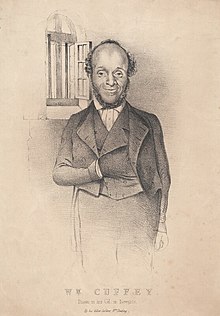
One of the convicts in Hobart from 1850 to 1870 (when died aged 82) was the black leader of London Chartism William Cuffay. Cuffay, a tailor by trade had been sentenced to transportation for his alleged part in a putative central London Chartist rising at Seven Dials in August 1848.
As a political prisoner he was left to work and organise in Hobart and was in fact pardoned in 1857. Its not clear if he played or watched cricket. He was perhaps rather old to play. He had been known as a theatre performer in London and may well have continued this in Hobart so we do know that his interests extended beyond political organising.
Between 1846 and 1848 he was the auditor of the Chartist Land Scheme that built small agricultural villages in England and allowed Chartist supporters to opt out of factory work. The scheme ultimately failed, frustrated by Government refusal to make it legal. However villages were built including the first at O’Connorville which is at Rickmansworth (just off the M25). The houses-now dwellings for the better off still stand.
On 6th August 1847 the Chartist Northern Star reported a cricket match that was played there to mark the election of Chartist leader Feargus O’Connor as the MP for Nottingham. Did Cuffay attend? We don’t know although when he was arrested in August 1848 a banner from the Westminster Chartist branch that had been used at O’Connorville was found in his rooms.