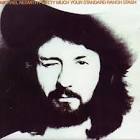
Tribute paid to Michael Nesmith clean shaven musician who came to appreciate beard power
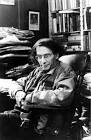
The Beard Liberation Front, the informal network of beard wearers, has paid tribute to the musician Michael Nesmith (1942-2021) who has died at 78.
Nesmith was part of the Monkees, a ‘manufactured’ pop band in the late 1960s who had a number of hit records. In fact however Nesmith was a talented musician who went on to have a successful career in a musical style which is known in 2021 as Americana.
During his solo career he frequently wore a gravitas adding beard drawing a distinctive line with the fresh faced clean shaven image of the Monkees
BLF Organiser Keith Flett said, Michael Nesmith’s solo career and hirsute image deserve to be remembered as making a significant contribution to music over almost 5 decades
CALL FOR FAKE SANTA BEARDS TO BE BANNED ON SAFETY GROUNDS
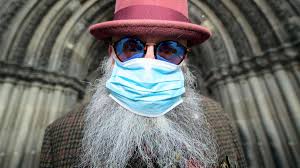
The Campaign for Real Santas, which promotes Santas with genuine organic beards, has called for fake Santa beards, commonly seen in December, to be banned on safety grounds.
The campaigners say that while there are no existing scientific studies, there is an obvious danger that ‘Santas’ coughing, spluttering, or sneezing into their false beards could mean that they become carriers of COVID-19,flu and other infections.
This is particularly so when fake Santa beards are likely to be worn over lengthy periods without cleaning or washing taking place.
With unemployment and under-employment amongst mature men over 50, there is absolutely no reason for anyone to use an assistant Santa who does not have a real beard.
While the chances of fake Santa beards spreading infection may be relatively small, given the exposure children may have to them, it remains case that a Santa with a fake beard could be a ‘super spreader’ of infection
CFRS organiser Keith Flett said, in calling for fake Santa beards to be banned on safety grounds we want to underline that we are not seeking to ban Santa. Far from it in fact. There are plenty of people with genuine beards, well maintained, clean and safe, to fulfil the role.
THREE STEPS TO SPOT A GENUINE SANTA
1 Ask the virtual Santa to tug their beard. If it comes away, then the Santa is FAKE
2 If the beard remains intact ask the virtual Santa to tug their beard again. If the Santa swears then they are genuine. If they simply repeat a ‘ho ho ho’ mantra they are FAKE
3 The Campaign for Real Santas says that genuine Santas must have just the right mix of bonhomie and grumpiness and a real organic beard.
Notes
The Organic Santa of 2021 will be named on December 18th. The winner in 2020 was Michael Rosen
The Campaign for Real Santas is organised by the Beard Liberation Front
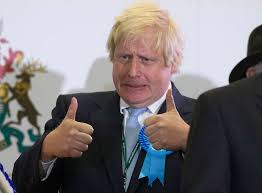
Following an increase in the scandals surrounding Boris Johnson, including his Downing St flat refurb and Downing St Xmas parties in 2020, Labour has taken a lead in two opinion polls published on 9th December. Stephen Bush, currently of the New Statesman but due to move to the FT has noted that polls don’t matter much during a Parliamentary mid-term. Broadly I agree but if a trend of Labour leads is established it becomes more significant.
We can see this in the period 1992-1997
We can’t obviously be sure what moves the polls but I do think that there is some evidence that there are particular events which change people’s minds on a long-term basis, as Black Wednesday seems to have done in 1992
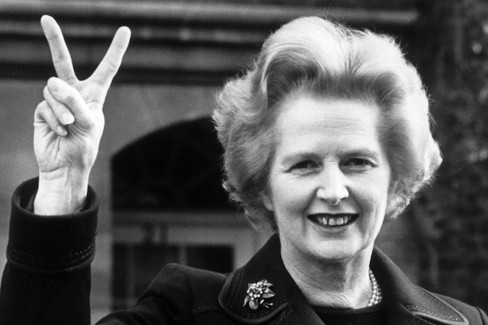
By 1992 Thatcher had been forced to resign over the Poll Tax debacle and was replaced by John Major. Major, unexpectedly and quite narrowly, beat Labour, led by Neil Kinnock, in a General Election on 9th April 1992. For the few months afterwards the Tories led Labour on average by 5 points in the opinion polls.
Then came Wednesday 16th September 1992, ‘Black Wednesday’. On that day the Tory Government withdrew the pound from the European Exchange Rate Mechanism (ERM). In order to protect the pound Chancellor Lamont raised interest rates from 10% to 12% in the morning, and then up to 15% in the afternoon.
The following day interest rates returned to 10% but the damage was done in terms of electoral standing. Voters with mortgages, perhaps more inclined to vote Tory, had seen the spectre of the cost rising by 50% in a day. If it had happened once clearly it could happen again.
By November 1992 polls were showing ratings of around 30% for the Tories and 50% for Labour. They changed little until the eventual election in 1997. Labour’s lead was nothing to do with Blair, who wasn’t Labour leader in 1992, but with an event so potentially cataclysmic in its impact that it stuck in voter’s minds.
It’s worth pointing out (thanks to Lindsey German for this point)that the October 1992 pit closure crisis underlined and amplified the Tory crisis. The Tories had spent the mid-1980s demonising and defeating the miners on pit closures. But when Heseltine tried again in 1992 the mood was very different. Public support swung behing Arthur Scargill and the NUM’s efforts to stop further closures.
One wonders if the latest scandals to surround Johnson will see the start of the same long term poll trend? The next few months will tell us. Whether you think Starmer is a decent Labour leader or not, it wont be much to do with anything he does or doesnt promote. What 1992 suggests is that its about Tory crisis and whether the left and labour movement can galvanise the mood around that which has the real impact
Morning Star Editor Ben Chacko makes some very good points on the balance between the left fighting the rightward drift in Labour and building a wider fight from below:
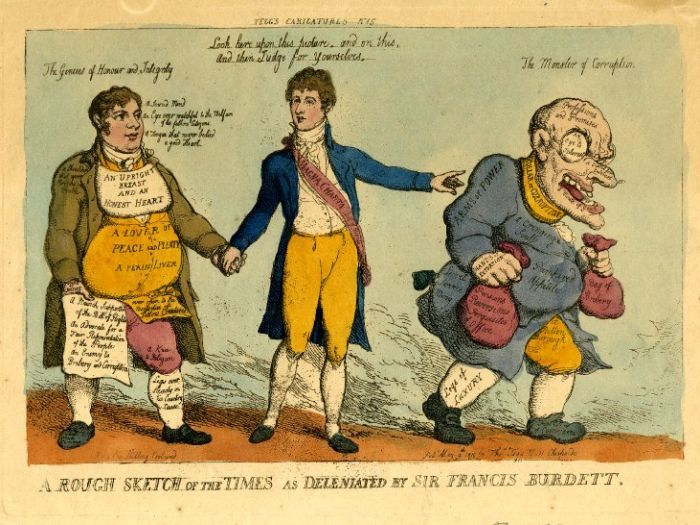
Prince Charles, the Tory Treasurer & Boris Johnson’s No.10 flat. A tale of ‘Old Corruption’
In the wider story of the links between Prince Charles, his nephew and Tory fund raiser Ben Elliott and Boris Johnson the Sunday Times reported an interesting detail that hasn’t had coverage.
Prince Charles successfully raised funds to save the historic Dumfries House in Scotland. Part of the plan was to build Knockroon a model community similar to Poundbury near Dorchester. After the financial crash of 2008 this proved problematic and only 34 out of 770 houses were built.
A donor bought 9 of those houses. He was Lord Brownlow of Shurlock Row. He is a property developer. Lord Brownlow, a friend of Prince Charles, also paid the £58,000 for the renovation of Boris Johnson’s flat that it had become clear could not come from public funds and from which also Tory Treasurer Elliott steered clear. Lord Brownlow was Vice Chair of the Tory Party 2017-2020.
The Tory Party has now been fined £17,800 by the Electoral Commission for failing to properly account for the payments (BBC report below). While the Tories regularly tread a fine line between dodgy and illegal activities here they have fallen on the wrong side of it(they have 28 days to appeal)
It was Old Corruption in the sense of William Cobbett, a political system based not on merit or democracy but on who you know.
Raphael Samuel, socialist historian (26 Dec 1934- 9 Dec 1996)
It is 27 years since the death of one of the most significant socialist historians of the post-1945 era Raphael Samuel. His work, focused as it was on the recovery of working class and plebeian history and dominated by the rigour of the carefully researched footnote deserves to be not just remembered but taken as an exemplar.
Below is an obituary that appeared in Socialist Review January 1997
Obituary: Artisan of history
Keith Flett
Raphael Samuel, who has died aged 61, was a youthful member of the Communist Party Historians’ Group in the 1950s when its leading members included Eric Hobsbawm and E P Thompson. However, he left the CP in 1956 and as a socialist historian he was very much a child of the `new left’ and the upheavals of the 1960s.
Samuel studied under Christopher Hill at Balliol College, Oxford, in the early 1950s, but, unlike the older generation of Marxist historians, Samuel never sought academic advancement. His published work, usually under the banner of the History Workshop, was invariably a collaborative exercise, and for more than 30 years from 1962 he remained a tutor at Ruskin College, Oxford, encouraging mature trade union students to take an interest in historical research. History Workshop collections edited by Samuel, such as Village Life and Labour and Miners, Quarrymen and Saltworkers, opened up a focus on the history of ordinary working people, and the essays were usually written by `worker historians’ often students of Samuel at Ruskin. So 13 History Workshop pamphlets including Stan Shipley’s Club Life and Socialism in mid-Victorian London were published between 1970 and 1974. Shipley had been an AEU branch secretary in Walthamstow.
Perhaps ironically, shortly before his death Samuel was persuaded to take a long overdue and much deserved professorship at a new centre for the study of community in the East End of London at the University of East London.
Samuel was a key figure behind the rise of the History Workshop movement which began life at Ruskin College, Oxford, in 1966 as an informal seminar on the English countryside in the 19th century. The principal, Samuel has related, almost closed it down, worried that students were listening to each other rather than to the lecturers. History Workshop Journal followed in 1975. The Workshops in particular brought together large numbers of rank and file socialist historians committed to recovering the past from the viewpoint of ordinary people. Early sessions famously included topics such as `A Day With the Chartists’ which sought to recreate the ideas, experiences and conditions that the Chartists had encountered. The Workshop in particular became very much a product, as Samuel recorded in People’s History and Socialist Theory [1981], of the events and enthusiasms of 1968. Ruskin was out on strike days before the Paris events of May 1968.
Raphael Samuel was one of the most prominent historians in the country to support history from below the attempt to actively recover the history of ordinary people and their movements. In many ways this was a step forward from the sometimes rather rigid orthodoxies of more mechanical Marxist histories. It fed in directly, too, to the resurgence of socialist ideas after 1968 and to the birth of the women’s movement in which the History Workshop Conference of November 1968 played a central organising role.
Samuel could be fiercely critical of socialists with whom he disagreed. Debate has raged, for example, about whether a series of articles he wrote about the Communist Party in the 1940s and 1950s in New Left Review under the title `The Lost World of British Communism’ was an attempt to write an affectionate history from below of what it had been like to be a CP member before 1956 or an attack on any kind of left wing political activism.
He was nevertheless a great enthusiast for history and a great encourager of people engaged in socialist historical research. His energy and productivity knew no bounds, whether it was in organising meetings or producing articles.
With his untimely death socialists can make a preliminary attempt to draw a balance sheet of what Raphael achieved. The History Workshop movement, of which Samuel published a 25 year history in 1991, has declined and become, to an extent, sucked into academic respectability. In recent years it has dropped its masthead describing it as a journal of `socialist and feminist historians’ as it has reflected the pessimism of some on the left about the prospects for change after the collapse of Stalinism. Certainly the early, welcome, focus on working class history and movements and direct links to political activity in the present have largely gone. Gone too is the commitment to `worker historians’. In its place has come a certain attraction to the ideas of postmodernism. Both the History Workshop where it still functions and History Workshop Journal, however, remain battlegrounds, in historical terms, for many of the ideas, good and bad, which are current on the left. Their influence, and that of Samuel, has been immense. Groups and publications inspired by them exist in many countries.
History from below as practised by Samuel and others has also met its limitations. In many cases it has led towards an interest in ephemera and detailed micro-histories which, while of interest to the historian, are certainly not about changing the world. Samuel himself in recent years became increasingly interested, as his 1994 collection of articles Theatres of Memory indicates, in recovering the popular history of culture, cultural objects and artefacts. Samuel saw this interest in heritage as a real living people’s history, genuinely democratic and open to all. It is as a people’s historian rather than as a socialist historian that he would probably wish to be remembered.
Even so socialist history in this country would have been and will be much the poorer without Raphael. He kept his commitment and his ability to argue to the end. I came across him at the Bishopsgate Institute, opposite Liverpool Street station, which was to be the centre of his new chair, weeks before his death.
Despite being terribly ill he found time not only to enquire into my own research but to have a spirited debate about whether Charles Bradlaugh’s National Secular Society, formed in 1866, was a proto-Labour Party. That was Raphael, argumentative and passionate about his history to the end. He was and remained a real product of the 1960s with all the good and bad points that flow from that.
Jeremy Corbyn in Beard Off vote for Parliamentary Beard of the Year
The Beard Liberation Front, the informal network of beard wearers, has said that voting for the first close shave round of Parliamentary Beard of the Year 2021 has ended with Andy McDonald and Stephen Kinnock going through to the Beard Off round.
Voting for the second and final close shave round saw Jeremy Corbyn, the MP who has won the accolade more times than any other MP the easy winner with Jon Trickett second.
Eight initial candidates attempted to shave each other for the coveted annual accolade. Last year’s winner Stuart Anderson MP has mislaid his beard during the year and does not feature.
The winner of Parliamentary Beard of the Year will be announced on 14th December
BLF Organiser Keith Flett said, as usual it’s not about whether the politics of a particular MP are approved of or not. It is about the positive impact their beard has had in the public eye during the year, or not as the case may be. There are no whips or block votes involved so it’s entirely down to public support.
Parliamentary Beard of the Year 2021 shortlist. Final Beard Off
Final Beard Off vote for Parliamentary Beard of the Year 2021
Jeremy Corbyn, (Independent Labour, Islington North)
Andy McDonald (Labour, Middlesbrough)
Jon Trickett (Labour, Hemsworth)
Stephen Kinnock (Labour, Aberavon)
Voting began on 1st December. Two preliminary close shave rounds will provide four finalists for a Beard Off round with the result announced on 14th December
The names of Boris Johnson’s children. Is Margaret the next in line?
The lives of Boris Johnson’s children are of no public interest, unless they themselves decide to make it so, but their names as decided, one hopes between Johnson and his partner of the moment, have some passing note.
Sonia Purnell’s biography of Johnson, Just Boris, reports that he wanted to call his first child with his ex-wife Marina Wheeler, Lettice. It is (of course) a Latin name used in Medieval English the modern translation of which is Letitia. Ms Wheeler’s preference won-out and the baby was named Lara.
His first baby with Carrie Symonds has been called Wilfred, Old English, which seems like a modest step forward from the Latin. Wilfrid (634-709) was an Anglo-Saxon Saint and Bishop of York. The name fell into disuse but was revived from the nineteenth century on having nowadays perhaps an association with Victoriana.
Carrie has now given birth to a second baby- a girl. It remains to be seen if the progress in history continues and a name associated with the twentieth century is chosen. Margaret perhaps?
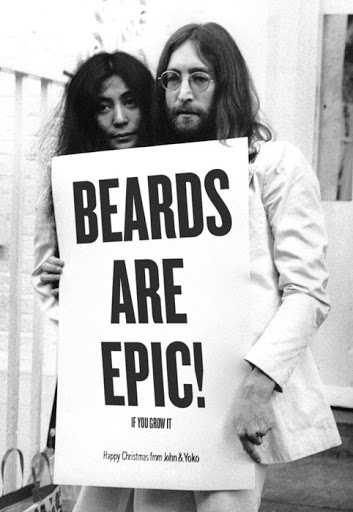
John Lennon 9 Oct 1940-8 Dec 1980. From Can’t Buy Me Love to Revolution.
John Lennon was shot and killed 41 years ago on 8th December 1980, aged 40.
In the days long before 24 hour news, social media, the interwebs and mobiles news travelled more slowly. I recall hearing of Lennon’s death at a trade union committee meeting in New Barnet. I was 24 and even that age slightly too young to have been around for the Beatles peak period in the sense of buying their records, at least until the late 1960s.
41 years after his death Lennon has passed into history himself now (30 years being one benchmark between history and the present broadly speaking). How he will be remembered by those who do remember him and those who don’t is an interesting question. The Lennon of Cant Buy Me Love or the Lennon of Revolution? Or both perhaps…
The Beatles released the John Lennon song Revolution on 26th August 1968 and sat at No.1 in the charts for 12 weeks.
Revolution was the ‘b’ side to a rather better-known Beatles song, Hey Jude. If that song has primarily endured as something that audiences at major events worry Paul McCartney may pop up and try to sing, Lennon’s thoughts on revolutionary politics remain of interest.
The chronicler of Beatles songs, the late Ian McDonald, noted that the musical range that spanned Lennon’s earlier song, I Am the Walrus, and Revolution was unmatched by any post-1945 musician.
The song was rejected as an ‘A’ side officially because it was too slow but really because McCartney, at that time, regarded it as politically controversial. The singer later changed his position and released Give Ireland Back to the Irish, as a single which was promptly banned by the BBC. Revolution never was.
Revolution was recorded in May 1968 as the Paris ‘nights of the barricades’ reached their peak. However alternative and longer versions of Revolution appeared on the Beatles White Album.
But it was not the music of Revolution, essentially a slow blues, that caused comment and controversy but the words.
In particular debate centred around Lennon’s words that ‘when you talk about destruction’ you can ‘count me out’ which on an alternative version he sang as ‘count me in’.
Those used to British TV in 2020 may be slightly amazed that a video of the Beatles performing Revolution was aired on the BBC’s Top of the Pops in September 1968.
Lennon’s drift in the song was that change in society had to come through ‘peace and love’ rather than a more combative approach to capitalism.
It was not well received by the left, which considering the furore it caused on the right was unfortunate for Lennon.
Lennon was clearly alive to the Beatles main audience in 1968, a worldwide one of youth who were rapidly becoming radicalised.
The Rolling Stones had very much the same idea with Street Fighting Man, a song which now sounds distinctly odd when sung by Sir Michael Jagger.
Lennon’s track provoked an article in Time magazine and a critical response in song from Nina Simone that deserves to be better known particularly in the age of Black Lives Matter.
The British radical paper Black Dwarf attacked the peaceful sentiments of Revolution, provoking an exchange on revolutionary politics between Lennon and the paper’s Editors. In the US the new left saw it as a ‘betrayal’ of the movement and a ‘petty bourgeois cry of fear’.
Ian MacDonald nevertheless argued that the song was the first ‘crack in the Beatles corporate façade’, while, no leftist himself, going on to note that by 1987 Revolution was being used by a Nike in an advert to promote its training shoes.
Historical hindsight tells us that Lennon himself was a on a political journey, reflected in the words of the song and his indecision about whether he supported the ‘peace and love’ pacificism of the 1967/8 period or the harder revolutionary politics that began to appear as the 1960s drew to a close.
By 1970 the Beatles had split up and Lennon was in the US, often seen as a participant on left-wing demonstrations and reportedly funding left-wing campaigns. Certainly by that time the man who had sung Can’t Buy Me Love less than 10 years before was regarded by the FBI as a political subversive whose activities needed to be watched
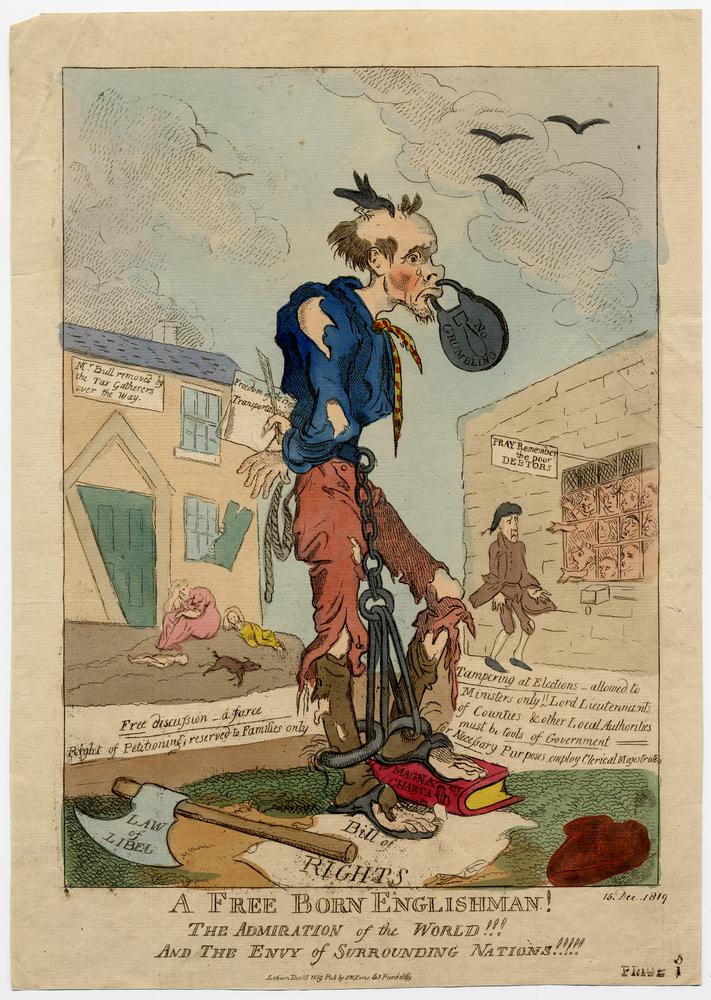
From the Six Acts 1819 to the Police, Crime, Sentencing and Courts Bill 2021. Tory attacks on the right to protest have a long history
The Tories Police, Crime, Sentencing and Courts Bill has been back in the Commons today. From earlier rounds Priti Patel has added another 18 pages of illiberal measures to restrict and ban protests
The Bill is a ragbag of measures which proposes amongst other things a possible 10 years in prison for damaging a statue, rather more than the penalty for rape. It also gives the police even greater power to restrict protests.
The Tories have a long history of this sort of thing.
One of the Six Acts, which were actually formally passed in December 1819 after Peterloo, was the Seditious Meetings Act.
Under the Act all meetings of more than 50 people- in reality no more than 49 persons- were allowed. This included any meeting: “for the purpose…of deliberating upon any public grievance, or upon any matter or thing relating to any trade, manufacture, business, or profession, or upon any matter in church or state,”.
The only exception were meetings called by an ‘authorised official’. In addition a meeting of people in one specific area could be called provided permission was given by a Justice of the Peace. He of course required six days-notice. At such meetings no banners, flags or emblems of any sort were allowed.
While the Act was repealed in 1824 a related limit of no more than 49 delegates at any representative gathering remained in place through the Chartist period up to1848.
Indeed in order to try and avoid official interference in protest meetings, these were often held out of town in remote rural spots well away from the reach of the authorities.
It took many years of political organising by the trade unions, the Chartists and others to get rid of these restrictions. It is a perpetual fight but the perspective is important. The Tories talk of freedom, in practice its actual defenders come from a rather different place.
London Fields Brewery shut by Carlsberg: the importance of union organisation
London Fields Brewery in Hackney was shut with immediate effect on Tuesday.
An unknown number of people will either lose their jobs or ideally Carlsberg should find them suitable alternative employment (it does after all have a very large UK operation). Suitable alternative employment is a term in redundancy law and Carlsberg are legally required to open a period of collective and individual consultation with those effected. At that consultation counter proposals can be made to suggest different ways of doing things to save jobs.
All that of course implies that a union was recognised at LFB, which as far as I know it wasn’t. In practice workers will get statutory redundancy terms based on length of service which won’t amount to very much.
If a union had been recognised a sudden announcement of closure before Xmas might well have been avoided.
Carlsberg ran LFB in a joint venture with Brooklyn but its clear from the post announcement media statement that Carlsberg are the owners. They claim the LFB core range beers had seen significant falls in sales and hence, one presumes, were making a loss.
Carlsberg become the second global brewer to draw back from craft beer in recent weeks after Molson Coors sold the Hopstuff plant and bars to Salt. Molson Coors have retained the brand name but Carlsberg have stated that are looking for a buyer for the LFB brewery who will continue the brand. In the meantime the beers are being brewed at Camerons underlining that Carlsberg want to sell it as a going concern. One wonders if there will be any takers..