The start of winter nights in London: the history of the poor & night shelters
On Wednesday morning in Tottenham there was the first mild frost of the winter. On Thursday night the temperature was set to fall to 2C. Not freezing but very cold if you have nowhere to go and no heat.
In recent times the Mayor has made efforts to provide overnight shelter for those on the streets as winter weather sets in. The situation is certainly worse because of the pandemic. Nor is it a new thing
In his essay Comers and Goers (in Dyos, the Victorian City), the late historian Raph Samuel surveyed the seasonal migration of labour into and out of cities in the late Victorian period.
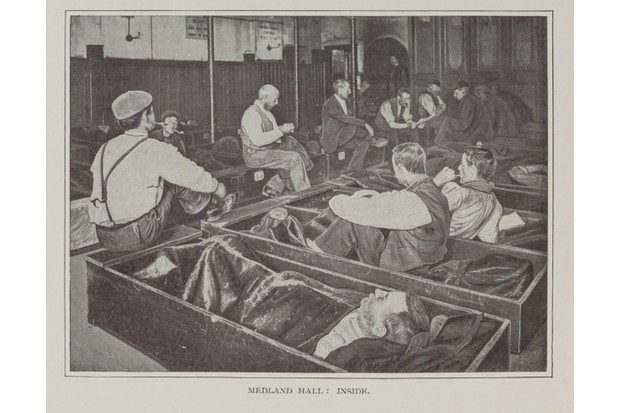
He noted that many came to winter in London, where, depending on the weather, night shelters, straw yards as they were called by those who used them, funded by private charity, opened up each November. The shelters were free and without obligation. People could stay for up to a month and they were heated with a huge open fire. The largest was at Playhouse Yard Cripplegate. The alternative was the Poor Law funded Casual Ward where a stay was limited to two nights and had to be paid for by a day’s forced labour.
Samuel lists many other places where people slept rough in London including railway arches and around the main hotels where heat was to be found, but the picture remains disturbingly similar 150 years on. Progress….
Owen Paterson resigns but Johnson’s Government is still mired in Old Corruption
There was rightly a furore after Tory MPs (for the most part) voted not to carry through the suspension of Tory MP Owen Paterson (Paterson himself voted against his suspension) for dealings which Keir Starmer has rightly labelled ‘corruption,
MPs have standards of behaviour and an independent committee found that Patterson had broken them. Johnson’s response was to back the committee but to have a look and see if rules can be changed to allow corrupt dealings.
On Thursday after anger at this attempt to avoid democratic scrutiny and accountability Owen Paterson has resigned as an MP.
The whole episode has an echo in British history perhaps particularly in the views of William Cobbett
EP Thompson encapsulated the Cobbettian worldview in the Making of the English Working Class. Describing Cobbett’s intervention in the 1806 election for the Westminster seat in the unreformed Parliament, he noted how Cobbett summed up the opponents of the radical candidate:
relations of placemen and pensioners’, ‘tax-gatherers, magistrates, policemen and dependent clergy’, ‘play-actors, scene-shifters, candle-snuffers, and persons following.. immoral callings’.
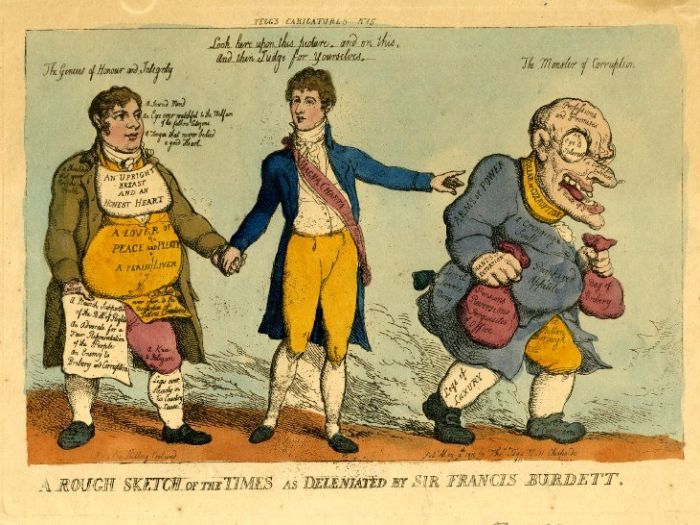
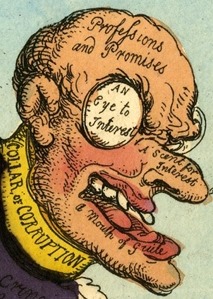
In his Rural Rides, Cobbett criticised ‘pensions, sinecures, tithes and the other ‘glorious institutions’ of this ‘mighty empire’. He referred to this collectively as The Thing.
That world eventually began to change as Parliamentary Democracy started itself to be renewed with the 1832 Reform Act. It might be noted however that the passage of the Act was a fine call between reform and a plebeian revolution.
Its good for Parliamentary democracy that Paterson eventually resigned but the wider point is that Johnson’s Government is deeply mired in the practices of Cobbettian Old Corruption. Sinecures and favours for mates are rampant, democratic practice is not.
The 1832 Reform Act averted a revolution in Britain. If action isn’t taken on Old Corruption 2021 there could be real trouble ahead
Beard Liberation Front sends hirsute greetings to Steve Bell on 40 years of Guardian cartoons
4th November
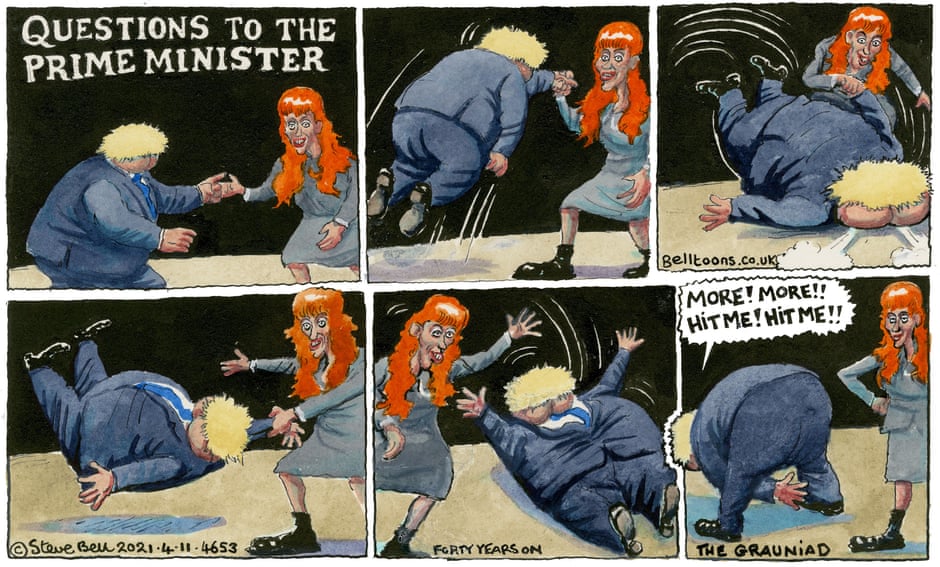
The Beard Liberation Front, the informal network of beard wearers, has sent hirsute greetings to Guardian cartoonist Steve Bell as he marked 40 years of cartoons on the paper on 3rd November with a strip depicting Angela Rayner’s demolition of Johnson at Wednesday’s Prime Minister’s Questions.
The last ‘If’ cartoon strip for the Guardian appeared on 29th April and he started drawing it in November 1981. He stills draws one off cartoons for the paper.
While Bell is far from history his cartoons form part of the social history of Britain since the 1970s.
I first came across his work while teaching in Birmingham in the late 1970s (Bell had been doing the same- though I did history and politics not art) when he drew a strip in the Birmingham Broadside one of a number of alternative press publications that then flourished in the UK post 1968.
His Maggies Farm strip (first in Time Out then City Limits) was an important part of the left’s reaction to Thatcher while his Lord God Almighty cartoons for the Leveller were equally striking.
Then of course came If. The characters and caricatures are a commentary on modern times. The penguins and Kipling are from the Falklands era but are in today’s last strip, Major with his underpants displayed firmly outside and the Inner London Wildlife branch of the Labour Party- again still going and very much needed in times like these.
Bell has noted (see link) while print culture is held to be in decline (the print edition of the Guardian doesn’t sell much more than 100,000 on average and that figure is boosted by a much higher sale for the Saturday edition) we live in an increasingly visual culture and cartoons are ideally suited to it.
So not only has Steve Bell made history his cartoons will continue to do so.
BLF Organiser Keith Flett said Steve Bell’s Beard Power has endured 40 years of clean shaven revisionist politics and his work still has the power to make the powerful bristle
Owen Paterson, the Tories & the Old Corruption of William Cobbett
There has rightly been a furore after Tory MPs (for the most part) voted not to carry through the suspension of Tory MP Owen Paterson (Paterson himself voted against his suspension) for dealings which Keir Starmer has rightly labelled ‘corruption,
MPs have standards of behaviour and an independent committee found that Patterson had broken them. Johnson’s response is to back the committee but to have a look and see if rules can be changed to allow corrupt dealings.
It’s something that has an echo in British history perhaps particularly in the views of William Cobbett
EP Thompson encapsulated the Cobbettian worldview in the Making of the English Working Class. Describing Cobbett’s intervention in the 1806 election for the Westminster seat in the unreformed Parliament, he noted how Cobbett summed up the opponents of the radical candidate:
relations of placemen and pensioners’, ‘tax-gatherers, magistrates, policemen and dependent clergy’, ‘play-actors, scene-shifters, candle-snuffers, and persons following.. immoral callings’.
In his Rural Rides, Cobbett criticised ‘pensions, sinecures, tithes and the other ‘glorious institutions’ of this ‘mighty empire’. He referred to this collectively as The Thing.
That world eventually began to change as Parliamentary Democracy started itself to be renewed with the 1832 Reform Act. It might be noted however that the passage of the Act was a fine call between reform and a plebeian revolution.
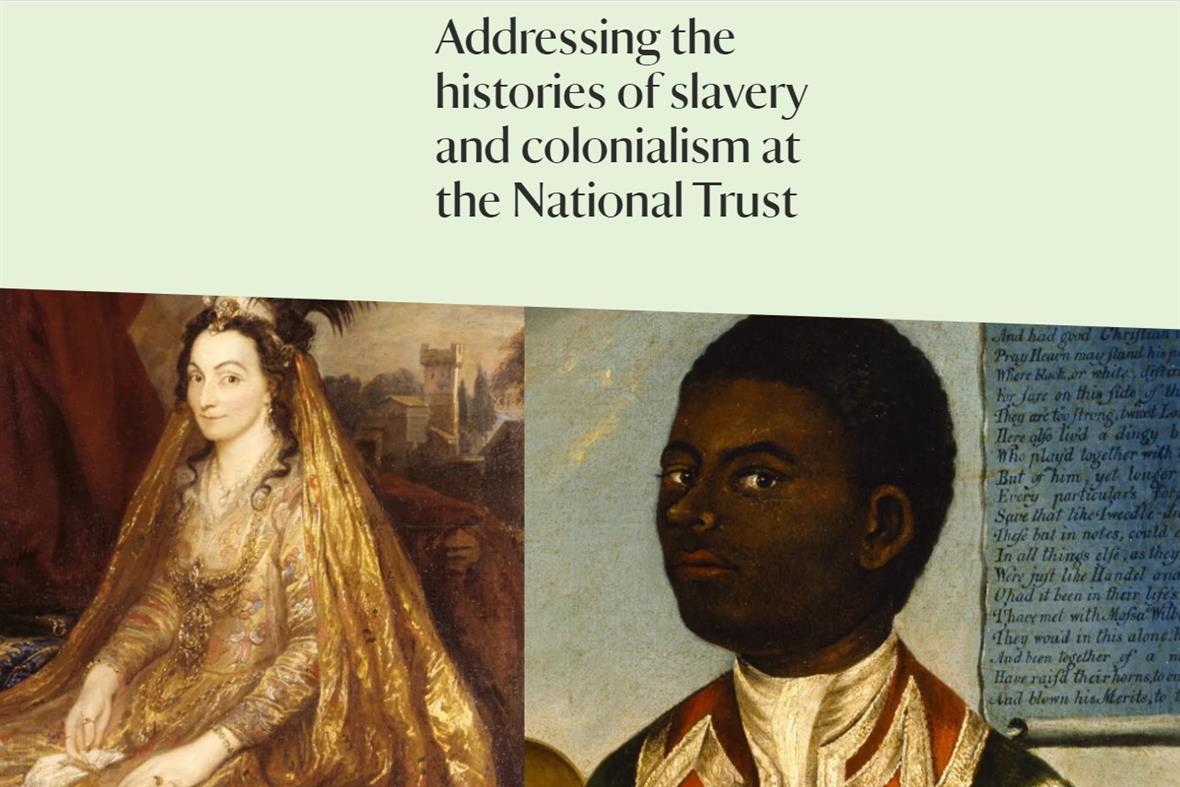
Historians say Today programme attack on National Trust colonial history project reflects poor Editorial judgement.
The London Socialist Historians Group, which organises the socialist history seminar at the Institute of Historical Research, University of London has said that an attack on Radio 4’s Today programme on the National Trust’s colonial history project, reflected poor Editorial judgement by the programme.
Two people were interviewed and both attacked the project without any attempt at a balanced discussion.
Neil Bennett who is the organiser of a hard right group of National Trust members, Restore, claimed that a 2020 report showing that 93 Trust properties was ‘bad history’ while Simon Jenkins opined that those involved in drawing up the report were ‘dire’. Neither man was able to point to any historical errors.
One of those closely involved with the on-going work to document the impact of Britain’s colonial history on the properties the National Trust oversees, Prof. Corinne Fowler has called out the continuing attacks as part of a culture war which has nothing to do with genuine historical research and scholarship.
LSHG Convenor Dr Keith Flett said, we fully support the important research of Prof Fowler and her colleagues. Boris Johnson has said that he wants the whole of British history to be told. The impact of centuries of British colonialism is part of that history. Those who want to airbrush it from the record deserve to be robustly challenged, not allowed to opine without contest as they did on the Today programme.
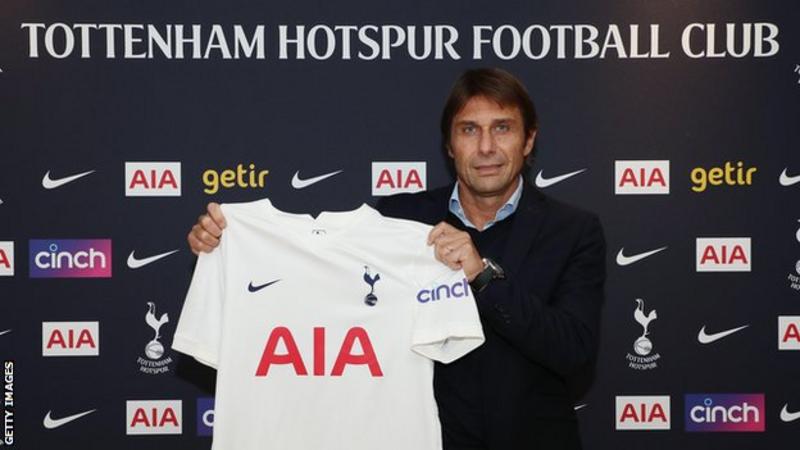
The Beard Liberation Front, the informal network of beard wearers, has raised concerns over the extremely clean shaven appearance of new Spurs manager Antonio Conti
The campaigners say that while Conti has a record of success so did the previous manager, Nuno, until he arrived at White Hart Lane. Nuno was sacked on Monday with follicly challenged Spurs boss Daniel Levy playing a key role.
BLF Organiser Keith Flett said, we believe beard power is a positive thing in modern football. The sacking of Nuno had an element of pogonophobia, and we are from sure Conti’s clean shaven approach will work in North London in 2021
The Tories are continuing to prosecute the Culture War with the appointment of Nadine Dorries as Culture Secretary. This issue of the Newsletter rounds up a number of the interventions the LSHG has made in some particularly high profile instances.
Dorries first act as Culture Secretary was to nod through the destruction of the Dorman Long Tower on Teesside. A monument or statue to the steel industry and steel workers on Teesside it was grade 11 listed by Historic England but that didn’t bother Dorries.
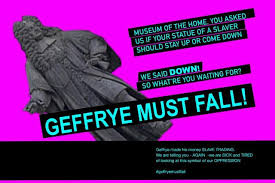
In a war tactics and strategies can vary. The Government’s aim is to invent a layer of people it calls ‘woke’ and in reality promote their history over ours. Hence statues of slave traders must stay at all costs, while the Dorman Long Tower must go.
Dorries predecessor as Culture Secretary Oliver Dowden had pursued a slightly different strategy along the lines of ‘retain and explain’. He oversaw a policy that no statue or monument should be moved or taken down. He claimed he preferred new statues to be erected but in fact during his tenure as Minister none were.
It might be argued that much of this is simply a distraction launched by the Tories while they get on with bashing the working poor.
However it is also something that seeks to establish and dictate exactly what British history is or is not. That is reflected not just in statue wars but in terms of persistent interventions by Tory politicians into what history is taught in schools and Universities.
Labour has had very little to say on this, not least because its clear that the current leader Starmer is not a history man. It is however a task that socialist historians need to address and dispute rather than leave the field to Tory propagandists.
As COP26 starts Boris Johnson & Climate Change. Changing his mind to suit
In September 2021 Boris Johnson defended comments made about climate change by the new International Trade Secretary Anne-Marie Trevelyan in 2010 and 2012 noting that just like him she now saw things differently.
“I don’t want to encourage you, but if you were to excavate some of my articles from 20 years ago you might find comments I made, obiter dicta, about climate change that weren’t entirely supportive of the current struggle, but the facts change and people change their minds and change their views and that’s very important too,” he said, adding: “The fact is the UK is leading the world and you should be proud of it.”
As recently as 2015, Johnson claimed “global leaders were driven by a primitive fear that the present ambient warm weather is somehow caused by humanity; and that fear – as far as I understand the science – is equally without foundation”.
He also wrote an article in 2013 suggesting the government should consider preparing for a mini-ice age caused by solar activity, drawing on a discredited theory by the climate denier Piers Corbyn –
Piers Corbyn claimed that his theory focused on sun spots was based on Marxism (it wasn’t) and it was in any case completely wrong.
Piers Corbyn is at least consistently wrong about all sorts of things. Johnson is more slippery. Whether he actually believes in anything beyond the superiority of free market capitalism, or just says things which he appear politically expedient at the time, is at best questionable particularly as his Janus faced position on Brexit underlined.
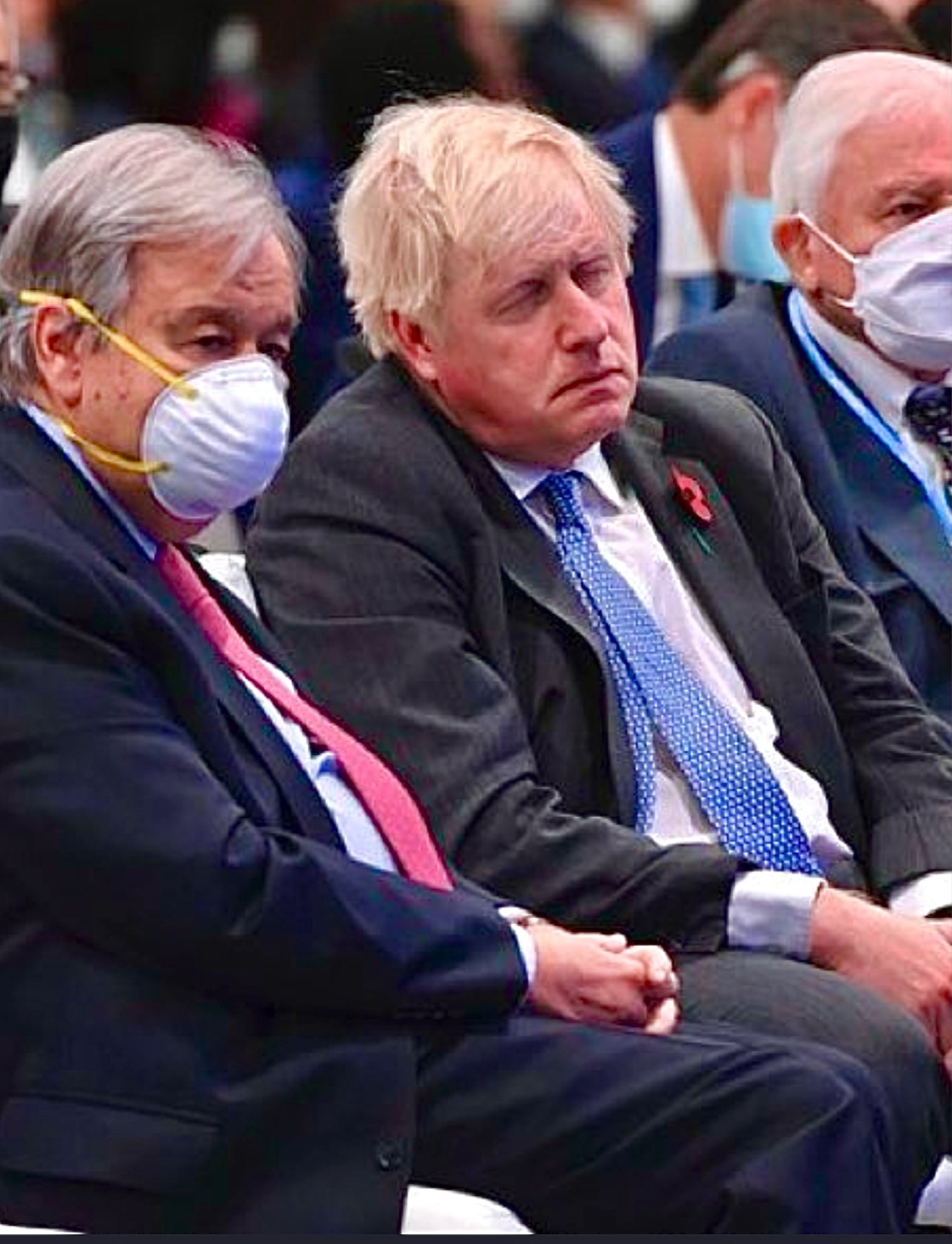
Boris Johnson has been pictured maskless (of course) and asleep at COP26 in Glasgow.
There have been previous claims, denied by Downing St, that Johnson takes naps during the day. Given that he had COVID-19 himself in March/April 2020 this may well be an impact of what is known as Long or Post COVID. If so it’s a pity Johnson doesnt admit it and speak up about it.
That said the most well known picture of napping Johnson (before today) was taken at the Oval cricket ground a while before the pandemic.
More generally I don’t think there is anything wrong with having a brief nap during the day (if the job and circumstances allow). There is something rather macho about suggesting there isn’t.
That of course is another problem for Johnson. Day time naps go counter to the image he has constructed of himself. In her biography of Johnson, Just Boris, Sonia Purnell notes that Johnson compared himself to Margaret Thatcher who slept little and was already busy with the day’s work at 5am.
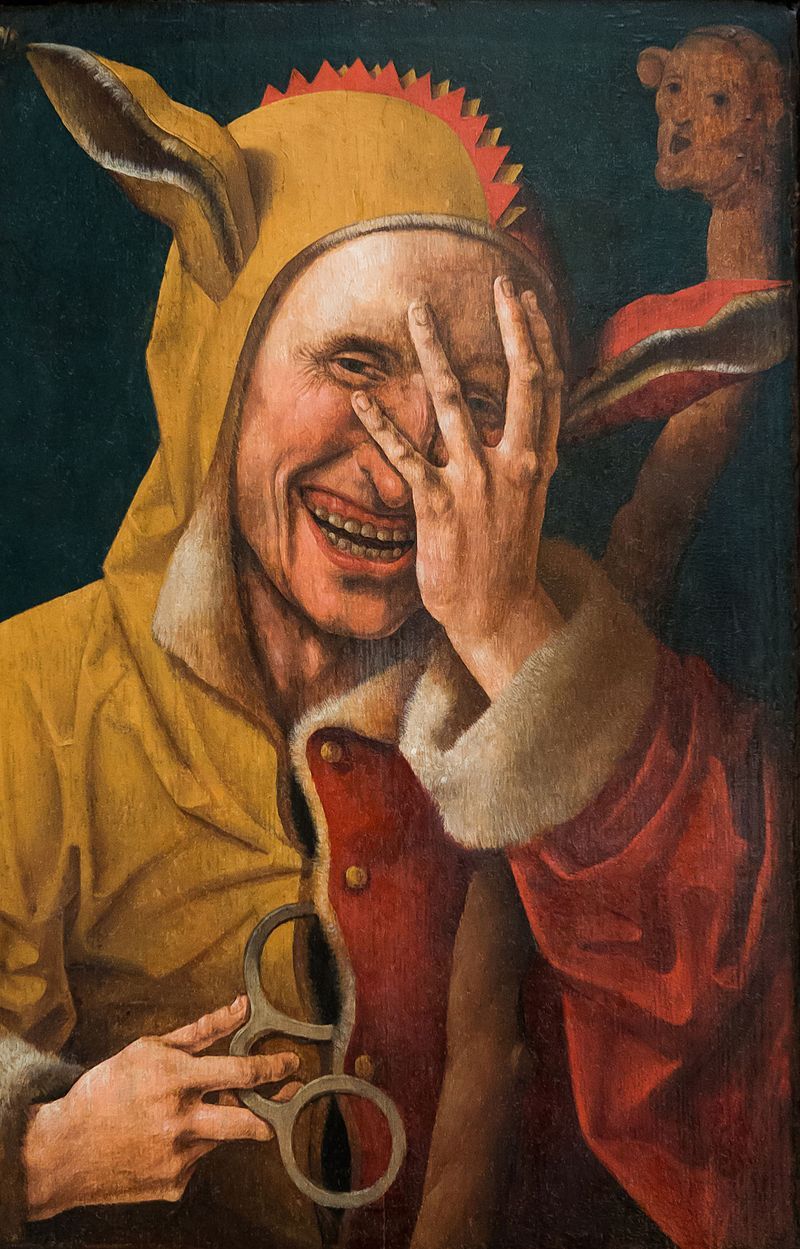
All Saints Day: The World Turned Upside Down as the season of the Lords of Misrule starts
As you can hardly have missed 31st October is the commercial festival of Halloween, more traditionally known as All Hallows. It is also Celtic New Year. The following two days are All Saints Day and then All Souls Day- the Day of the Dead which was a major festival of the Catholic Church in the West.
These festivals mark the changing of the season from summer to winter but there is a lot more to it than the piles of commercial Halloween tat and oversize pumpkins you can find in supermarkets. While a Guardian Editorial in 2015 criticised the crass commercialism of the day as it is currently configured it seemed unaware of some of the other meanings and ways of it being marked.
Traditionally (see Steve Roth, Hamlet the Undiscovered Country) 31st October was the time when disruptive spirits roamed. That is reflected in Shakespeare’s Hamlet. The ghost appears on All Hallows Eve.
Roth notes:
All Hallows was also a time for election of “mock kings,” “lords of revels,” or “kings of misrule.” These lords would reign over the revels season through Christmas and Twelfth Night (5 January, another night of inversion and misrule), often ending their reigns at Candlemas (2 February) or Shrovetide (which had–and has–perhaps the greatest association with carnival and misrule).
31st October was a time of the carnivalesque, of festivities and the appointment of Lords of Misrule. In some parts of the UK November 4th is still marked as ‘mischief day’.
The Lords of Misrule would reign until at least Twelfth Night on January 5th and often until Lent.
They were not always as disruptive as they might sound. They were often a way of providing a safety valve in society to mock authority and important figures without actually in anyway challenging them. The reversal of roles, masks and rebellion were often play acting.
For example in Henry V Shakespeare depicted Sir John Falstaff as the Lord of Misrule. Falstaff is well loved Shakespearan character but I don’t think anyone expects him to lead a riot or a revolt.
That wasn’t always true though. Sometimes the Lords of Misrule genuinely did represent an element of the World Turned Upside Down or at least the potential for it. Winter parades through the streets could lead to confrontations with authority.
I was born on 31st October 1956 but it would be reasonable to say that the event that shaped my outlook on life was not the above but the fact that it was the date Russian tanks rolled into Budapest to crush the Hungarian Revolution, followed by the Allied invasion of Suez
Turning the World Upside Down did not come out of the barrel of a T54 tank or a Western war plane then or at any other time. It comes from revolt from below, and often from the streets and workplaces. The traditional season for that is now firmly open.