THE CRYPT DOOR SWINGS OPEN ON THE SCARIEST HALLOWEEN BEARD POLL
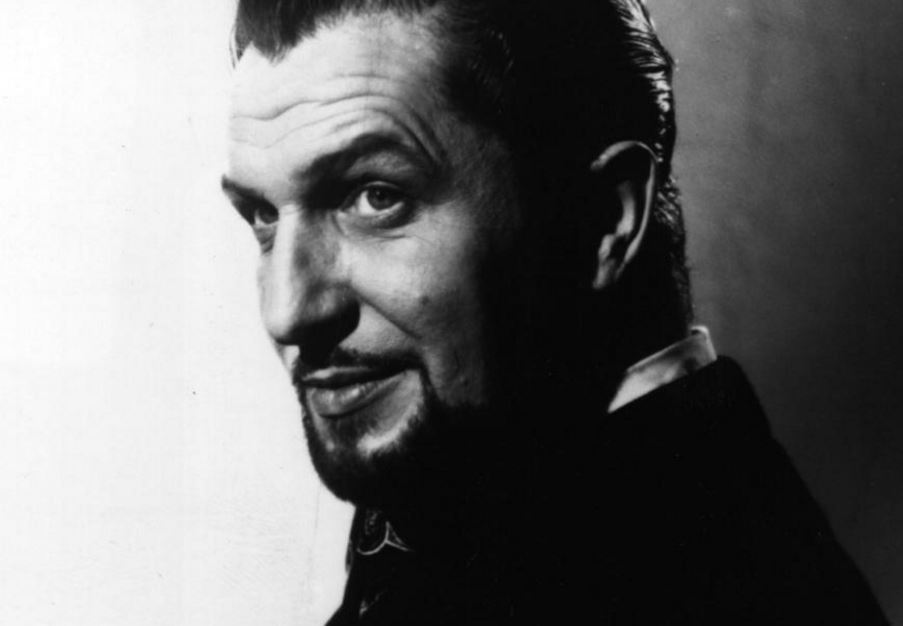
The Beard Liberation Front, the informal network of beard wearers, which campaigns against irrational prejudice against the hirsute, has said that the crypt has creaked open on the Scariest Beard of Halloween 2021 poll with the first round of the poll now open.
The title, awarded each year on October 31st, takes a wry look at Halloween festivities by identifying the scariest beard in the public eye. The winner is likely to win by the narrowest crack of a squeaky floorboard.
The BLF does not generally believe that beards are scary, a view promoted by generations of pogonophobes.
BLF Organiser Keith Flett said, facial hair is part of Halloween tradition. We aim every year to subvert some of the pogonophobia that lies behind that, while looking in a light hearted way at ‘scary’ beards.
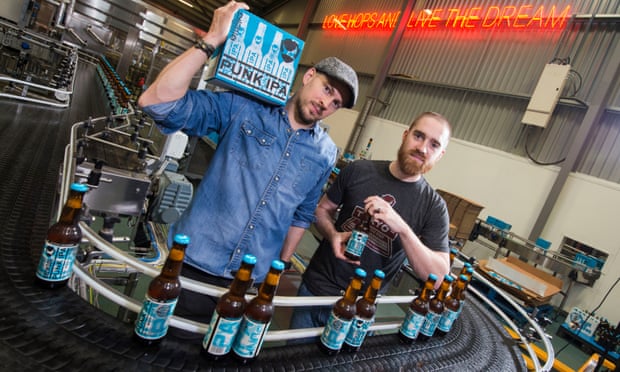
Brewdog: all that glitters is not gold (but is this the only thing James Watt is apologising for?)
The words ‘all that glitter is not gold’ can be found in Shakespeare’s Merchant of Venice (Act 2 Scene 7) although similar formulations were in use much earlier than the late sixteenth century.
They are words that might recommend themselves to those who hunted out solid gold cans of Brewdog’s Punk IPA. They were in fact gold plated but mostly brass.
The Advertising Standards Authority has now found the advert was misleading:
James Watt has apologised, offered to pay a cash equivalent (value not mentioned) to those who found cans in the original promotion and decided to run it again, this time without misleading people.
One senses Mr Watt has been advised on this.. However is it really the only thing he feels he wants to apologise for and take action on?
Brewdog are known for publicity stunts and seem to have had the view that there is no such thing as bad publicity. Recent complaints of poor working conditions by ex-employees, acknowledged by Brewdog, may give them pause for thought on whether the strategy is now nearing closing time.
Michael Rosen the author and Arsenal fan noted a Fletter that appears in the Guardian (20th October). You can find it in the paper or free on-line.
I’ve been writing Fletters to the Guardian since the mid-1980s but what does the term mean?
It’s not mine. It was coined by my 6th Form English teacher Leonard Frizzell at Alexandra Park School Muswell Hill in the 1974/5 period. He also coined Pamflett and Leaflet. I was the custodian of the 6th form copy of the Guardian.
In those far off days the school was run by Communist Party teachers and most of the rest were from the Labour left. The chemistry teacher Mr Davies would spend his time praising the achievements of the Soviet Union while errant students set off chemical explosions in the background. Mr Jones the maths teacher went round opening windows during the 1972 miners strike in an act of solidarity.
Muswell Hill at that time had one of the largest Communist Party memberships in the country (my late father had been a member)..
The various Flett missives, Fletter, Pamflett and Leaflett were I think meant by Frizzell to mean concise and left-wing contributions to political debate. A bit like twitter now perhaps…
Boris Johnson hosted a dinner for 20 or so top business leaders at Downing St on Monday evening.
They were no doubt relieved that he was not doing the cooking himself but using a caterer.
The dinner was meant to be part of a promotion for investment in industry, although quite how essential it was to that purpose might be questioned
As often the real interest was in what they were eating.
Canapes: jellied eels, chicken liver parfait, pumpkin and white truffle gougers
Starter: potato and roe
Main course: Welsh venison with 16 year old Lagavulin whisky
Dessert: pear and lemon meringue
One presumes dietary issues were addressed.
Those struggling to put basic food on the table after the Government’s Universal Benefit cut might ask who was paying for the dinner. The answer is certainly not Boris Johnson but of course the taxpayer..
James Watt & Brewdog’s High Performance Culture (just recognise a union).
James Watt of Brewdog has been speaking to the Telegraph(there are other papers). The story, summarised in other media, is primarily about a potential delay in an IPO(Initial public offering, a public share listing). While Allan Leighton was recently appointed primarily to advise on an IPO, Watt says that while it could be in 2022 it could be 2023. That’s due to uncertain times. Understood, so far, so boring.
Clearly the journalist asked Watt if the delay was related to recent complaints by former staff about harassment and bullying. Watt said the decision predated this. Well, he would say that wouldn’t he.
Watt did however note that Brewdog’s staff handbook had been amended to make clear that it has a ‘high performance culture’. We can see that the Cabinet does not have such a thing but most companies that want to make a profit do.
If I was being professionally boring (I’m a trade union officer representing managers and professionals in the private sector)I’d ask what other companies Brewdog’s HPC is benchmarked against.
However more basically no one reads staff handbooks except trade unions (Brewdog doesn’t recognise them) and the HR managers who write them hoping to insert a few lines that will catch employees they don’t like out. There are some good HR managers out there btw. I represent some of them too.
Watt says that of those who complained some departed for disciplinary reasons. That is a poorly advised line. The appropriate words are that the company (Brewdog) doesn’t comment on such matters, unless of course illegality is involved.
Watt also says that while the ex-workers wanted the ‘perks’ of a dynamic company they didn’t like the high performance culture. In short he means they were lazy.
I’d suggest Mr Watt puts the shovel done, stops digging, and recognises a trade union. He might find he is better informed after that.
Caution: historian at work. E P Thompson’s study August 1980
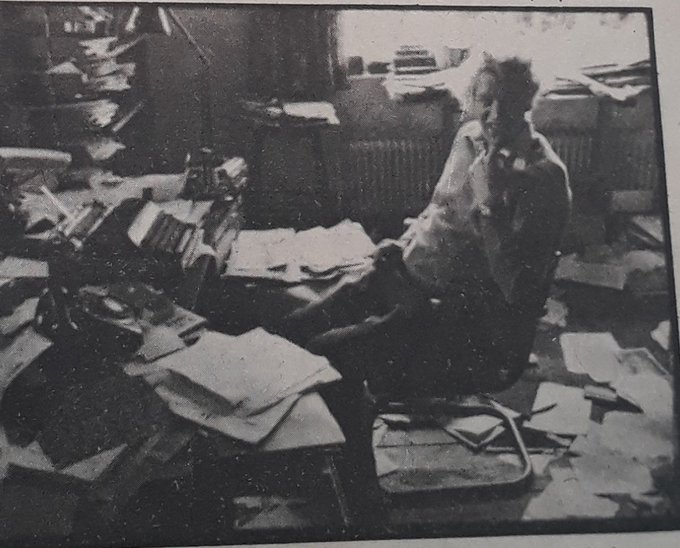
A rare picture of the study of socialist historian E P Thompson (1924-1993) appeared in an interview he gave to the New Musical Express in the 16th August 1980 issue.
The picture shows a large number of papers strewn about. A reminder, as is the presence of a typewriter that these were still the days when articles and books were typed on paper and corrected in the same way. Hence no doubt the papers are in part drafts and corrections.
There is also, pre=mobile a dial phone.
Looking back from 2021 some might wonder how Thompson ever produced any work, but he did, including the Making of the English Working Class (1963) which has the best part of 1,000 pages.
The age of the laptop, printer and mobile makes research easier in many ways, but perhaps some of the skills of careful revision and correction have diminished as well.
More Black History David Starkey has never heard of: Chatham Cuffay(1755-1815)Black dockyard worker in C18th Kent
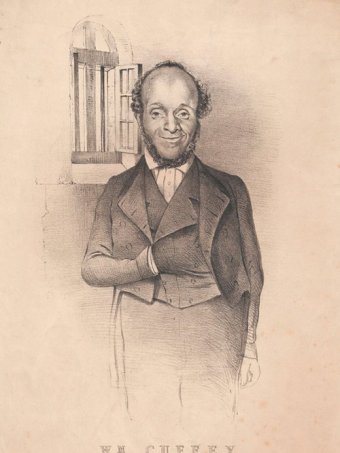
The life of William Cuffay(1788-1870) the black leader of London Chartism in 1848 is becoming better known but there is now some detail on his father.
Interestingly neither appear to be known to David Starkey who opined on GB News a few days ago that Black British history only went back 40-60 years. He also claimed that serious research into earlier periods, such as Miranda Kaufman’s ground breaking work on Black Tudors, had no evidence.
He was wrong and in fact research into Black British history continues to uncover just how much of importance there is.
Chatham Cuffay (not his original first name which appears to be as yet undiscovered) came from a slave background and travelled to England on a navy ship possibly as a chef. He became one of a significant number of black workers in late eighteenth and early nineteenth century England. Many arrived as Cuffay had done and probably the largest cohort remained dock and ship related workers but over time they may well have had an increased presence in the wider working population. William Cuffay, a tailor, is one example of this. His father has until now remained very largely hidden from history.
Chatham Cuffay, is believed to have originally been from St Kitts and Nevis. His parents were possibly former slaves who had been freed but their son Chatham Cuffay was never enslaved. In 1772, he emigrated with his mother to Medway on board a naval ship under Captain Charles Proby. A young man of about 17, he was baptised in the same year in Gillingham and given his first name after the port at which he had landed.
Proby later became Resident Commissioner at Chatham and it is his influence which was likely to have helped Cuffay find employment in the Dockyard as an Able Seaman and Cook. In 1780 he gained a position on the Chatham Yacht –the Commissioner’s official vessel.
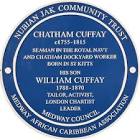
A plaque has been positioned where it is, as this is the location the Chatham Yacht would have been moored and subsequently where Chatham, worked and boarded the ship from. Chatham appears in pay books across several years at Chatham Dockyard, the last entry being March 1803 where he is recorded as a Storehouse Labourer.
Chatham is by no means the first Black worker at the Dockyard but he is the first named. He represents an unknown number of slaves that, by free will or force, boarded Naval Ships in the Caribbean and established themselves in England.
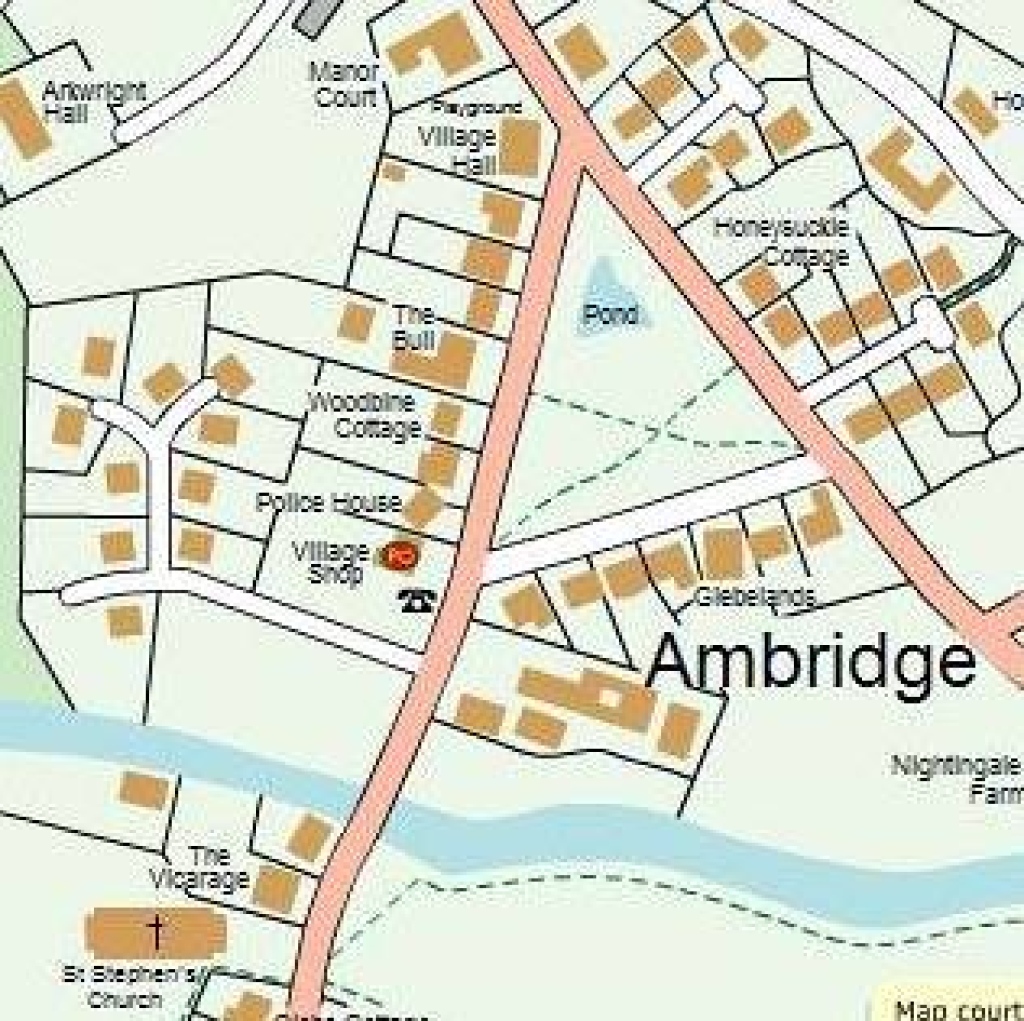
The new manager at Home Farm Stella has queried whether it’s a good idea to continue with an arrangement where some Brookfield sheep graze on their land, after a run-in with Pip. Brian has explained that as most things in Ambridge it’s a family affair.
He has decided against selling the farm but that doesn’t mean all is stable. Stella notes that in her mission to modernize farming the cosy relationships of yesteryear may have no place.
Martyn Gibson: One Nation Tory. Who knew?
Inspecting the pigs at Berrow Farm, Borsetshire Land’s Martyn Gibson asks how new worker Jazzer is getting on. Brian is full of praise and mentions Jazzer’s efforts to rehabilitate Blake. Gibson questions Jazzer and suggests that Blake could be offered contract work with full employment rights. Gibson previously thought of as a neo-liberal opines that it’s the right thing to do. Ambridge remains a patrician society it seems, unless Stella can bring change.
Russ has a haircut
In return for help with an essay trainee hairdresser Chelsea offers to cut Russ’s hair as his normal barber has gone bust. Russ is reluctant but agrees and apparently is please with the result. No pictures have yet to appear on social media so its difficult to say whether a No,1 really suits him
In Other News
Jazzer is selling the bike. No he isn’t
Plans to progress carbon neutrality at Brookfield are in hand. Provided there is profit in it
David Starkey claims Black British history only goes back 40-60 years (he’s never heard of William Cuffay)
It being Black History Month the hard right TV and social media channel GB News has obviously invited right-wing historian David Starkey to share his thoughts.
Should you really want to hear the 4 minutes plus comments you can find it on GB News itself
Starkey is an historian of aspects of the Tudor period of English history but has never shown any sign of detailed knowledge of other periods. Nor would he be expected to have since research historians generally focus on specific periods.
What Starkey does have are right-wing views and lots of them.
His GB News piece is one of his more restrained efforts, hence it hasn’t so far made the front pages. He could hardly avoid of course another pop at Miranda Kaufman the historian who through research has demonstrated a black presence in Tudor England. This annoys Starkey not that he has done any research to dispute it.
He opined rather that most British black history was wishful thinking because there was only 40-60 years of recent history that was relevant. Obviously Starkey has never heard of William Cuffay the black leader of London Chartism in 1848. There are things still to discover about his life but a lot is known although not to Starkey.
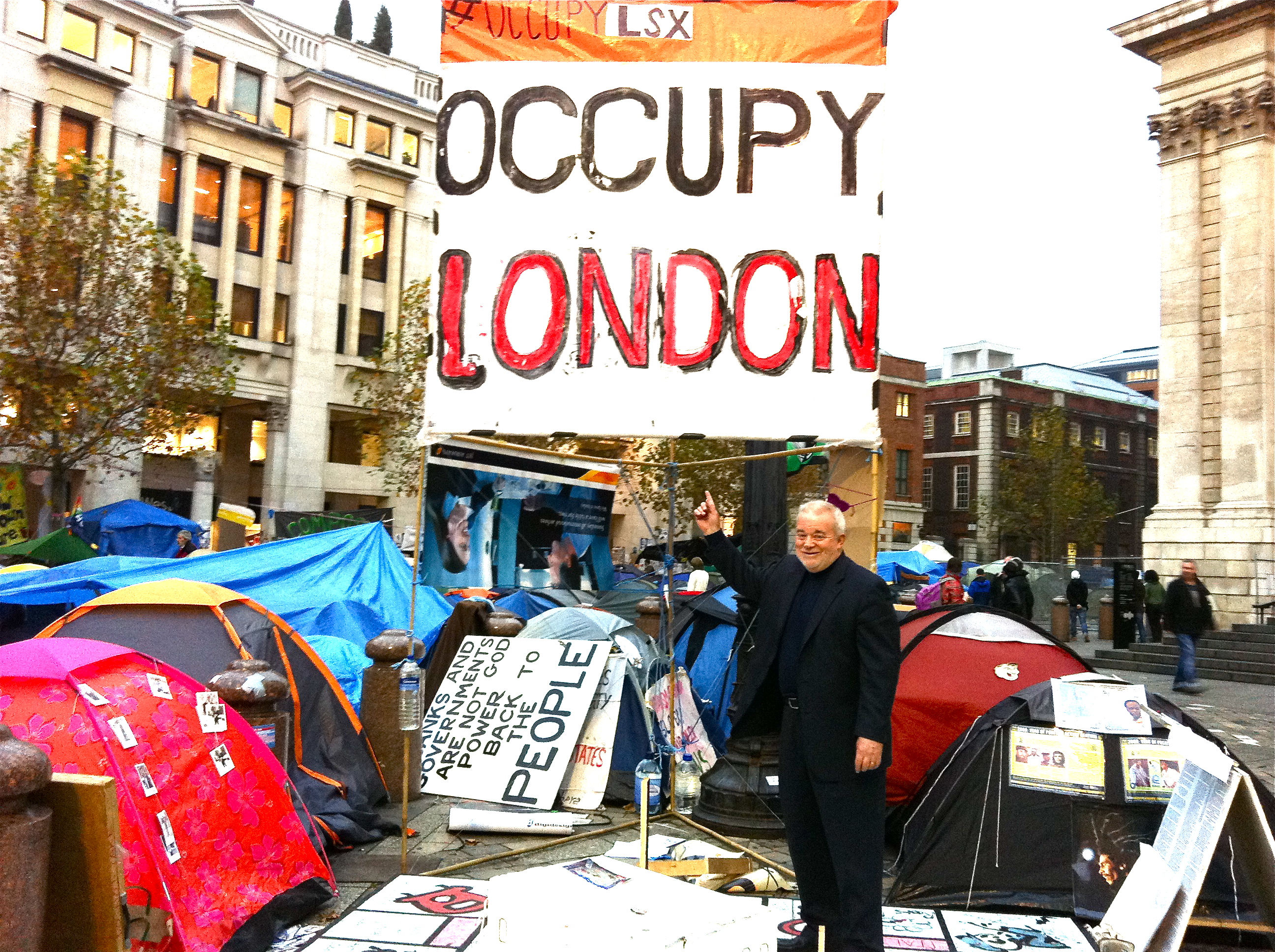
The Occupy movement shook— if not exactly changed- the world—starting 10 years ago. It pulled in not only established activists, but also protesters appearing on the political stage for the first time, angry at a world where a small group causes a massive crisis and then expect everyone else to pay for it.
What should socialist historians say and do about this ten years on?
Firstly, there was and is a duty of solidarity, and there is a history to that. From Wall Street to St Paul’s, Occupy made protests in some of the central spaces of Capital and asserted the right of ordinary people to do so. The State reacted with varying degrees of physical and legal force. Free speech battles have been a feature of capitalist societies. In Britain much effort was put into fencing off and enclosing public spaces. Kennington Common where the Chartists gathered in 1848 is but one example. Modern commentators on London such as Iain Sinclair have emphasised how this battle for control over public spaces has continued right up to the present day. As the Occupy protesters discovered, pretty much everywhere in central London is ‘owned’ by someone who can tell people to ‘get orf my land’.
Historians also have other duties. A new movement seeks a history and attempts to understand history. There is a history of occupying space in recent times from the Upper Clyde Shipbuilders to Greenham Common and the Stop the War camp in Parliament Square. There is also the issue of what history can usefully be discussed and learned in the Tent Universities that were a feature of some of the Occupy spaces such as St Paul’s.
Occupy still suggests a major task for socialist historians. Not only to get out there and get involved but also to think about what history can usefully be discussed and how, with activists who are looking for an understanding of the history of labour movements, protest and activism. It is a history that should be informed by the disciplines of the seminar room, the library and the archive but driven by the requirements of an activism determined to confront neo-liberal capitalism. In a sense it is a little like the ‘counter-culture’ of the late 1960s which produced numerous texts and alternative reading lists. With a youthful memory of that and direct experience of the current Occupy movement, there is no question that the latter is more political and more focused on trying to understand how capitalism does— and more particularly does not— work.