Articles

Campaigners say grey squirrels pose threat to 2021 conker season

In Uncategorized on October 8, 2021 by kmflett

Campaign for Real Conkers

Against bans on conker playing

Press Release 8th October Contact Keith Flett, 07803 167266

Campaigners say grey squirrels pose threat to 2021 conker season

The Campaign for Real Conkers, the group that opposes bans on conker playing, has said that with the 2021 conker season in full swing, grey squirrels are posing a significant threat to conker supplies.

The campaign says that numbers of grey squirrels in many areas of the country are increasing. The squirrels can be seen carrying off and burying conkers on a regular basis leading to a shortage of the nut for players to pick up.

Squirrels don’t eat conkers but few seem to realise this and either collect and bury them or bite into them, destroying them as game conkers.

Campaign organiser Keith Flett said, we have nothing at all against squirrels but those who want to play conkers this year face a race against time to collect the nut before they are carried off by squirrels.

Notes

The CFRC believes that conkers is one of the few sports that can be played for free. All that is required is a conker and some string.

It is opposed to championships, rules, regulations, separate teams for men and women and commercial sponsorship.

It seeks to encourage young people to play conkers. It should not be the preserve of those of mature years
Articles

E P Thompson’s on William Blake’s poem,London

In Uncategorized on October 7, 2021 by kmflett

E P Thompson on William’s Blake’s London

E P Thompson was a great enthusiast for William Blake and wrote about his work(Witness Against the Beast 1993) understanding Blake as one of the great early nineteenth century radicals.

On June 25th June 1970 Thompson was featured in a BBC1 programme on Blake’s poem London. Blake wrote the poem in 1793 as part of the Songs of Experience.

It reflects Blake’s radicalism, his support for the French Revolution, and hence his disdain for City of London and the development of capitalism that it was then playing a role in. Blake lived in the City during this period and the poem reflects his personal experiences of his surroundings, together with of course his politics:

London

BY WILLIAM BLAKE

I wander thro’ each charter’d street,

Near where the charter’d Thames does flow.

And mark in every face I meet

Marks of weakness, marks of woe.

In every cry of every Man,

In every Infants cry of fear,

In every voice: in every ban,

The mind-forg’d manacles I hear

How the Chimney-sweepers cry

Every blackning Church appalls,

And the hapless Soldiers sigh

Runs in blood down Palace walls

But most thro’ midnight streets I hear

How the youthful Harlots curse

Blasts the new-born Infants tear

And blights with plagues the Marriage hearse

Articles

National Poetry Day: the danger of clean shaven revisionism

In Uncategorized on October 7, 2021 by kmflett

National Poetry Day: the danger of clean shaven revisionism

For some it’s a choice,

Whether or not to wear a beard

It should be a choice.

A personal decision, for personal reasons

But remember

If you can wear a beard.

But you don’t wear a beard,

You may become,

A clean shaven revisionist

Articles

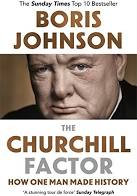
Historians take issue with Boris Johnson’s Tory Conference speech reference to Churchill

In Uncategorized on October 6, 2021 by kmflett

London Socialist Historians Group

Media Release 6th October

Contact Dr Keith Flett 07803 167266

Historians take issue with Boris Johnson’s Tory conference speech

The London Socialist Historians Group, a network of research historians that organises the socialist history seminar at the Institute of Historical Research, University of London, has taken issue with Boris Johnson’s speech to the Conservative conference in Manchester.

Johnson said that he was

 “minded to ignore” those who claim Winston Churchill was a racist

“But as time has gone by it has become evident that this isn’t just a joke they really do want to re-write our national story,” “We really are at risk of a cancel culture know-nothing iconoclasm.”.

He went on to argue that Tories would defend “our history… not because we are proud of everything but because trying to edit it now is as dishonest as a celebrity trying furtively to change his entry in Wikipedia.”

The historians say that Johnson’s view of British history is a very partial one, determined to play down the impact of colonialism and the slave trade. The reality is that racism was part of Churchill’s worldview and that is well documented, although there is much else that can also be said historically about him, and Johnson amongst others has done so.

Boris Johnson who did not mention that October is Black History Month has struck entirely the wrong note about British history.

LSHG Convenor Dr Keith Flett said, it is Boris Johnson who wants to cancel the bits of British history he finds inconvenient. Socialist historians are in favour of telling the whole story, and there is a good deal of research still required to do that, including the real history of black and ethnic minority people in Britain stretching back at least to the Tudors

Articles

Tim Dunn & Michael Rosen face off in Round 2 of Beard of Autumn vote

In Uncategorized on October 6, 2021 by kmflett

Beard Liberation Front

6th October

Contact BLF Organiser Keith Flett 07803 167266

Tim Dunn & Michael Rosen face off in Round 2 of Beard of Autumn vote

The Beard Liberation Front, the informal network of beard wearers, has said that the vote for Round 2 of the Beard of Autumn 2021 is now open.

It is the second of two preliminary rounds, followed by a Beard Off final where the top two beards from each of the earlier rounds try to beard the others.

Brighton FC manager Graham Potter and actor David Tennant topped the first round vote and go through to the Beard Off final

The winner will be announced on 15th October

The Beard of Autumn is the final quarterly award of the year with the vote for the coveted Beard of the Year 2021 getting underway at the beginning of December

BLF Organiser Keith Flett said, the Beard of Autumn list reflects some of those whose beards have shown the hirsute in a positive light in the last few months. Obviously not all will agree which is why there is a vote!

Beard of Autumn

Graham Potter, football manager

Moeen Ali, England cricketer

Michael Rosen, author & Arsenal fan

Andy McDonald, Labour MP

Andy McDonald, Labour MP

Tim Dunn, railway historian

David Olusoga, historian

David Tennant, actor

Bob Harris, broadcaster

Articles

40 years ago. E P Thompson on Thatcher’s Britain as a police state

In Uncategorized on October 6, 2021 by kmflett

40 years ago: E P Thompson on Britain as a police state

Priti Patel’s speech to the Tory Conference on Tuesday was much as one might have expected. Yet more measures were announced to criminalise protest. Patel might notionally agree that there is a right to protest but In practice can’t find any context in which it should be legal.

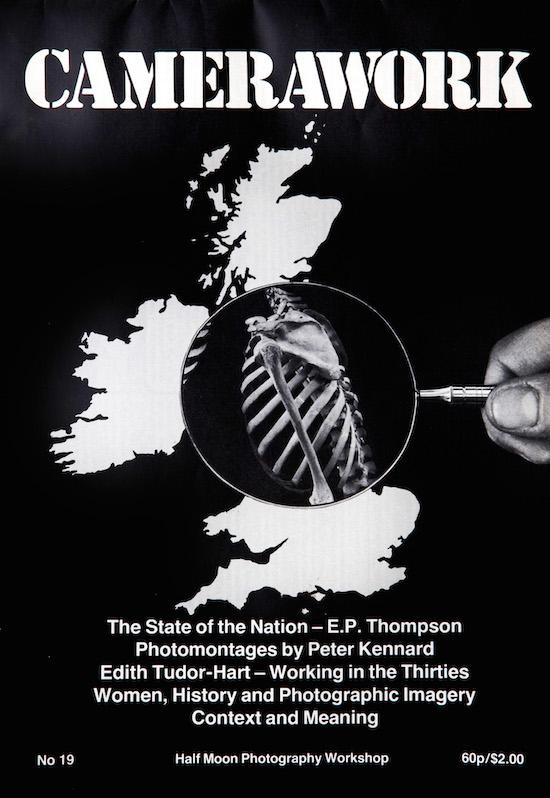
In 1980 the now defunct journal Camerawork published an issue (No.19) which contained amongst other things a page long commentary by the socialist historian E P Thompson together with a photomontage by Peter Kennard.

Thompson focused on the inquest into the death of Blair Peach, a socialist who was killed by a blow from a police truncheon at an anti-fascist demonstration in Southall in 1979. Thompson was very critical of the decision of the Coroner in the case Dr Burton not to appoint a jury.

He went on to criticise the views expressed in the memoir of the Head of the Metropolitan police Sir Robert Mark (1972-1977) as ‘illiberal’

Thompson concluded that:

As a historian I can say that I know of no period when the police have had such a loud and didactic presence, and when they have offered themselves as a distinct interest, as one of the great institutions

The undermining of democracy is certainly going on and at an inflationary rate

They wish to push us into a managed society, whose managing director is money, and whose production manager is the police…

The complete issue of Camerawork 19 is at this link

https://www.fourcornersarchive.org/archive/view/0000020

Articles

John Smith & Blair/Brown: Labour & the polls

In Uncategorized on October 5, 2021 by kmflett

John Smith & Blair/Brown Labour & the polls

The Blair/Brown programmes being shown on the BBC have raised the question again about what impact the election of Blair as Labour leader after the death of John Smith in May 1994 had on Labour’s poll ratings.

I can’t obviously be sure what moves the polls but I do think that there is some evidence that there are particular events which change people’s minds on a long-term basis, as Black Wednesday seems to have done in 1992

By 1992 Thatcher had been forced to resign over the Poll Tax debacle and was replaced by John Major. Major, unexpectedly and quite narrowly, beat Labour, led by Neil Kinnock, in a General Election on 9th April 1992. For the few months afterwards the Tories led Labour on average by 5 points in the opinion polls.

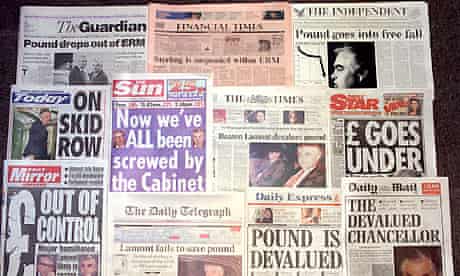
Then came Wednesday 16th September 1992, ‘Black Wednesday’. On that day the Tory Government withdrew the pound from the European Exchange Rate Mechanism (ERM). In order to protect the pound Chancellor Lamont raised interest rates from 10% to 12% in the morning, and then up to 15% in the afternoon.

The following day interest rates returned to 10% but the damage was done in terms of electoral standing. Voters with mortgages, perhaps more inclined to vote Tory, had seen the spectre of the cost rising by 50% in a day. If it had happened once clearly it could happen again.

By November 1992 polls were showing ratings of around 30% for the Tories and 50% for Labour. They changed little until the eventual election in 1997. Labour’s lead was nothing to do with Blair, who wasn’t Labour leader in 1992, but with an event so potentially cataclysmic in its impact that it stuck in voter’s minds.

If enthusiasts for the Blair era want something genuinely interesting to focus on it might be on how after 4 years of a Labour Government, Blair managed to win the 2001 General Election with an almost identical outcome seat wise to 1997. It might of course be argued that this was to do with the mess the Tory Party was in, identity wise, but it might also suggest Blair’s early years made a positive impact on voters….

Articles

CWU get it right on what to do when Facebook/WhatsApp are down: write a letter

In Uncategorized on October 5, 2021 by kmflett

CWU get it right on what to do when Facebook/WhatsApp are down: write a letter

The CWU, which represents postal workers, had the perfect response to the global outage of Facebook, WhatsApp & Insta on Monday(all owned by the same people of course as free market capitalism tends towards monopoly).

They tweeted that the best form of communication was to write a letter. This may have puzzled those who have never had the reason or desire to do so. Indeed letter writing, whether personal or to the newspapers is in significant decline.

Even so, not only is writing in a letter format, rather than a short FB or twitter post, a useful discipline, it is also in terms, of length, form and content something that is entirely under the writers control.

Just remember to put your name at the end, because otherwise it will be an anonymous letter, a separate historical category altogether.

Articles

Socialist Historians mark Black History Month with a look at what the Tories leave out of history

In Uncategorized on October 5, 2021 by kmflett

London Socialist Historians Group

5th October

Contact Dr Keith Flett 07803 167266

Socialist Historians mark Black History Month with a look at what the Tories leave out of history

The London Socialist Historians Group which organises the socialist history seminar at the Institute of Historical, University London marked the start of Black History Month on Monday 4th October

Marika Sherwood spoke on ‘George Orwell told us that ‘the most effective way to destroy people is to deny and obliterate their own understanding of their own history’. What has been obliterated from ‘our’ history here in the UK and in what used to be our colonies?’

Marika Sherwood is one of the most well-known historians working in the area of black history in the UK. She was one of the founders in 1991 of the Black and Asian Studies Association.

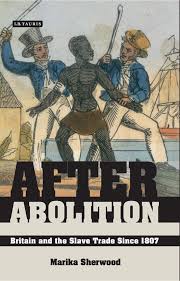
Her 2007 book After Abolition, Britain and the Slave Trade since 1807 is an important contribution to black history.

Marika told the seminar that when she first started teaching in London schools in the mid-1960s there were no resources available for either students or teachers to learn about black history. While the situation has improved, with landmark books like Peter Fryer’s Staying Power, there is still a lot to be done.

She gave the example of the reparations paid to slave owners after slavery was abolished in the UK in the early nineteenth century. This money, many millions in 2021 terms had helped to finance the development of a good deal of British industry. The slaves themselves got nothing. While there is detail on some of this now, a significant amount of historical research is still required to fully understand how much of modern Britain has its roots in the slave trade.

The historians say that as part of the Tories Culture Wars the real history of black and minority ethnic people in the UK is increasingly whitewashed. However historians continue to do serious and important research to discover and recover this important part of Britain’s imperial history and resistance to it.

Marika Sherwood said:

I think I raised some issues that ought to interest many people…. I think we need a massive campaign for the government or release ALL papers on Black activists. And if some have been destroyed, then we should have access to the list of files destroyed. And who made this decision and when.

Link to recording

https://us02web.zoom.us/rec/share/fE5I0SnZXy_bBqPRMm2_UXZpPOhh8IdtUm7zMvormhPoKhnl7oeqkz5tbvsouTNG.2TLh0Ky_PkML6Lwy Passcode: z#Fg#G5&

Articles

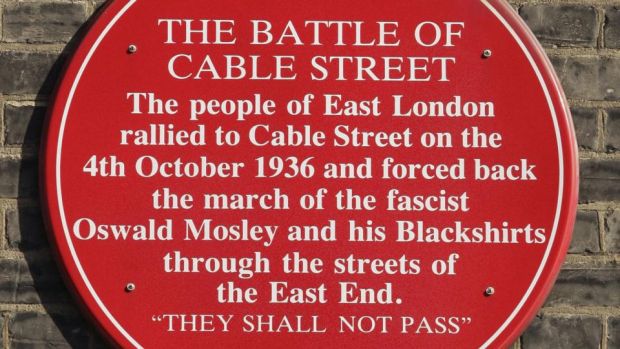
Cable St 4th October 1936. They did not pass,they shall not pass

In Uncategorized on October 4, 2021 by kmflett

Cable St 4th October 1936. They did not pass, they shall not pass

Sunday saw a commemoration in the East End of the Battle of Cable St when Mosley’s fascists were stopped from marching in the East End by a demonstration of the local community, trade unionists, socialists and anti-fascists. As Michael Rosen noted of his parents Connie and Harold who were present on that day, they had seen Hitler and Franco and now Mosley was trying to do the same in Britain.

The fascists did not go away of course. After the war the British Union of Fascists were backing trying to intimidate Jews. The 43 Group was formed to stop them and the late Morris Beckman wrote a history of it:

The 43 Group was disbanded in 1950 but the fascists remained in active and in 1962 the 62 Group was formed to stop the successors to the BUF, the National Socialist Movement and others from attacking Jews and others.

An excellent series about this started airing on the BBC on 3rd October. Ridley Rd is written by Sarah Solemani who was born in Stamford Hill and whose father was active in the Anti-Nazi League

https://www.theguardian.com/tv-and-radio/2021/oct/03/sarah-solemani-fascists-arent-just-monstrous-robots-understanding-this-might-help-us

Even after the 62 Group’s work the fascists didn’t go away. By the mid-1970s they were back as the National Front still marching to intimidate minorities. The Battles of Wood Green and Lewisham saw them stopped on the street and the Anti-Nazi League was formed.

Like other fascist groups before them, the NF declined but as before in due course they were back as the BNP. They too were confronted, for example at Welling in 1993 where they had established a ‘bookshop’.

Unite Against Fascism was launched in 2003 and successfully opposed the BNP, which like other fascist groups before them declined.

More recently the EDL guided by Stephen Yaxley Lennon and others has been the main fascist group on the streets. It too was confronted by anti-fascists and appears to have declined.

The wider point is that fascist politics are endemic to a market capitalist society, sometimes finding support, sometimes not, depending on context and times. As at Cable St 85 years ago however if they are not opposed they can become a serious problem.

Looking around Europe or the US it can be seen that fascist and far right politics continues to thrive in some places. Opposing it is essential but the task of doing it requires organisation, strategy and tactics and not everyone always agrees. It still needs to be done though.