Articles

Priti Patel,Extinction Rebellion & the Rule of Law. Protest & Survive

In Uncategorized on August 23, 2021 by kmflett

Priti Patel, Extinction Rebellion & the Rule of Law. Protest & Survive

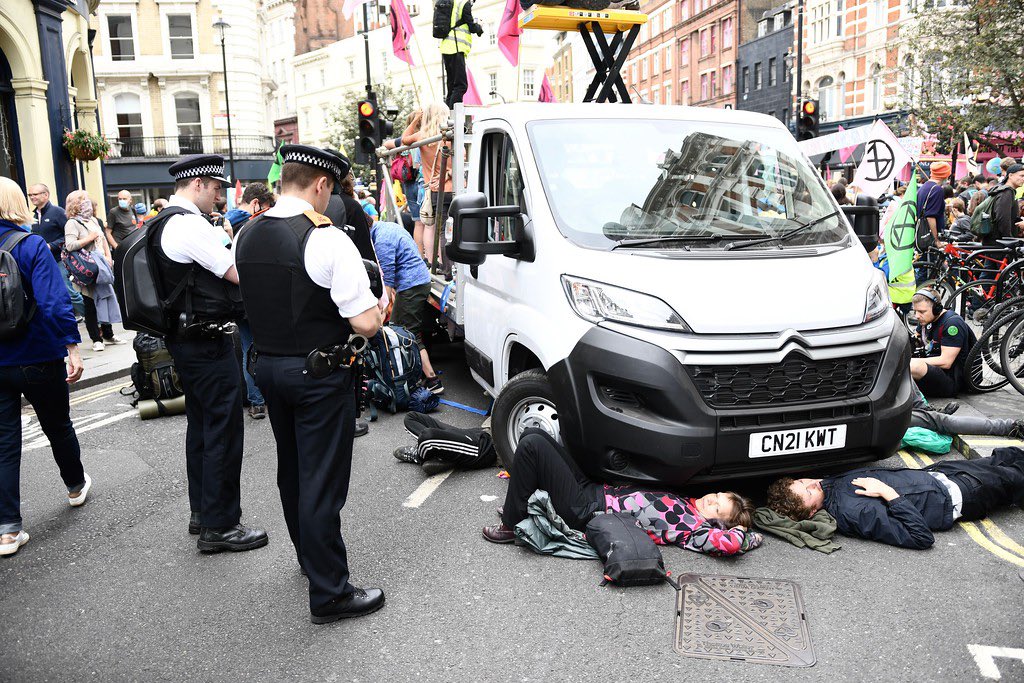
A fortnight of protest is underway in central London organised by Extinction Rebellion. Hopefully it will draw further attention to the need to actually do something about the climate emergency.

It also underlines that the Home Secretary has not found it as easy as she would like to frustrate such, for the most part, entirely legal and well supported protests.

No one could ever accuse Priti Patel of being a liberal or for that matter of being competent.

Her 2020 outburst (extract  from Guardian report below) branded Extinction Rebellion as ‘criminals’. That is her way of describing people exercising a democratic right to protest. As the senior police officers she was addressing noted there is no need for new laws to address ER protests (there are numbers already- properly used or not, that is for the Courts not Ms Patel) and neither do they constitute criminal activity because while they may annoy authority they are not violent.

She said XR was “attempting to thwart the media’s right to publish without fear nor favour”, and claimed their campaign of civil disobedience was “a shameful attack on our way of life, our economy and the livelihoods of the hard working majority”.

“I refuse point blank to allow that kind of anarchy on our streets,” the home secretary told the virtual conference.

“The very criminals who disrupt our free society must be stopped. And together we must all stand firm against the guerilla tactics of Extinction Rebellion.”

https://www.theguardian.com/environment/2020/sep/08/extinction-rebellion-criminals-threaten-uks-way-of-life-says-priti-patel

The Government’s ‘extremism’ advisor the ever unreliable John Woodcock has reportedly determined that XR or at least not all of it is in fact ‘extremism’. Rather XR are protesting about an extremely serious issue: climate change.

https://www.theguardian.com/environment/2021/aug/21/wrong-to-label-extinction-rebellion-as-extremists-says-home-office-adviser

There are two issues here, the law and the protest

It is important to defend the right to protest. Its not just an abstract right though. The Social Democratic Federation in the late nineteenth century held marches which were about their right to march. The protest needs to be the key, the reason for defending the right to do so. Here the need to get a focus and action on climate change grows ever more urgent. XR are an important part of that.

The historian E P Thompson took a view of the Rule of Law in his book Whigs and Hunters and a minority one for a Marxist as he recognised.

His view was that while law was an instrument of class power, as Priti Patel undoubtedly sees it, it was also something that was contested with conclusions in specific matters not a foregone conclusion. In that space rights to protest and liberties exist. Ms Patel doesn’t like that and may try to change the balance of it, but the weight of history is against her.

Thompson wrote in a brief conclusion to Whigs and Hunters, a book about late eighteenth and early nineteenth century battles over the rights to land and land use:

We reach then, not a simple conclusion (law=class power) but a complex and contradictory one. On the one hand.. the law did mediate existent class relations to the advantage of the rulers; not only is this so, but as the century advanced the law became a superb instrument by which these rulers were able to impose new definitions of property to their even greater advantage.. On the other hand the law mediated these class relations through legal forms, which imposed again and again, inhibitions upon the actions of these rulers

Historical work in progress

Articles

A benchmark for Starmer’s vision of the future: Tony Blair 21st July 1994

In Uncategorized on August 22, 2021 by kmflett

A benchmark for Starmer’s Vision of the future: Tony Blair in 1994

Ahead of his latest relaunch Keir Starmer has handed a statement to the Observer which they have printed with some added wrap around (link below).

He apparently aims to use his speech at Labour Conference in September to paint his vision of the future.

There are several concerns here. Some might say that the 10 pledges he made when elected Labour leader last year were his vision. No doubt he will argue things have changed(Dylan) but he stands accused of outlining a politics he did not in fact support.

A second concern is that he has shown no sign so far of being a good public speaker. Some have a natural aptitude for this, most have to learn by actually doing it. It might be argued that he is on a learning curve.

A third concern is his stated view that Tony Blair is someone who can offer lessons for the present. We know Blair himself thinks so, while many do not agree.

However, whatever his other shortcomings, Blair as Labour leader was a good speaker( & I heard him quite a few times). I’m not talking about what he said but rather that he could hold an audience.

A fourth concern is that while in my view Blair entirely lost it with Iraq he did when elected leader have a good political brain. Indeed the speech he made when he was elected leader in July 1994 impressed even Tony Benn.

Benn noted(21 July 1994)

I watched Blair carefully because I havent heard him make a general speech and it was really quite radical. He talked about ending quangos and ending hereditary peers, about right and wrong, and I think he drew in part on Caroline’s Keir Hardie, which he had reviewed very sympathetically

You don’t need to like Blair or his politics to understand that in the mid-1990s he had political appeal(the left of course opposed him, as did I) which Starmer has yet to find and may never find.

the Labour leader said he would use the forthcoming annual conference to paint “in primary colours” the kind of country a new Labour government would champion.

https://www.theguardian.com/politics/2021/aug/21/keir-starmer-ill-paint-a-picture-of-my-vision-in-primary-colours

Articles

Playing fields of Eton crisis: No Etonian medals at the 2021 Olympics

In Uncategorized on August 22, 2021 by kmflett

Playing Fields of Eton crisis: No Etonian medals at 2021 Olympics

According to figures in the Murdoch Sunday Times (15th August) nobody from Eton won a medal for team GB at the 2021 Olympics for the first time in three decades.

The Sutton Trust reported that before 2021 Old Etonians had won medals for 7 Olympics in a row in ‘sitting down’ sports including cycling, sailing and equestrianism.

In Tokyo Team GB won 20 medals in BMX, boxing and canoeing with all winners being from State schools.

However it wasn’t all good news in the sports class war. 35% of Team GB 2021 medal winners went to fee paying schools who participated in ‘posh sports’ such as the pentathlon and shooting.

The definitions of class and sport may seem rather random here but there is no doubt that the playing fields of Eton are in crisis.

Articles

Ambridge Socialist.Vince has more ex-wives than Boris Johnson…

In Uncategorized on August 22, 2021 by kmflett

The Ambridge Socialist

22nd August

Vince has more ex-wives than Boris Johnson

Vince Casey has de-invited and then re-invited Elizabeth to his daughter’s wedding which is being held at Brookfield barn. Cue much angst, at least on BBC reports from Ambridge. It turned out that all of Vince’s three ex-wives will be in attendance and there might be issues. Indeed, he seems to have more ex-partners than Boris Johnson. Its not yet known, possibly by him and everyone else, how many children he actually has.

Jackie Weaver promotes Shires

Jackie Weaver opened the village fete last Sunday and saw off a small gathering of UKIP protesters. More importantly she was keen to try Shires. We wonder if it is now being promoted as craft beer? Ms Weaver’s appearance started some social media chuntering, mainly we suspect by LibDem types about her precise role in the affair of Handforth Parish Council and whether this could in any way be compared to its Ambridge counterpart. It is August

Alice goes back to Rehab. Adam has a new job

Alice has checked herself back into Rehab with funds being supplied via Shula, much to Jennifer’s consternation. Yet another split in the Ambridge ruling class. Meanwhile Adam has got a new job which for those who thought he was and is unemployable outside of the family farm may turn out to be an interesting development.

With luck however we will be hearing a bit less from both for a while. There is only so much Ambridge ruling class angst that socialists can be bothered with.

Call Me Russ & Lily have away night. Where was the shower scene?

Call Me Russ Jones and Lily have had a night at Grey Gables (paid for by Lily obviously). We can only assume it was a night of passion but we cant be sure because unaccountably there was no shower scene.

Articles

St Helier August 1879. Marx becomes a vegetarian

In Uncategorized on August 21, 2021 by kmflett

Marx becomes a vegetarian. St Helier August 1879

In August 1879 Marx spent some time in St Helier, Jersey, with one of his daughters, Eleanor (Tussy).

On 14th August he wrote to Engels that ‘we are leaving our present lodgings in St Aubin because Tussy and I cannot stand the monotonous  daily fare of lamb or MUTTON in consequence of which I have become in the last few days an involuntary VEGETARIAN

As a consequence Marx moved to The Hôtel de l’Europe which he described as ‘excellent’ presumably providing different kinds of meat to allow him to abandon his temporary vegetarianism.

In the later Victorian period vegetarianism was often seen by socialists as a ‘fad’ a sign of someone who preferred to change themselves rather than try and change the world, hence Marx’s rather dismissive attitude it must be suspected.

Articles

So. Farewell then the ‘amazing The Hundred (for now)

In Uncategorized on August 21, 2021 by kmflett

So. Farewell then the ‘amazing’ The Hundred (for now)

Saturday at Lords see the finals of the womens and mens Hundred (weather permitting).

It will of course be ‘amazing’ (checks notes-that’s what it says here anyway)

I know many long standing cricket followers have avoided it. However, perhaps unfortunately, after spending several centuries as a union officer I have the habit of engaging with ‘the enemy’ the better to find out what they are up to.

I have watched quite a few Hundred games on BBC and Sky and listened to the BBC TMS commentary (when I could stand it-more below on that).

There have been some outstanding individual performances and a few close finishes. I cant say that I have bothered much about the made-up teams. Being based partly in Cardiff I know that Welsh Fire are nothing to do with Wales beyond playing at Sophia Gardens and I identify with the London Spirit as much as I do with my actual ‘county’ side Middlesex (not much).

Aside from banning Sweet Caroline (unsuccessfully) and complaining about crowds drinking The Hundred has essentially been a 16.6% shorter T20. The original plan was to develop the T20. It should have been stuck to.

The ECB has commercial reasons for promoting The Hundred and it has done so, as a product. The TV coverage has been OK on both (not much watched) Sky Pay TV and on the (much better watched free to air BBC). I exclude KP from this (muted). The core BBC TV commentary team of Phil Tufnell, Michael Vaughan and Isa Guha has been decent. The BBC does however have a tendency to regularly mention how ‘amazing’ The Hundred is.

The BBC TMS commentary has on occasion suggested room for improvement, though far from universally so. A lot was good. However its sometimes crossed the line between commentating on The Hundred and promoting it (the ECB has a PR budget for that) with a bit too much shouting about nothing much. TMS of course deserves big credit for also covering the 50 over game, the County game and Tests (Sky bother very little with the first two though they have the TV rights). One understood however what a commentator on a 50 over game, focused just on noting what was happening, meant when he remarked that this was now the real TMS. Let’s hope the TMS’s Hundred coverage has engaged new (& indeed younger) listeners who will listen across the TMS formats in future

The downsides to all this should be obvious. Both the County game and the Red ball game are at risk of being undermined and they are the basis of Test sides. The Hundred, only played here is the basis of nothing cricket wise.

Its true that the Hundred has promoted the women’s game which has been a huge plus (don’t mention that women players are not paid equally with the men, the broadcast media certainly has not in the main, although TMS has focused on it on several occasions, to its credit). However it could easily have been included within the existing T20 format and had the consultants not arrived at the ECB probably would have been.

Have we seen the last of the ‘amazing’ Hundred? Of course not. There are commercial contracts and commitments out there. It will continue which is more than may be said for some other forms of the game by the look of it.

In the meantime I’ve enjoyed watching at least some of The Hundred (like T20 games are often one sided non contests).The above comments are about cricket politics. There is space (if I have time) for comment on the specifics of the cricket played which is of some interest in itself

Some other views:

Matthew Henry BBC Sport

https://www.bbc.co.uk/sport/cricket/58295400

Toby Wood, well known Peterborough beard wearer

The Hundred … some thoughts

Emma John The Guardian

https://www.theguardian.com/sport/blog/2021/aug/22/the-hundred-has-won-over-the-doubters-and-smashed-its-way-to-success

Articles

The Chartist London ‘pothouse conspiracy’ of August 1848. As soon as this pub closes

In Uncategorized on August 21, 2021 by kmflett

The Chartist London ‘pothouse conspiracy’ of August 1848. As soon as this pub closes

A research note

In August 1848 following the arrest of Chartist leader Ernest Jones and the passage of repressive legislation covering Ireland in Parliament plans were made for a general rising involving Manchester, Liverpool and London.

The Irish dimension, too often overlooked, was important here, as was the informal link to Chartism.

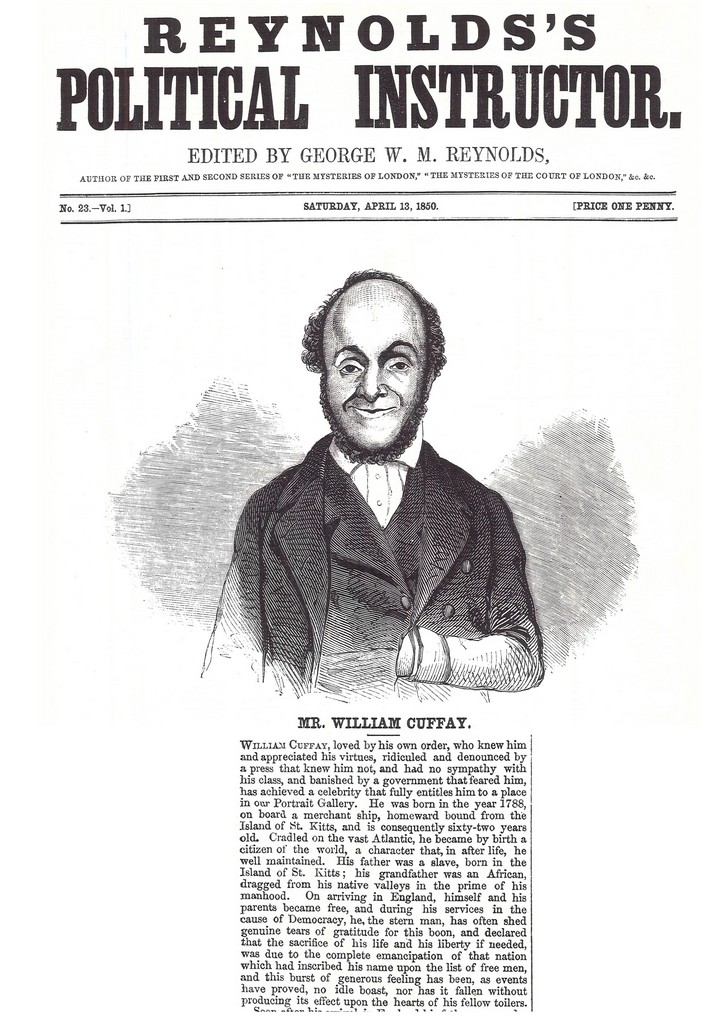
One of those arrested after the rising failed was the black leader of London Chartism in 1848 William Cuffay. His precise role in events remains open to interpretation.

The rising was only actually attempted in London and there is some detail about it. David Goodway’s London Chartism covers it briefly. He argues that it was probably the most well supported (but also the last) of attempts at insurrection in the Capital dating back to the 1790s and running through events like Cato St (1820). It was tradition of revolutionary conspiracy, rather than open organising.

A supposedly secret committee met to plan events on most days in the first half of August 1848. Meetings were actually mostly in coffee houses but some were in beer shops. The beer shop had come into being after the 1830 Licensing Act and might perhaps be likened to the modern micro-pub.

Its true however that when the police and military moved to arrest the leaders of the conspiracy they were to be found in two pubs, one off Red Lion Square and the other off Blackfriars Rd. Neither is still there.

Goodway estimates that up to 5,000 Chartists and others gathered at Seven Dials in the West End and in Southwark. However with the leaders arrested the rising melted away into the mid-August night.

We earnestly recommend all persons in the great towns of the kingdom, who in any way may have become informed of the haunts or proceedings of these pothouse conspirators to give timely warning to the police…

The Times 18th August 1848

Meeting Places for the August 1848 Rising in London

Seven Dials, Strutton Ground (Victoria St) Clerkenwell Green Tower Hamlets(Bishop Bonners Fields, now part of Victoria Park)

Pubs where the leadership met

Orange Tree beer-shop, Orange St off Red Lion Sq. Licensee Robert Hodges

Angel, Webber St(off Blackfriars Rd) Southwark. Demolished 1944

Articles

I Paper captures impact of Michael Rosen’s Beard Power

In Uncategorized on August 20, 2021 by kmflett

Beard Liberation Front

20th August

Contact BLF Organiser Keith Flett 07803 167266

I Paper captures impact of Michael Rosen’s Beard Power

The Beard Liberation Front, the informal network of beard wearers, has said that an interview with Michael Rosen (20th August link below) in the I Paper has captured the public impact of his Beard Power.

Rosen is joint holder of the Beard of the Year Award with Michael Sheen.

The I Paper reports on a recent performance that Rosen gave at the Globe Theatre in London and notes that: ‘He has the perfect voice for it and the face, too: as vividly proportioned as a picture-book caricature’.

The campaigners say that the beard is a key part of the performance as the follicles modulate air currents and help promote maximum impact.

BLF Organiser Keith Flett said, Beard of the Year is all about positive profiles of the hirsute in public life and Michael Rosen is an outstanding example of that.

https://inews.co.uk/culture/books/michael-rosen-covid-nhs-many-different-kinds-of-love-on-the-move-1158330

Articles

Reasons given for occupying Afghanistan in 2001 did not include women’s rights

In Uncategorized on August 20, 2021 by kmflett

Reasons given for occupying Afghanistan in 2001 did not include women’s rights

On social media and elsewhere fans of a continuing European role in Afghanistan have been claiming that a key objective of the occupation 20 years ago was women’s rights.

It can be agreed that with a Taliban Government the prospects for all Afghan women are likely to be grim based at least on the benchmark of equality.

However the aims of being in Afghanistan were laid out by Alastair Campbell, Blair’s comms man, at the time. ‘Humanitarian’ did come third on the list but that is a far broader category than women’s rights and might for example suggest a focus on refugees.

Also below is an extract from Tariq Ali’s assessment of 20 years in Afghanistan which is on the New Left Review site. It argues for a different reality, while making entirely clear that the Taliban are the enemy of women’s rights.

Alastair Campbell Diary 8th October 2001

Cabinet was largely TB and the other ministers involved reporting to the rest of them. By and large they were supportive. TB went through the three different planks-military, diplomatic and humanitarian..

The Burden of Power 2012

Tariq Ali, New Left Review

As for the status of women, nothing much has changed. There has been little social progress outside the NGO-infested Green Zone. One of the country’s leading feminists in exile remarked that Afghan women had three enemies: the Western occupation, the Taliban and the Northern Alliance. With the departure of the United States, she said, they will have two. (At the time of writing this can perhaps be amended to one, as the Taliban’s advances in the north saw off key factions of the Alliance before Kabul was captured). Despite repeated requests from journalists and campaigners, no reliable figures have been released on the sex-work industry that grew to service the occupying armies. Nor are there credible rape statistics – although US soldiers frequently used sexual violence against ‘terror suspects’, raped Afghan civilians and green-lighted child abuse by allied militias. During the Yugoslav civil war, prostitution multiplied and the region became a centre for sex trafficking. UN involvement in this profitable business was well-documented. In Afghanistan, the full details are yet to emerge.

https://newleftreview.org/sidecar/posts/debacle-in-afghanistan

Articles

August 1848 Central London.The last armed rising on English soil

In Uncategorized on August 19, 2021 by kmflett

August 1848- the last armed rising on English soil

1848 was a year of revolutions across Europe, except in Britain.

Here the Chartist demonstration for the vote on Monday 10th April 1848 did not lead, as the authorities feared, to an attempt to take power. The gathering on Kennington Common was the biggest demonstration in British history to that date, but rain intervened as well as a very serious mobilisation of police, army and special constables on the side of the authorities.

Yet that was not the end of the British 1848, even if Victorian chroniclers spent some effort in trying to suggest that it was.

Ireland faced a revolutionary threat and that found its echo on the mainland, particularly after 10th April when Irish nationalists [confederates] joined with the Chartists in many areas.

The Chartist protest of 10th April was repeated on 12th June with meetings this time around the UK.

The Liberal Home Secretary Russell banned these meetings and again mobilised the police and troops to stop them.

The Chartists gathered at Bishop Bonners Fields [now part of Victoria Park in the East End] in large numbers but did not attempt to have a meeting.

It was this sequence of events that led first the national Chartist leadership, and then as they were arrested, the London leadership to start planning an insurrection.

Planning or plotting meetings took place in pubs and coffee houses from June to August 1848. We know this because the meetings were infiltrated by several police spies.

The frustrations of the Chartists can be understood. They had seen revolutions sweep away autocratic regimes across Europe and in Britain they had faced bans and arrests if they protested peacefully.

In addition as the historian of London Chartism David Goodway points out, London had a conspiratorial political tradition to which some of those involved in 1848 were heirs.

William Cuffay the black leader of London Chartism became the effective leader of the attempt at revolution in the days up to the 16th August, although whether his aim was to control it or prosecute it has never been clear.

Even so there was a clear plan and this was to barricade an area of central London and take effective control of the Capital. There was also less clear plans to put effect to this by firing gas mains thereby causing fires and explosions.

The plan for a revolutionary rising was clear enough then. Victorian historians argued that very few supported it at the time and like 10th April 1848 it was a damp squib. As Goodway again points out this was not the case. He estimates that around 5000 Chartists and confederates were mobilised in London on 16th August. That number would certainly have been a good match for the authorities’ forces.

In reality neither side seemed prepared to actually do the deed. While the authorities had intelligence of what was planned the police who were mobilised at Seven Dials on 16th August neither went into action or, on the day itself, made arrests.

The Chartists who gathered at Seven Dials on the evening of 16th August around 9pm did not attempt to occupy it either. On word that the police knew of the plan they dispersed.

Arrests, including that of Cuffay and some others did take place in the days that followed.

Aside from being something that has been hidden from history and is worth recalling the events at Seven Dials 173 years ago this month have another resonance.

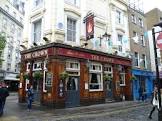
While the area is very different in some ways to how it was then- a very poor area with a pub on each of its seven corners- the actual physical layout of the space remains very much as it was. One of the pubs that was there in August 1848, the Crown, remains in place with essentially the same structure that it had then.

Paris has launched an App directing locals and visitors alike to locations related to the 1789 revolution. An equivalent London App must surely feature Seven Dials

This weekend why not re-live a moment of London’s revolutionary past and stop off for a pint at the Crown as some of the Chartist insurrectionaries of that summer certainly did themselves.