One year on England are playing Pakistan in a 50 over international at Cardiff. England players wore anti-discrimination shirts before the start of the play but the practice of taking the knee has been stopped.
I think that is a concern.
England football players despite criticism from racists and some Tory politicians continue to take the knee.
Of course it does and solves nothing in itself but it is a very visible reminder that there are issues of discrimination and equality in sport that need to be addressed and on a consistent basis.
That hasn’t stopped a year on and evidence on real change seems very limited.
Southgate & Kane Beard Power key to England challenge to Denmark
The Beard Liberation Front, the informal network of beard wearers, has said that Beard Power, as displayed by England football manager Gareth Southgate and captain Harry Kane is likely to play a key role in determining whether England can beat Denmark and get to meet Italy in the Sunday’s final of the European football Championships
Calls in the Guardian for England football manager Gareth Southgate to shave his beard off got a decisive thumbs down in a special BLF poll.
96% of those voting backed Gareth Southgate’s Beard Power with just 4% saying he should shave for victory.
Southgate is the first ever England football manager, going back to Walter Winterbottom in 1946, and 1966 aside, his clean shaven predecessors have not been notable for their significant success.
BLF Organiser Keith Flett said, The combination of Southgate & Kane’s Beard Power could be crucial in the semi-final if it is appropriately deployed. The clean shaven revisionists demand for him to shave completely ignore the reality that Beard Power is a key part of the England’s team’s strategy
Beard Liberation Front poll. Can the Beard Power of Gareth Southgate & Harry Kane see England to the Euro Final?
What a shave! Must Gareth Southgate’s beard go for England to win Euro 2020?
While agreeing wholeheartedly with Keith Flett’s Marxist analysis of the England football team’s prospects (Letters, 30 June), I cannot help noting that no bearded manager has ever led England to success in an international football tournament. Perhaps a barber might offer advice?
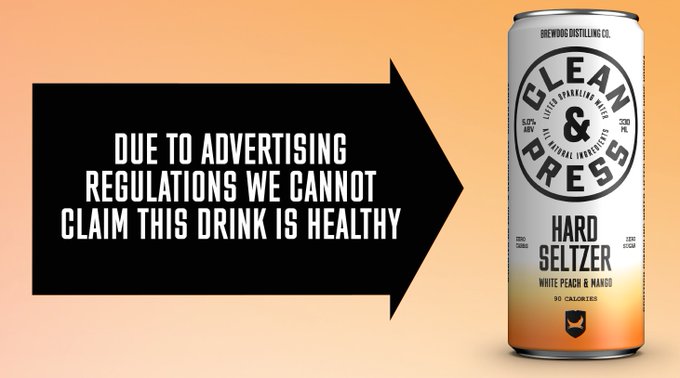
Ban on Brewdog Hard Seltzer Insta ad raises wider questions
The Advertising Standards of Authority has banned a Brewdog advert for Hard Seltzer that appeared on Insta.
The ASA’s issue was that while Brewdog claimed that the drink was healthy as it had only 90 calories, no drink that is 5% alcohol (as Hard Seltzer’s often are) can be described as healthy.
It looks like a collision between a sensible decision to stop alcoholic drinks being seen as light refreshment (though some might be if less strong- see Table Beer) and a temperance mindset which suggests that alcohol is bad for you period.
I doubt we can have any sympathy for Brewdog here who almost certainly knew what they were doing and wanted publicity for Hard Seltzer.
For those who haven’t tried one- I had a passionfruit variant made by Thornbridge and Mikkeller a couple of weeks ago. It was 5%. It was pleasant to drink and nothing at all to do with beer. It would indeed make a good alternative to beer if it wasn’t for the fact that it was actually stronger than many standard beers and lagers.
But if it was considerably less strong (and there are low to no alcohol Seltzers around) it might.
In an historical context its worth keeping in mind that numbers of drinks associated with temperance were actually fermented and contained a certain amount of alcohol. No doubt temperance campaigners thought they were healthy.
I suppose the point is, enjoy Hard Seltzer if you want to but don’t knock it back as if it were flavoured water. It is of course, but water wont give you a hangover and it is definitely healthy.
42 years of the Special’s Ghost Town. Love Music, Hate Racism isn’t a slogan. ‘You Have to Fight It’
June 2023 marked the 42nd anniversary of the release of the Specials single Ghost Town. It went on to spend three weeks at Number One in the charts in the summer of 1981.
Recorded in Leamington Spa and produced in Tottenham, the single is now part of social history capturing the disaffection and impact of the first years of the 1979 Thatcher Government.
It was re-released in 2021 to mark the anniversary but its significance goes far wider than the music charts. It speaks to an experience of particularly younger people under a Tory Government that is not so different in 2023 despite the passage of four decades.
The idea for the song, both the lyrics and the musical style came to the Specials Jerry Dammers as the band were touring the UK in 1980. They saw the first impacts of Thatcherism, with closed shops and businesses and people begging on the streets.
The following year saw the first reaction to this with riots, starting in Brixton in April 1981 and by the summer when Ghost Town was to be heard coming from car radios, in June and July 1981 a much wider area. Unemployment had risen to 2.5 million and the Metropolitan Police were engaged in the racist policing exercise branded ‘Operation Swamp’
It seemed like the music and the political reality were matching.
Dammers went on to produce the political anthem Free Nelson Mandela in 1984 before pursuing wider anti-racist music and cultural work.
40 plus years on the song is a reminder of the times in 1981 but also that life under another Tory Government is not significantly different. The pandemic had a specific impact but before that 10 years of Tory austerity had seen the pattern of joblessness, crumbling high streets and racist policing reassert itself, after the limited, pre-2008, adjustments of the New Labour years.
In short Ghost Town is a history of 2023 as much as 1981.
Speaking to the Financial Times (3rd July 2021) Terry Hall argued
that Love Music Hate Racism is not enough just as a slogan ‘You Have to Fight It’. As the article notes the Specials concept was ‘black and white musicians, clear, unambiguous politics, defiance’
It goes wider than that however. An indication came from the unlikely source of the then Chief Medical Officer Chris Whitty. Speaking to an NHS Confederation conference on 17th June 2021, Whitty made a rare foray into historical contextualisation.
He argued that the areas of the country where COVID had hit hardest, were clearly defined, and invariably featured, during periods when infections rose.
He specifically mentioned Bradford, Leicester, parts of London and the north west, that were hard hit but also areas where deprivation is most noteworthy.
He went on to argue that a map of Covid’s biggest impact now and a map of child deaths in 1850 would look remarkably similar.
His view was that there were areas where deprivation had been prolonged and deeply entrenched not just over 40 years but over 170 years. It was a devastating indictment of the history of market capitalism although not one, of course, that attracted the attention of much of the media.
It is unlikely that Chris Whitty will be singing a rendition of Ghost Town but the lyrics of 1981 still speak to our times:
Cant go on no more,
The people getting angry,
This town is coming like a ghost town
Time to be angry indeed.
An earlier version of this post appeared in the Morning Star
Can Hedgehogs survive ‘species champion’ Chris Grayling?
Following a public petition there was a debate in Westminster Hall on Monday on hedgehogs and the threat to their survival.
A summary of what the Government is doing and a link to the transcript of the debate is below.
Hedgehogs are in serious decline thanks to agricultural changes, housing schemes and new roads all of which destroy the natural habitats of the hedgehog.
In short hedgehogs are threatened by a drive for profits.
There is unfortunately another serious threat. Serial failed Tory Minister Chris Grayling is currently the ‘species champion’ for hedgehogs. If I were them I’d be organising a protest march at the very least- using hedgehog highways obviously
Rebecca Pow
The Parliamentary Under-Secretary of State for Environment, Food and Rural Affairs
We have a portfolio—a toolbox—of measures that will combine to improve our nature and put back our declining species. The local nature recovery strategies are key to that and will be used on the ground by local authorities. That will give them the opportunity to determine—it is like a mapping system—what they want where, where there is good nature, where it could be better or where they would rather just focus on industry. All of those things will build together, and local authorities will be able to make hedgehogs a priority if they so wish. I am confident that we have a very good framework in the Environment Bill.
We also have our new Agriculture Act 2020, and we have left the common agricultural policy. We now have schemes to ensure that our land use will deliver environmental benefits—through the sustainable farming incentive, the local nature recovery scheme and our much bigger landscape recovery scheme, which will link whole areas and potentially have the corridors that our wildlife needs to move about. Those schemes—sustainable farming, in particular—will be able to create and preserve woodlands, heathlands, species-rich grassland and a range of habitats that will benefit hedgehogs, in particular.Toggle showing location ofColumn 189WH
Serious points were made about planning. DEFRA is in close consultation with the Ministry of Housing, Communities and Local Government, particularly on the issue of sustainable development. Hedgehog highways, swift boxes, ponds and all of the things that we are flagging really need to go into our future developments, together with sustainable urban drainage and all of the things that affect our water quality and flooding. It should all knit together.
Pandemics. Lessons from the Nineteenth Century on people & profit
Boris Johnson has announced an end to most restrictions related to COVID-19 in England from July 19th. Infections are currently rising but there is pressure from business to open up and pressure too from a considerable range of people who have been badly hit over the last 15 months or so by loss of work and contact. The conundrum of profit or people is ultimately one that can be found in the nineteenth century as well as the twenty-first.
In pre-modern history plagues could wipe out significant sections of the population and create conditions for what is now known as ‘regime change’. The Black Death in 1348-9 is thought to have killed around 40% of the population in some cases for example, sparking social upheaval.
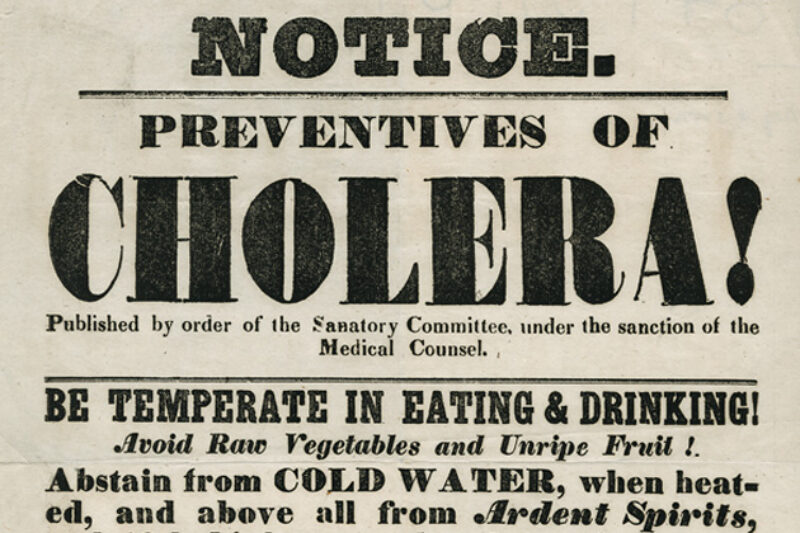
From the nineteenth century on this has been less the case. Societies began to be able to control and disease better. While successive epidemics of diseases like Cholera and TB swept the world in the 1800s-and in fact still do in some parts the globe- and large numbers died as a result, the proportion of now much larger populations impacted was more limited. Even the most severe cholera epidemics killed at local peaks 15-20% of people.
The relationship between epidemics, their impact on society and protest and change has been more complex in the last 200 years but a relationship there still definitely is.
Haiti Dictator ‘Papa Doc’ Duvalier was ousted in 1986 following popular unrest. This related to a rise in AIDS case in the country which put off visitors from the US, sensibly or not, and caused a collapse in the tourist trade, a central feature of the Haiti economy. The resulting job losses led to revolt.
This pattern can be broadly seen in nineteenth century cholera epidemics.
The two largest took place between 1830-32 and 1848-49. These were times of social change and revolution around the world. Wars and revolutions, also provoke population movements and refugees. This was a way epidemics spread in the nineteenth century and remains so in 2021.
The link between epidemics and revolution was a strong one at least in the mind of reactionaries. In France in 1849 some called cholera a ‘revolutionary infection’ seeing its spread as being caused by the ‘dangerous classes’ every bit as much as revolt could be.
More often though it was not revolution but riot and protest around epidemics and their impact that was seen. With job losses, poverty and lack of adequate food the issue was who to focus protest on. Governments were an obvious and relevant area with claims that they did little because they were not troubled by deaths of poor people. Sometimes it was medical authorities themselves who were faced with protests that they had not done enough. Much of this may seem rather familiar in 2021 as well.
Of relevance to 2021 is that while many Governments used similar techniques of control when epidemics first broke out-isolation, quarantine, control of movement, these didn’t ultimately work. That was because not only the cause of epidemics such as cholera was poorly understood but also because there was no effective medical remedy.
In 2021 we are in a different place. COVID-19 while a new virus is at least partly understood. There are very effective vaccines although progress in vaccinating people around the world varies hugely
When epidemics reasserted themselves in the nineteenth century as they invariably did, Government reaction was mixed.
Some, where they had the ability to do so- such as Prussia- implemented police measures which remained mostly in force long after the epidemic had retreated. Others did little. In Hamburg for example nothing was done because of the impact quarantine had on trade but also because police measures posed a threat to public order. Clearly deaths took place as a result.
Perhaps it might be reflected that the best way out of this conundrum is to find an effective vaccine if not to prevent an epidemic to control and restrict its impact. Fortunately in 2021 society is much better placed to do that than it was 150 years ago.
The conclusion we might draw is that while modern science and vaccines have the potential to change matters hugely the social pressures and class forces at work remain very familiar from the earlier periods of market capitalism
The key text on the subject is Richard J Evans, Epidemics and Revolutions, Past and Present 120, August 1988
Boris Johnson ‘Personal Responsibility’ & ‘Common-sense’. A sense of class arrogance.
Boris Johnson has laid out measure to relax legal rules around COVID-19 and replace them with guidance based on advising people to use their common-sense and take personal responsibility.
These are not terms that have an easily definable meaning. For bosses seeking to maximise profits, health and safety might not be quite as much of a priority as it should be. For those employed however a cautious approach to COVID based on mask wearing and social distancing might seem more reasonable.
We might surmise that a Johnsonian approach to common-sense formed as it will have been at Eton and in the Bullingdon Club is highly likely to be foolhardy.
It is too soon for Johnson to attract the attention of historians but he does have biographers. One, Sonia Purnell (Just Boris) does record an occasion when something that Johnson actually thought was just ‘common-sense’ turned out to be anything but, and to his personal detriment.
This was in October 2004 when Johnson was still editing the Spectator. Purnell notes that short of a leader column as the deadline appeared (no doubt due to laziness on Johnson’s part), right-wing columnist Simon Hepher was prevailed upon to write something at short notice.
He focused on the minutes silence at an England Wales football game for Ken Bigley a contractor from Liverpool who had been murdered in Iraq.
The leader criticised the ‘mawkish sentimentality of a society that has become hooked on grief’ and argued that Liverpool was a ‘handsome city with a tribal sense of community’.
Apparently some of Hepher’s copy was edited but the section on Liverpool was seen as just common-sense. Johnson didn’t bother to check the detail of the context of the Hillsborough tragedy and how many had died.
Purnell relates that the references to Liverpool were thought to be just ‘common-sense’. There was uproar.
Johnson was despatched on a tour of apology to Merseyside but, rightly, has been despised in the City ever since.
For Johnson common-sense is about class arrogance. For others it should be about collective community solidarity.
Wimbledon in 2026 may seem rather less than a festival of proletarian sport particularly with the BBC’s fascination of who is to be found sitting in the Royal Box.
That is perhaps unfair because while the wealthy and famous are seen there, they are also present at many other sporting events, most of which take place more frequently, and hence have less focus.
Even so tennis does have a reputation as a rather middle-class sport, Andy Murray’s pandemic call for a decent pay rise for NHS workers notwithstanding.
Verso published a book in 2020 which both challenged and to a degree confirmed that perspective. David Berry’s A People’s History of tennis is well worth a read
In 2020 Prospect magazine published an article by Berry on one part of the book, that which covers Workers Wimbledon, an alternative to the All England Championships that ran from 1932 to 1951, the war years aside.
By the late 1930s Berry notes:
Workers’ Wimbledon had become the pinnacle of an alternative tennis culture in Britain that encompassed Labour Party tennis clubs, miners’, postal workers’ and railwaymen’s tennis associations and public park leagues. Together they challenged the private tennis club code of exclusion and discrimination.
It was part of a wider socialist culture, involving travel clubs and other sports. By 1960s the rise of the consumer society, saw its decline. That’s no reason why it couldn’t be revived in a modern format however
I wont repeat the points Berry makes which are below (paywalled but register to read for free):
Beard Wearers urged to continue mask wearing after 19th July to protect themselves & others
The Beard Liberation Front, the informal network of beard wearers, has urged the hirsute to continue wearing masks in appropriate contexts and settings after July 19th, even if the requirement is lifted in England.
The campaigners say that mask wearing has seen a rise in follicle health over the past year, as beards have been protected from the elements and accidental exposure to noxious substances.
They also say that mask wearing protects others, hirsute and clean shaven, from anything that the beard wearer themselves may transmit, via the occasional splutter or cheer.
BLF Organiser Keith Flett said, we urge beard wearers to protect themselves against clean-shaven fools like Boris Johnson and continue mask wearing where appropriate after July 19th.
Beard Liberation Front poll. Do you support the Beard Liberation Front policy for beard wearers to continue wearing masks after July 19th whatever clean shaven fool Johnson says? Details here: https://t.co/fWCJpG6kZY Vote below
Peter Linebaugh on US Independence Day. Historical Complexities beyond flag waving
July 4th is of course US Independence Day and a significant moment in world history (and of the many significant moments one that is better remembered than many..)
Were there an equivalent in Britain no doubt Keir Starmer & co would be out waving flags.
The reality is, as Peter Linebaugh underlines at the link below, is much more complex when it comes to July 4th.
Linebaugh is a socialist historian who studied with E P Thompson at Warwick in the late 1960s and has produced landmark work on the struggles of ordinary people from below- the Many Headed Hydra (with Marcus Rediker) being amongst the best known. It looks at the links between the Atlantic slave trade, US and UK capital and how people fought them- the revolutionary Atlantic.
For Linebaugh US Independence Day marked a key moment in the battle of the colonialists against the London monarchy- political republicanism.
They objected to paying taxes to fund wars in which they had no say (no taxation without representation). They also wanted to further colonise parts of North America which the London Government did not. This wasn’t of course because it was against the principle but simply on a cost basis.
It was as Linebaugh argues, independence for some, but not for slaves who had centuries further to fight for their independence.