Articles

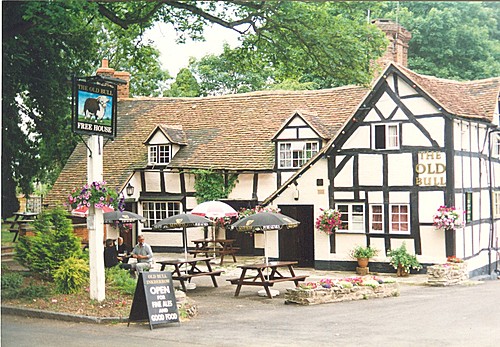
Back to the pub at last. But what kind of pub?

In Uncategorized on May 17, 2021 by kmflett

Back to the pub at last. But what kind of pub?

The past year has seen, due to the pandemic, massive issues for nearly everyone in the brewing, beer and pub trades area.

Only nearly everyone because global big beer such as ABInBev and even large UK based concerns like Marstons- now a PubCo- have weathered the economic times well enough.

That is not true of course for many of those who work in the industry who at best have found themselves furloughed with no real guarantee of future employment and at worst, numbers have lost their jobs.

Estimates of the number of pub closures so far vary but the number is likely to be significant. This is particularly true for ‘wet-led’ pubs. That is those who sell mainly beer and little or no food. They have been shut for most of the last year without any Government recognition of the particular issues they face by any of the four UK Governments.

Measures announced in the March 3rd Budget by Rishi Sunak included a range of grants, loans and VAT cuts (but not on alcohol), while beer duty remains frozen despite the long running Campaign for Real Ale claim for it to be cut. UK alcohol taxes are amongst the highest in Europe. In short it is in the ‘better than nothing’ area of Government interventions

Against this backdrop the Government however decided to do something specifically on pub closures.

One suspects a lot of it is spin designed to appeal to a particular cohort of what could be seen as a  section of Tory voters. In a tabloid paper owned by Rupert Murdoch Boris Johnson was reported as claiming that he is ‘on the wagon’ (not drinking) until the pubs re-open and this is a priority.

Some might suggest that there are other more pressing matters for financial help- the NHS for example- consistently underfunded by the Tories. It is not however an either or matter.

There is such a thing as society and pubs play a key role in that even for many who don’t drink. They are meeting places, where much of the social fabric of society is knitted. Without them isolation, and alienation start to dominate.

In this context the Chancellor Sunak’s Budget specific announcement of a £150 million fund to help communities save places and spaces they see as central to their local area, has been widely supported.

The scheme works on matching funds raised by local community campaigners up to a limit of £250,000. £500,000 might not be enough to buy out quite every pub, depending on location, but is probably sufficient for some that are struggling.

Three key questions emerge.

Firstly the last year has seen numbers of Government funding schemes most of which, with the exception of furlough, have proved patchy and mostly very slow and bureaucratic. Will this be any different.

Secondly the Government has an impressive, or notorious, depending on your perspective, record of channelling public money to its mates. Might this be just another way of doing that?

Thirdly supposing that neither one or two is correct, or only partly so, what might a radical community pub actually look like?

So far we have only a headline document clearly quite carefully written by civil servants. The detail of how to apply for the fund will appear in June 2021 when on the possible current timetable pubs should be able to open without significant restrictions.

The focus on the scheme which applies across a range of institutions that a local community might want to save from being lost including pubs is on proper governance from established community groups rather than ad hoc campaigns that come together on a particular issue.

We’ll see in June where the specific balance lies. It does read though as if well to do conservative (officially with a small ‘c’) efforts in the Shires might be preferred to what the Culture Secretary Oliver Dowden often refers to as ‘activists’.

There are two further caveats here. Firstly there are numbers of existing campaigns to save community pubs, well organised and run, and on occasion successful. Often these are informed by the experienced campaigners of CAMRA, which celebrates its 50th anniversary this month.

They can offer advice and strategies for community pub buy-outs and they are an officially recognised ‘player’ by the Government.

Secondly there is the stage before a bid for a pub gets underway. That is making sure that a developer doesn’t get in first knock it down and build flats.

For this planning permission is required as it’s a change of use. However in the absence of any alternative proposals its likely to get nodded through. That’s where the Asset of Community Value legislation needs to be used.

An ACV allows bids on pubs to be halted while a community buy-out is attempted- specifically that means raising funds. How this legislation works in conjunction with the Community fund (if it does) will be important.

Successful community pub buy-outs require hard campaigning and fund raising work and this is now a more common feature of life. If there is success there are more issues to address. An historic pub where I live in Tottenham, the Antwerp Arms, was saved and is now a very successful place. It meant a lot of hard work by an experienced community management team and it also meant a good pub manager who was on board with the ideals behind the project. It was done but it is easier said than done.

So what might such a pub look like? Firstly it should not be in anyway top down. The Carlisle State Management scheme is an interesting historical template, but for the community buy-out to work it needs to be from below.

That might well mean for example a co-operative pub democratically run by regulars and staff to the mutual benefit of both. There are examples of this working but there are a lot of market and society pressures to be understood and dealt with.

Such a pub could and should be a genuine community space welcoming to all, drinkers and non-drinkers. It also though has to work as a business and turn a profit. Here lie tensions that require careful community management governance and stewardship.

Let’s hope for the moment though that the new community fund provides the chance to give this model a try.

Articles

Hirsute warned to take care if hugging to avoid interlocking follicles

In Uncategorized on May 17, 2021 by kmflett

Beard Liberation Front

17th May

Contact BLF Organiser Keith Flett 07803 167266

Hirsute warned to take care if hugging to avoid interlocking follicles

The Beard Liberation Front, the informal network of beard wearers, has warned the hirsute to take great care if they determine to hug a fellow beard wearer once restrictions lift on 17th May.

The campaigners say that the big concern is that when hugging if the beard wearers have full or organic beards that the follicles may accidentally become interlocked and impossible to separate without cutting of the beard.

One way to avoid this is hug someone from behind, obviously with prior warning.

BLF Organiser Keith Flett said, as ever we advise the hirsute to take care out there and that particularly applies to beard hugging.

Articles

How did hoppy beers become popular in Britain?

In Uncategorized on May 16, 2021 by kmflett

How did hoppy beers become popular in Britain?

There is an interesting thread on @BoakandBailey twitter account (16.5) about the rise of hoppy, golden beers in the UK.

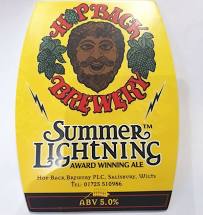
For me the first such beer was Hop Back’s Summer Lightning

It still tastes decent today but in the early 1990s for those of us brought up on malty, brown beers (which we enjoyed I should underline) the level of hops was a revelation. This was a beer taste we had not previously had.

As Boak and Bailey note other beers followed on- OakhamJHB, Rooster’s Yankee, Kelham Island Pale Rider and so on.

This though was 30 years ago. The Beer Orders had just begun to open up the pub trade (not as it turned out always in a good way). Pubs still tied to breweries could sell a guest beer and pub disposals started to see the rise of pub companies.

There were however few independent pubs dedicated to selling interesting cask beer (this was a long time before craft keg).Supermarkets did not sell, in the main, beer from smaller breweries.

Summer Lightning was brewed in Wiltshire and JHB in Cambridgeshire. How was it possible to come across such beers in, for example, London except by making a visit to a specialist pub?

The answer which may read oddly to some in 2021 is Wetherspoons. Beers like Summer Lightning and JHB were regularly on the bar at Spoons pubs and that without doubt is where many first tried and get the taste for them.

Tim Martin has been called many things (often quite accurately) but rarely one of the founders of modern UK beer  drinking habits…

Articles

The Ambridge Socialist. It’s Class War in Ambridge!

In Uncategorized on May 16, 2021 by kmflett

The Ambridge Socialist

16th May

Its Class War: Aldridges/Archers v Grundys/Horrabins

Class War has erupted again in Ambridge and the Ambridge Socialist is clear which side we are on as ever. We back the Grundys and the Horrabins, the key proletarian families of the village against the Archer and Aldridge ruling class.

It may be agreed that neither Alice or Chris are particularly attractive characters and in that sense were clearly meant for each other as they pursued a future of miserabilism. That however is currently not to be.

Jennifer’s attempt to justify the alcoholism of Alice is unjustifiable while Brian is a noted long time John Barleycorn fan. This is deemed quite acceptable for a leading male member of the Ambridge ruling class of course.

How the class war will play out remains to be seen but the Ambridge Socialist will be keeping a close watch on which side people take.

Take part in the Class War vote:

Rehabilitation of doubtful villagers continues

This week Joy Horville has been rehabilitated as a thoughtful and caring Ambridge resident, while the image enhancement of Vince Casey, previously thought to be a ‘baddie’ has continued. Vince has been helping out Rex with the arrival of the pigs at Lower Loxley. It is likely however that any rehabilitation of Call Me Russ as a decent human being remains some way off.

Articles

Protest on Palestine. Why size & scale matters

In Uncategorized on May 15, 2021 by kmflett

Protest on Palestine. Why size & scale matters

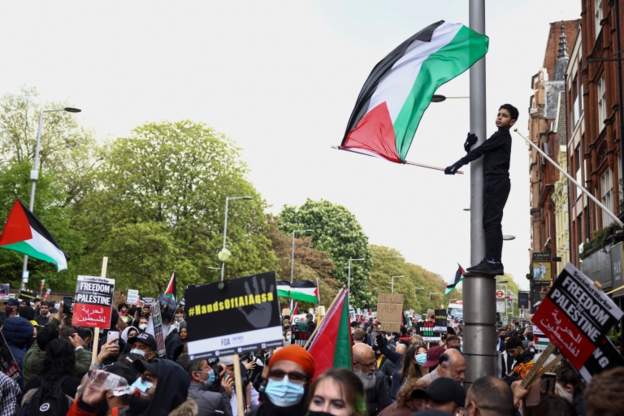
Saturday saw protests across the UK about current events in Palestine. Most recently Israeli forces have destroyed a tower block housing the operation of the Associated Press in Gaza, while reports of dead and injured, including numbers of children are constant.

The protests today were world-wide. I attended the one at the Nye Bevan statue in Cardiff which not only was a good size but reflected a wide section of the community too.

Given the size of the City numbers will never be as large as in London, where estimates of numbers were 100,000 plus. Its important in this context to grasp that the London protest was not a national demonstration, as those in the Capital often are, but a local one. In that sense the numbers were truly impressive.

Who however was impressed? Boris Johnson and Priti Patel will have been impressed in the negative and no doubt ponder if they can’t manage to ban or restrict future protests- as was done in Paris for example.

The world contains large numbers of conspiracy theorists who may claim the media ignored the protests. They didn’t. You can find the BBC report on the news website (15.33) and the Guardian website also has a report, although it seems more interested in the Australian protest.

The argument is not a lack of reports but how much prominence they have or don’t have given the seriousness of the matter and the global scale of protest.

But if UK politicians mostly weren’t listening what was the point?

Several speakers at the London protest made the thing clear. It is an act of solidarity that will be seen and heard in Palestine and Gaza. Physical proof that many stand with them against the aggression of the IDF and the Israeli Government.

It is without doubt another 2014 moment. My perspective on that is here:

Articles

2021 Beard, Shorts & Sandals official opening delayed

In Uncategorized on May 15, 2021 by kmflett

Beard Liberation Front

15th May

Contact Keith Flett 07803 167266

2021 Beard, Shorts & Sandals Season official opening delayed

The Beard Liberation Front, the informal network of beard wearers, has said that the official opening of the 2021 Beard, Shorts and Sandals Season has been delayed due to poor weather.

The campaigners say that a combination of cool temperatures and rain means that it isn’t yet able to set to a date for the official opening. The matter is kept under close review and the current expectation is for an opening around the late May Bank Holiday weekend.

The pre-season remains open, where shorts and sandals may be worn when it is appropriate to do so

The BLF says that it has amended guidelines for the official start of the 2021 Season and brought in a new framework to facilitate social distancing. This will be reviewed later in the summer.

1] Shorts should ideally be three-quarter length-‘culottes’ for the  2021 season. The length of shorts is particularly important as climate change may mean that unprotected legs get sunburnt.

2] Footwear should be casual. There is a considerable range of sandal type footwear now available. Some leaves parts of the feet and toes open to public view, while some does not. The BLF is not prescriptive about the matter.

3] Socks should generally not be worn during the official season. However if the beard, shorts and sandals are to be displayed in relatively busier urban areas it is likely to be prudent to wear closed rather than open casual footwear and ankle socks, not visible to others may be worn.

4] There is no prescription or definition on what type of beard may be worn, or how this may match with the shorts and sandals. This is left up to the individual.

5] Social distance should be kept where appropriate and required. On no account should there be any large groups of beard, shorts and sandals wearers. Discussion of styles should be confined to small groups or social media.

BLF Organiser Keith Flett said, the Beard, Socks and Sandals season continues to be a major influence on summer fashions in recent times. Unfortunately the official opening of the season has had to be delayed this year due to inclement weather. We are keeping things under close review and aim to get underway as soon as possible.

Articles

After Hartlepool: 1935 & all that

In Uncategorized on May 15, 2021 by kmflett

After Hartlepool: 1935 & all that

Labour’s defeat in the Hartlepool by-election together with, at best, a very mixed set of results in elections on 6th May, has sparked much discussion about where Labour’s politics should head to achieve the electoral ambition of booting out the Tories.

Keir Starmer it has become clear is not a great history man. He persists on blaming his own errors on Jeremy Corbyn, the Labour leader who Starmer himself did a good deal to undermine. More specifically he sometimes argues that the politics of Corbyn, which nearly won the 2017 Election, must be rejected because in 2019 they led to the worst Labour defeat since 1935.

David Edgerton, the Professor of Modern British History at Kings College tweeted before Hartlepool that this was a complete misunderstanding of what the 1935 Election was about and represented.

In the wake of the 1929 economic crash, the Labour Government had split in 1931. Ramsay MacDonald and a small number of other Labour MPs joined with the Tories to form a National Government. The plan, which remains familiar, was to make working people pay for the bosses crisis. The resulting General Election saw MacDonald installed as the Prime Minister of a primarily Tory Government. Labour was reduced to 52 seats such was the impact of the split.

By 1935 Clement Attlee was Labour leader and the picture in the Election of that year was of a significant Labour revival. The Party increased its number of seats from 52 to 154 and took 38% of the vote compared to the Tories 47%. That represented a 7% increase in Labour’s share of the vote.

The Second World War intervened before another Election could be held but the result of the 1945  Election, a Labour landslide, remains a significant moment in British labour history.

Comparisons between the 1935 result and that obtained in December 2019, quite frequently made by Starmer and allies, are not only wide of the mark but historically inept.

In 2019 under Jeremy Corbyn’s leadership Labour won 202 seats with 32% of the vote. While this was a significant reduction from the 2017 Election, that result currently looks like a high-water mark in what had been a period of relative decline in Labour votes and vote share going back to the New Labour period. By 2015 when Ed Miliband was Labour leader the share of the vote at the Election in was 30.4%

There are no easy historical comparisons to make from all this but rather a series of questions.

Looking at 1931 the decision of the MacDonald and a few other Labour MPs to join the Tories wrecked Labour’s standing. Perhaps a point here is that when Keir Starmer backs a policy of Boris Johnson, as he often does, many electors wonder what exactly the point is of voting Labour. They either don’t vote or in some cases back the Tory candidate.

Another potential issue is the impact of what is known as Pasokification. Pasok was the social democratic party in Greece, which declined to near electoral irrelevance having failed over a period to offer sustained policy alternatives to right-wing Governments. This trend of electoral decline can be seen across Western Europe.

Jeremy Corbyn’s Labour aimed to halt this process in Britain by offering a clear social democratic alternative to the austerity policies of the Tories, which had also been largely backed by Labour.

The real comparison with 1935 is that when Labour got close to the Tories in 1931 it had a devasting impact at the polls. When a clear alternative was presented in 1935 the road to electoral success which led to 1945 was started on.

Articles

Andy Burnham is wrong. It’s not Labour London that’s a problem it’s London-centric Head Offices

In Uncategorized on May 14, 2021 by kmflett

Andy Burnham is wrong. It’s not Labour London that’s a problem it’s London-centric Head Offices

Andy Burnham’s argument(Guardian 14th May link below) that Labour policy making should be less London-centric (14.5) feeds unfortunatley into the ‘North=poor and neglected; South=wealthy’ myth. When E P Thompson wrote about the birth of the Independent Labour Party in Homage to Tom Maguire (1960) he argued that the labour movement was born in those ‘shadowy parts’ known as the ‘provinces’, and saw this as a positive. He contrasted this however not with London but with the thinking that came of London HQs of unions and political organisations.

In reality many parts of London, my own of Tottenham included, are just as poor and neglected by the Tories as many parts of the north of England. They also vote Labour as the victory for Sadiq Khan as London Mayor on 6th May underlines.

https://www.theguardian.com/commentisfree/2021/may/13/keir-starmer-english-devolution-labour

Articles

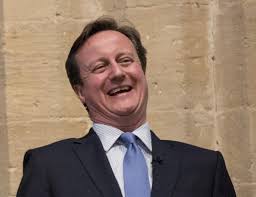
David Cameron,Regrater Lex Greensill & Cobbetian ‘Old Corruption’

In Uncategorized on May 14, 2021 by kmflett

David Cameron, Regrater Lex Greensill & Cobbetian ‘Old Corruption

Regrater or Forestaller was the term used- particularly by radicals-in the eighteenth century to describe what has more recently been known as the middleman.

That is someone who inserts themselves between a supplier and a buyer and makes themselves a profit out of it.

That is essentially what the story of Greensill, the global financing company that has gone bust threatening thousands of jobs including 5.000 in the UK steel industry, is about.

It is a complex story, some parts of it as yet remain unclear. The media have focused on David Cameron who was PM when Greensill got Government business and then went on to work for the Company. Culture Minister and statue obsessive Oliver Dowden defended Cameron as a ‘man of integrity’. As a Sunday Times Editorial (28th March) noted Cameron doesn’t actually have a reputation to lose.

Greensill was from an Australian farming family that went bust after a bad harvest. He came to the UK and got employment at Morgan Stanley. Here he met Jeremy Heywood, a civil servant, who was on secondment in the private sector.

Heywood returned to Government as Head of the Civil Service in the Cameron-Clegg Government. He died in 2018.

In Government Heywood seems to have promoted Greensill to Cameron.

As the Sunday Times story indicated Greensill’s business was about supply chain finance. He would act between the supplier and the buyer and aim to speed up payments for a fee.

Only one scheme actually happened.

This allegedly was about addressing the issue of chemists receiving late payment from the NHS for prescriptions they dealt with.

Here we find the core of the issue and it was about austerity.

If there was an issue of late payment it should have been sorted out by the Government and the NHS. Greensill was entirely unnecessary to the matter. Indeed under the previous Labour administration a plan had been agreed to address it. It was not implemented.

This was the age of austerity and Cameron-Clegg wanted a Small State and public sector. Hence anything that could and should have been done by the Government that could be passed to the private sector was.

As the report underlined the scheme was not much used because the commission charged by the banks that were making payments to the chemists came to more than any loss they might have made through late payment.

The BBC have reported that Cameron has told a Treasury Committee on 13th May that:

he had felt the firm’s proposals would help small businesses access cash during an economic crisis, and were “absolutely in the public interest”.

This statement does not accord with reality. One wonders if Cameron actually knows that or is simply lost in a world of self-justification?

It is any way the world of William Cobbett’s Old Corruption before 1832 in 2021. Cameron made a lot of money out of this. Not specifically out of the NHS contract but as a consultant to Greensill. He told the Committee he was paid considerably more annually than the £150K he had earned as PM. If he had been hired for his specific expertise he might have suggested that the NHS scheme was not only not going to help but would end up adding cost. He was however hired not for his expertise in anything but because of who he was- an ex-PM.

The BBC has now revealed (August 9th) that Cameron is believed to have made around £7.2m doing part-time work for Greensill for two and half years. Cameron has said that he was only one of several advisors and had no role in any decisions. He did however lobby the Goverment over 50 times to provide public funds for Greensill

BBC Report

https://www.bbc.co.uk/news/uk-58149765

Articles

After 6th May. London: Labour City (with contradictions)

In Uncategorized on May 13, 2021 by kmflett

London: Labour City (with contradictions)

I voted Labour in London on May 6th (in Tottenham) and was pleased to see that Labour retained control in City Hall with Sadiq Khan re-elected as Mayor.

He had a slightly reduced majority against his hard right Tory opponent Shaun Bailey but still ended up with well over 50% of the vote once second preferences were counted.

Sadiq Khan is hardly my kind of Labour politician but wider points prevail. He is a Muslim re-elected in one of the world’s great cities against a tide of Islamophobia and he was the Labour candidate on a night when, perhaps partly thanks to Keir Starmer’s leadership, Labour did less well than it really should have after a year of Johnson & the pandemic.

But as Khan himself pointed out a Tory Mayor in London is possible. Boris Johnson’s Mayoralty still has investigations hanging over it but if we think back further before Ken Livingstone headed up the GLC its leader was Horace Cutler. Cutler was a Tory with an interesting beard known widely as ‘Barnum’.

We can accept though that in general London is a Labour city and becoming more so. In fact Owen Hatherley in the New Left Review article quoted below quotes from a survey which found that if only over 70s were allowed to vote few places would be Labour but they included South Wales, Manchester and inner city London.

There are contradictions. A key one is that London is also a City of the rich and the centre not only of British capitalism but also (even post-Brexit)of much wider capitalist operations and profit making. Labour at City Hall hardly touches the periphery of this, although it might be argued it doesn’t have much power to do so.

All that said an understanding that London is fundamentally Labour, a world City where the working class and working class politics is key to an understanding of reality that you won’t find much discussed in the media. Neither unfortunately is it much understood by sections of the left who when they look at the Capital see the City of London and not the Labour City.

The December 2019 general election marked the fourth time in four years that London has veered from most of the rest of the country in a national vote, supporting Corbyn’s Labour in face of a Conservative landslide. In the 2015 election, the Tories lost hundreds of thousands of votes and important seats in the capital. In the 2016 EU referendum, London joined Scotland as the most monolithically pro-Remain part of the uk. In most of England, the 2017 election saw strong votes for both Labour and the Tories, but in London the May government was routed, with even Kensington falling to Labour, and several of the South-East’s commuter and ‘overspill towns’ registering sharp leftward swings, as if London’s politics were seeping outwards.

Owen Hatherley New Left Review 2/122 March/April 2020

Even London became and remained a Labour stronghold after 1923, when it elected 20 per cent of the national total of Labour MPs, or twice its percentage of the British population.

Eric Hobsbawm Labour in the Great City New Left Review 1/166 Nov/Dec 1987