Articles

Dr Tony Sewell, author of Government report on racism gets it wrong on Tottenham

In Uncategorized on April 8, 2021 by kmflett

Dr Tony Sewell, author of Government report on racism gets it wrong on Tottenham

Dr Tony Sewell was responsible for producing a Government report on racism last week. He concluded broadly that things were getting better although there were still issues with discrimination. It seemed out of line with the experience of many for whom things are definitely not getting better and the report was much criticised.

On the front page of the Daily Telegraph today- an obscure right-wing paper that is sold in newsagents and supermarkets- that he was being silenced or cancelled.

He followed up this up with a major interview in the features section of the paper and a podcast.

I have read the entire report and criticised the history behind Sewell’s claim that things are getting inevitably and inexorably better on racism. Certainly victories happen but then so do defeats.

If the Macpherson report into the murder of Stephen Lawrence was a victory for those who believe more must be done to root out institutionalised racism then Sewell is a defeat. Its not that he doesn’t think things should be done- the report has many recommendations- but rather he doesn’t see a big picture that needs changing.

I was intrigued in Sewell’s interview however by a statement related to Tottenham. He suggested that while Tottenham is 95% comprised of ethnic minorities, it is policed by officers who are 90% white. He suggests this is an argument for having a locally recruited police force-something which has its pros and cons as a strategy.

The problem is that Sewell’s facts are wrong. Tottenham is a very diverse place people wise certainly and all the better for it but here is the population make up from the 2011 census:

27.7% Other White

26.7% Black

22.3% White British

10.7% Asian

12.6% Other/Mixed

No doubt it would be helpful if the police in Tottenham reflected this mix better. It would be even better if they stopped being institutionally racist (obviously far from every officer has this mindset- it is the tone and manner of policing that is the issue).

That however is a point Dr Sewell does not wish to know about it and neither does the Government

Articles

The start of the first-class cricket season in England & Wales. Tradition meets 2021

In Uncategorized on April 8, 2021 by kmflett

The start of the first-class cricket season in England and Wales. Tradition meets 2021

Thursday 8th April sees the start of the first-class cricket season in England and Wales.

Unless you are enthusiast you may not have noticed (you might struggle not to notice the start of the football season even if you are not a fan).

There are of course no spectators allowed for now (there wouldn’t have been all that many anyway..) but in 2021 the games are live streamed with BBC Test Match Special ball by ball commentary. Hopefully this will spark interest.

The season is at last starting on time this year and will in due course see the launch of the Hundred 10 over competition. E-mails have been arriving about priority booking. I’m no fan of this in principle but we’ll see I guess.

The coverage has been as often underwhelming. As long time Somerset fan Ian Marriott tweeted the BBC decided to mark the start of the season by covering the launch of the Indian Premier League series. It is in my view the best of these limited over series but no marks to the BBC for timing.

Even the Telegraph, usually good on cricket coverage, managed just one page deep inside its sport section.

There is I must admit a wider angle now.

In times past the start of the domestic season was a chance to follow some live cricket for the first time in months, the England winter overseas tours having been completed some-time since. In 2021 you can watch and often enjoy cricket games in a range of formats day and night on Sky and BT Sport.

This week even saw Australian batsman Marcus Labuschagne taking his trousers off while at the crease in a Queensland v NSW Sheffield Shield match being streamed live by Australia Cricket in the early hours UK time.

Suffice to say for those following the story there was no evidence of a hidden toasted cheese sandwich. Perhaps he had already eaten it.

Articles

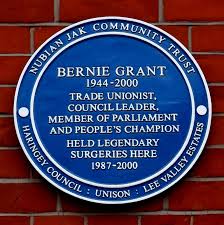
Bernie Grant d. 8th April 2000. Anti-racist, socialist, beard wearer

In Uncategorized on April 8, 2021 by kmflett

Bernie Grant d. 8th April 2000. Anti-racist, socialist, beard wearer.

I’ll be making the short way from my Tottenham residence to the old Tottenham Town Hall today to pay respects at the plaque marking the life of one of the great post-1945 political figures, Bernie Grant.

He died 21 years ago today after a period as leader of Haringey Council and then Labour MP for Tottenham from 1987, one of the first four black MPs to be elected in the modern era.

There is no question that Bernie made a significant impact on Haringey politics and well beyond which continues. He was the first black leader of an authority anywhere in Europe and while the example has been far too slow to be followed it was a landmark.

His fight against racism and opposition to the Thatcher Government when he was Council leader again set a template

I was Chair of Haringey Trades Union Council throughout the period that Bernie was Council leader and MP.

I recall particularly Election meetings where in those days we would invite the Labour candidate only to speak. Bernie was an inspiring and indeed an idiosyncratic speaker. Throughout the period he was pursued by the tabloid press (fortunately it was well before social media) and particularly the S*n who labelled him ‘Barmy Bernie’. We were always on the look out for ill intentioned types at these kind of meetings keen to twist an off-cuff the remark.

My connections do go rather wider. His brother was a trade union colleague in telecoms (as was his partner) and like myself an anyone but England cricket fan.

We have to accept I think that political figures like Bernie Grant come along only rarely in each generation. Remembering him 21 years after his death is important not least for the motivation it should give to continue the fight now.

Articles

If 2020 was the year of the Lockdown Beard, 2021 could be the year of the ‘Activist Beard’

In Uncategorized on April 7, 2021 by kmflett

If 2020 was the year of the Lockdown Beard 2021 could be the year of the ‘Activist Beard’

The level of protest, not just in the UK, but across the globe, has been rising for a while and beards have had a role to play.

While 2020 saw the growth of lockdown beards as restrictions ease in some places perhaps 2021 will see the resurgence of the activist beard

There are several other kinds of beards. The activist’s beard is a site of restlessness, of active dissatisfaction, It is unkempt and straggly, determined to resist order as befits a dissident fermenting ideas and fomenting trouble for the establishment. Of someone too caught up in the weighty issues of injustice and discrimination in the world to bother with appearances. The beard is a sign of individuality, of not caring enough about the things that don’t count while caring deeply for the things that do.

Times of India 5th April 2021

Articles

Tom Palin, Hung for Riotous Assembly at Shrewsbury Jail 7th April 1821. Time for a pardon

In Uncategorized on April 7, 2021 by kmflett

Tom Palin, Hung for Riotous Assembly at Shrewsbury Jail 7th April 1821. Time for a pardon

200 years after his death there are calls for a posthumous pardon for Tom Palin who was hung at Shrewsbury jail on 7th April 1821 for felonious riot.

Why we should remember Tom Palin and why he should be granted a posthumous pardon 200 years on

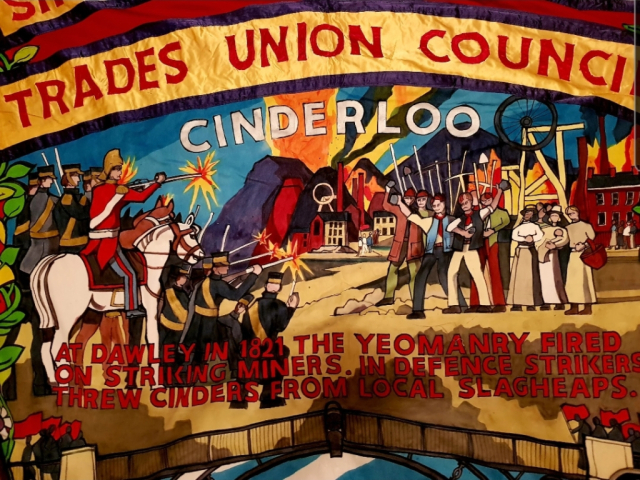
Palin had been, or at least was alleged by the authorities to have been, the leader of a group who attempted to free prisoners held by the local Yeomanry at Cinderford on 1st February 1821.

The occasion known as Cinderloo in an echo of Peterloo in 1819 involved local miners and others protesting at wage cuts by an aggressive local employing class.

The riot act had been read and Palin was one of those who failed to disperse. As the call for his pardon notes little is known about him, and there is no memorial.

It seems clear however that he was singled out by the authorities for reasons which remain unclear. Calls for his sentence to be reduced to imprisonment-a common occurrence at this time- went unheeded.

Palin was one of just 58 people to be hung at Shrewsbury jail in the entire nineteenth century and he was the only one to receive the death sentence for anything even remotely like a ‘political’ offence.

Strangely the record I can find of those hung at Shrewsbury records his crime as one of Luddism. The activities of the Luddites had concluded by 1817 or so, but this may be an indication that Palin’s activities had been known to the authorities over a much longer period.

Palin might have considered himself unlucky to be hung for riot, but in fact it was far from unknown for this to occur under what was known as the ‘Bloody Code’. The range of offences for which hanging could be the penalty was extensive including cutting down trees, and writing threatening letters.

As E P Thompson argued the counter weight was that the legal system did allow the possibility of genuine challenge to harsh sentences, although not in Palin’s case.

By the 1840s the range of offences for which the death penalty applied had been vastly reduced and no longer included riot. At the same time the use of an armed Yeomanry to keep order had been replaced by the introduction of police forces. They had truncheons rather than sabres or guns.

It seems appropriate to pardon Palin. It would be as appropriate to erect some form of monument to mark his role in defending workers rights and, if possible, to find out more about who he was.

Articles

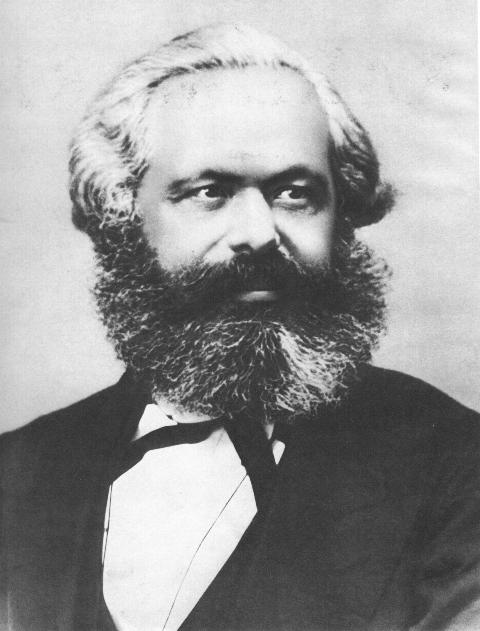
Brighton, August 1871: Marx encounters a spy

In Uncategorized on April 6, 2021 by kmflett

The issue of Government spies and infilitrators into radical and labour movement organisations is a current concern. It is however nothing new.

Marx wrote to Jenny Marx from Brighton (where he was for his health) in August 1871 that he had encountered a familiar individual… He doesnt speculate on why he was being watched but it is likely to have been in the wake of the defeat of the Paris Commune. Marx and Engels had been central in helping Communards who had escaped brutal repression in Paris and made their way to England

Brighton, August 1871: Marx encounters a spy

I forgot to tell you yesterday of a curious événement. The second day after my arrival here, I met a chap in a waiting posture at the corner of my street. He was the same man whom I

had told you about before as having accompanied Engels and myself on our way HOME on a number of occasions. Engels had thought he was a spy and we once gave him a ‘hint’. As you know,

GENERALLY SPEAKING I am not good at detecting spies. But this fellow has obviously and undeniably dogged my every step down here. Yesterday, I became fed up with it, so I stopped, turned round

and stared at him with my notorious EYEGLASS. WHAT DID HE DO? He doffed his hat very humbly and today he no longer honoured me with the pleasure of his company.

Marx to Jenny Marx 25th August 1871

Articles

Beard Liberation Front to promote beard power in Hartlepool By-Election but won’t stand

In Uncategorized on April 6, 2021 by kmflett

Beard Liberation Front

6th April

Contact BLF Organiser Keith Flett 07803 167266

Beard Liberation Front  to promote beard power in Hartlepool By-Election but won’t stand itself

The Beard Liberation Front, the informal network of beard wearers, has said that its political committee which met on Easter Monday has decided not to stand a candidate in the Hartlepool By-Election on May 6th.

The BLF usually prefers to campaign in By-Elections rather than stand candidates but looks at them on a case by case basis.

A key concern is always to avoid do anything that will lead to a victory by the Tory Party candidate. While more Tory MPs have grown beards in recent times, the party remains distinctly un-beard friendly in key areas such as promoting a more equal and diverse Britain.

The campaigners say it sought with mixed results to establish whether declared candidates have beard friendly policies. Whether or not they wear a beard is not a factor.

The Liberal Democrat candidate has a beard but neither Labour or the Northern Independence Party expressed a view before the BLF met.

BLF Organiser Keith Flett said, we firmly believe that beards are an electoral issue. There has not been a Prime Minister with a beard since 1902 and there is little sign that there will be one anytime soon. We hope to promote the importance of Beard Power in modern life while not splitting hairs in the Election.

Articles

Good News. Pubs in England open outdoors 12th April. Less good. You might meet Boris Johnson

In Uncategorized on April 5, 2021 by kmflett

The Government has announced pubs in England can re-open outside from 12th April.

Boris Johnson (no great fan of beer..)has announced he will pay a visit for a pint.

One wonders what pub and what beer…

PM Boris Johnson says he will be “cautiously but irreversibly raising a pint of beer to my lips” as restrictions ease further in England next week’ BBC News 5th April

Articles

Craft Beer in London, Easter 2016. Five Years On

In Uncategorized on April 5, 2021 by kmflett

Craft Beer in London, Easter 2016, Five Years On

Below is a slightly edited piece I wrote about craft beer five years ago, Easter 2016. This Easter as last I’ll been inside drinking cans of beer, which are much more widely available and more diverse than 5 years ago.  That’s another story though.

Looking back 5 years the song has not exactly remained the same. Brodies (at least in London) are no more and the Craft 100 held in Clapham is but a memory. Beavertown is now under the effective control of Heineken.

Perhaps this was one of the last occasions when ‘craft’ beer still appeared as much on cask as keg. 5 years on that certainly is not the case.

On the plus side there are a lot more London breweries now and a lot more choice (when the pubs are open that is- from April 12th we hope)

For some years I used to travel (with my partner Megan) ‘Oop north at Easter to sample new and interesting beers that weren’t seen in London.

Such beers still exist but such is the lure of the Great Wen that most beers from the north turn up in the Capital sooner rather than later.

Easter was spent in London at various craft beer events and outlets.

On Thursday Megan and myself ventured Sarf to Clapham. The Craft 100 was again running at the Craft in Clapham.

These are always well organised events and this year was no exception. It was busy but there was no issue getting served and the decision (at last) to serve in thirds (as well as halves and pints) made a huge difference.  Interesting beers could be sampled in greater numbers and in my view a third of Even More Jesus (cask 11.4%) is considerably more enjoyable than a half.

The range as always was exceptional and at the end of the night I realised I hadn’t sampled one keg beer. So is it right that more interesting beers are now more often to be found on keg than cask? Hmmm.

Travelling back Norf we stopped at the Waterloo Tap (remember I’d been drinking only thirds, slowly). The latest Tap venue it contains no spiral staircases and a spacious toilet (albeit only one). It has from memory 20 keg taps and 6 cask.

Moving on to Friday and the late afternoon found us at the King William in Leyton for Brodies bunny basher. This has been an epic event but last year it was a bit of a disappointment. Brodies have had their ups and downs as a brewery but on this evidence they are on their way back.

Here it’s true that most of the more interesting beers were on keg (and limited by a total of 9 keg taps) but there were good well-made brews to sample.

We than wandered across to one of the Beard Friendly Pubs of the Year, the Cock Tavern E8, to try BBN DIPA and one of the latest of Beavertown’s trial IPAs (as well as Tiny Rebel/Brighton Bier new misspelt Cascadian Kolsch on cask).

Saturday afternoon found us, as it often does when in London, at Beavertown brewery.

While the recent birthday party seems to be passing into legend, the new beers continue to appear. The jury remains out on Bloody ‘Ell 2016. For me the best I’ve tried was on cask at the Craft 100, but whether keg or can is better and how they compare with 2015…

Anyway on offer were the latest trial IPAs (all at 5.7% this time). For me Cpt Hasta was the best of the bunch. (the trial ended with the production of Lupuloid)

That day also saw the last print edition of The Independent and Will Hawkes last beer column made the point that the focus on craft was moving on from the interesting and unusual towards the consistent (as well).

Articles

In the age of Black Lives Matter is it time to re-name India Pale Ale?

In Uncategorized on April 5, 2021 by kmflett

In the age of Black Lives Matter is it time to re-name India Pale Ale?

With pubs in England set re-open outside from 12th April, draught beer can once again be enjoyed. Some of this will no doubt be the currently very popular beer style (or perhaps styles)IPA.

Beer writer Matthew Curtis @totalcurtis has raised what the name is historically about on twitter and pondered if its time to stop using it. Certainly a good deal more could be done to make drinkers in 2021 aware of what originally lay behind the name of the beer they are drinking.

I know Boris Johnson & Co think British colonialism represented progress in history but that progress was often brutal and bloody.

Calling the beer not IPA but something else might be one option though and historically there are examples. After all is not Fuller’s Extra Special Bitter (ESB) a classic IPA? That’s another debate as many would call it a strong ale and any way it is not historic, dating back only to 1971.

Pete Brown has dealt with some of the debates around IPA here:

The link with various aspects of far from always great British imperial history is difficult to avoid.

What did the ships that took IPA to India return to Britain laden with? As often Martyn Cornell has an answer, in relation to a ship returning from Calcutta in 1838:

cargo including raw cotton, 83 elephants’ tusks, coffee, wool, pepper, ginger – and opium

The IPA shipwreck and the Night of the Big Wind

In other words profitable parts of British imperial rule that should have gone to those who laboured to produce them in India.

In short, enjoy the IPA but keep in mind its history and that Black Lives Matter