Hocktide: Women Turning the World Upside Down at Easter
British traditions are varied and confusing and those of Easter are no exception.
A strand of radicalism is a frequent thread. That is, the existing order of power relations is subverted in some way. The most common form of this is the Lord of Misrule, a character who is the precise reverse of the existing order of monarchs and other leaders. The figure is meant to be one of fun but as often disorder and riot are also present.
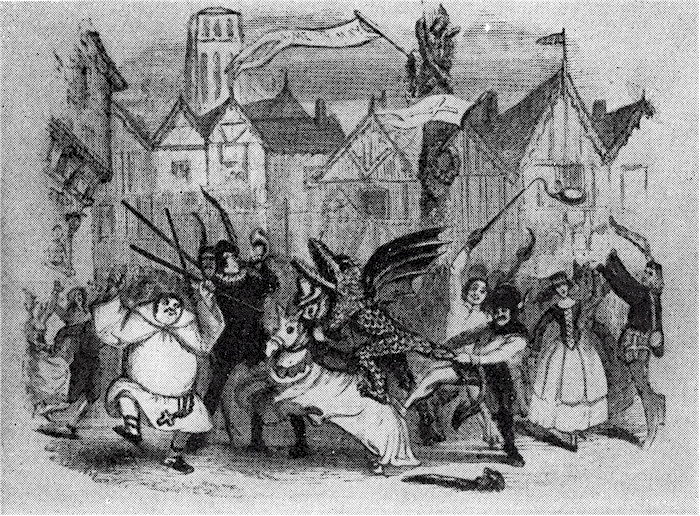
Easter has little association with Misrule but there is still a subverting tradition- that of Hocktide. In more recent times (and I’m not sure it existed beyond the early nineteenth century) it took place on Easter Monday or Tuesday. Earlier it was to be found at the end of a much longer Easter festival- two weeks or so after Easter Sunday.
Hocktide involved most commonly groups of women, married or single, kidnapping men and holding them to ransom for money. Originally the money raised went to local Church funds but it appears that later it was used to fund sporting activities.
In a male dominated society it was a rare expression of female power.
Hocktide, like many other religious associated customs was discouraged under the Long Parliament in the 1640s and even more so during the period of Cromwellian Government in the 1650s.
With the Restoration in 1660 it returned and it wouldn’t be surprising to find even today some echoes of the tradition taking place.
EP Thompson, spies & the ‘Freeborn Englishman’. 1790-2024
Government spies have been used for undercover and often illegal purposes since the late eighteenth century. They were active around Peterloo in 1819 and Cato St in 1820 and have remained a feature of Government efforts to disrupt the labour movement and radical politics into the twenty-first century.
Traditionally spies who were responsible for illegal activities would conveniently disappear- often abroad- before trials where they might have to appear.
It’s more difficult to do that now and the Government produced a SpyCops Bill in Parliament. This in effect absolved spies of anything illegal they might do.
As E P Thompson notes below neither the Freeborn Englishman or the forbears of the modern labour movement would be impressed that Keir Starmer abstained on the vote on that Bill, while suggesting a few, rejected, amendments, when in Opposition.
It would be wrong to suggest that either the Labour Party or unions don’t have and have had right-wing figures who are not sympathetic to civil liberties. That however has not been the dominant position.
Thompson was spied on himself by the security services from after 1945 certainly up to 1963 (where most official documents are now available at the National Archives). Perhaps needless to say Thompson was not involved in anything untoward unless you view trying to democratise society and advance socialist measures in that light.
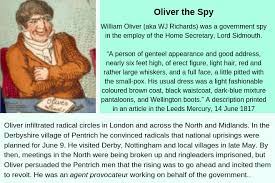
Thompson however was the historian above others who revealed the origins of Government spying in the modern British State, discussing the activities of Oliver the Spy in the Making of the English Working Class. The State was concerned about the activities of the Luddites in the early years of the nineteenth century and sought to infiltrate them.
Thompson by contrast drew attention to the Freeborn Englishman, someone who cherished liberties, albeit limited ones, (for most the vote did not come until much later in the nineteenth century or even 1918 and 1928). More particularly he did not like being interfered with either by his own State or by the agents of other States.
The Government continues to use spies and agent provocateurs. The inquiry into police spying on the left and the unions in the 1960s,1970s and 1980s has resumed once again.
Thompson summarised the perspective in this introduction he wrote to the Secret State (1978):
By the end of the eighteenth century, this was an all-pervasive Whiggish rhetoric, shared by Tories, Whigs and Radicals alike. Moreover, it was a rhetoric taken over and applied to greatly more democratic ends, by the rising popular reform movement. The parliamentary oligarchs wished to contain their debates within the privacy of the walls of parliament; they did not wish the British people to overhear how their governors talked, in private, about them. Wilkes and the printers defied ‘the law’ and breached this privacy; we owe Hansard to this defiance. In area after area, the ‘common people’ insisted that the civil rights of the ‘freeborn Englishman’ were not the privileges of an elite but were the common inheritance of all: freedom of press, speech and conscience, rights of assembly, inhibitions upon the actions of military or police against crowds, freedom from arbitrary imprisonment or unwarranted arrest and entry upon private premises. The insurgent British working-class movement took over for its own the old Whiggish bloody-mindedness of the citizen in the face of the pretentions of power. Even when labouring under the manifest class discrimination of the Combination Acts, the secretary of an illegal trade union branch of framework knitters in Mansfield in 1812 was able to protest against a clause in a Bill proposed by the workers’ representatives themselves, which authorized the search for shoddy goods in the houses of manufacturers : ‘if iver that bullwark is broke down of every english mans hous being his Castil then that strong barrer is for iver broke that so many of our ancesters have bled for and in vain.’ The workers had appropriated the democratic precedents and practices of past generations for their own; the ancestors were not ’theirs’ but ’ours’.
Misreporting the left in 1869. The Times on the First International
The most well known figure of post-1848 Chartism and co-thinker of Marx and Engels, Ernest Jones, died in Manchester in January 1869. In late March 1869 the Clerkenwell branch of the Reform League (a post-Chartist grouping) held a rally in Trafalgar Square in memory of Jones.
Several of the organisers such as Lucraft and Weston were members of the General Council of the First International. Marx declined an invitation to speak (he any way was, as frequently, unwell) but both Engels and himself contributed to the cost of the event.
Writing to Engels on 29th March 1869 Marx drew his attention to a brief report of the event that had appeared in The Times on 27th March. Marx noted: ‘our people carried a red flag inscribed Proletarier aller Lander verunreiniget Euch!’
The Times claimed that this meant in English ‘RAGAMUFFINS OF ALL REGIONS BEFOUL YOURSELVES!’
In reality of course it means ‘proletarians of all countries unite’.
The Times- over 150 years of misreporting the left…
BEARD LIBERATION FRONT EASTER MESSAGE: AVOID CHOCOLATE-BEARD INTERFACE
The Beard Liberation Front, the informal network of beard wearers, has sent Easter greetings to its followers but urged them to beware any chocolate-beard interface on Easter Sunday.
The campaigners say that chocolate in the beard can lead to a sticky mess which can only be satisfactorily removed with collateral damage to beard hairs and follicles.
Particular caution is urged when eating Easter eggs with creme or soft centres.
BLF Organiser Keith Flett said, Easter is a traditionally a time of new growth and BLF supporters will now be getting in training for the traditional, socially distanced, May Day Beard Waggle. In the meantime we urge enjoyment with care in respect of Easter eggs to avoid beard damage
Moss Gangmaster duo jailed. Philip gets 8 years & Gavin 5 years
The BBC reported on Thursday that after pleading guilty Philip Moss was sentenced to 8 years and Gavin Moss to 5 years. This report however was via Sgt ‘Knacker’ Burns so there is no guarantee it was factually correct. It is a pity the BBC decided not to directly broadcast the Court proceedings
Jackie Weaver plans intervention in Ambridge Parish Council
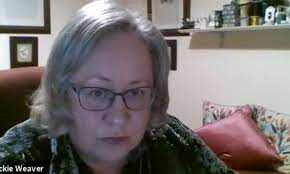
Well known Parish Council official Jackie Weaver has been on twitter this week noting that she would be quite happy to intervene in Ambridge. This week has seen ‘Audrey’ elected as interim chair. She is believed to be a stooge for the mysterious Hilary Noakes who is not currently a member of the Council. The Ambridge Socialist renews our call for Emma Grundy to establish the Ambridge Commune on the same basis as the 1871 Paris Commune. We suspect Ms Weaver has other solutions in mind.
Lynda Snell drops Ambridge Mystery Plays
After a meeting with the convenor of the Darrington Mystery Plays, the improbably named Evangeline Lowminster, Lynda Snell has nixed the Ambridge production. Ms Lowminster claimed that she had written the words, under a pseudonym, that Snell planned to use. The Ambridge Socialist believes that Eddie Grundy’s strategy of promoting Ambridge-Darrington unity is a more a productive way forward.
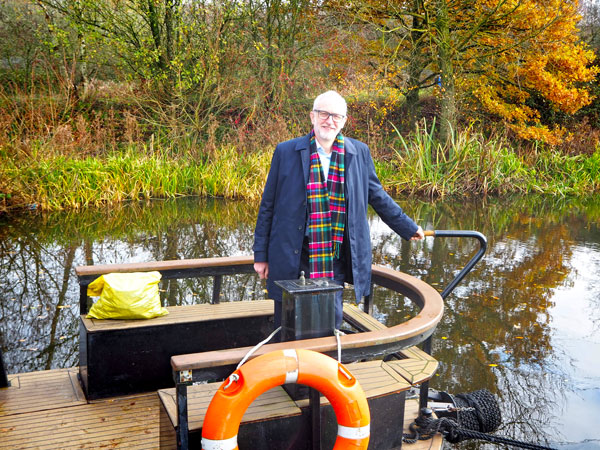
It is a year since Jeremy Corbyn stood down as Labour leader.
There is irony in the point that on the anniversary of his standing down as Labour leader Jeremy Corbyn united with Liberal Democrats and many Tory MPs to oppose the unworkable and authoritarian plan for domestic vaccine passports. Meanwhile Keir Starmer was still making up his mind. It rather sums up Labour’s year I’m afraid.
The ability of Corbyn to reach out on a specific issues to those with different views mirrors the work he did early on in his political life, perhaps particularly the protest against the National Front in April 1977 known as the Battle of Wood Green.
In the last year Corbyn has remained very active as Islington North MP even as the current Labour leader managed to suspend him as a Labour MP. He has launched a new campaign the Peace and Justice Project. He has continued to be very active on social media criticising the Government and supporting those fighting for better conditions. Again a good deal more than his successor. I’ve lost count of the number of Zoom meetings I’ve seen him on.
Very little of this of course has got any mainstream media coverage but its noteworthy that the BBC’s report of his opposition to vaccine passports was entirely neutral. The first time that has been managed for a while.
Jeremy Corbyn won’t be coming back as Labour leader but the role he played in building a half a million member strong Labour Party and nearly winning the 2017 General Election should not be forgotten, much as some try hard to do so.
Author, historian, cartoonist, ICU Doctor: Top Beards of Spring 2021 named
The Beard Liberation Front, the informal network of beard wearers, has named the Top 4 Beards of Spring 2021:
Tim Dunn, railway historian
Michael Rosen, Author
Steve Bell, cartoonist
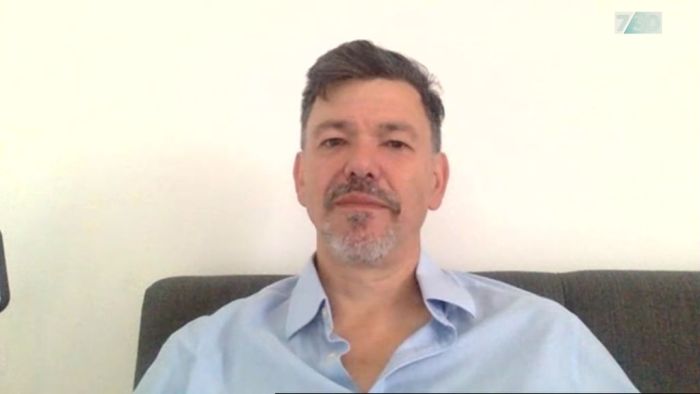
Prof. Hugh Montgomery, ICU doctor
The four leading beard wearers were in contention in a final round of voting which saw also 1500 votes cast over 3 days of voting.
They were author Michael Rosen and railway historian Tim Dunn who headed up Round Two together with ICU Doctor Prof Hugh Montgomery and Guardian cartoonist Steve Bell who shaved the opposition to win Round One
Tim Dunn topped the poll, while Michael Rosen was second but the campaigners noted that in this exceptional period it was felt more appropriate to have a shared Award.
Beard of Spring is the second of four seasonal awards that lead to the Beard of the Year in December.
The campaigners say that while the second seasonal award of the year traditionally focuses on new beard growth, the focus in 2021 is as much on those whose beards have appeared in a positive public light during the most challenging of quarters.
BLF Organiser Keith Flett said, in this extraordinary period of lockdown those who have made positive contributions to public life are especially valued. Our particular focus of course is on positive images of beards the four top beards of Spring 2021 have been great ambassadors for the hirsute.
Michael Rosen & ICU doctor who treated him named as Top Beards of Spring 2021
The Beard Liberation Front, the informal network of beard wearers, has said that author Michael Rosen and the ICU doctor who treated him Professor Hugh Montgomery are amongst the top 4 in the coveted Beard of Spring Awards which are traditionally announced every Easter weekend.
Four leading beard wearers were in contention in a final round of voting which saw also 1500 votes cast over 3 days of voting.
They were author Michael Rosen and railway historian Tim Dunn who headed up Round Two together with ICU Doctor Prof Hugh Montgomery and Guardian cartoonist Steve Bell who shaved the opposition to win Round One
Tim Dunn topped the poll, while Michael Rosen was second but the campaigners noted that in this exceptional period it was felt more appropriate to have a shared Award.
Beard of Spring is the second of four seasonal awards that lead to the Beard of the Year in December.
The campaigners say that while the second seasonal award of the year traditionally focuses on new beard growth, the focus in 2021 is as much on those whose beards have appeared in a positive public light during the most challenging of quarters.
BLF Organiser Keith Flett said, the Beard of Spring poll sets the beard-benchmark for the period ahead when beards can be safely flaunted in public as the weather improves. We congratulate the winners who are admirable ambassadors for the hirsute in public life
Hirsute campaigners to take decision on standing in Hartlepool By-Election
The Beard Liberation Front, the informal network of beard wearers, has said that its political committee will meet on Easter Monday to make a final decision on whether it will stand a candidate in the Hartlepool By-Election on May 6th.
The BLF usually prefers to campaign in By-Elections rather than stand candidates but looks at them on a case by case basis.
A key concern is always to avoid do anything that will lead to a victory by the Tory Party candidate. While more Tory MPs have grown beards in recent times, the party remains distinctly un-beard friendly in key areas such as promoting a more equal and diverse Britain.
The campaigners say it is seeking to establish whether declared candidates have beard friendly policies. Whether or not they wear a beard is not a factor.
BLF Organiser Keith Flett said, we firmly believe that beards are an electoral issue. There has not been a Prime Minister with a beard since 1902 and there is little sign that there will be one anytime soon.
You can also access free all the back issues to 1997
Thanks to John Burton for design and production and to Christian Hogsbjerg for digital and social media publicity.
The issue contains obituaries for the Welsh socialist historian and Labour MP Hwyel Francis and the libertarian socialist Ken Weller.
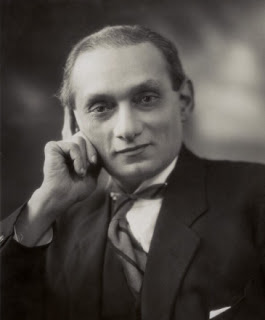
The centre piece is an excellent research piece by Christian Hogsbjerg on Saklatvala and research into epidemics. Saklatvala went on to become a Communist MP for Battersea North (1924-29)