Hot Cross Buns: from Cromwell to capitalism. Official bans to Victorian London street food
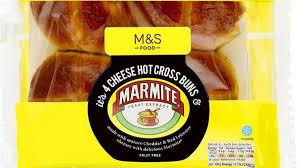
The tradition of Hot Cross Buns comes from a positive Good Friday tradition of baking bred or biscuits on the day which was meant to bring good luck.
This became eventually the Hot Cross Bun. Production in bakeries was banned during the Elizabethan era for reasons of religious doctrine and during the Commonwealth from 1649-1660 because of dislike of the doctrine. Private home baking of them no doubt continued.
Like all the best traditions with the rise of market capitalism the production of Hot Cross Buns was commercialised for profit and by the 1820s they were being street sold in London.
If Covid Passports are run by Gove’s placemen and sinecurists they will be authoritarian & worthless
Last summer when pubs were open in many areas a requirement of admission was that you scan a QR code using the NHS App on your mobile so that if COVID infection was reported this could be tracked and traced.
I had no issue with doing that and I did. Later it became clear that the privateers running the system at vast expense to the public and vast profit to themselves hadn’t bothered to check the data.
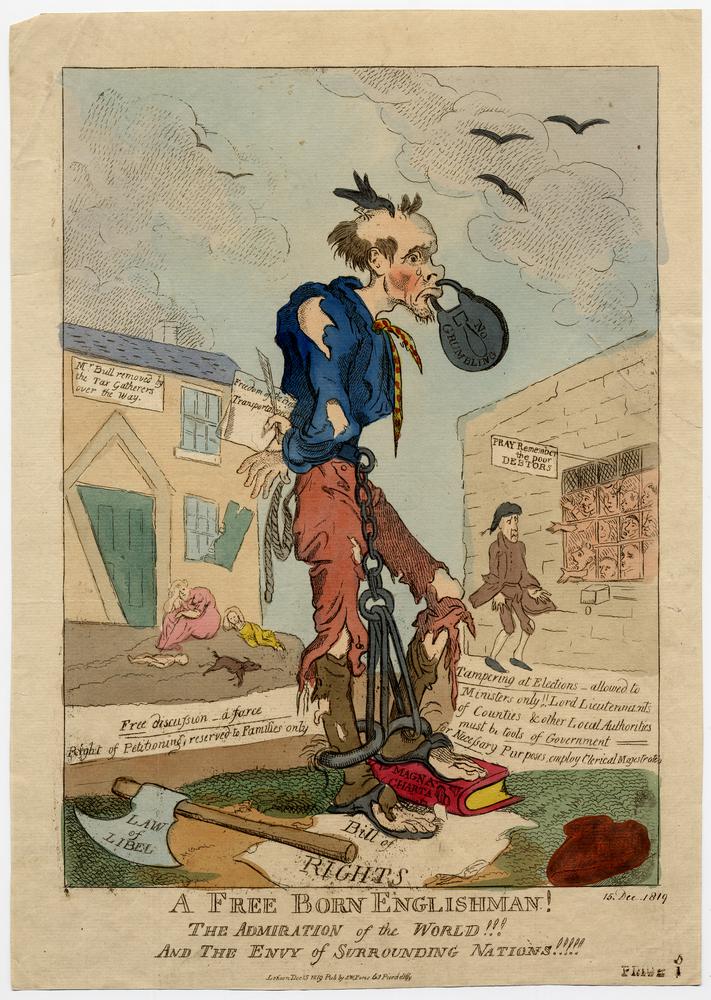
It was the world of Sinecurists and placemen that William Cobbett wrote of before the 1832 Reform Act. People who held profitable Government jobs not because they were any good at them or often did them at all but because of who they were and who they knew.
Cobbett wrote in Rural Rides:
There was no harm in them that I know of beyond that of living upon the public, but, where were their merits? They had none, to distinguish them, and to entitle them to the great sums they received
Reading a story that Gove has leaked to the Telegraph (2.4) about the trialling of COVID Passports at events in May I have the same issue.
I have no problem in being vaccinated. I’ve had my first jab and will get my second as soon as it is offered.
If a system of showing that I have had the vaccine is run by the NHS I wouldn’t have an issue showing where appropriate that this was the case. That would be a voluntary matter not an authoritarian compulsory intrusion into public life.
If on the other hand, as last summer, the system is run by one of Gove’s mates, at vast public expense and vast profit to themselves, and who wouldn’t bother to check the data anyway, I’m with Cobbett. This is not required.
Without any guarantee the data gathered will used and used properly, Gove’s latest plan has something of the echo of a well known Michael Rosen poem. Gove is not a fascist but he has no issue with ramping up authoritarianism and lots of issues with democracy:
Hirsute Campaigners warn on ‘excessive enthusiasm’ for Maundy Thursday traditions
The Beard Liberation Front, the informal network of beard wearers, which campaigns against beardism, irrational prejudice against the hirsute, has warned against excessive enthusiasm for Maundy Thursday traditions.
The campaigners say that while the day before Good Friday is traditionally associated with the distribution of the Maundy Money and the washing of feet it is also known as Shear Thursday.
This refers to those who had given up shaving for Lent, cutting off their beards as the period of abstinence ended.
The BLF says that while there is no objection to trimming and styling an organic Lenten beard on Maundy Thursday shaving it entirely suggests excessive enthusiasm and is to be avoided.
BLF organiser Keith Flett said, Spring is a time of growth and as we announce the winner of the Beard of Spring poll on Easter Saturday, Maundy Thursday is not the time for beard shaving
I’m pleased to note that the below was generally met with indifference. However it was posted just after midnight on April 1st and there is a tradition involved with that….
So in fact I have no immediate plans to give up Flettering. That said the trends I outline below do exist. The countervailing point is that the published letter still has value. It can be discovered and recovered for future reference in a way that many other ‘for the moment’ comments cant or wont be. Whether this will continue to be the case does very much depend on the continuation of the print format, even if it does become more of a niche than a mass medium.
According to my (not particularly accurate) Wiki entry I’m a ‘prolific letter writer to the British press’.
That bit at least is true. I write less these days but I haven’t stopped, despite occasional suggestions that I have.
I started in the mid-1980s writing to the Guardian (which I still do)with the expressed aim of trying to provide some historical perspectives to a media that seemed even then to be obsessed with out of context for the moment reports.
The letters don’t and never have covered just that though. Beer, beards, cricket, cheese and of course socialist politics all feature.
Now however I’ve decided after 35 years or so to call it a day.
While I still see the value of the edited (in effect moderated) letters page compared to social media and below the line commentary, the sad reality is that the audience for letters to the editor has diminished over the years. So too have the publications that one can write to, as many either go on-line only or close altogether.
What’s Brewing, the monthly paper of the Campaign for Real Ale, has just published its last print edition. I used to write letters regularly, but no more. Beer discussion has moved almost entirely on-line some time since.
I comment on Twitter and Facebook and run a blog. All excite considerable comment on occasion. I’m afraid published fletters mostly pass by more or less un-noticed by comparison. Those that ask me, for example, if I’ve stopped writing to the Guardian I suspect mostly don’t read the print edition anymore (nor do I) where the letters are prominent in the comment section. The letters appear in the various Guardian digital versions (which I subscribe to) but you have to search them out.
If you do actually want to read what I’m saying a good point of entry is on twitter @kmflett. If you don’t you wont come across me inadvertently as you’re flicking through a paper or magazine anymore
The Glorious Revolution of 1688 & the end of Maundy Thursday Royal feet washing
While not much is made of it there was a revolution in 1688 in England.
William and Mary came to the throne. In the seventeenth century religion was far more central to national life than it now is for many. William, Prince William of Orange, was a Dutch Calvinist.
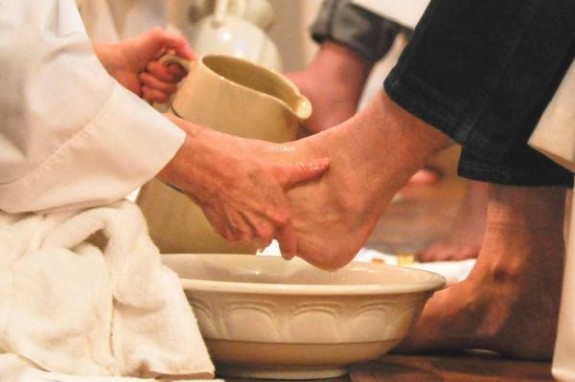
On Maundy Thursday 7th April 1689 people had made their way to Hampton Court hoping to be touched by the King and have their feet washed as had been the tradition. It was of course interrupted during the Commonwealth from 1649-1660 as there was no King available to do it.
William however declined to do this. As often the history is complicated.
The decision to stop feet washing was in part political. William fairly obviously had not arrived on the throne via some kind of Divine Right of Kings but because he had been appointed by Parliament through a process of political revolution. Hence the idea that the monarch could somehow cure people by touching them didn’t fit. In this sense the change was progressive.
However William also disliked the idea of feet washing because it was regarded as ‘superstitious’ which was a code for Roman Catholic, underlining the discrimination against those who hold that faith which has been an abiding feature of official British life since the sixteenth century.
The tradition of course was not so easy to get rid of as all that and the debate about whether Royal feet washing on Maundy Thursday was appropriate continued well into the eighteenth century.
According to my (not particularly accurate) Wiki entry I’m a ‘prolific letter writer to the British press’.
That bit at least is true. I write less these days but I haven’t stopped, despite occasional suggestions that I have.
I started in the mid-1980s writing to the Guardian (which I still do)with the expressed aim of trying to provide some historical perspectives to a media that seemed even then to be obsessed with out of context for the moment reports.
The letters don’t and never have covered just that though. Beer, beards, cricket, cheese and of course socialist politics all feature.
Now however I’ve decided after 35 years or so to call it a day.
While I still see the value of the edited (in effect moderated) letters page compared to social media and below the line commentary, the sad reality is that the audience for letters to the editor has diminished over the years. So too have the publications that one can write to, as many either go on-line only or close altogether.
What’s Brewing, the monthly paper of the Campaign for Real Ale, has just published its last print edition. I used to write letters regularly, but no more. Beer discussion has moved almost entirely on-line some time since.
I comment on Twitter and Facebook and run a blog. All excite considerable comment on occasion. I’m afraid published fletters mostly pass by more or less un-noticed by comparison. Those that ask me, for example, if I’ve stopped writing to the Guardian I suspect mostly don’t read the print edition anymore (nor do I) where the letters are prominent in the comment section. The letters appear in the various Guardian digital versions (which I subscribe to) but you have to search them out.
If you do actually want to read what I’m saying a good point of entry is on twitter @kmflett. If you don’t you wont come across me inadvertently as you’re flicking through a paper or magazine anymore
Report claims no institutional racism in the UK. Where is the statue of black Chartist leader William Cuffay?
A new report authored by people broadly sympathetic to the perspectives of the current Government has concluded that there is no evidence of institutional racism in the UK though what it terms ‘historic racism’ has an impact.
Tottenham MP David Lammy has rightly challenged the reports conclusions, tweeting that people black and white will be dismayed that a chance to grapple with very real discrimination has been passed over.
It is notable that while the Government persists in its ‘see no evil..’ approach large employers and sporting bodies are taking the matter seriously and taking action. How effective that will be is another matter but at least there is a recognition of the issue.
However let’s take the report at its word for a moment.
Culture Minister Oliver Dowden has said that he does not support taking down statues even of slave traders but he does support putting up statues that reflect the history of Britain and how its understood in 2021.
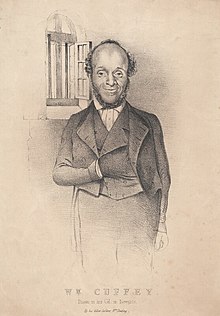
What plans in that case are in hand to erect the long called for statue of William Cuffay?
Cuffay (1788-1870) was the black leader of London Chartism in 1848, a prominent campaigner for the vote and the system of Parliamentary democracy we now have.
The fact that he is not recognised by a statue in central London presumably cant be put down to any institutional bias in Government over many years, so no doubt Mr Dowden is actively working on it.
As the Campaign for Real Ale(CAMRA) reaches 50 has it curbed Big Beer?
CAMRA is 50 years old in March.
That is quite an achievement for a voluntary campaign. It implies at least renewal through several generations of activists, something which is often hard to achieve.
It now has 170,000 members and most will be active at least in the sense of promoting CAMRA’s raison d’etre, the production and drinking of good beer.
It is not a party political organisation or, in the main, a campaign that takes capital ‘P’ political decisions. After all drinkers of decent beer come with all kinds of opinions and none. It’s not about the opinions it’s about the beer.
All that said of course there are politics. That can’t be avoided for any campaign that operates in a capitalist market economy.
It’d be fair to say, that CAMRA is neither pro or anti-capitalist as such but strongly in favour of a moral economy of beer. That is a society where brewers and publicans can make a fair profit but the quality, price and supply of beer are much influenced by ordinary drinkers.
When CAMRA started the outlook for beer and pubs was poor indeed. More so arguably even than this last pandemic hit year.
There had been a long process, much accelerated from the 1950s, of brewery consolidation. That meant takeovers and closures. By the early 1970s beer in Britain was very largely controlled by what was known as the Big Six. Giant brewing concerns such as Courage, Watneys and Whitbread. Since the breweries also owned most of the pubs that meant a significant restriction of choice for the drinker at the bar.
To put it in perspective, in 2021 London has well over 100 independent breweries. 50 years ago there were just two- Fullers and Youngs.
There was also the question of the beer the Big Six were producing.
With the consolidation big brewing operations brought , cost reduction was looked for. That meant a move away from traditional cask beer to pasteurised keg beer. It was much easier to transport and keep in the pub without cellaring skills. One problem was that for many beer drinkers this cold, fizzy beer, served under gas pressure, was either tasteless or worse had a distinctly unpleasant taste. A related problem was often that as breweries owned the pubs there was little escape from keg.
The beer writer Richard Boston wrote in his 1970s Guardian column of areas of East Anglia where if you didn’t want the Watneys Red Barrel served in one pub you could always try another. The problem was that also sold Watneys.
There was a lot for CAMRA to oppose and that meant it had no choice but to confront the Big Six- known as Big Beer.
That meant a range of campaigning tactics, taking into account that it was 50 years ago, largely an organisation of younger activists. The Big Six were lampooned. Watneys became Grotnys and Whitbread Twitbread. Pubs were boycotted and those that sold traditional cask ale promoted. The first Good Beer Guide to CAMRA approved pubs appeared in 1974.
At the same time campaigning pressure was exerted on the Big Six to draw back from keg and start selling cask beer again.
Over time this campaigning pressure worked. Allied breweries were first producing a cask Burton Ale from 1976. Even Watneys finally gave in and brewed Fined Bitter real ale.
CAMRA pressure on large companies had its impact. They had to change their strategies and plans
Capital constantly revolutionises itself, or tries to, however and no battle against it within its framework is ever definitively won.
The Big Six had to return to cask beer and more pubs now sold it. But the choice remained very limited. In early Good Beer Guides, symbols were used to show the range of beer available. To stretch beyond a mild, an ordinary and best or special bitter was unusual.
Beer from the remaining independent breweries- around 100 of them- was very hard to come by outside of their own local area.
CAMRA’s focus shifted to an extent to lobbying for changes in the law, under a Tory Government. No easy matter clearly but it was achieved. The Beer Orders restricted the number of a pubs a brewery could own. That meant pubs were sold and saw the rise of pub companies. At the same time there was legal provision for a guest beer to be sold in pubs which were tied to particular breweries.
Again it was a pursuit of the moral economy strategy of CAMRA. Not ending the control of capital but tempering it in the interests of drinkers.
That was 30 years ago and capital has not stood still since.
If the first wave of Big Beer had been successfully grappled with by CAMRA, a new wave appeared that posed significant new challenges.
If you want a pint of Courage Best or Whitbread Bitter you wont find one in 2021. The Big Six companies that once dominated British brewing are long gone. Even the classic and benchmark pale ale, Bass, is hard to come by. Its recent history summaries well where Big Beer has now gone.
The Bass brewery in Burton is owned by Molson Coors, a US/Canadian brewing giant. The actual beer however is owned by another huge brewing operation ABInBev. It is based in Belgium but has significant interests across the world in Latin America and South Africa for example. However it has contracted out the brewing of the beer to Marstons, one of the larger UK based brewers and pub companies. Or it was. In 2020 it sold a majority stake in its brewing operations to Danish brewer Carlsberg.
Grappling with UK brewers as CAMRA did successfully in the 1970s and 1980s is one thing. Trying to take on global brands is a rather different matter.
The focus shifted to some extent to supporting those larger regional to national brewers that remained UK owned- albeit often supporters of the Tory Party. This was more of an argument about what kind of capitalism rather than the specific nature of capital.
However Big Beer has marched on here as well. As well as Marstons, Fullers brewing operations were brought by Japanese brewer Asahi and Greene King is now owned by a Hong Kong businessman. Nor did it stop there. Some of the larger craft brewers whose backgrounds had rested on the idea of independence from Big Beer have ended up being swallowed by it. Heineken has a 49% stake in Beavertown while ABInBev owns Camden.
This is not a counsel of despair. CAMRA remains a large organisation with the capacity to campaign and influence. It’s clear though that on its 50th birthday the original model- even with later tweaks- of promoting a moral economy of beer, not anti-capitalist but for a constraining influence on it needs to be re-thought.
To an extent what the process should be will have to await the re-opening of pubs and a return to some normality. However some broad parameters and perhaps campaigning choices can be seen now.
Firstly CAMRA could do more to combat Big Beer on a global basis. Consumer organisations around beer, like CAMRA, exist in a number of European countries and the US. There are long standing links and these could be developed and mobilised further. That is to an extent easier now global communication can be effected around apps like Zoom. The trade union and anti-war movements, to name two example, have been co-ordinating activity across the world for a while.
Secondly CAMRA could look to build on its original campaigning focus. The revitalisation project it ran a couple of years ago, focused a good deal on that. The campaign is very good at lobbying MPs and Government and promoting legislative changes (or opposing them) but the protests of the 1970s about brewery closures or takeovers are now rare. To some extent this relates to an ageing membership- something that impacts many social movements. However with the rise of movements like Black Lives Matter and Extinction Rebellion, its clear that the mood to protest which was there in the early days of CAMRA is back again.
In practice both of these could be done, but a lot does depend on managing to engage and mobilise younger drinkers in a way CAMRA did so successfully 50 years ago.
Wetherspoons opens pubs & creates jobs: The Good, the bad & the ugly
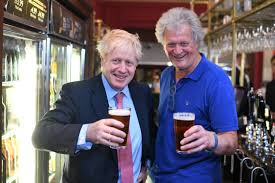
Wetherspoons have announced that post pandemic they plan to open more pubs, expand others and create 2,000 jobs.
After the year pubs have had they must be seen as a headline of good news
Of course it is much more complicated than that. After persistent blethering by Tim Martin about the impact lockdowns have had on Wetherspoons trade it appears that what with furlough and Government aid, matters aren’t quite so bad after all.
Of course no area of hospitality has done well in the last 12 months but Spoons have fared better than wet led pubs that don’t sell food which the Government has consistently dumped on.
Martin also repeats his well known views on the Government’s COVID policy which are in tune with right-wing Tory MPs. The points he makes that there is no evidence that pubs are a particular source of infection I think are right but they are not right because he makes them. Chris Whitty has noted that there was no scientific reasons for 10pm curfews or substantial meals as in fact have the Courts in England. Hence both are gone.
The bad element of all this is that while jobs are being create, they will not well paid ones or particularly secure. Martin refuses to recognise trade unions. He is far from alone in the pub trade in that respect but he makes a thing of it. Some Wetherspoons are unionised btw and they have consistently argued notwithstanding the above against a boycott. Rather they suggest that people visit a Spoons if they want to and while there talk to staff about joining a union.
The ugly side, again as above, is that Martin and Wetherspoons continue to prosper while other areas of the pub trade and hospitality have not had as much or any Government support. While Spoons opens pubs others are still likely to close…
Stuart Hall on Progressive Patriotism: ‘raiding the past, out of context’
Writing in The Guardian last month (8.2.21) Nesrine Malik argued that Labour doesn’t need to copy the patriotism of the Tories but instead pursue a progressive patriotism:
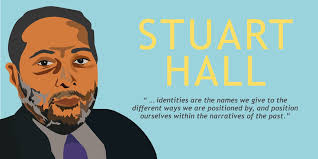
Below is an extract from an interview the late Marxist theorist Stuart Hall gave to the New Statesman in 2012 where he touches on some of the issues with progressive patriotism as he saw it.
What Thompson called the “peculiarities of the English” (and especially the peculiarities of English socialism) have been on Hall’s mind a good deal lately. He has been talking about the New Left and Englishness with, among others, Jonathan Rutherford, his colleague on the editorial board of the journal Soundings and a prime mover in “Blue Labour”, and Jon Cruddas, entrusted by Ed Miliband with responsibility for the Labour Party’s policy review.
Hall says he understands the impulse behind Rutherford’s and Cruddas’s attempt to find intellectual resources for a new politics of “common life” in ancient English radical traditions. Yet he insists that such traditions cannot be revived “at will”. “I talked to Cruddas about this,” he tells me. “I think I understand his preoccupations rather more than Maurice Glasman’s. In a constituency like Cruddas’s, where you’re fighting the far right, you have to think about those things [English identity, immigration]. But you have to be careful about how you recruit them. He came to talk to me about the New Left, which, of course, was interested in the popular language of the nation. But I had the feeling he was raiding the past, out of context, in a way.”