Articles

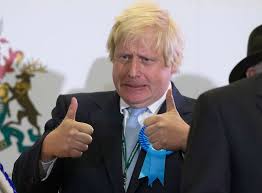
Boris ‘Alexander the Great’ Johnson & Jennifer Arcuri points to a wider culture of Tory ‘misconduct’

In Uncategorized on March 29, 2021 by kmflett

Boris ‘Alexander the Great’ Johnson & Jennifer Arcuri report points to a wider culture of Tory misconduct

A report from the Independent Office of Police Conduct into whether Boris Johnson’s relationship with Jennifer Arcuri amounted to Misconduct in Public Office-a potential criminal offence- has concluded that it did not.

In an interview with the Sunday Mirror  (28th March) Arcuri has confirmed they had a four year affair. Johnson’s partners and personal life are widely discussed but in my view a matter for him, although one might comment they wouldn’t have fitted officially with the Victorian family values of his hero Margaret Thatcher.

Arcuri notes that her private name for Johnson was ‘Alexander the Great’. Alexander is Johnson’s actual first name,

What the report does do, in some detail, is point to a potential conflict of interest between Johnson’s role as London Mayor and his friendship with Arcuri and the fact that he took no action on this.

Perhaps particularly interesting are paragraphs 70-73 of the report

Ms Arcuri attending a New York Trade Mission in February 2015 which she was not entitled to attend. The fact that she did actually attend it in a rather ill-defined capacity is thought to be because officials were aware of her relationship with the Mayor.

There is no suggestion that Johnson authorised Ms Arcuri’s attendance and its possible that he may not have known about it specifically. What also seems likely however is that he knew in a general way that Ms Arcuri might trade off others knowledge of a supposed relationship. On this the report criticises his ‘inaction’ in dealing with any suspicion of a conflict of interest or impropriety. In short Johnson did know that problems might arise and questions get asked (as in fact did happen) but just couldn’t be bothered to do anything about it.

It is reported that the Greater London Authority inquiry into these matters is still live. Johnson said on Monday 29th March that he abided by the Nolan principles of conduct in public life.

Coming on top of media reports about David Cameron’s involvement with the bankrupt bank Greensill there seems to be a pattern of Tory sinecures and favours echoing not a modern democracy but the Old Corruption of the period before the 1832 Reform Act.
Articles

David Cameron, Austerity & Regrater Lex Greensill

In Uncategorized on March 29, 2021 by kmflett

David Cameron, Austerity & Regrater Lex Greensill

Regrater or Forestaller was the term used- particularly by radicals-in the eighteenth century to describe what has more recently been known as the middleman.

That is someone who inserts themselves between a supplier and a buyer and makes themselves a profit out of it.

That is essentially what the story of Greensill, the global financing company that has gone bust threatening thousands of jobs including 5.000 in the UK steel industry, is about.

It is a complex story, some parts of it as yet remain unclear. You can find what is known in the Murdoch Sunday Times (28th March) if you can find a way of getting access. The media in so far as they have picked up the story have focused on David Cameron who was PM when Greensill got Government business and then went on to work for the Company. Culture Minister and statue obsessive Oliver Dowden has defended Cameron as a ‘man of integrity’. As the Sunday Times Editorial notes Cameron doesn’t actually have a reputation to lose.

Greensill was from an Australian farming family that went bust after a bad harvest. He came to the UK and got employment at Morgan Stanley. Here he met Jeremy Heywood, a civil servant, who was on secondment in the private sector.

Heywood returned to Government as Head of the Civil Service in the Cameron-Clegg Government. He died in 2018.

In Government Heywood seems to have promoted Greensill to Cameron.

As the Sunday Times story indicates Greensill’s business was about supply chain finance. He would act between the supplier and the buyer and aim to speed up payments for a fee.

Only one scheme actually happened.

This allegedly was about addressing the issue of chemists receiving late payment from the NHS for prescriptions they dealt with.

Here we find the core of the issue and it was about austerity.

If there was an issue of late payment it should have been sorted out by the Government and the NHS. Greensill was entirely unnecessary to the matter. Indeed under the previous Labour administration a plan had been agreed to address it. It was not implemented.

This was the age of austerity and Cameron-Clegg wanted a Small State and public sector. Hence anything that could and should have been done by the Government that could be passed to the private sector was.

As the report underlines the scheme was not much used because the commission charged by the banks that were making payments to the chemists came to more than any loss they might have made through late payment.

It’s unclear how or whether Greensill made money out of this (though in due course his company took over the finance operation) which indicates that- as the current situation suggests- he may not in fact not even have been a successful middleman but simple a scammer.

It is the world of William Cobbett’s Old Corruption before 1832 in 2021.

Articles

Michael Rosen has been changed by COVID but his beard remains resilient

In Uncategorized on March 29, 2021 by kmflett

Beard Liberation Front

29th March

Contact Keith Flett 07803 167266

Michael Rosen has been changed by COVID but his beard has remained resilient say campaigners

The Beard Liberation Front, the informal network of beard wearers, has said that despite the terrible impact of COVID on the author and Arsenal fan Michael Rosen, his beard has remained resilient, almost throughout.

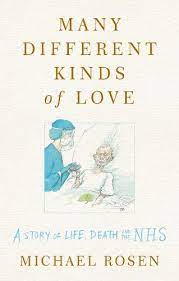
In his new book, Many Different Kinds of Love, on his hospitalisation with COVID in March 2020 and his gradual recovery, he includes extracts from the patient diary that nurses wrote for him every day during his stay in a North London ICU.

The entry for 6th May 2020, written by a nurse, Holly, notes in part:

we also shaved your beard. Sorry, we know you usually have a beard, that’s just so we can keep the area around your trachy..clean.

The campaigners say they were aware of the shaving incident which was fully understood and indeed in line with BLF COVID guidelines.

Michael Rosen went on to be voted Joint Beard of the Year 2020 with Michael Sheen and he remains hirsute.

BLF Organiser Keith Flett, we admire the restraint of Michael Rosen in only including one mention of his award winning beard in the book. It is however a powerful record of what the last year has meant and the importance of the NHS and those who work in it to so many.

BBC report

The former children’s laureate, poet and Michael Rosen, has begun writing again after suffering a near fatal Covid infection last year, which involved him being put into an induced coma for seven weeks.

The celebrated poet and author’s new book, Many Different Kinds of Love, includes parts of the “patient diary” intensive care nurses wrote for him as part of a strategy to help coma patients recover psychologically.

“It helps me understand what actually happened,” the author, 74, tells BBC Breakfast.

“Recovery is very, very strange because there are two people – there’s me before I got all this stuff, and then me afterward. And I keep wrestling with whether they’re the same person or not… I guess I have to come to terms with that.”

BBC news 18th March 2021

Vote for Beard of Spring 2021

Articles

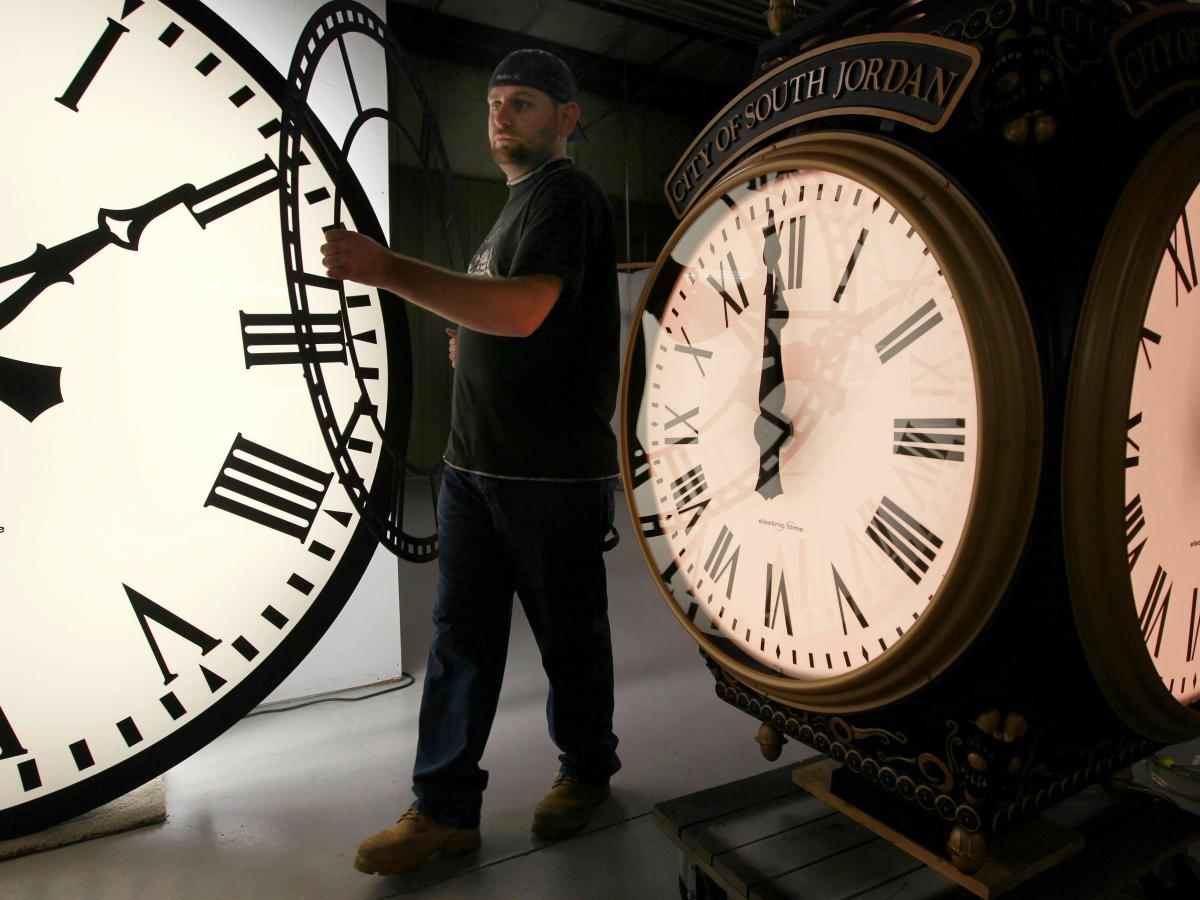
E P Thompson on the clocks going forward

In Uncategorized on March 28, 2021 by kmflett

E P Thompson on the clocks going forward

Clocks have gone forward or back in Britain to mark summer or winter time for around a century. There are debates about how daylight is lost or gained as a result and the impact of this and these continue.

Behind that however lies an industrial obsession with time and the market capitalist idea that time is money.

A common theme of the clocks going forward for summer is that those who are not working overnight will get one less hour in bed. The subtext there is perhaps whether an hour lost is necessarily such a bad idea.

After all from the 1880s the labour movement campaigned for the 8 hour working day, which is also meant 8 hours for recreation and 8 hours for rest.

EP Thompson’s Time, Work Discipline which appeared in Past and Present in 1967, remains a foundation text.

To give a brief flavour, he writes of ‘Smilesian snippets about humble men who by rising early and diligence, made good’. He continues that as workers secured reductions in working hours moralists became concerned that ‘manual workers after concluding their work were left with several hours in the day to be spent nearly as they please’.

So that one hour lost means that pub opening time is in fact one hour nearer on a normal Sunday but not this one..

Articles

India v England 50 over series ‘amongst the most hirsute’ but beard oil not required

In Uncategorized on March 28, 2021 by kmflett

Beard Liberation Front

28th March

Contact Keith Flett 07803 167266

India v England 50 over series ‘amongst most hirsute’ but beard oil not required

The Beard Liberation Front, the informal network of beard wearers, has said that the three match 50 over cricket series between England and India is amongst the most hirsute of recent contests. A majority of players on both sides have beards.

However the campaigners say that discussion amongst TV commentators about beard oil and beard maintenance was wide of the mark.

BLF organiser Keith Flett said, no commercial preparations are required to keep a beard clean, healthy and presentable. Soap and water are quite adequate for the task.

How to maintain your beard

1 Check twice daily for any split ends or misplaced hairs and remove them

2 Wash & comb through the beard every day at least once, preferably more often.

3 To maintain hair quality beard oils or balms are used by some, while others marinate briefly in imperial stout or porter. However the Beard Liberation Front cautions that Step 2 is quite adequate

4 Occasional pruning will help to strengthen hair growth and make sure you desired style is maintained. Pruning where required and appropriate should be on a weekly review basis

5 Don’t forget to post the occasional picture of your well maintained beard on social media to encourage others.

Beard of Spring 2021. Link to vote:

Articles

Beard of Spring Final vote: ‘These are the beards/that point the way

In Uncategorized on March 28, 2021 by kmflett

Beard Liberation Front

28th March

Contact Keith Flett 07803 167266

Beard of Spring Final Vote: These are the beards/that point the way*

The Beard Liberation Front, the informal network of beard wearers, has said that voting is now open in the final Round of the coveted Beard of Spring Award.

Four leading beard wearers are in contention.

They are author Michael Rosen and railway historian Tim Dunn who headed up Round Two together with ICU Doctor Prof Hugh Montgomery and Guardian cartoonist Steve Bell who shaved the opposition to win Round One

Beard of Spring is the second of four seasonal awards that lead to the Beard of the Year in December.

The campaigners say that while the second seasonal award of the year traditionally focuses on new beard growth, the focus in 2021 is as much on those whose beards have appeared in a positive public light during the most challenging of quarters.

BLF Organiser Keith Flett said, the Beard of Spring poll sets the beard-benchmark for the period ahead when beards can be safely flaunted in public as the weather improves.

The vote is open now and will close on March 31st.

In this extraordinary period the BLF says that no outright ‘winner’ will be declared. Rather the leading beards of Spring 2021 will be celebrated

Vote at this link:

Beard of Spring 2021

Steve Bell, cartoonist

Stephen Cottrell, Archbishop of York

Michael Rosen, Author

Tim Dunn, railway historian

Kevin Courtney, Joint GS NEU

Garret Oliver, Brewer, Brooklyn brewery

Prof. Hugh Montgomery, ICU doctor

Prince Harry, personality

*extract from a tweet by Michael Rosen

Articles

Ambridge Socialist. Parish Council crisis. Time for the Ambridge Commune

In Uncategorized on March 28, 2021 by kmflett

The Ambridge Socialist

28th March

Philip Moss: is it all over?

Philip Moss (aka Andy Hockley) appeared on the Dum Tee Dum Zoom meeting on Friday evening. He provided a fascinating account of the time Philip Moss has spent in Ambridge. He suggested that since Moss has now pleaded guilty to the charge of modern slavery there was unlikely to be a trial and he didn’t really expect to feature in the Archers-at least as Moss-again.

In the view of the Ambridge Socialist this would be unfortunate. There is significant interest in understanding both the back story of Moss’s activities and what happened to the modern slaves he sold on.

Parish Council: time for workers control

Following discussions with proto-Vicar Shula, Neil Carter has carried through his decision to resign as Secretary of the Parish Council. No replacement has been found and Professor Jimbo’s plea to Emma Grundy to take on the role has so far failed. Meanwhile various right-wing fruitcakes wait in the wings. The Ambridge Socialist calls on Emma Grundy to take the role of Secretary and declare the Commune of Ambridge.

Eddie Grundy seeks to unite the communities

Eddie Grundy having withdrawn from the Ambridge Mystery Plays due to Lynda Snell’s authoritarianism has now publicised his role in Darrington’s rival version. Some may see him as a splitter but the Ambridge Socialist believes he is trying to promote proletarian unity.

Greenborne & Ambridge

A new serial has launched across community radio stations based in a village near an urban centre. It sounds a little bit like the Archers but allegedly is more modern and in tune with the zeitgeist. We shall see.

Ambridge Angst

Chris, Alice & Martha aren’t getting along too well. Again

Susan is trying to re-shape herself

Articles

‘Kill the Bill’ protests & Bristol.Johnson sees a ‘mob’. Historically it looks like a protest crowd

In Uncategorized on March 27, 2021 by kmflett

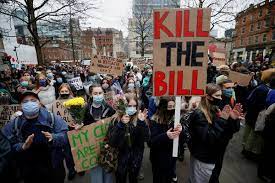
‘Kill the Bill’ protests & Bristol. Johnson sees a ‘mob’. Historically it looks like a protest crowd

Priti Patel’s new authoritarian Bill on policing and protest has sparked protests around the UK.

Those in Bristol have received much media and social media reporting and comment. Clearly people can look at these for themselves. Historically it’s difficult to see even the most combative of protesters here as anything but rather mild. The police response is probably serving most of all to remind those of a younger generation than myself that the officers are there not to facilitate but to frustrate protest, whatever they may say.

Boris Johnson has described the Bristol protesters as a ‘mob’. Looking at social media they however mostly seemed to be quite well disciplined, unlike numbers of police officers. Again you can look and take a view for yourself.

The usage is important because historically there is a world of difference between using the term ‘mob’ and describing the same gathering as a crowd.

Edmund Burke commenting on the French Revolution saw only a ‘mob’. Later historians have taken a different view. George Rude, probably the leading historian of crowds, used the term deliberately to cover a broadly progressive gathering of people. E P Thompson was slightly less sure detecting in some crowds, for example the Bristol Riot of 1831, elements of behaviour such as book burning which would have been better attributed to a reactionary mob.

The point is that while a mob is thought to behave irrationally, a crowd is usually understood to have gathered for a purpose.

In eighteenth century England what many in the ruling orders certainly regarded as mobs often came together to protest about the quality or price of bread and demand changes for example. Yet these protests were organised and far from irrational.

However the crowd takes the stage of history when mass democratic politics, trade unions and political parties with individual membership appear. We can date this in Britain to around the time of Peterloo, one reason why the authorities were so concerned about the protesters for the vote who gathered in Manchester on August 16th 1819. They sensed this was a new form of crowd protest, organised and disciplined but struggled to grasp how to relate it. On that occasion it was with violence.

Crowd protests in the twenty-first century usually rely on weight of numbers to make their point peacefully but that doesn’t mean that there is not what the American sociologist Charles Tilly called a repertoire of protest.

One thing is for certain. The ‘noises off’ of the crowd remain essential to effect real change.

Articles

Tribute to Nigel Todd, Socialist historian & Newcastle Labour Councillor

In Uncategorized on March 27, 2021 by kmflett

Tribute to Nigel Todd, Socialist historian & Labour Councillor

I was sorry to read today of the death of Nigel Todd, the north-east socialist historian and Labour Councillor. There are some reports and tributes below.

I’d known Nigel and discussed socialist history with him for more years than I can now recall (a warning about relying on memory as an historical source without other information!)

The tributes so far refer to his 40 years as a Newcastle Labour Councillor, some record in itself, and his work with the WEA and the Co-Operative movement. He was also a staunch anti-racist.

However his work as a socialist historian should not be forgotten.

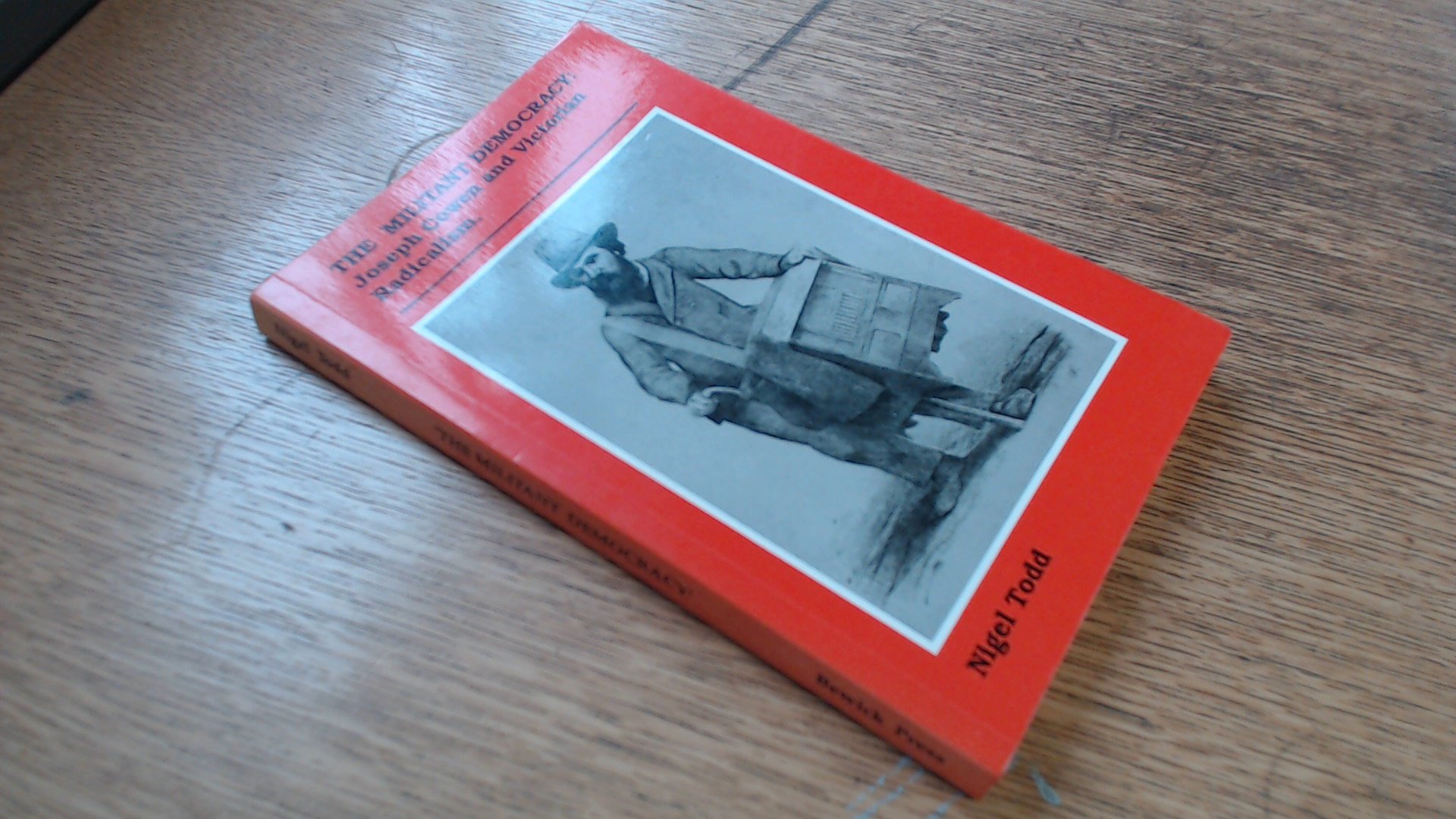
His 1991 book, Joseph Cowen, the Militant Democracy and Victorian Radicalism, argued that Cowen who became a radical (and eventually not so radical) MP for Newcastle in the late nineteenth century should also be understood as someone who played a significant role in the development of the Victorian labour movement.

Nigel tweeted last summer that the statue of Cowen in Westgate St, central Newcastle, was definitely one that should remain in place!

The book on Joseph Cowen was published by Bewick Press, which had been founded by socialist and historian Ray Challinor. Ray died in 2011 and his Guardian obituary was written by Stan Newens who himself passed away a few weeks ago.

It’s difficult to avoid thinking that with the death of Nigel Todd at 73, another link with not only the history of the left and the labour movement but how it was rescued for new generations after 1968 has gone.

His work will no doubt be continued by others with the North East Labour History Society, the Labour Party, WEA and Co-operative Movement. It’s sad though that he will no longer be one of those involved. He leaves however an impressive record of activism and historical scholarship

https://www.bbc.co.uk/news/uk-england-tyne-56549737

https://www.chroniclelive.co.uk/news/north-east-news/newcastle-councillor-nigel-todd-tributes-20269507

Articles

Political leadership in the labour movement: a homage to the ‘provinces’

In Uncategorized on March 27, 2021 by kmflett

Political Leadership in the labour movement: a homage to the ‘provinces’

The appearance of a Northern Independence Party reminds again (as it should) that real political power does not reside in Westminster

The left, wondering when it might next be in Office in central London has taken, not for the first time in the last 125 years or so, to wondering whether regional power bases might be a better way forward. Andy Burnham is running again for Mayor of Manchester. Sadiq Khan looks set to be re-elected as London Mayor. In Wales Labour continues to run the Welsh Government.

All these positions provide some real power with the chance to do things that (one hopes) can make life a little bit better for ordinary people. Not, unfortunately, revolutionary stuff but important.

Scale that up to Westminster and it all gets a lot bigger and a lot harder. If you’ve never had any experience of how to change things even a little bit, how it is done, and what obstacles there are, it can be difficult.

It is a  point about Blair and New Labour and now Starmer. One wonders if Blair had had regional experience he might have persisted more effectively with his domestic agenda rather than getting frustrated and then distracted by launching wars abroad. Likewise if Starmer had more political experience at the grassroots he might be less inclined than to consistently dump on Liverpool or parachute candidates into Hartlepool. Perhaps I’m being too kind in both cases but experience does count.

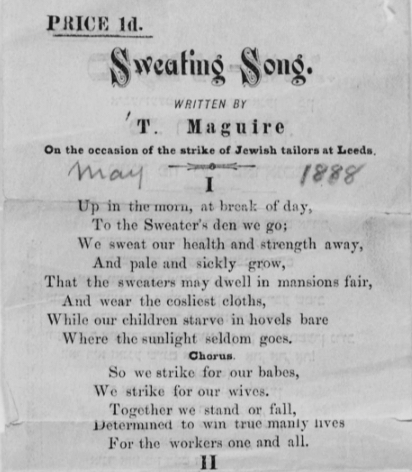
The point about where power in the labour movement really lies historically was made by EP Thompson in his 1960 essay Homage to Tom Maguire. Maguire was an ILP activist who died too young.

It appeared in Essays in Labour History, but is quite difficult to come by now (it was recently reprinted in the collection EP Thompson and the Making of the New Left edited by Cal Winslow).

Thompson makes the point that ‘provincial events are seen as shadowy incidents or unaccountable spontaneous upheavals on the periphery of the national scene’. But, Thompson counters ‘the ILP  grew from the bottom up, its origins were in the shadowy parts known as ‘the provinces’.

Thompson was no huge fan of London, but argued that from the 1950s it had irreversibly won out over the provinces in terms of political power. Recent events underline that this was wrong, Thompson the political activist had fed back into Thompson the historian on the point.

Moreover since 1960 there is an argument that what is known as the ‘Westminster bubble’ means that parts of London itself are now seen as ‘provincial’. The quite regular pieces looking at what goes on in Islington North or Tottenham where I normally reside underline the point