Articles

Brewdog are investigating…Why craft beer needs trade unions

In Uncategorized on March 9, 2021 by kmflett

Brewdog are investigating… Why craft beer needs trade unions

Its one of those things that happens on beer twitter from time to time.

A post noted that Brewdog Indianapolis had sacked female and LBTQ employees on International Women’s Day apparently looking for a change in culture at the bar, possibly to a white male workforce.

The CEO of Brewdog USA tweeted that of course Brewdog don’t discriminate while the London based head of Brewdog bars globally tweeted that he was investigating. On the one hand he was aware of an issue on the Indianapolis bar. On the other hand people are not sacked on the basis of gender or sexuality and if anyone had done that they’d be off too.

No doubt we will hear more but suffice to say that twitter pile-ons and claims of investigation by management on the same medium probably won’t get to the bottom of what has gone on here or sort out the issues.

For that a proper collective industrial relations framework is required. That means Brewdog recognising a trade union. That allows employees with issues to raise them through representatives who can pursue them through agreed processes with the employer.

It doesn’t guarantee successful outcomes but if it doesn’t there is always the recourse to some form of industrial action and/or legal advice.

Its all quite mundane and actually works (allowing for the fact that countries like the US and UK don’t have a level industrial relations playing field). In particular it helps to avoid the sound and fury of twitter pile-ons. It provides a context of collective action and it’s a way of actually holding employers to account.

Brewdog brew some decent beers, take some worthwhile initiatives (as well known missteps) but how they treat the people the employ and the framework for how that occurs is a real bottom line

Keith Flett is a trade union officer in the private sector

Articles

Best Wishes sent to joint Beard of the Year 2020 Michael Sheen for full recovery from COVID

In Uncategorized on March 9, 2021 by kmflett

Beard Liberation Front

9th March

Contact Keith Flett 07803 167266

Best Wishes sent to joint Beard of the Year 2020 Michael Sheen for full recovery from COVID

The Beard Liberation Front, the informal network of beard wearers, has sent best wishes to actor Michael Sheen for a full recovery from COVID.

He has revealed on Twitter that he has been laid low with the virus for some weeks but is now in a recovery stage:

https://www.bbc.co.uk/news/uk-wales-56338176

Michael Sheen was voted joint Beard of the Year 2020 with author Michael Rosen and as recently as St David’s Day 2021 was named Beard of Wales.

BLF Organiser Keith Flett said, we are pleased to see that Michael Sheen’s beard is intact but the key thing is that he takes the time to endeavour to make a full recovery.

Articles

Meghan Markle suffered racism but Prince Harry was impacted by Royal anti-beard prejudice

In Uncategorized on March 9, 2021 by kmflett

Beard Liberation Front

9th March

Media Release

Contact Keith Flett 07803 167266

Meghan Markle suffered racism but Prince Harry was impacted by Royal anti-beard prejudice say campaigners

The Beard Liberation Front, the informal network of beard wearers, has said that while Meghan Markle’s interview with Oprah Winfrey has raised disturbing issues of racist attitudes in the Royal Family, the pogonophobia directed at Prince Harry has been overlooked.

Prince Harry’s beard has long been a cause of concern at Buckingham Palace. In the post-1945 era hirsute Royals are rare, Prince Michael of Kent being the only notable exception.

Harry faced a sustained campaign in sections of the media to demand he shave his beard off before his wedding to Meghan Markle.

The campaigners say that while pogonophobia, as it has impacted Prince Harry, is not in the same category as the racism Meghan Markle has suffered- he can always shave the beard off- it underlines the level of prejudices held at senior levels in the Royal Family.

BLF Organiser Keith Flett said, it appears that the Royal Family have a range of prejudices and hatred of facial hair- pogonophobia- may well be one of them. No doubt Buckingham Palace think Prince Harry is hiding something under his beard. It appears to be an ability to focus on outdated attitudes amongst other things.

Articles

Beard of Ireland 2021 Round 2 open as Shane Lowry & Robin Swann go through

In Uncategorized on March 9, 2021 by kmflett

Beard Liberation Front

Press release 9th March

Contact Keith Flett 07803 167266

BEARD OF IRELAND 2021 ROUND 2 OPEN AS SHANE LOWRY & ROBIN SWANN GO THROUGH

The Beard Liberation Front, the informal network of beard wearers, has said that competition for the Irish Beard of the Year 2021 is officially bristling as Health Minister Robin Swann and golfer Shane Lowry won the first round of voting and go through to the final at the weekend

The 2017 winner was politician Colum Eastwood who bearded broadcaster William Crawley for the annual Award.

In 2018 the DUP’s Lee Reynolds shaved writer Dominic O’Reilly for the honour with Colum Eastwood in a steady third place.

In 2019 Lee Reynolds retained the title

The 2020 winner was Maynooth academic Peter Coles

The BLF says that while traditionally a land of predominantly clean-shaven cultures, Ireland has in recent times become something of a centre for stylish and trendy beards and the interest in the 2021 poll has underlined the point

Contenders for the title in 2021 include a diverse range of the hirsute- a golfer, political activists, journalists, an academic as well as the two Health Ministers in Belfast and Dublin who are both hirsute.

The campaigners say the poll is specifically about the impact the beard of an individual has made in Irish public life and no other factor.

BLF Organiser Keith Flett said, competition for the 2021 Beard of Ireland Award is bristling. The winner is announced on 17th March

There will be two preliminary Beard Off votes between 5-8th March and 9-12th March. The top two from each round will then go on to a Best Beard of Ireland vote between 13-16th March

Vote here:

Beard of Ireland 2021

William Crawley, broadcaster

Matthew O’Toole, politician

Sam McBride, journalist

Peter Coles, academic, Maynooth University

Shane Lowry, golfer

Aodhán Connolly, Businessman

Robin Swann, Health Minister, Belfast

Stephen Donnelly, Health Minister, Dublin

Articles

Guardian Letters on International Women’s Day: Progress in History

In Uncategorized on March 8, 2021 by kmflett

Guardian Letters on International Women’s Day: Progress in History

As a socialist and trade unionist I know that fine words and good policies, welcome though they are, often don’t amount to much in practice.

International Women’s Day is a reminder of that. All the sentiments and publicity don’t alter the reality that the gender pay gap is still too large- and pay is far from equal in many areas in reality. Work has hardly started on sorting out the even larger gender pensions pay gap.

The practical details and evidence of progress is important. Its also important that what progress is made is maintained and built on each generation. Often it isn’t.

In that context the fact that every letter in today’s Guardian was from a woman is positive. Letter writing remains more of a male preoccupation than a female one. In 2017 the then letters editor Nigel Willmott estimated that around 20% of letters received at the paper were from women.

Guardian Letters 8th March 2021

https://www.theguardian.com/world/2021/mar/07/womens-history-through-the-generations-of-my-family

There is scope for much more progress in history.

And yes I still write regularly. Its not about men writing less. Its about women writing more. Often the views and perspectives will be similar, but not always. The more variety and diversity the better. It underwrites democratic debate.

Articles

Not cancelling history but remembering it: International Women’s Day,still getting Hidden from History

In Uncategorized on March 8, 2021 by kmflett

Not cancelling history but remembering it: International Women’s Day, still getting Hidden from History

International Women’s Day comes not so long after the 55th anniversary of the first women’s liberation conference held at Ruskin College, Oxford.

There were various events to mark the 50th anniversary in 2020  but rather underplayed as far as I can see was the link that conference had to socialist history.

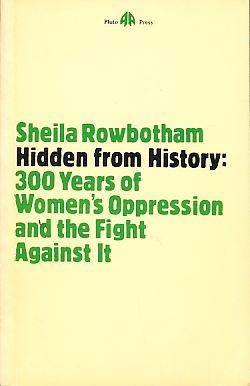
A key impetus for the conference came from a women’s history strand organised in History Workshop events in the late 1960s. A key figure in that was Sheila Rowbotham who has written a number of important books about women’s history including Hidden From History, a brief extract from which is below.

If historical memory is not refreshed what is known by activists in one generation can disappear in the next. Hence how many will recall that one of the key figures behind IWD was the German Communist Clara Zetkin. A link below provides a brief summary of a London Socialist Historians Seminar on her writings from 2016

Clara Zetkin, international women’s day & historical memory

Likewise how well remembered currently is someone like Alexandra Kollontai a pioneering socialist feminist who served in the Bolshevik Government in Russia after 1917.

Much historical work as ever to be done.

The action of working-class women at work also forced trade unionists to take their predicament and determination seriously. From 1888 to around 1892 there was a considerable amount of spontaneous industrial action not only by men but also by women who had never organised before. The matchgirls’ strike is the best known because of the publicity the socialist Annie Besant gave it in papers and journals. However Commonweal, the paper of the Socialist League, reported several other incidents of female militancy in the same year. Blanket weavers in Heckmondwike, female cigarmakers in Nottingham, girls in a tin box manufactory in London, who pelted men who continued to work after they came out with red-ochre and flour, cotton workers, and jute workers in Dundee, took action spontaneously in 1888. The reasons for striking varied, from demands for increases to resistance to cuts, or opposition to fines. Again in 1889 mill girls in Kilmarnock came out over the bad quality of yam they were being given. At Alverthorpe, near Wakefield, woollen weavers, women and girls, rejected a reduced rate and marched in procession headed by girls with concertinas. This was broken up by the police, and the girls with concertinas-obviously regarded as ‘leaders’ -were fined for obstruction. Even waiters and waitresses demonstrated at Hyde Park in October 1889-though unfortunately they saw foreign workers not their employers as their foes.

Sheila Rowbotham, Hidden From History 1973

Articles

International Women’s Day: Putting Up the Statues

In Uncategorized on March 8, 2021 by kmflett

International Women’s Day: putting up the statues?

International Women’s Day on 8th March doesn’t usually feature much discussion about statues but given the last year there is, rightly, more in 2021.

The focus has been on statues being taken down. So far there has only been notable example- that of Colston in Bristol- although some others have been moved (and some should have been such as the statue of the slave trader at the front of the Museum of the Home in Hackney).

The Culture Secretary Oliver Dowden has been clear that he is not in favour of taking down statues but is in favour of putting them up.

One example is the call from a number of right-wing Tory MPs, the self-styled ‘Common sense’ group for statues of those who received significant war honours to have memorials erected. These would be in the hundreds and while some might well be deserved others stretching back to the nineteenth century would be at best questionable. They are also nearly all men.

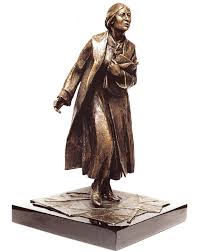
Meanwhile there are still few statues of significant women. Mrs Thatcher’s head will be erected in Grantham last this year while the statue of Mary Wollstonecraft on Newington Green has at last been put up-after much effort- but remains controversial in respect of its style.

Lots of other feminists, suffragettes, socialists and trade unionists have no memorial. Even Sylvia Pankhurst, the socialist suffragette, the subject of a new biography, still doesn’t have a statue on Clerkenwell Green (as planned)although progress has been made.

Perhaps Mr Dowden will use International Women’s Day to announce an initiative?….

https://www.theguardian.com/culture/2021/feb/17/more-war-hero-statues-is-wholly-retrograde-move-conservative-mps-say-womens-groups

Articles

Laurence Fox will receive no support from beard wearers for London Mayor bid

In Uncategorized on March 7, 2021 by kmflett

Beard Liberation Front

7th March

Laurence Fox will receive no support from beard wearers for London Mayor bid

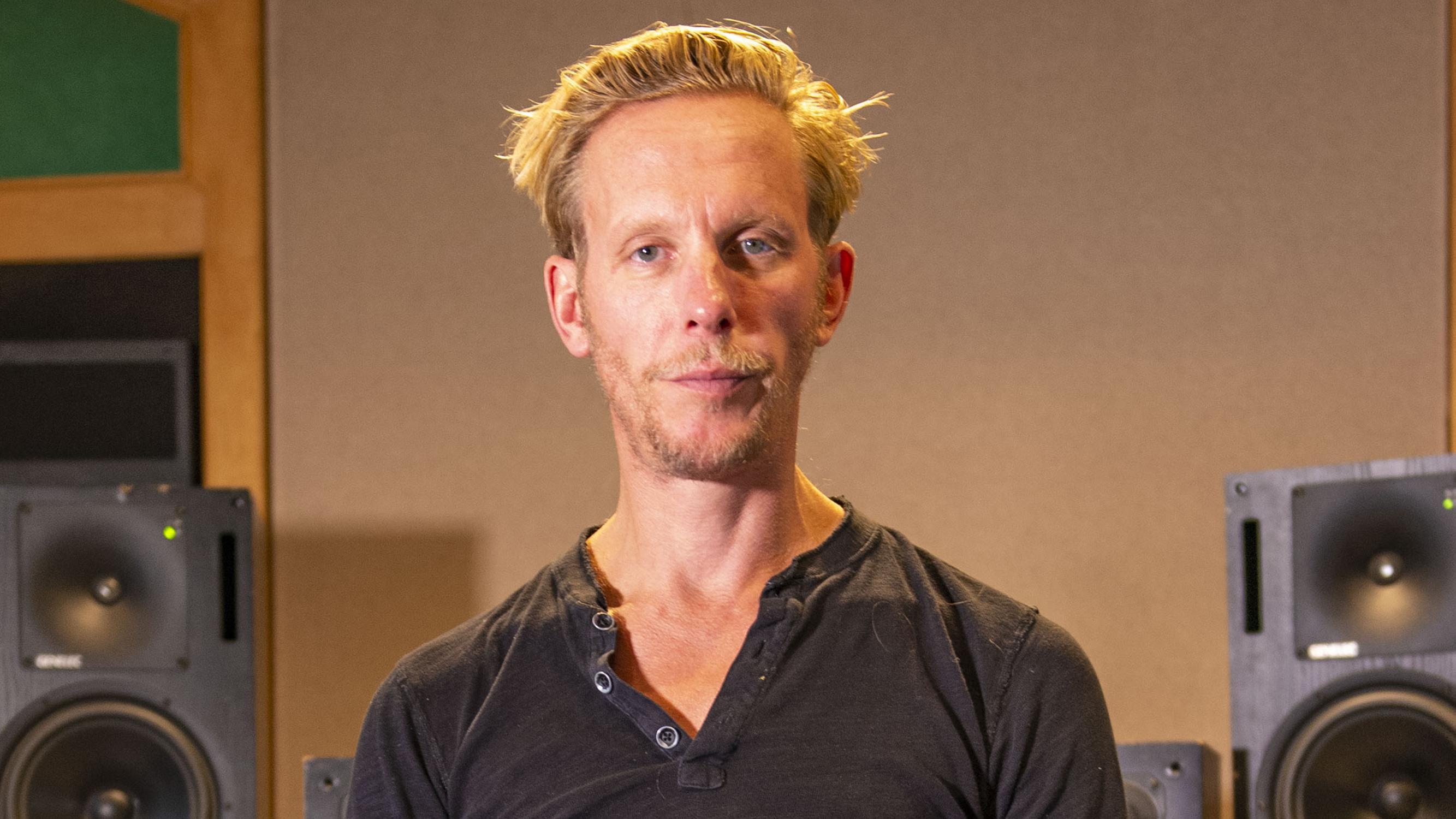
The Beard Liberation Front, the informal network of beard wearers, has said that actor and anti-lockdown activist Laurence Fox will receive no support from the hirsute in his bid to be London Mayor this May.

Fox often wears a rather unkempt beard which is neither a designer or an organic style but appears to be the product of random growth.

The campaigners say that whatever the acting abilities of Mr Fox, his recent activities have clearly brought the hirsute into disrepute.

BLF Organiser Keith Flett said, we stand for a Beard Friendly London. Laurence Fox has an element of facial hair but he is a long way from the inclusive policies which the BLF promotes

Articles

Ambridge Socialist: ruling class sheep split deepens

In Uncategorized on March 7, 2021 by kmflett

The Ambridge Socialist

7th March

Ambridge ruling class sheep split deepens

The split amongst the ruling class of Ambridge over sheep futures has deepened this week.

Regular readers will recall that at Brookfield while leading patriarch David ‘Earl of Portland’ Archer wants to continue with mixed farming Roooth and Pip have argued that post-Brexit this is not the way forward and that there must be more focus on cattle.

Meanwhile Ben Archer who also supports the Brookfield modernisers has briefed Ruairi on the plan. He, having turned 18, is set to attend his first meeting of the Central Committee of Borchester Land. He has a plan that will allow sheep to be purged from Brookfield while not actually purging the sheep themselves (yet).

Under this plan it is Adam and his sheep farming operation that has got to ago. This will offer significant economies for Home Farm but Adam is concerned that the positive environmental impact of the sheep will be lost. Brian Aldridge who clearly backs the plan points out that in fact they will lease the land to David for the Brookfield sheep. Hence benefits and cost savings can both be achieved.

In short it looks like Adam and David versus the rest…..

Judge Jim

Jim Lloyd, or Jimbo as some call him, has agreed that he might be a little too judgemental at times. He however a Professor and it goes with the job. He should judge on…

Moss pleads guilty

According to Sergeant Knacker Burns Philip Moss has decided he will now plead guilty to whatever he ends up being charged with. No doubt he has a plea bargain in mind involving dropping others in it

Grey Gables crisis worsens

Iain is worried about Grey Gables. There are no guests and it is running out of money. Actually in the real world it shouldn’t be open at all and Tracey should be furloughed. No doubt Mr Sunak’s ‘generous’ Budget will help but as the Ambridge Socialist has reported the first Ambridge Wetherspoons is on the cards.

Articles

Socialist History Seminar 15th March: Asking for the Moon-Memory & Hope in activist movements

In Uncategorized on March 7, 2021 by kmflett

London Socialist Historians Seminar Mon 15th March 5.30pm

Asking for the Moon: An investigation of memory and hope in activist movements

Eibhlín Ní Chléirigh

Memory, legacy and heritage are important issues in modern socialist history and research.

Eibhlin will look at the memory of previous struggles influences the activism of the present day.

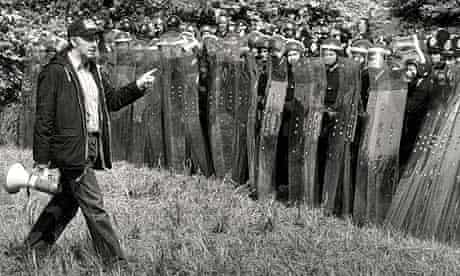
For example during the 1984 miners strike Dublin raised more money for the strikers than some UK cities and this may well have been influenced by memories of the struggles around the 1913 Dublin lock-out.

Recording of the seminar:

https://us02web.zoom.us/rec/share/6wyY5TfsCJUnJjTRgrjfszOGPAP5wqjLbRrOFauY_mu3hEHtJU7I_6iQXer5wgKa.Tt60QhkrMJYt97dF Passcode: MbH6P9Q=

More details: Keith Flett 07803 167266

______________________________________________________

Asking for the Moon

An investigation of memory and hope in activist movements

History is not just an accumulation of events, but crucially also the human experience of those events’
Joep Leerssen [1986] in ‘Mere Irish and Fíor Gael’

This seminar looks at the diverse ways that communities, activists, and social movements not only strive to document their struggles and experiences, but also how they critically engage with histories, generate education from them, and how such practices inform contemporary struggles for change. These educative aspects of social movements are the context and privileged setting in which communication for development intervention identify, connect with, and resuscitate collective memories, renewing them as tools for transformative activist learning in contemporary settings.

Historical memories provide models of freedom. Knowledge of them generate awareness of historical diversity and change which can inform hopes for alternative and better, freer kinds of societies and social relations. This hope becomes increasingly grounded in the heat and light of contemporary struggles, emancipatory projects and social movement building that aids the institutionalization of alternative spaces, learning, narratives, methods of expression all developed in constant dialogue and communication with the corrective orientations provided by the deep interplay between education and action on the one hand, and on the interconnections across scale and space, time and distance, across and through generations, the past and present, the local and the global forging unities and exponential enhancement of capacities and remit of influence and effectiveness through these networked infrastructures.

Social movements condense and crystalize the autonomy through communal and collective histories are kept, refurbishing them and the mechanism and interventions that develop them as action learning that produces concrete knowledge hope to enhance revolutionizing and effective transformational practice in cause of subaltern and human liberation.

As the hegemonic interests and the global order hastens people and planet towards unchartered waters of unprecedented inequalities, global pandemics and imminent but as yet not inevitable ecological catastrophe, every knowledge and practice of democratic, participatory counter-hegemonic resistance must be nurtured and the hope must be that when the Spring of peoples power of the kind that swept through the Middle East and pulsated across the world a decade ago returns our better educated visions, concrete programmes, activist tools, creative capacities to act to ensure its successful development and realization will be better next time.