‘Wenger’s Law’ on football offsides may end VAR beard discrimination
The Beard Liberation Front, the informal network of beard wearers, has said that it believes that the new ‘Wenger’s Law’ on football offside decisions may have the important impact of stopping VAR discrimination against players with beards.
The rule change is currently being trialled in China.
At the moment if any part of a player that could score a goal-and that clearly includes the beard-is found to be in front of an opponent than they are judged to be offside.
Under the new Wenger’s Law if any part of the player that score a goal is level with an opponent they will be on-side. Since the beard will invariably be one aspect of the player that is at the forefront of their presence near goal, this will mean that a beard can no longer lead to a player being offside.
The campaigners note that there could still be some scope for VAR ambiguity however. Under Wenger’s Law there must be clear daylight between a player and an opponent for them to be judged offside. However if a player’s beard appears to be close to an opponent while the rest of them is not there may well still be an issue.
BLF Organiser Keith Flett said, Arsene Wenger has never worn a beard but we think on balance this change to the offside rule may help hirsute footballers.
The Campaign for Real Ale is 50 years old on 16th March (I’ve only managed 46 years membership). Its one of the larger voluntary organisations in the UK and like most the membership is ageing somewhat (myself included).
Still, the last year notwithstanding, people now live longer and are active for longer so this is not quite the statement it might have been decades ago. CAMRA has also made considerable efforts to ‘modernise’ and attract younger people who care about beer and pubs. Its not been without success but its work in progress.
At the moment its engaged in essential campaigning activity around the future of breweries and pubs and lots of related issues which if you are a pub goer you’ll be more than familiar with.
Against all this the Murdoch Times (6th March) has decided to publish a story about some on-line arguments between some members about various contentious issues. I cant usefully link to it because its paywalled. I happened to scan the story in the print edition.
CAMRA is genuinely, like the pub itself, a broad-brush thing, so opinions can vary but as CAMRA’s finance director Ben Wilkinson quoted in the piece notes whatever the disagreements, all are united in the need to defend and promote good beer and pubs.
As someone who remains actively involved in the labour movement and the left I’d say that while disagreements and arguments can be infuriating and time consuming they are sign that people care and are engaged. If all is quiet- and I’ve sat in those kind of meetings-it simply tells you people’s thoughts are elsewhere.
Hopefully before long the discussions can move off-line and back into the pub. And if you’re telling me Greene King renaming pubs called the Black Boy is ‘woke’ you’re wrong by the way.
Will Tottenham Cake feature on the new series of Celebrity Bake Off
A new series of Celebrity Bake Off starts on Tuesday 9th March and the big question is clearly whether the proletarian patisserie known as the Tottenham cake will feature. It was last on the main Bake Off show in 2013.
It has featured in the Guardian this week(below) and it remains on sale in bakeries in North London although possibly not those near the Emirates stadium. There is of course no comparable Arsenal cake.
It may be a little sweet for modern tastes and chilli version might go down well.
Tottenham pudding as Martyn Day notes is not something for human consumption. Just as now during World War two weekly collections of food waste were made in the area. At that time they ended up at the Down Lane refuse site at Tottenham Hale (very close to my abode) where they were turned into animal food as part of the war effort
It is important not to confuse the school dinner offering Tottenham cake (Pass notes, 3 March) with Tottenham pudding, an industrially produced boil-up of waste fruit and vegetables for consumption by chickens and pigs.
Martyn Day
Twickenham, London
Guardian Letters 6th March
How did school dinner cake first become associated with school? That’s unclear, but the recipe bears more than a passing resemblance to Tottenham cake. Although Tottenham cake traditionally has pink icing, whereas school dinner cake is traditionally served with a weirdly thin, pink custard.
I presume Tottenham cake comes from London. From the early 20th-century bakery of the Quaker Henry Chalkley, to be precise. The cake was handed out free to schoolchildren when Tottenham Hotspur first won the FA Cup in 1901.
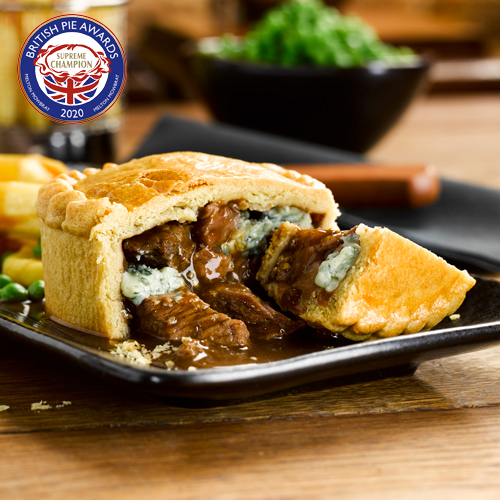
BRITISH PIE WEEK: STEAK & STILTON VOTED CLASSIC BEARD FRIENDLY PIE
The Beard Liberation Front, the informal network of beard wearers, has said that with British Pie Week running from 1-7th March its annual poll on the most Beard Friendly Pie has found overwhelming support for a Steak, Stilton and ale pie as the classic beard friendly pie.
The hirsute campaign group say that as with many prepared foods the requirements of people with beards are often overlooked when it comes to pies. The outcome of the annual poll often reflects that with traditional pies designed for eating ‘on the go’ easily beat leading pie brands.
The BLF says that common issues with pies for those with beards are:
Excessive gravy
Puff or flaky pastry which ends up in the beard not the mouth
‘Deep filling’ making it difficult to avoid contact of the pie with the beard
The campaigners cite some types of the traditional steak and kidney pie as an example of pies which are made without thought for the requirements of the hirsute pie consumer. Such pies often have excessive gravy- and comparatively little steak and kidney- which ends up in the beard.
Unfortunately the same issues tend to apply to many vegetarian and vegan pies too
BLF Organiser Keith Flett said, last year’s winner the Scotch pie polled well but Steak & Stilton carried the day. It’s a tasty combination but also one that comes together well as a pie filling to prevent bits getting caught in the beard.
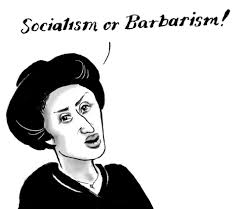
Rosa Luxemburg at 150.b. 5th March 1871: scourge of bureaucrats, cynics & empty rhetoricians*
It’s the 150th anniversary of the birth of Rosa Luxemburg. She was murdered by German Freikorps on 15th January 1919. Luxemburg was a leading member of the socialist Second International but unusual in the grouping in opposing the First World War.
On the 50th anniversary of her death on 15th January 1969 The Guardian published an appreciation by its then European Editor John Palmer* the first couple of paragraphs I repeat below:
Rosa Luxemburg is a strangely unsung martyr in the official Socialist pantheon. An outstanding leader of the Second International, she has been quietly forgotten by the official Social-Democratic Labour parties. A Marxist theorist and revolutionary on a par with Lenin, she has alternatively been regarded with suspicion and indifference by official Communist historians.
Yet her ideas, along with those of Trotsky, are having a renaissance among the young revolutionary New Left which is making itself felt both west and east of the Iron Curtain. This is no coincidence. In her lifetime Luxemburg was the scourge of bureaucrats, cynics and empty rhetoricians..
BEARD OF IRELAND 2021 POLL SEES COMPETITION BRISTLING
The Beard Liberation Front, the informal network of beard wearers, has said that competition for the Irish Beard of the Year 2021 is officially open
The 2017 winner was politician Colum Eastwood who bearded broadcaster William Crawley for the annual Award.
In 2018 the DUP’s Lee Reynolds shaved writer Dominic O’Reilly for the honour with Colum Eastwood in a steady third place.
In 2019 Lee Reynolds retained the title
The 2020 winner was Maynooth academic Peter Coles
The BLF says that while traditionally a land of predominantly clean-shaven cultures, Ireland has in recent times become something of a centre for stylish and trendy beards.
Contenders for the title in 2021 include a diverse range of the hirsute- a golfer, political activists, journalists, an academic as well as the two Health Ministers in Belfast and Dublin who are both hirsute.
The campaigners say the poll is specifically about the impact the beard of an individual has made in Irish public life and no other factor.
BLF Organiser Keith Flett said, competition for the 2021 Beard of Ireland Award will no doubt bristle with the winner announced on 17th March
There will be two preliminary Beard Off votes between 5-8th March and 9-12th March. The top two from each round will then go on to a Best Beard of Ireland vote between 13-16th March
Vote at this link:
Beard of Ireland 2021. First Beard Off round (5-8 March)
Campaigners say change of image for Starmer now top priority as Tories take 13% poll lead
The Beard Liberation Front, the informal network of beard wearers, has said that a change of image for Labour leader Keir Starmer is now the top priority as a YouGov poll, mirroring other recent polls, gives the Tories a 13% lead
CON: 45% (+4)
LAB: 32% (-4)
GRN: 7% (-)
LDEM: 6% (+1)
REFUK: 3% (-)
via @YouGov, 03 – 04 Mar
Chgs. w/ 26 Feb
The clean shaven man in a suit image is just not working for Sir Keir. For many the Labour leader appears to be anonymous, rather than having a defining political image.
Previously the beard experts have said that repeated tweaks to Labour’s policy positions are not getting across to voters. They note that Boris Johnson has no set and discernible policies aside from promoting himself and staying in office for the time being.
The Beard Liberation Front has underlined it’s view that the way forward for Starmer is to grow a gravitas adding beard. They note that the Labour leader may be reluctant to do this given it might associate him with the well-known appearance of the immediate past leader of the Party.
However they say there are a vast range of beard styles available and Starmer could easily adopt one that emphasised both a sharp appearance and wisdom.
BLF Organiser Keith Flett said, a Labour Government is by far the most likely to act on beard friendly measures for the workplace and against discrimination in general. It is therefore concerned at Labour’s poll drift and believes that a change of image for Keir Starmer must now be the top priority
Memory & Activism: the Heritage of Chartism. From Flett to Gove
I was unfortunately not able to join the event at the time but have now caught up with Matthew Roberts Working Class Movement Library meeting on Chartism. It is well worth watching/listening to and the link is below.
Roberts makes the point that Chartism has been claimed by various political constituencies. The Fabians, who saw William Lovett as a model for moderate peaceful reform. Those to the left of Labour who looked to the physical force traditions of Chartism and more recently liberal democrats (lower case) and even Michael Gove- who is neither-to press the case for a more democratic electoral system.
Roberts references by 1980s arguments with pre-New Labour around various attempts to harness the Chartists to their project, perhaps in particular Neil Kinnock. To be fair to him he certainly did know something of South Wales Chartism but an attempt to harness the 1839 Newport Rising to 1980s Labour politics didn’t impress me (and it still doesn’t). Cue a letter to the Guardian in 1986..
I am of course firmly on the page of seeing Chartism not just as history but as a movement that still has lessons for the modern labour movement and left. As Trotsky noted in Where is Britain Going, Chartism was the first to try a range of tactics including the General Strike and Armed Revolt. We need to enter here a note of caution from E P Thompson who argued that as the working class proceeded to warren capitalism from end to end starting in the 1860s, those options as specifically tried then (that is with no clear alternative) had gone.
Indeed but even so the fundamental questions that the Chartists asked about how to get democratic representation within capitalism and whether an alternative could work and how remain ones asked in 2021.
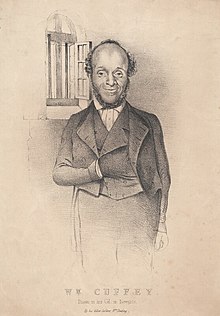
A key point Matthew Roberts made was what the memory and heritage of Chartism might be now. There is a new generation of historical research- albeit not so much in the public eye. There is also a danger of Chartism being seen as a fight by white blokes for their rights (though tbf Nigel Farage never references it). Here as Roberts notes the continuing effort to get recognition for the black leader of London Chartism in 1848, William Cuffay, has importance. There is some good news here in the sense that a plaque on Cuffay has been agreed in his birthplace of Medway and will be erected once current restrictions lift.
A question which is at least now being asked is whether there was a wider black presence in the Chartist movement and if so what its extent was. There are a handful of known examples but as often with historical research, if you don’t look, you don’t find.
There is also a think a good deal more that could be done on female Chartism following on from the work that Dorothy Thompson and others did some time ago.
Like the work of the left itself, the issue of the heritage and memory of Chartism remains work in progress.
Heritage politics and the memory of Chartism in England and Wales
Matthew Roberts at the Working Class Movement Library
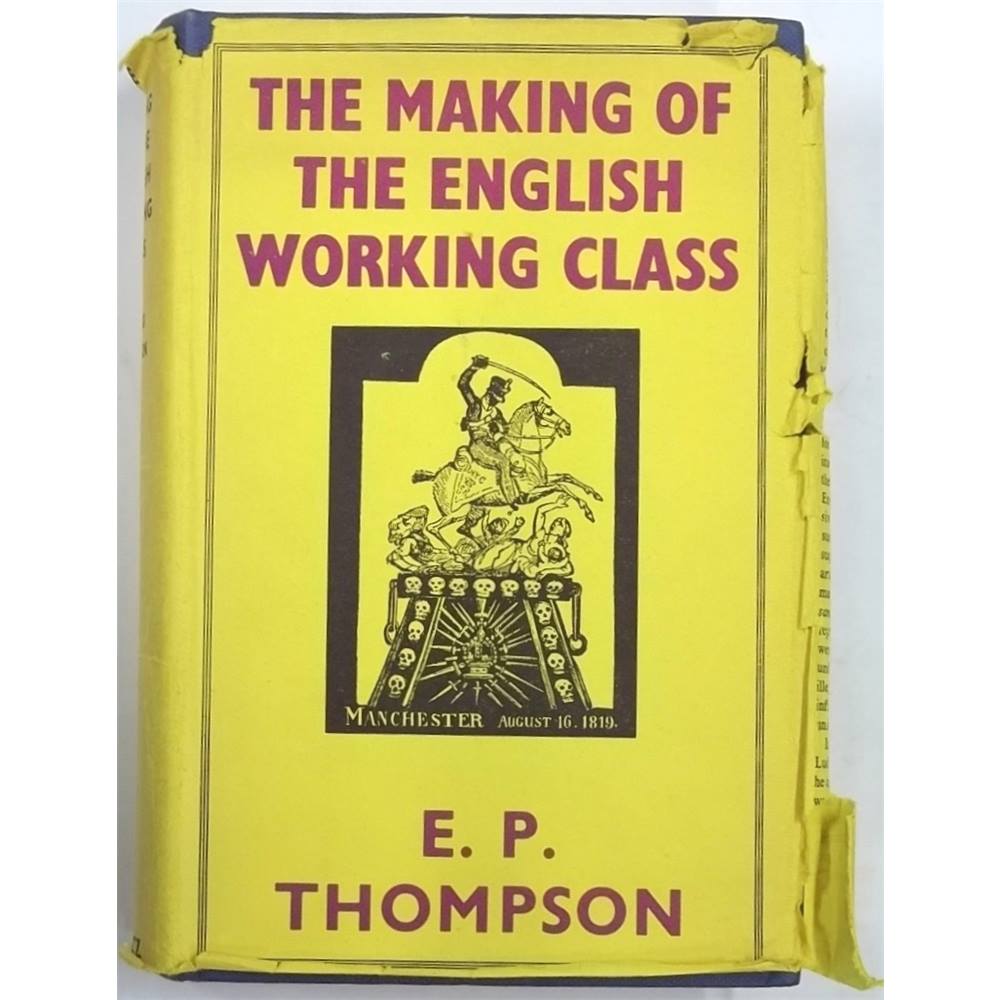
World Book Day: the Luddite letter writer in E P Thompson’s Making of the English Working Class
I’d choose E P Thompson’s Making of the English Working Class (1963 still in print) as my book for World Book Day. I’m conscious of the fact that the day is aimed at younger people and encouraging reading and Thompson’s book is a weighty tome, which might put some off.
That said it is full of characters who might spark interest and indeed passages that can be read allowed.
In fact Thompson compiled a good deal of the detail in the book and arguably some of the approaches to it while teaching WEA night classes in Yorkshire in the 1950s. His engagement with working-class students underlines the point he made in the 1968 postscript that the book is far from being a dry academic tone
Take this brief piece about a Luddite letter writer, stuck in jail
Thompson notes that in the early nineteenth century working class there was a considerable span of articulateness from the fully articulate artisan to the barely literate.
He writes:
‘Besides this (an example of a wife writing to a journeyman tailor in jail) we may set the letter of the Sheffield joiner Wolstenholme, to his wife’
Our Minaster hath lent me four vollams of the Missionary Register witch give me grat satisfaction to se ou the Lord is carin on is work of grais in distant contres
Thompson goes on ‘the writing of this letter was attended with difficulties since ‘Have broke my spettacles’
In a footnote he suggests that since the prisoners knew their letters were read by the Governor they were inclined to include references to improving reading
In an earlier version of this post the historian John Baxter added the following very useful background to the writer of the above letter:
Good choice and the book has plenty of Luddite literature quoted but Luddites held to the ‘taissez vous'(keep quiet ) maxim.Most avoided being caught.This letter lovingly reproduced by Thompson,was I recall one is several letters held still by the state after several members of the Sheffield Political Hampden Club/union Society revolutionary underground were duped by Oliver the Spy and spent most of second half of 1817 imprisoned without charge.Katrina Navickas has used these letters to emphasise the role women played advocating rights for political prisoners.Think this letter was relating to William,’Old Wolstenholme’ a member of the revolutionary underground in 1801-2 who was this time arrested.He had two sons with him in jail in 1817..James , his son was the ‘Sheffield ‘captain’ so called..they claimed to be Despard’s men as badge of pride and twenty years later he and his own son James were Chartists.The son was elected to the Chartist convention..was in London and connected to the rising planning of 1839 got to hang out with Beniowoski and Dr Taylor but escaped to America in September and never came back.
The family were Kilhamite(TomPaine) Methodists from Scotland Street chapel.written a piece which in desperation for outlet put on Academia as ‘Passing the torch ofLiberty’.Then found at last moment that it was a three generation story..James son of William had won James ,a 36 year old son in 1839.Have revised it but subsumed much of information in my new version Holberry biography .
He had a long and varied life on the left and in his later years did much work on socialist history.
I have vivid memories of him, usually lecturing me in a friendly way about some issue or other
Here however is one of his earliest published pieces (from Marxists.org) which appeared in the Socialist Review in 1954. It was the publication of the Socialist Review Group which is now the Socialist Workers Party. Stan Newens left in 1959 but certainly never forgot!
Stan Newens
Why Not to Rearm Germany
(September 1954)
The main feature of political ferment in Britain this year has been the great debate on German rearmament within the Labour Party. The widespread opposition to the National Executive’s decision to support the idea of a German army in any form at all has produced fifty-seven resolutions on the Conference agenda, and behind them an immense amount of discussion.
This opposition is one of the most heartening features of the trend towards a genuine socialist policy within the Labour Party. It represents the refusal of the rank and file workers in the movement to accept any policy that the N.E.C. cares to recommend. As such all left wingers are bound to herald its development.
THE BEVANITE LEAD: The reasons why the proposals for the inclusion of a German contingent in a European army has [sic.] met such stubborn resistance in the ranks are several. First and foremost, the scattered opposition has at last been given a lead by the Bevanite M.P.s. The powerful upsurge of feeling throughout the ranks of the Labour Party has demonstrated that the desire for a real socialist policy and the dissatisfaction with many aspects of official Party policy are not non-existent, but only completely scattered and disorganized.
THE OFFICIAL VOLTE FACE: Of course this is not the only reason for the strength of the opposition to German re-armament. The notion of re-arming Germany is so much out of harmony with the ideas which have been popularised on nearly every side in Britain for fifteen years and more that it produces a shock even in conservative quarters. When the official Labour Party line takes a turn contrary to all previous statements of Labour Party leaders, inevitably the turn is questioned.
When the idea of West German participation in a West European Army was first raised Mr. Attlee called the proposals “a very queer way to try to build up the unity of Western Europe” (Hansard, 16th March, 1950). Yet the official Labour Party pamphlet In Defence of Europe, states:–
“From a Socialist viewpoint there is much to be said for it. It transcends national frontiers and represents a considerable surrender of sovereignty to a wider grouping of nations.” (p. 2)
Ernest Bevin said:–
“All of us are against it. I repeat all of us are against it. It is a frightful decision to take.” (Hansard, 18th March, 1950)
Yet in In Defence of Europe welcomes it as “a great act of reconciliation” (p. 2)
Inevitable anyone politically conscious enough to work in the Labour Party is bound to wonder about the reasons for the change. It is clear even to a simpleton that either the statements before or after the change were wrong – perhaps both.
Why does Socialist foreign policy today look so different to what it was yesterday?
In whatever way reasons for the opposition before the change of policy may have been incorrect from a socialist point of view that opposition was undoubtedly correct. Even though the statements made before September, 1950, by Labour Party leaders failed to point out that the restoration of the German capitalist set-up, no any militaristic tendency within the German people as a whole, made German rearmament another step to a third world war. Any socialist would be bound to support their opposition.
THE RESTORATION OF CAPITALIST GERMANY: The present proposals for the rearmament of Western Germany are merely another step in an attempted reconstruction of pre-war Germany as a bastion of western capitalism against the Russian “bloc”. This attempt is being made despite the fact that pre-war Germany was the breeding ground of Nazism and that it involves the rehabilitation in important positions of many Nazis.
Take for example the industrial magnates who, faced with the rising clamour of the working class movement for social changes to relieve their miseries during the slump of 1929–33 were ready to finance Hitler as their saviour. Of them, Major General Telford Taylor, chief American counsel for war crimes said:
“In a very real sense these defendants and others like them – not the half-mad Nazi fanatics and street fighting thugs – are the principal criminals. And what is more important, these defendants will, if their guilt is unexposed and unpunished, be an immeasurably greater threat to the future world peace than Hitler, were he alive today.”
These very men have been allowed to regain their leadership of German industry. Alfred Krupps, who was sentenced in 1948 to twelve years imprisonment and confiscation of all property for using slave labour, was released and his property restored in 1953. Heinrich Dinkelbach, a Nazi from 1938 and right hand man to Friedrich Flick, head of the pre-war United Steel Company is now Chairman of the re-organized United Steel. Wilhelm Zangen, Chairman of the Mannesmann steel combine before the war, is back at his old post. Herman Abs, a former director of Deutsche Bank who “devoted his entire attention to extending German domination throughout Europe” (U.S. Office of Military Government, November 1946) is now head of the advisory committee which controls most of the assets of the pre-war chemicals monopoly, I.G. Farben.
Not only the men are the same, on the whole but so is the structure of industry. Speaking in the House of Commons on the 18th May, 1947, Ernest Bevin declared “We adhere to the principle of public ownership of German industries.” But when the North Westphalian Government – where the Ruhr is – decided to nationalise all heavy industries in 1947, the British High Commissioner vetoed. A similar veto was applied by the American authorities in Hesse.
Similarly, the Allied governments agreed to break down the industrial monopolies and cartels in order to destroy the concentration of economic power. Yet Krupps, United Steel, Mannesmann and other steel giants are still functioning. I.G. Farben, the gigantic pre-war chemical trust, was reported to have recovered its unity in all commercial operations by 1950 (Manchester Guardian Weekly, 30th March, 1950) and is now practically re-united in all respects as Badischen Anilin und Sodafabrik Ludwighaven. The same story applies in the case of banking.
Even the military staff for the proposed army includes a large number of leading military figures under the Nazis. Generals Speidel, Heusinger, Lieutenant General Kuitzen, Generals von Leuttwitz, von Gersdorf, Boeslager, von Manteuffel, Count Schwerin and Dettleffsen, are examples of the people connected with Herr Blank’s West German embryonic Defence Department. The Daily Herald (23rd May, 1953) stated that most of the volunteers for the proposed Germany army were veterans of Hitler’s campaigns from all ranks.
All these facts show how capitalist Germany which produced Hitler is being resurrected. And with resurrection the natural search for markets and for fields of investment, which drives all capitalist countries to seek to expand their influence, will tend to drive Germany in turn eastwards once again.
This is precisely the plan of the leading capitalist spokesmen in the American sphere. The re-arming of Germany is merely a new step in the policy which led to the North Atlantic Treaty organization, the giant increases in the British re-armament programme, and the inclusion of Fascist Spain in the plan.
RIGHT-WING OPPOSITION TO GERMAN RE-ARMAMENT: However, on the wisdom of German re-armament as a new move, not all European – particularly French – capitalists are in accord with their American allies. Much of the anti-German propaganda, the demands for restrictions on German industry and the annexations which followed the war were dictated by fear of Germany as an economic rival rather than a military threat.
For example, the Association of British Chemical Manufacturers urged the elimination of the German dyestuffs industry (The Times, 27th March, 1946). Lincoln Evans, as General Secretary of the Iron and Steel Trades Confederation, wanted limitation of heavy industry “not indirect armament” (letter to The Times, 5th November, 1946). Sir Murray Stephens, a Glasgow shipbuilder, protested against raising the limits on German shipbuilding (New York Herald Tribune, December 1948). These fears and sentiments are current in France and it is not surprising that many right wing spokesmen are too afraid of Germany as an economic threat – eventually backed by military force – to their countries to support the idea of German rearmament. Marshal Juin in France and Lord Beaverbrook’s press in Britain are examples.
SOCIALIST VERSUS RIGHT WING OPPOSITION: Their ideas, however, have nothing in common with a socialist opposition. They manifest themselves in the form of sheer anti-German ideas. Like Ilya Ehrenburg, their motto is: The only good German is a dead German.
The truth is that the German people are no more militaristic than any other. The threat comes from the continued existence of the capitalist system and their incorporation in the American capitalist “bloc”. That is why we must oppose German rearmament. The same reasoning applies equally to the British, French and the Russians. It is not militarist tendencies within these people but the systems in which they live – monopoly capitalism in the Western Bloc and State Capitalism in Russia – and the rivalries between the two world camps which threaten them. Therefore we must oppose British, French and Russian rearmament as tenaciously as German.
The fault of the Bevanite leadership of the opposition is their failure to do this. In nearly every other respect they support British adherence to the American “bloc” and their opposition to German rearmament is often right wing and chauvinist.
A consistent policy involves a choice between this unconvinced, uncertain adherence to the American bloc and a socialist stand.
NEITHER WASHINGTON NOR MOSCOW: This is not to suggest a change from American tutelage to Russian. Everyone but the so-called “Communists” in the working class movement knows that the totalitarian dictatorship which prevails in the Soviet countries is just as much to be hated and opposed by genuine Socialists as the American capitalist system. The revolt which swept through the cities of East Germany on June 17th, 1953, demonstrated the hatred of East German workers for it.
The opposition to German rearmament which the Socialist Review appeals for is on the basis of equal opposition to all attempts by either world “bloc” to incorporate part or all of Germany into its own sphere. This means resistance aiming ultimately at an international socialist position equally independent of both Washington and Moscow. In other words a “third camp”.
It demands, therefore, not only the prevention of German rearmament as part of America’s anti-Soviet Crusade, but in addition opposition to every aspect of this crusade. This means the complete withdrawal of troops from Germany, British exit from the North Atlantic Treaty Organization and a programme for a Socialist – not Capitalist or Stalinist – unity of Europe.