Articles

Temperance & the left: An historical discussion that should be revisited

In Uncategorized on February 16, 2021 by kmflett

Temperance & the left. An historical discussion that should be revisited

The Guardian, which when it was the Manchester Guardian, was supporter of temperance as a progressive working-class demand, has a report of a new study into pubs and COVID from the University of Stirling(16th Feb):

https://www.theguardian.com/world/2021/feb/16/bars-pubs-still-pose-covid-risk-despite-safety-efforts-experts

Suffice to say that its not really a study. It involved researchers posing as customers and watching what went on in pubs for several hours. They reportedly found some were ‘drunk’ (not defined). The study suggests that while pubs took safety precautions they didn’t entirely work and some might never re-open.

Of course there is no data on COVID infections that suggests pubs are a particular source of infection even though when open they were the most closely monitored of all sectors of the economy.

The report is simply an exercise in temperance prejudices which is reflected in the Institute of Alcohol Studies retweeting a link to it. The IAS is the successor to the UK Temperance Alliance.

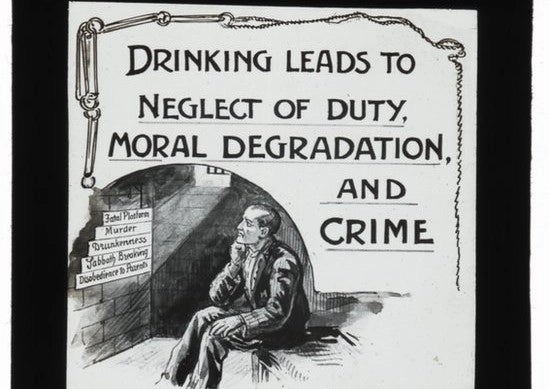
My issue with this is not temperance as such but the dishonesty in which such views are cloaked these days. There are those who think drink is a bad thing and society would be better off if people didn’t drink. It was once a respectable and quite widely held view, including on the left and in the labour movement. It’s a pity that its modern supporters cant be upfront on the matter.

I’ve always been clear that while fairly obviously I like a drink I have quite robust views on where and when its appropriate to drink. Meetings are on-line currently but physical meetings will be back in some form. When I organise them I’m very strict about no drinking before or during the meeting. It causes disruptive behaviour. Unlike the pub which has rules and laws and a landlady or landlord, meetings don’t have such a helpful framework. Your only course of action is to throw a non-sober person out.

Some history on the relationship between temperance and the left is below. I do wish modern day temperance campaigners, many of whom do sit on the liberal-left, would own this and be upfront on matters. Then maybe we could have a genuine discussion on the role of drink in society the downsides and the upsides, instead of publishing rather odd pieces of ‘research’.

The relationship between radical and labour movements and drink was complex from the start.

Pubs were radical meeting places. One need only look at how protesters gathered at Peterloo on 16th August 1819 from all over the north-west, some stopping at ale houses on the way for refreshment (water not generally being safe to drink).

The 1830 Beer Houses Act allowed for the opening of a new layer of pubs that sold beer only (no spirits)and had a mainly working-class clientele.

The Chartist Movement certainly met in pubs but also contained those who regarded, rightly, drunkenness as the enemy of radical organisation. The Chartists had a principle of ‘exclusive dealing’ buying things only from those who backed the Six Points of the Charter for the vote. The August 1839 Grand National Holiday called for abstention from all excisable goods underlining the development of a temperance trend.

Temperance remained an important part of working-class and labour politics in the first decades of the twentieth century. Keir Hardie was a temperance supporter from the early days of the Independent Labour Party in the 1890s. He argued ‘that a man who can take a glass or let it alone is under moral obligation for the sake of the weaker brother who cannot do so, to let it alone.

By 1905 a Trade Union & Labour Official Temperance Fellowship had been formed and a majority of the Labour MPs elected in 1906 were abstainers. Philip Snowden, a leading figure in the first Labour Government in 1924 published Socialism and the Drink Question in 1908. There was a problem though. The Tories were the party of brewing, beer and pubs and working mens and socialist clubs sold drink not only because it was what their customers wanted but also because it provided the profit to allow them to continue.

Temperance has remained, in part, an honourable tradition rooted in dislike of giving money to (Tory) drinks manufacturers and a realisation that unsober people rarely get to change the world for the better. Labour leader Jeremy Corbyn for example, is a noted non-drinker

We might also be reminded what the Labour MP Victor Grayson had to say about efforts to promote temperance in law in the House of Commons over a hundred years ago:

In October 1908 the Labour MP Victor Grayson tried to adjourn a Licensing Debate in the Commons so the question of unemployment could be considered. The next day he underlined the point: ‘there are thousands of people dying in the streets while you are trifling with this Bill’.

Many of those who survive on Universal Credit may well think Grayson had a point. Whether they like a drink or not their focus is on keeping a roof over their heads and making sure they have enough money to eat.
Articles

Shrove Tuesday: not just pancakes but subversion

In Uncategorized on February 16, 2021 by kmflett

Shrove Tuesday not just Pancakes but Subversion

In 2021 the moveable feast of Shrove Tuesday, the day before Lent, is known almost entirely for the consumption of pancakes. Any activities such as pancake tossing will certainly be virtual

Historically matters, in certain periods, particularly the early C17th, were a bit more exciting.

Shrovetide was the occasion for ball games, what Ronald Hutton in the definitive volume on British folk customs, Stations of the Sun, notes as ‘licensed misrule’.

By 1598 the ball games had started to develop into something wider. There were, Hutton records, riots on 24 out of the 29 Shrove Tuesdays in the early Stuart period (1600s). The riots took place mainly it seems in areas to the north of the City of London and involved centrally apprentices but also craftsmen.

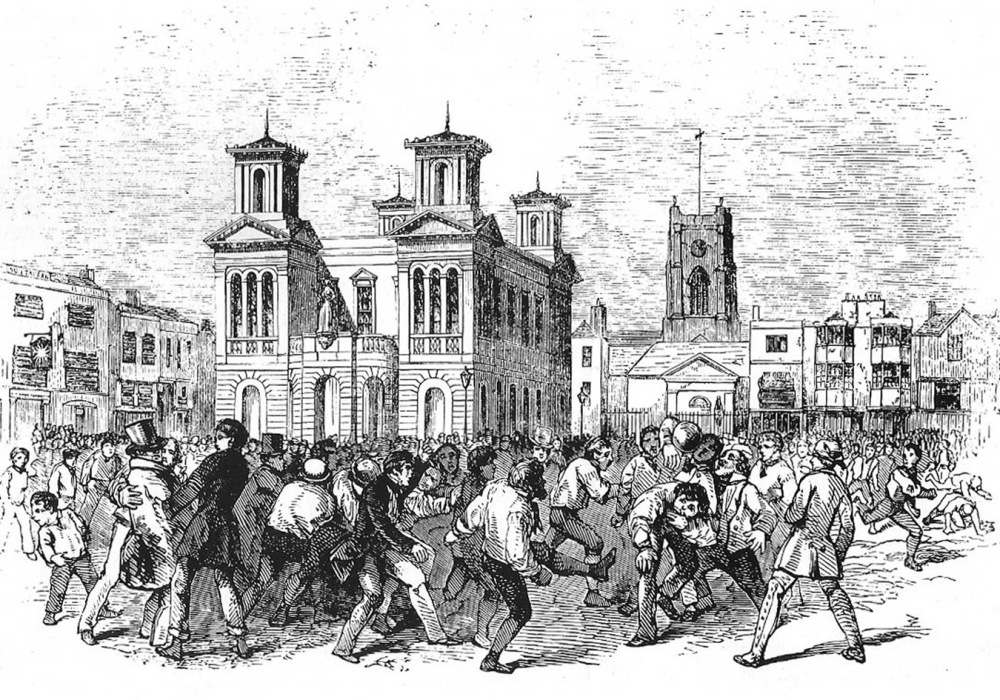
E P Thompson noted in his essay Patrician Society, Plebeian Culture about eighteenth-century England a Shrove Tuesday game of football which took place at Kingston in 1799, The magistrates banned it but the ‘populace’ and the ‘mob’ ‘triumphantly’ defied the ban.

Riots were not random but aimed at particular targets, in particular brothels and playhouses. Hutton records that between 1612-14 on Shrove Tuesday a Shoreditch brothel was attacked each year until it shut. On Shrove Tuesday 1617 a new Drury Lane playhouse was destroyed and prisoners freed from Finsbury prison by rioters.

Hutton notes that, while the targets may at least seem odd to modern eyes, they ‘fitted into a much older tradition of cleansing a community before Lent’. In other words the Shrove Tuesday crowd, in rioting, was seeking to destroy what it saw as the less moral parts of the early C17th economy.

The tradition of rioting died out only slowly and the mass playing of football on Shrove Tuesday still goes on in some places- Ashbourne in Derbyshire for instance- as a distant echo of earlier times. Shrove Tuesday football had no rules and no limit on the number of participants. The struggle (or fight) to get possession of the ball was at least as important as what was done with it afterwards.

That is also a reminder that Shrove Tuesday in the traditional calendar was the end of the reign of the world turned upside down figure of the Lord of Misrule, often appointed on the previous All Hallow’s Eve 31st October.

In short in the 1600s Shrove Tuesday was not about pancakes but about disorder, riot and subversion.

,

Articles

15th February 2003: the biggest protest in UK history 23 years on. The importance of historical memory

In Uncategorized on February 15, 2021 by kmflett

15th February 2003: The biggest protest in UK history 23 years on

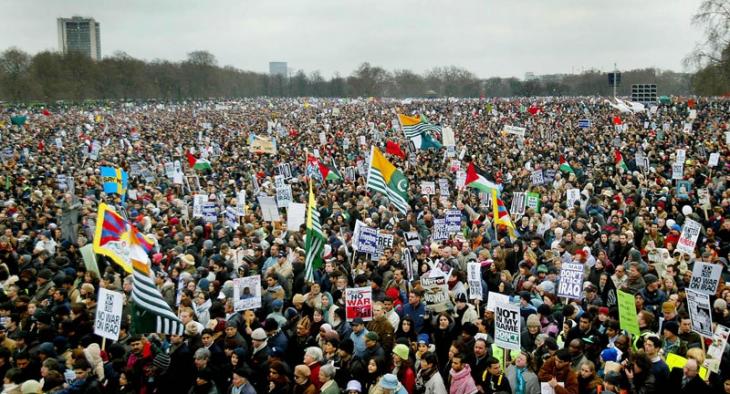
It is twenty three years this week since the biggest march in British history, against war in Iraq, on Saturday 15th February 2003.

Below is a slightly edited version of what I wrote on the 10th anniversary.

The march is not yet history and is some way from being so. The political arguments about war, imperialism, defence and intervention continue and many of the leading players in 2003 remain active today, holding, as they did then, a wide range of  views on the world, but still including opposition to illegal wars.

It does however continue to be important to keep remembering that the event took place and left a mark on a generation. Perhaps not surprisingly the blockbuster film has yet to appear and perhaps never will. But what happened and what it achieved should continue to be something that is discussed and debated.

__________________________________________________________________________________

10 Years After: The Historical lesson of 15th February 2003- Keep Marching On

Many readers of this will have been on the central London demonstration called by the Stop the War Coalition on Saturday 15th February 2003 as I was myself.

It was the biggest demonstration in British history and remains so.

The British Government still has imperial ambitions. But whereas before that cold Saturday ten years ago it would have been a minority of left and peace voices that spoke out, today it is legitimate for a broad range of opinion to question why the country is intervening in  wars elsewhere and what purpose it serves.

The media are unlikely to be devoting special supplements and programmes to the anniversary although in truth that is what it deserves.

Making sure the demonstration is remembered and underlining the historical point that popular mobilisations make a difference is important.

While there were many young people on the march, the fact remains that there are people in their twenties and thirties today who are too young to have either been on the march or to remember it. If in today’s environment it was said,’ we can mobilise well over a million in people in central London for an important issue’, eyebrows might well be raised. Yet just 10 years ago we did exactly that.

So making sure that the event is remembered and remains in the popular memory is an important task not just for historians but for the left generally.

For those who were there, and it was estimated that someone from most households across the UK was, the question ten years on remains one of what impact was made, and whether marching changes anything.

Here history can provide some pointers.

As the historical sociologist Charles Tilly argued in his book Repertoires of Contention- looking at Britain in the late eighteenth and early nineteenth centuries- people fighting injustice can follow a range of strategies. These can vary from petitions through strikes to armed revolts and from riots to large indoor meetings that agree to lobby Parliament.

It depends what is thought to be effective at the time and what mobilises numbers for the maximum impact. In recent times a march with a large and broad turn-out, although far from the only strategy, has often made a significant and sometimes lasting political point.

There is another angle made by the late Peter Sedgwick in his introduction, Farewell, Grosvenor Square to David Widgery’s 1976 volume about the left in the 1960s.

Sedgwick argues that until the rise of CND in the late 1950s the idea of going on a demonstration to make a political point seemed an odd one for many. If you wanted change you wrote to your MP and voted for a Government from time to time.

The minority who did march were watched by many more from the nearest pavement.

From the 1960s all that changed. As Sedgwick noted when delivering leaflets door to door for a protest the reaction was no longer puzzlement from the householder but ‘thanks luv see you at t’demo then’.

Even if a march does not have the precise consequences that were  desired it often does beg significant political questions and may do so long after the last marcher has returned home.

That’s why it is important to keep remembering that cold Saturday of 15th February 2003 and to keep in mind that it can happen again.

But while we are remembering 15th February it is important not to forget some other points.

The march did not stop the drive to war with Iraq as the usual suspects have been busy reminding us. But the war itself did not come until a month later on March 19/20th 2003. At that point the aim of anti-war activists was to take protests beyond demonstrations towards walk-outs and industrial action. Numbers did take place, but not sufficient numbers to reinforce the impact of 15th February. It suggests that in the circumstances of the time the mass march was far from being our best strategy to stop the war but in fact the best shot we could muster. Unfortunately it was not enough

Finally a literal footnote. Despite the concern of the Royal Parks and the then Culture Secretary, the late Tessa Jowell, the grass in Hyde Park survived the march and last time I checked was still thriving.

Articles

Socialist Historians call for an end to Culture Wars on British historical research

In Uncategorized on February 15, 2021 by kmflett

London Socialist Historians Group

Media Release 14th February

Contact Dr Keith Flett 07803 167266

Socialist Historians call for an  end to Culture Wars on British historical research

The London Socialist Historians Group that organises the socialist history seminar at the Institute of Historical Research has said that plans by the Government to appoint a Free Speech Champion for Universities and tell cultural institutions that they must not airbrush British history is part of a Tory Culture War. It has little to do with history and a lot to do with the Tories striking stances on things they think will win them votes.

At the same time the historians say that the apparent ignorance that Culture Minister Oliver Dowden has about history and what historians to do cannot go unchallenged. British history is not some static unchanging thing. Obviously there are key factual events but how each generation understands them and which bits of British history are discussed and remembered is subject to change. At least some of that relates to work that historians do to better understand British history.

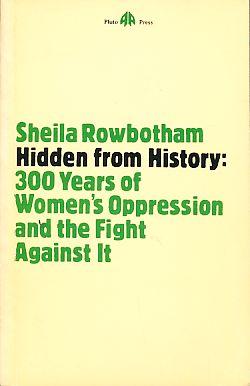
LSHG Convenor Dr Keith Flett said, I would suggest that Oliver Dowden reads Sheila Rowbotham’s Hidden from History and Peter  Fryer’s Staying Power. Without those foundation texts the history of women and ethnic minorities would have stayed airbrushed out of the British historical record.

Articles

Boris Johnson: kerfufflist

In Uncategorized on February 14, 2021 by kmflett

In an interview with CBS Boris Johnson has labelled Donald Trump’s impeachment as a kerfuffle

https://www.bbc.co.uk/news/uk-politics-56061624

It might be argued that an event that took place in relation to the storming of the US centre of Government in Washington and left 5 people dead warranted a more sober description. Its hardly a secret though that Johnson struggles to take things seriously except his own ambitions.

Johnson has used the term kerfuffle before in July 2017 when he said he wouldnt be standing as Tory leader (when May became PM) because the public had had enough of the kerfuffle.

There are of course other terms that could have been deployed. Michael Rosen on twitter suggested Brouhaha and there were numbers of others.

Perhaps Johnson picked up kerfufflism at Eton. It was certainly not a term deployed at Alexandra Park Comprehensive School.

Articles

5 years since Beavertown’s landmark 4th Birthday event at Tottenham Hale

In Uncategorized on February 14, 2021 by kmflett

5 years since Beavertown’s 4th Birthday event at Tottenham Hale

Beavertown is nine years old this weekend and they’ve brewed Double Chin (double Neck Oil) again to mark it.

What a long strange trip its been, from one of the leading craft indy brewers to a partnership with Big Beer in the form of Heineken.

Below is something I wrote for the first birthday event they had at Tottenham Hale 5 years ago. It was one of the events that showed what interest there was in the craft beer area and what the range of beers was. Of course things have moved on a good deal since then but its always interesting to keep in mind where we’ve come from.

I was at Beavertown’s 4th birthday event at Tottenham Hale on Saturday (14th February 2016)

It has attracted some comment on social media and muttering elsewhere.

In my view the idea of holding a festival of some of the most interesting ‘craft’ beers in the UK was a good one and the principle of making it a free and un-ticketed event was also right on this occasion.

But as any CAMRA remember will remind you (I joined in 1975) organising beer festivals is much harder than might be thought.

I’ve since ‘ascended’ to higher things but I was once a trade union organiser and I know very well that when you organise things, if something goes wrong you get the blame. If it goes OK, it’s taken for granted (see CAMRA fests). That’s fine by me since I’m invariably organising something for a purpose.

Anyway I did get in on Saturday and yes I do live very nearby in the proletarian utopia of Tottenham Hale. However I queued with the rest from just after 1pm (having come from doing some union organising work with the local MP David Lammy).

It was at least not raining and the free can of Gamma Ray while we waited was a nice gesture. That said I am no fan of queues and I am rarely to be found joining one.

Inside it was indeed very busy, sometimes too busy. That said there were lots of interesting beers and provided you picked your bar there was no wait.

The pricing at £2 a third, irrespective of style and strength, was also an important feature. It encouraged an equality of sampling of new beers, not always seen in similar events run on strict commercial lines.

And the weather wasn’t as bad as it often is in the middle of the Six Nations rugby series.

Criticisms I have a few. More toilets are needed. Drinking beer particularly when it’s cold tends to provoke the need to urinate.

I also had a good deal of sympathy for those who travelled from outside London and found the wait to get in just too long. Just last week I was the Celt Firefest in Caerphilly having booked a nearby hotel with my partner Megan for an overnight stay. The event was ticketed but if it hadn’t been and we hadn’t been able to get in I would have felt seriously grumpy. This needs to be looked at (entrance arrangements not how grumpy I am)

Finally I note on social media suggestions that since the event had 4,000 likes on Facebook, the organisers should have known it would be very busy and ramped things up accordingly.

Hmm. Anyone who organises anything that is un-ticketed knows that attendance is quite unpredictable and FB is no guide. Clicking like on FB does not translate into feet on the ground in Tottenham Hale (if only).

So perhaps at least some ticketing is going to be needed for future Beaver events on such a scale to manage numbers and expectations about getting in or not.

That aside it was a great day. It showed an admirable ambition and deserves a ‘we

Articles

A genuine Valentine’s tradition: the redistribution of wealth

In Uncategorized on February 14, 2021 by kmflett

A genuine Valentine’s Day tradition: the redistribution of wealth

Valentine’s Day in 2021 is all about the commercialisation of romantic lurve.

There were other more robust Valentine’s traditions which have been edged out of history

In his book about traditions, Stations of the Sun, Ronald Hutton notes the existence of Valentining.

It was mainly for children who demanded from wealthy neighbours Valentine’s gifts for themselves and dates back the eighteenth century.

Needless to say as with many of these traditions it was robust and accompanied by rhymes containing veiled threats:

Good morrow, Valentine,

First ‘tis yours and then ‘tis mine

So please give me a Valentine

A tradition well worth reviving in the age of Boris Johnson

Articles

The Ambridge Socialist. Justin: is their life beyond market capitalism?

In Uncategorized on February 14, 2021 by kmflett

The Ambridge Socialist

14th February

Justin: is their life beyond market capitalism?

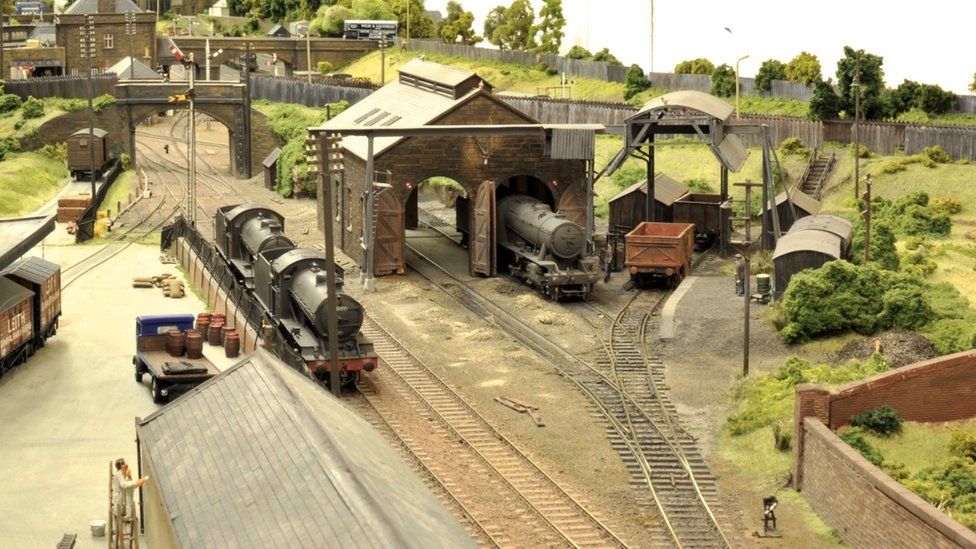
Justin, having been booted off the board of Borchester Land for being just a little bit too keen on modern slavery is wondering what to do with his life. Lillian has despatched Justin to speak to Tony about hobbies. Tony of course enthuses about model railways and shows Justin his latest efforts. Justin is impressed but wonders if there is a way to make money from it. The Ambridge Socialist wonders if Justin isn’t becoming a caricature. After all even the most vicious capitalists  have pastimes, even if they often still related to doing down the less well off.

The Shadow of Moss

The shadow of Philip Moss still hangs over Ambridge with no sign that any of the residents plan to do anything positive about it. For example reparations could be made to the Moss’s enslaved workers. Instead both Neil and Shula have had their faith tested in ways that the Daily Telegraph probably approves of. Respect to them but it would be good if they could do it in private rather than on the Archers.

Union Reps in Ambridge

Neil was in trouble this week with Borchester Land although he appears to have kept his job. Strangely however there was no mention of him consulting his union rep. That was odd because for some while Neil was the agricultural workers union rep in Ambridge himself (now Unite) having replaced Mike Tucker.

In 2015 Chris Kaufman wrote to the Guardian to complain that while he had questioned why the Archers no longer featured unions he had got no answer. He suspected that the National Farmers Union had the exclusive ear of the BBC. The NFU is of course not a union but an employers organisation.

Articles

Socialist History Seminar 22nd Feb. John Newsinger on Trump & the Christian Right

In Uncategorized on February 14, 2021 by kmflett

London Socialist Historians Group

Contact: Keith Flett 07803 167266

Socialist History seminar 22nd Feb. Trump & the Christian Right: A dark side of US Exceptionalism

John Newsinger will speak on Trump and Trumpism

Millions of white American Christians believe that Donald Trump was chosen by God to save them from a totalitarian secular liberalism inspired by Satan. Without the support of these people he would never have been elected and overwhelmingly they still support him today. How did this come about, who are these people and what are the likely consequences for

Link to recording of the seminar:

https://us02web.zoom.us/rec/share/8v7u_IYJh2igQVArjmDeJ96ovfuhiWNNzveDP2eS6T46nxCYP6xRwWpTZ8EAMOwr.Ol1ZspNqAiZOxxYW Passcode: @^NSrVT6

Articles

Michael Rosen & Michael Sheen named the Loveliest Valetine’s Beards 2021

In Uncategorized on February 14, 2021 by kmflett

Beard Liberation Front

14th February

Contact: Keith Flett 07803 167266

Michael Rosen & Michael Sheen named the Loveliest Valentine’s Beards 2021

The Beard Liberation Front, the informal network of beard wearers, has said that the annual vote for

My Hairy Valentine the beards that are most loved has ended with hairs being split between author Michael Rosen and actor Michael Sheen

They shaved contenders such as George Clooney and Idris Elba for the accolade.

This year My Hairy Valentine was refocused to include two categories:

1 Beards that are sexy, allowing for the reality that this is in the eye of the beholder

2 Beards that are loved because they add a reassuring presence to public life and should be celebrated.

The campaigners say that they didn’t attempt to define a sexy Valentine’s beard as beauty is in the eye of the beholder. They are concerned however to move away from traditional images of chisel jawed clean shaven men, and dispel pogonophobic myths that beards are dirty or unkempt

BLF Organiser Keith Flett said, given that Michael Rosen and Michael Sheen also shared the Beard of the Year 2020 Award in December it seems clear that they are the most loved beards at the moment and what better day to celebrate that than Valentine’s Day.